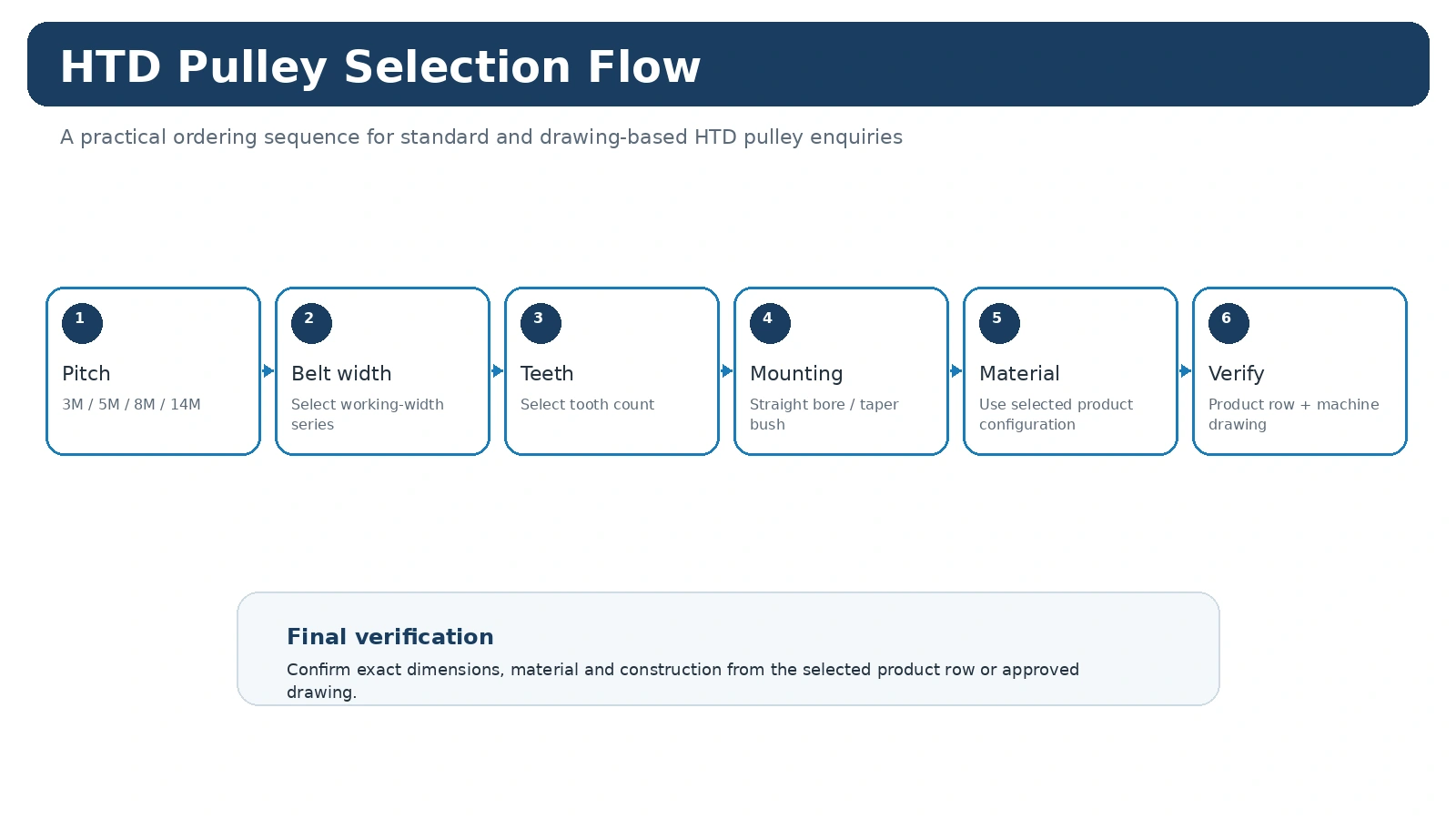
Pilihan manufaktur mengikuti jenis puli dan gambar yang telah ditentukan. Alur proses dapat berubah tergantung pada material, ukuran, konfigurasi lubang atau bushing, susunan flensa, dan persyaratan inspeksi khusus pesanan.
Pertahankan Keluarga Gigi dan Antarmuka Poros di Bawah Satu Spesifikasi yang Dirilis.
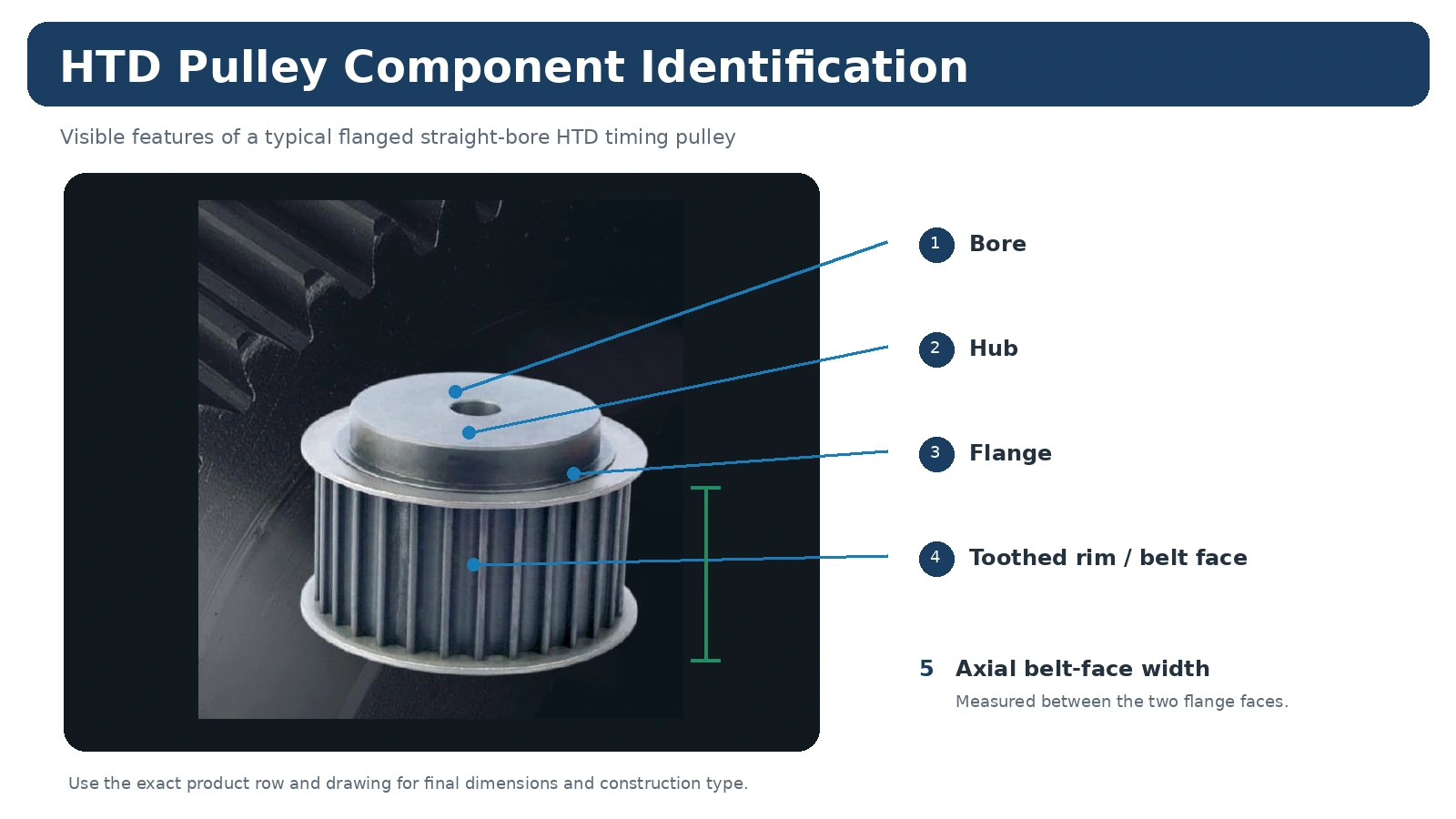
Geometri sisi sabuk mengidentifikasi sistem sinkron; pengerjaan lubang, hub, dan fitur terkait kemudian harus mempertahankan persyaratan pemasangan. Perubahan pada antarmuka poros dapat memengaruhi ketebalan dinding, proyeksi hub, posisi aksial, dan titik inspeksi, sehingga harus dikendalikan oleh kode produk atau gambar yang disetujui, bukan hanya dengan instruksi lisan.
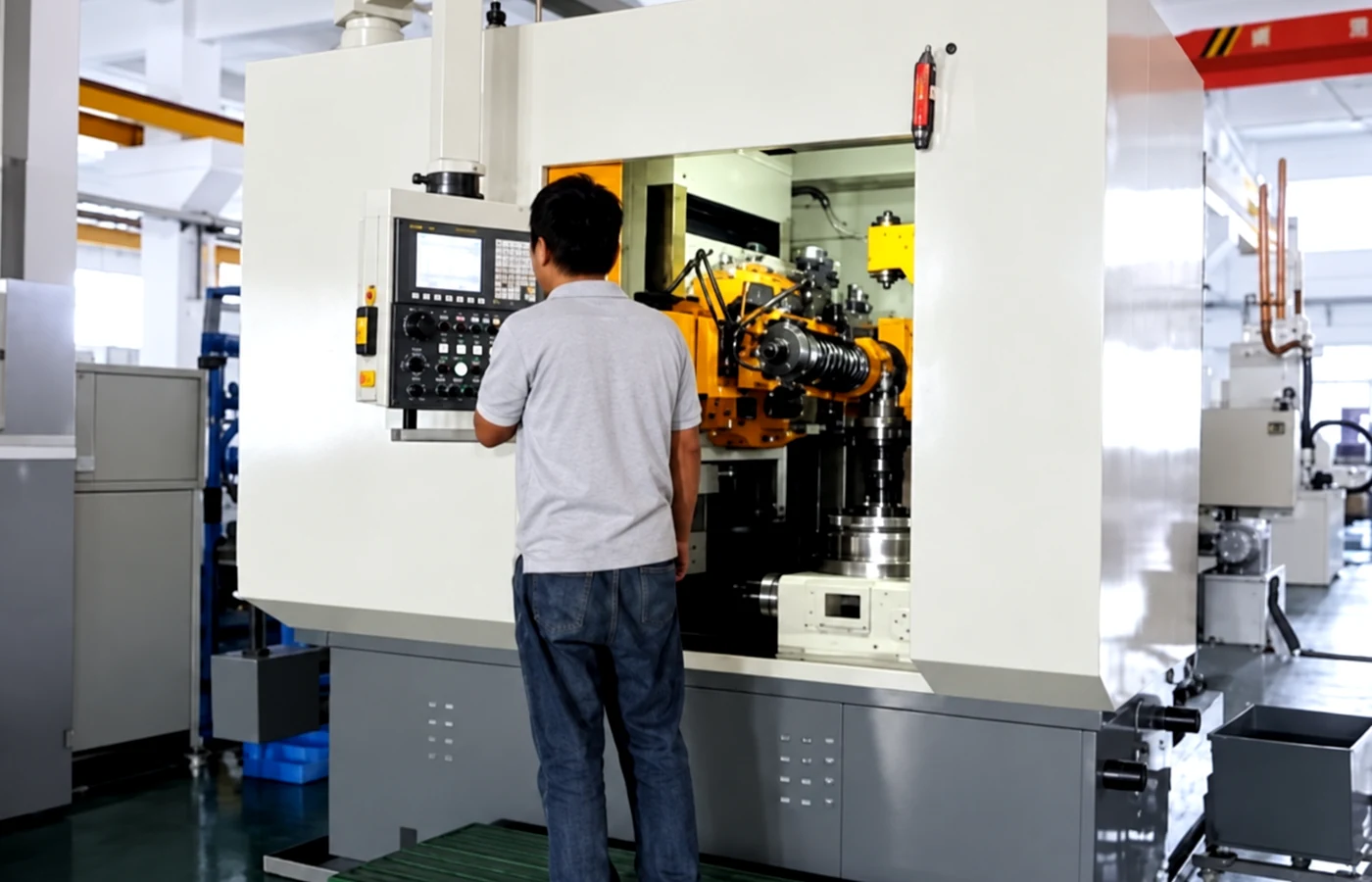
Alur Manufaktur dan Inspeksi Khas
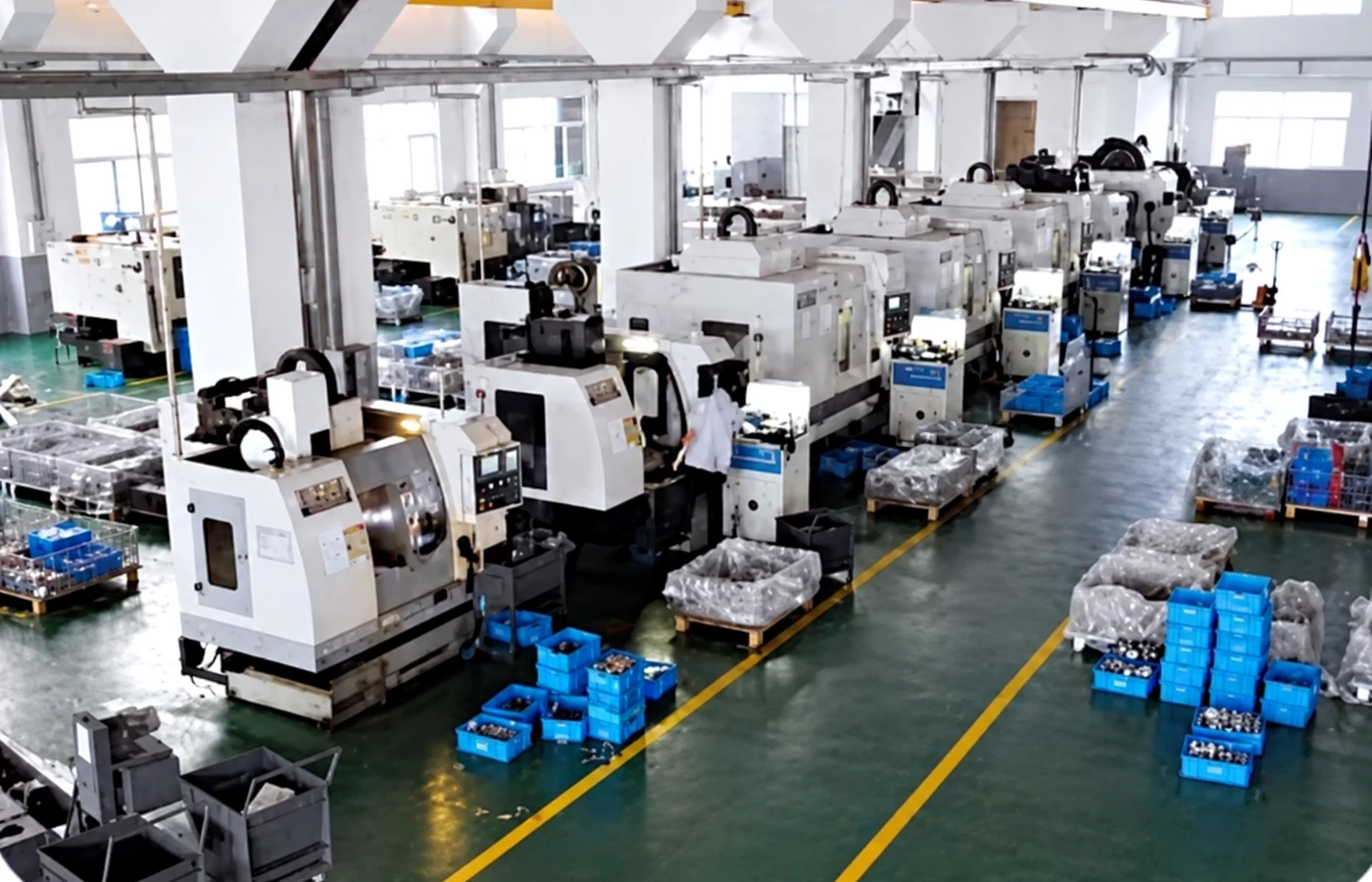
Operasi Pembubutan dan Pemotongan
Siapkan badan katrol dasar dan permukaan referensi yang dibutuhkan oleh konfigurasi yang dipilih.
Pemesinan Gigi
Pertahankan identitas keluarga HTD dan jumlah gigi yang dipilih melalui proses pemesinan.
Fitur Lubang/Hub
Lengkapi fitur antarmuka poros yang ditentukan oleh pesanan atau gambar yang telah dikeluarkan.
Inspeksi
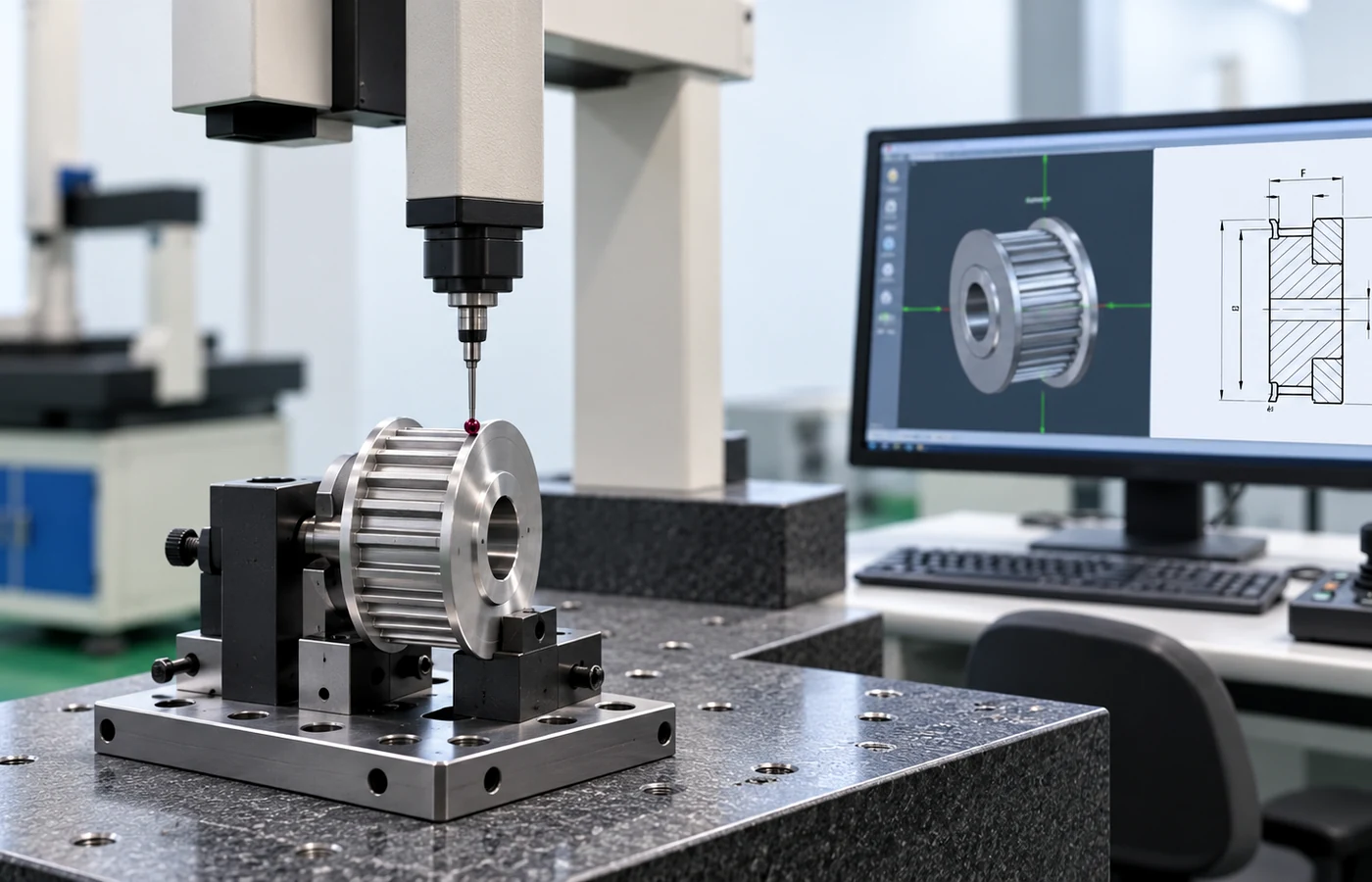
Periksa dimensi dan catatan yang telah diidentifikasi sebagai hal yang sangat penting untuk pesanan.
Definisikan Fitur Nonstandar Sebelum Rilis Produksi
Dokumentasi mengenai material khusus, perlakuan permukaan, toleransi ketat, penandaan, penyeimbangan, atau inspeksi harus dicantumkan dalam RFQ dan gambar. Ketersediaan bergantung pada puli yang dipilih, jumlah, dan jalur proses; situs web ini tidak menerapkan satu pernyataan kemampuan atau toleransi universal untuk setiap produk.
Jaga Identitas Produk Melalui Inspeksi dan Pengemasan
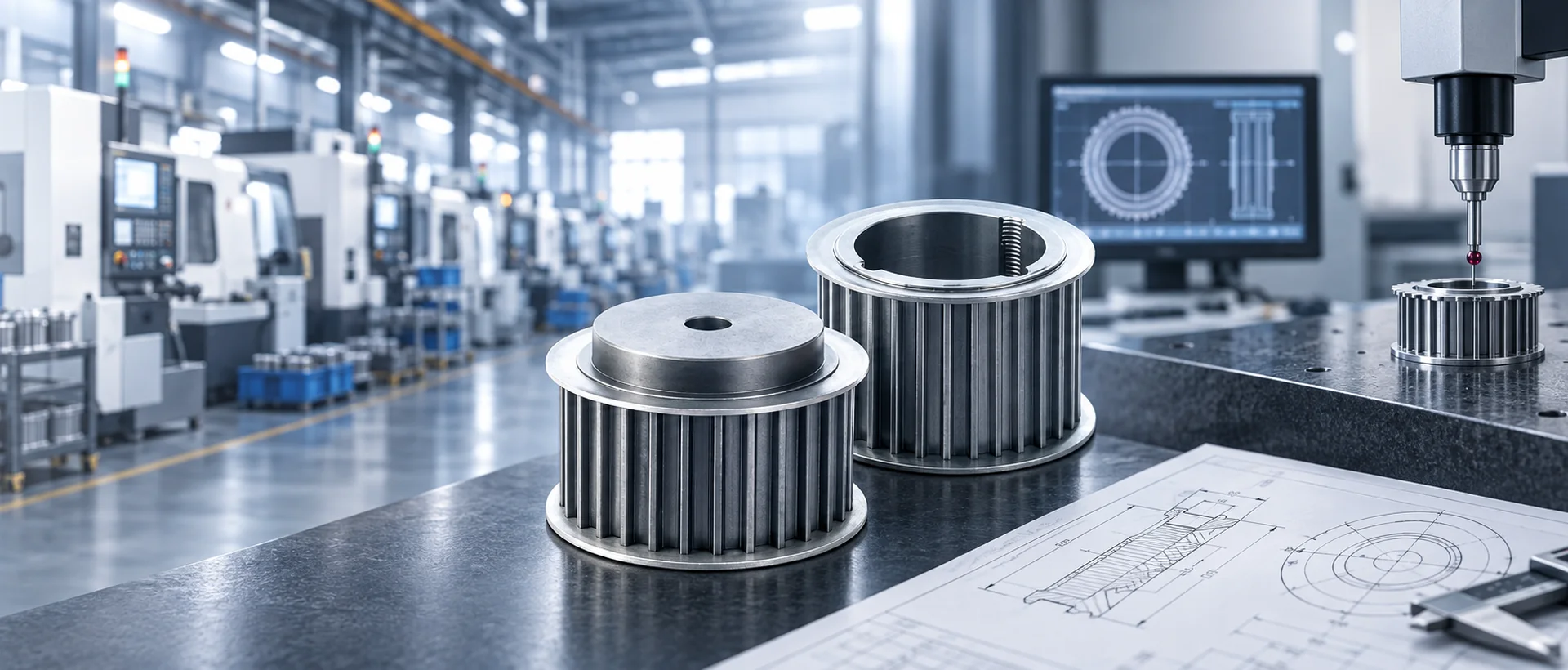
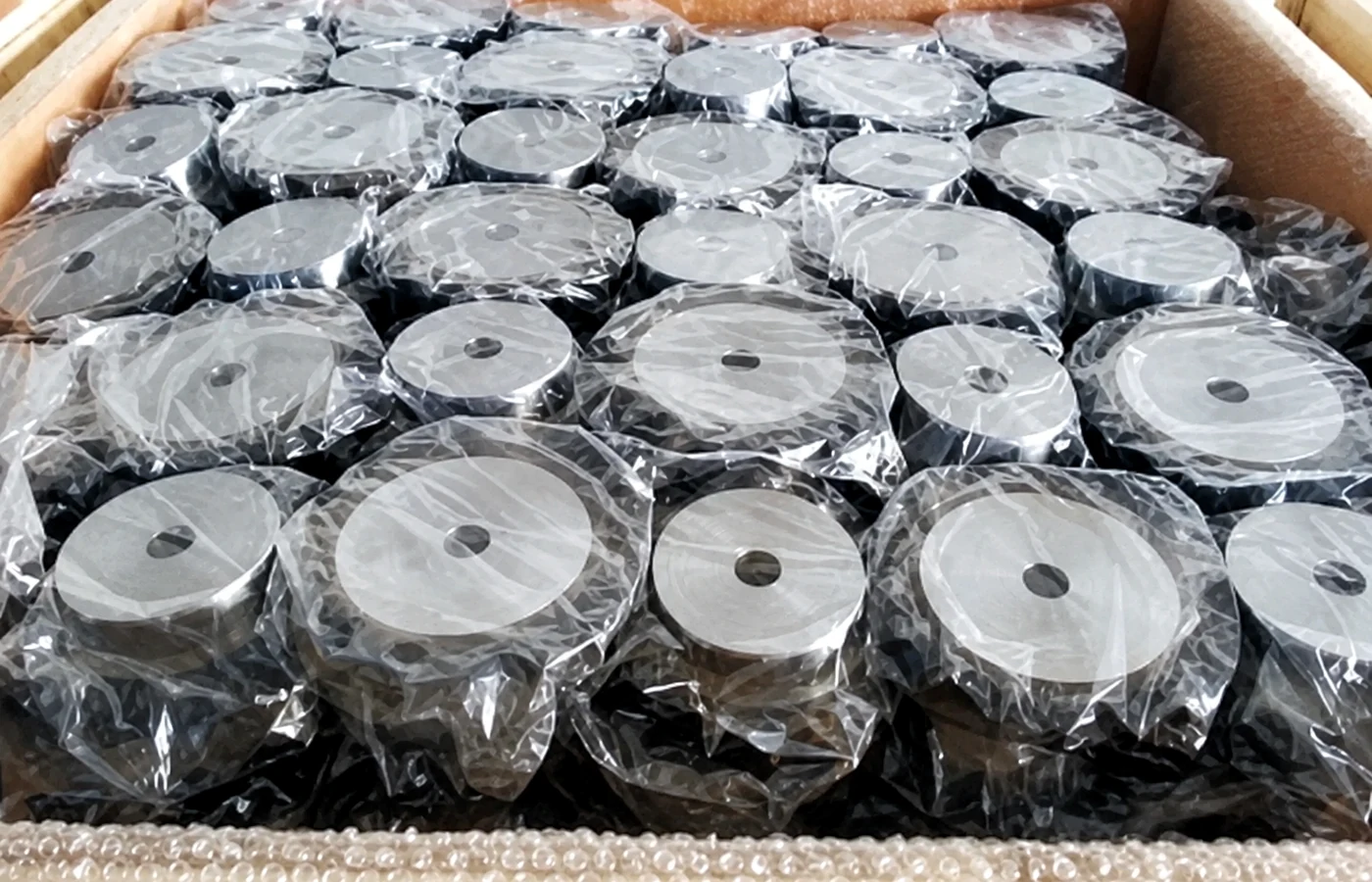
Pesanan model campuran lebih mudah diterima dan dikelola jika referensi model, kuantitas, dan gambar atau baris pesanan terkait tetap jelas hingga inspeksi dan pengemasan akhir. Nyatakan persyaratan penandaan khusus atau pencocokan dokumen apa pun sebelum produksi agar dapat dimasukkan ke dalam rencana pemesanan.
Geometri Gigi dan Fitur Poros Membutuhkan Kontrol yang Berbeda
Pinggiran bergerigi harus tetap konsisten dengan keluarga HTD yang dipilih, sementara fitur lubang akhir, antarmuka tirus, hub, dan flensa menentukan bagaimana bagian tersebut dipasang dan di mana sabuk berjalan. Pulley katalog standar menggabungkan fitur-fitur tersebut dalam tipe konstruksi yang telah ditentukan. Pesanan khusus harus mengidentifikasi secara tepat fitur mana yang berbeda dari baris standar sehingga pengerjaan dan inspeksi dapat difokuskan pada perubahan fungsional.
Untuk suku cadang pengganti, inilah mengapa puli yang aus harus diukur sebelum dibongkar jika memungkinkan. Garis sabuk terpasang dan proyeksi hub seringkali lebih mudah dipahami saat penggerak lama masih terpasang. Untuk mesin baru, informasi yang sama dikontrol dalam gambar yang dirilis.
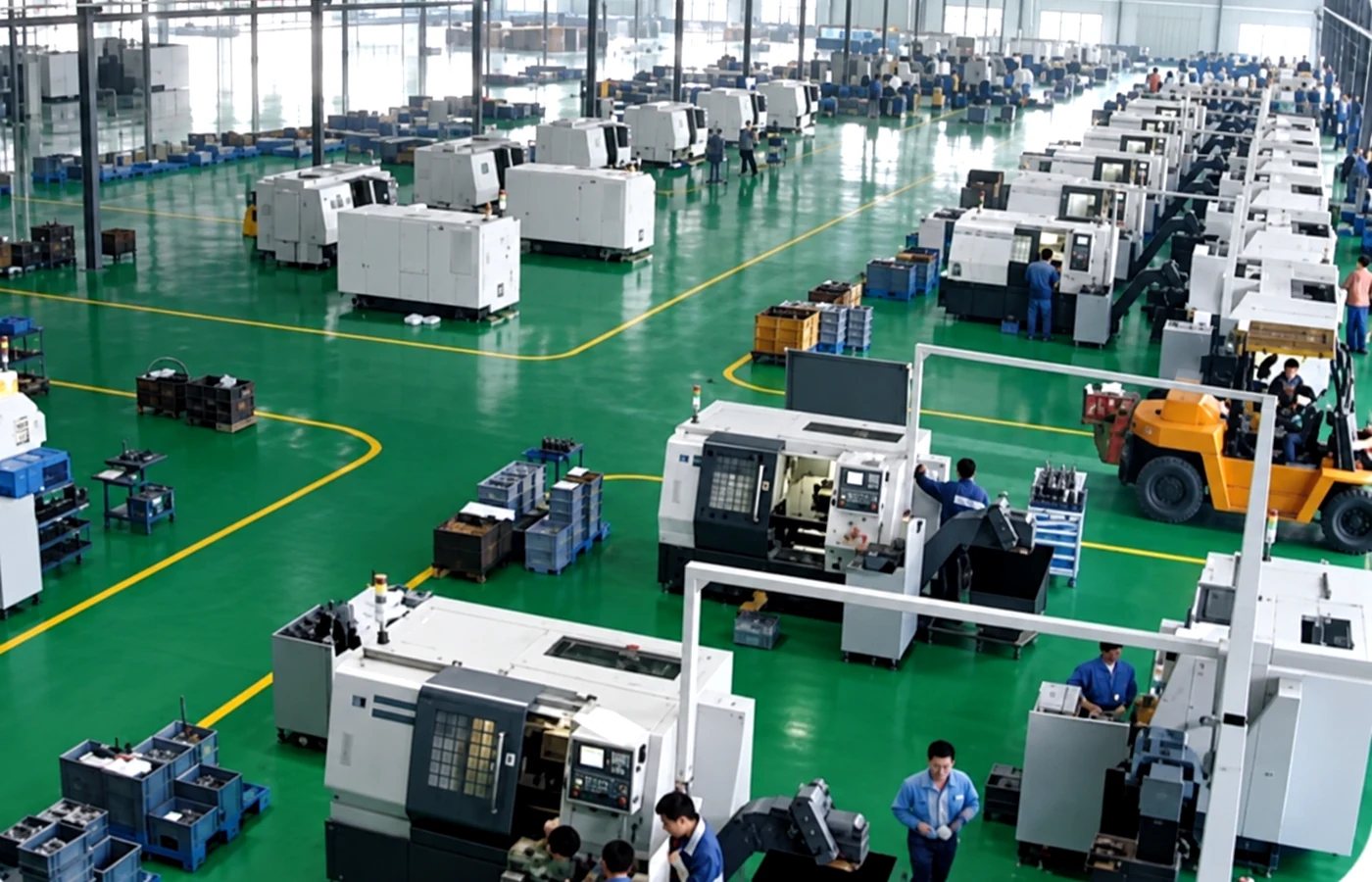
Inspeksi direncanakan berdasarkan persyaratan yang telah dirilis.
Dimensi katalog tidak secara otomatis menentukan batas kesesuaian atau penyimpangan khusus. Jika karakteristik tersebut penting untuk mesin, cantumkan pada gambar atau RFQ dan identifikasi datum atau metode pengukuran yang harus digunakan oleh bagian pembelian dan produksi. Ini lebih andal daripada menambahkan catatan "presisi tinggi" generik yang tidak dapat diperiksa secara konsisten.
Komponen jadi dapat diperiksa dimensi dan fitur konstruksinya sesuai dengan model yang dipilih. Jika pesanan memerlukan catatan inspeksi atau dokumentasi material, set dokumen yang diminta harus disepakati sebelum produksi agar catatan yang benar dapat disimpan untuk pengiriman.
Dari Komponen Jadi hingga Pengiriman
Pembersihan, identifikasi, dan pengemasan menjaga identitas produk yang dilepas setelah inspeksi. Pesanan model campuran mendapat manfaat dari pemisahan model yang jelas karena jumlah gigi, lebar, dan varian pemasangan dapat terlihat serupa ketika dikemas bersama. Lini pembelian, identifikasi kemasan, dan catatan inspeksi apa pun harus menggunakan seri atau revisi gambar yang sama.
Fitur Kustom Ditinjau Sebelum Produksi, Bukan Ditambahkan di Akhir
Lubang khusus, alur pasak, hub, atau flensa dapat mengubah cara penjepitan dan inspeksi benda kerja meskipun pinggiran bergerigi tetap standar. Semakin awal fitur-fitur tersebut didefinisikan, semakin mudah untuk menjaga konsistensi jalur sabuk dan antarmuka poros yang sudah jadi dengan mesin. Hal yang sama berlaku untuk pelapisan, perlakuan panas, atau penandaan khusus: urutan proses dan jumlah minimum proses apa pun perlu ditinjau sebelum dirilis.
Oleh karena itu, penawaran khusus dikaitkan dengan revisi gambar, bukan daftar modifikasi yang longgar. Jika desain mesin berubah, perbarui gambar agar produksi dan inspeksi menggunakan definisi yang sama.