HTD Timing Pulley Maintenance and Inspection Checklist should be approached as a drive-system decision. The useful starting point is the mating belt and machine interface, followed by tooth count, working width, shaft mounting and duty conditions. This guide explains the checks that help an engineer or buyer turn timing pulley maintenance into an RFQ that can be verified against a catalogue row or drawing.
आयामों की तुलना करने से पहले ड्राइव की पहचान करें
For timing pulley maintenance, identify the complete belt marking before comparing pulley diameters. HTD is a curvilinear synchronous system and the nominal pitch must stay associated with its profile family. Record the driver and driven tooth counts when an existing ratio must be preserved. For a new drive, document the target speed ratio, driver speed and expected load before choosing tooth counts. This prevents a component-level decision from overriding the machine requirement.
किसी प्रतिस्थापन परियोजना के लिए, कैटलॉग पंक्ति को समतुल्य मानने से पहले मापे गए मान की तुलना स्थापित बेल्ट और मशीन व्यवस्था से करें। किसी नई परियोजना के लिए, डिज़ाइन आधार को दस्तावेज़ित करें ताकि बाद में रखरखाव करने वाली टीमें समझ सकें कि पिच, दांतों की संख्या और माउंटिंग शैली का चयन क्यों किया गया था।
वे आयाम जो स्थापना को नियंत्रित करते हैं
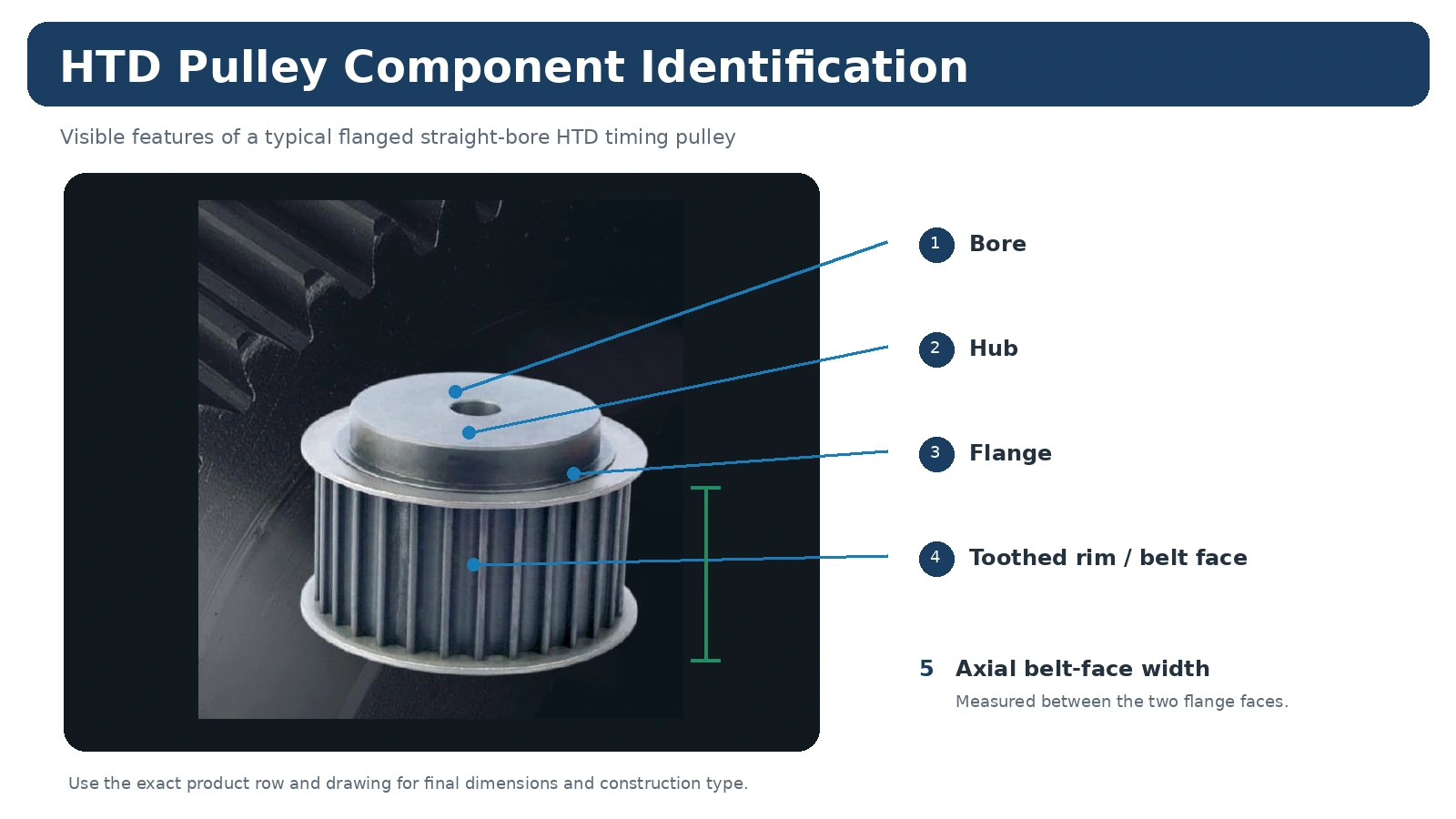
पिच और दांतों की संख्या मेल खाने के बावजूद भी पुली मशीन में फिट नहीं हो सकती क्योंकि बोर, हब, फ्लेंज या अक्षीय स्थिति भिन्न हो सकती है। शाफ्ट इंटरफ़ेस, बेल्ट-फेस की चौड़ाई, दोनों तरफ हब प्रोजेक्शन और एक स्थिर मशीन डेटम के सापेक्ष बेल्ट लाइन को मापें। यदि टेपर बुश का उपयोग किया जाता है, तो पुली सीरीज़ और बुश कोड दोनों को रिकॉर्ड करें। यदि फिनिश्ड बोर की आवश्यकता है, तो ड्राइंग में फिट, कीवे और किसी भी रिटेनिंग विधि को शामिल करें।
किसी प्रतिस्थापन परियोजना के लिए, कैटलॉग पंक्ति को समतुल्य मानने से पहले मापे गए मान की तुलना स्थापित बेल्ट और मशीन व्यवस्था से करें। किसी नई परियोजना के लिए, डिज़ाइन आधार को दस्तावेज़ित करें ताकि बाद में रखरखाव करने वाली टीमें समझ सकें कि पिच, दांतों की संख्या और माउंटिंग शैली का चयन क्यों किया गया था।
चयन में शामिल परिचालन स्थितियाँ
The same nominal timing pulley maintenance component can see very different service depending on the machine. Starts per hour, reversing, shock loading, continuous operating time, temperature, contamination, cleaning and access for tensioning all influence the drive. A compact automation axis emphasizes repeatable motion and controlled alignment, while a conveyor or process machine may emphasize continuous duty and service access. Supply these conditions instead of asking the pulley to be selected from size alone.
किसी प्रतिस्थापन परियोजना के लिए, कैटलॉग पंक्ति को समतुल्य मानने से पहले मापे गए मान की तुलना स्थापित बेल्ट और मशीन व्यवस्था से करें। किसी नई परियोजना के लिए, डिज़ाइन आधार को दस्तावेज़ित करें ताकि बाद में रखरखाव करने वाली टीमें समझ सकें कि पिच, दांतों की संख्या और माउंटिंग शैली का चयन क्यों किया गया था।
स्थापना से पहले निरीक्षण बिंदु
निरीक्षण में ड्राइव को प्रभावित करने वाले आयामों पर ध्यान केंद्रित किया जाना चाहिए: शाफ्ट इंटरफ़ेस, अक्षीय स्थिति, दांतों की स्थिति, फेस की चौड़ाई और ड्राइंग द्वारा नियंत्रित कोई भी रनआउट या डेटम संबंध। एक सामान्य गुणवत्ता विवरण स्वीकृति को परिभाषित नहीं करता है। यदि आयामी रिपोर्ट, सामग्री दस्तावेज़ या ऑर्डर-विशिष्ट रिकॉर्ड की आवश्यकता है, तो उत्पादन से पहले इसकी पहचान करें। रखरखाव के दौरान, फ्लेंज क्षति, किनारे की घिसावट, मलबा और शाफ्ट पर पुली के हिलने के संकेतों पर ध्यान दें।
किसी प्रतिस्थापन परियोजना के लिए, कैटलॉग पंक्ति को समतुल्य मानने से पहले मापे गए मान की तुलना स्थापित बेल्ट और मशीन व्यवस्था से करें। किसी नई परियोजना के लिए, डिज़ाइन आधार को दस्तावेज़ित करें ताकि बाद में रखरखाव करने वाली टीमें समझ सकें कि पिच, दांतों की संख्या और माउंटिंग शैली का चयन क्यों किया गया था।
ऑर्डर देने से पहले बंद करने के लिए खुले प्रश्न
स्थापित या निर्दिष्ट एचटीडी प्रोफाइल और चौड़ाई कितनी है?
दांतों की मौजूदा संख्या का कौन सा अनुपात या संख्या संरक्षित किया जाना चाहिए?
किस प्रकार के बोर, फिट, कीवे या टेपर-बुश अरेंजमेंट की आवश्यकता है?
हब प्रोजेक्शन और फ्लेंज क्लीयरेंस के लिए कितनी जगह उपलब्ध है?
इसकी गति, भार, शुरुआत, रिवर्सिंग और परिचालन घंटे क्या-क्या हैं?
आपूर्ति के साथ कौन-कौन से चित्र, सामग्री या निरीक्षण संबंधी दस्तावेज संलग्न होने चाहिए?
Failure Clues and Corrective Action
Edge wear points to tracking or alignment issues; polished or damaged tooth surfaces can indicate contamination, overload or an unsuitable mating condition; fretting or movement at the bore points to the shaft connection. Treat these signs as diagnostic clues, then check the machine rather than simply replacing the belt.
Record the conclusion in the RFQ or drawing so the same decision is visible to engineering, purchasing and inspection.
आरएफक्यू के साथ क्या भेजें
प्रोफ़ाइल, दांतों की संख्या, बेल्ट की चौड़ाई, शाफ़्ट इंटरफ़ेस, हब/फ्लेंज विवरण, मात्रा, गंतव्य और एक ड्राइंग या प्रतिस्थापन माप रेखाचित्र भेजें। नए ड्राइव के लिए गति, अनुपात, भार, केंद्र दूरी और वातावरण जोड़ें। समीक्षा करें। एचटीडी उत्पाद परिवार, उपयोग चयन मार्गदर्शिकाया प्रासंगिक की तुलना करें आवेदन टिप्पणी.
Inspect Condition Before Cleaning Away the Clues
Before cleaning the drive, photograph tooth surfaces, belt dust, edge wear, flange marks and any signs of movement at the shaft interface. These clues can help distinguish normal service wear from an alignment or mounting problem.
मापित मानों, कैटलॉग संदर्भों और परियोजना आवश्यकताओं को स्पष्ट रूप से अलग रखें। यदि कोई आवश्यक बिंदु संबंधित कैटलॉग तालिका या अनुमोदित चित्र में उल्लिखित नहीं है, तो उसे किसी संभावित लेकिन असत्यापित मान से भरने के बजाय, उसे आरएफक्यू प्रश्न या चित्र आवश्यकता के रूप में शामिल करें।
Keep Maintenance Records by Machine Position
Record the belt designation, pulley code, installation date and any measured issue by machine location. A useful history makes later replacement decisions faster and helps prevent similar-looking parts from being mixed.
खरीद रिकॉर्ड में मशीन की आवश्यकता और चयनित पुली के बीच स्पष्ट संबंध बनाए रखना चाहिए। इसका अर्थ है कि उत्पाद कोड के साथ-साथ बेल्ट या प्रोफाइल की पूरी पहचान, दांतों की संख्या, कार्य चौड़ाई और शाफ्ट-इंटरफ़ेस की जानकारी भी दर्ज होनी चाहिए। किसी भी विशेष सामग्री, फिनिश, नियंत्रित सहनशीलता, चिह्नांकन या रिपोर्ट संबंधी आवश्यकता को अलग से बताया जाना चाहिए ताकि इसे पूरे परिवार की एक सामान्य विशेषता न मान लिया जाए।
खरीद और प्रलेखन
चयन स्पष्ट हो जाने के बाद, स्वीकृत उत्पाद पहचान, मात्रा, गंतव्य और ड्राइंग संशोधन को एक ही खरीद लाइन पर रखें। मानक कैटलॉग पुर्जों की योजना आमतौर पर न्यूनतम उत्पादन मात्रा के आधार पर बनाई जाती है, जबकि बड़े या अधिक मूल्य वाले आइटमों की समीक्षा व्यावहारिक ऑर्डर मूल्य के आधार पर की जा सकती है। उपयुक्त कॉन्फ़िगरेशन और निर्माण प्रक्रिया होने पर, 1-5 पीस के योग्य नए ग्राहक नमूनों की समीक्षा नमूना मूल्य पर की जा सकती है।
मिश्रित मॉडल के ऑर्डर को लगभग 1,500 अमेरिकी डॉलर के व्यावहारिक ऑर्डर मूल्य में समेकित किया जा सकता है। विशेष सामग्री और विशेष प्रक्रियाओं के लिए आवश्यक न्यूनतम मात्रा का पालन किया जाता है। एक या दो पीस के बहुत छोटे ऑर्डर केवल योग्य इंजीनियरिंग सत्यापन या सशुल्क नमूना मामलों के रूप में ही संभाले जाते हैं, न कि खुदरा प्रतिस्थापन ऑर्डर के रूप में।
तकनीकी विवरण स्पष्ट होने के बाद लीड टाइम की पुष्टि की जाती है। मानक पुर्जों के लिए आमतौर पर 10-25 कार्यदिवस, कस्टम घटकों के लिए 20-45 कार्यदिवस और परियोजना-आधारित असेंबली या संबंधित उपकरणों के लिए 45-120 कार्यदिवस निर्धारित किए जाते हैं। EXW, FOB, CIF और DAP आम तौर पर स्वीकार्य हैं; FCA, CFR, CPT, CIP और DDP उपयुक्त शिपमेंट के लिए चर्चा की जा सकती है। कृपया इन्हें अनुमानित समय सीमा मानें, ऑर्डर की समीक्षा से पहले शिपमेंट का वादा न समझें।
एक व्यावहारिक निर्णय अनुक्रम
Start with tooth condition, belt wear, alignment, shaft security and contamination. Keep the machine requirement separate from the catalogue choice: first identify what the drive must preserve, then compare only the rows or drawings that match that identity. This keeps a familiar-looking pulley from being accepted before its functional interfaces have been checked.
For an existing machine, preserve the original relationship before making changes. For a new design, record the target ratio, operating context and installation envelope so the maintenance decision can be reviewed later without relying on memory or a photograph alone.
माप रिकॉर्ड बनाएं
The most useful measurement set contains wear pattern, tooth/flange condition, alignment, shaft movement and maintenance history. Mark which values were measured on the machine and which values came from a catalogue or released drawing. When a feature is inaccessible, photograph its relationship to a stable datum and identify it as confirmation-required rather than filling the gap with an assumed value.
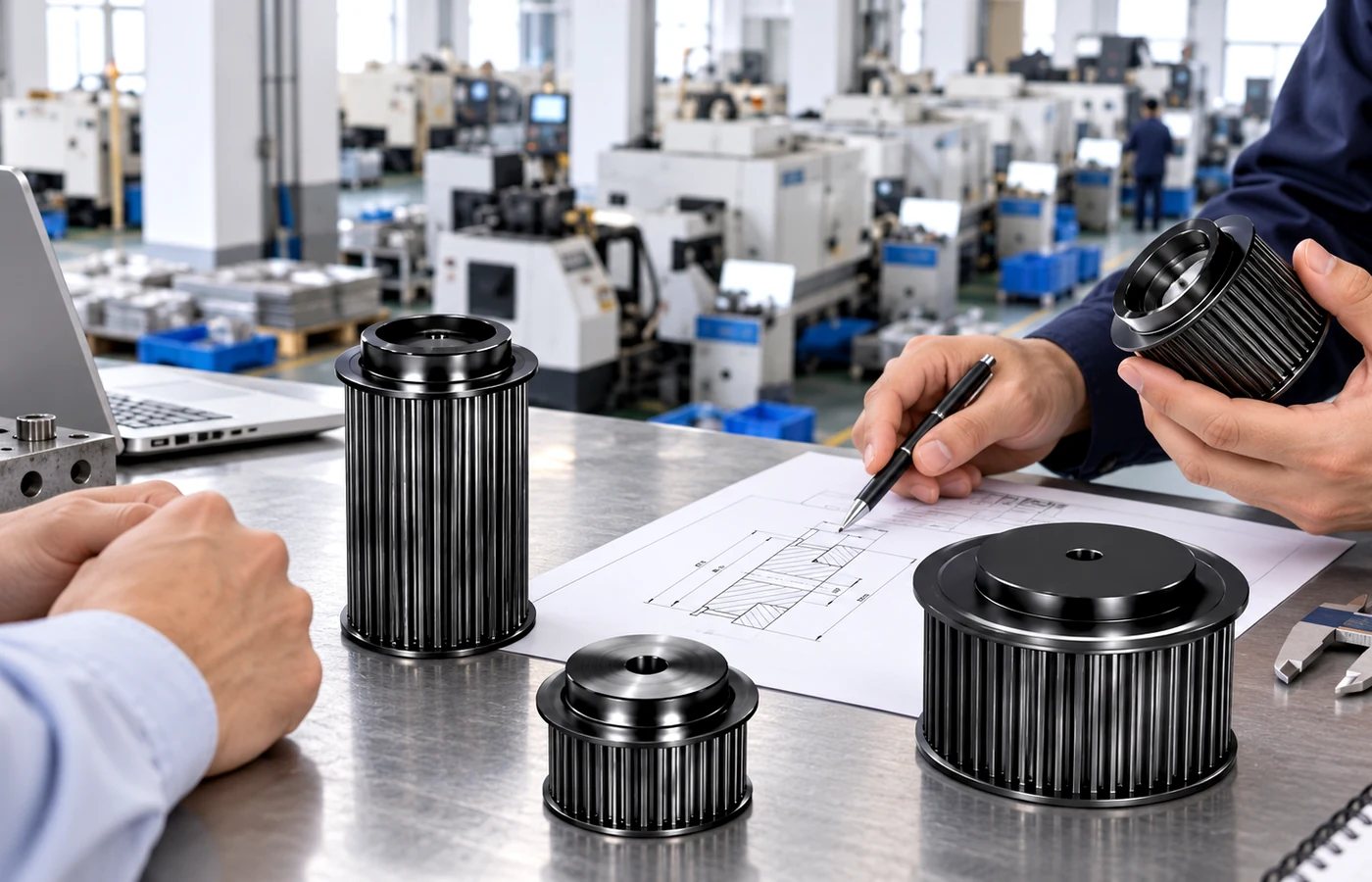
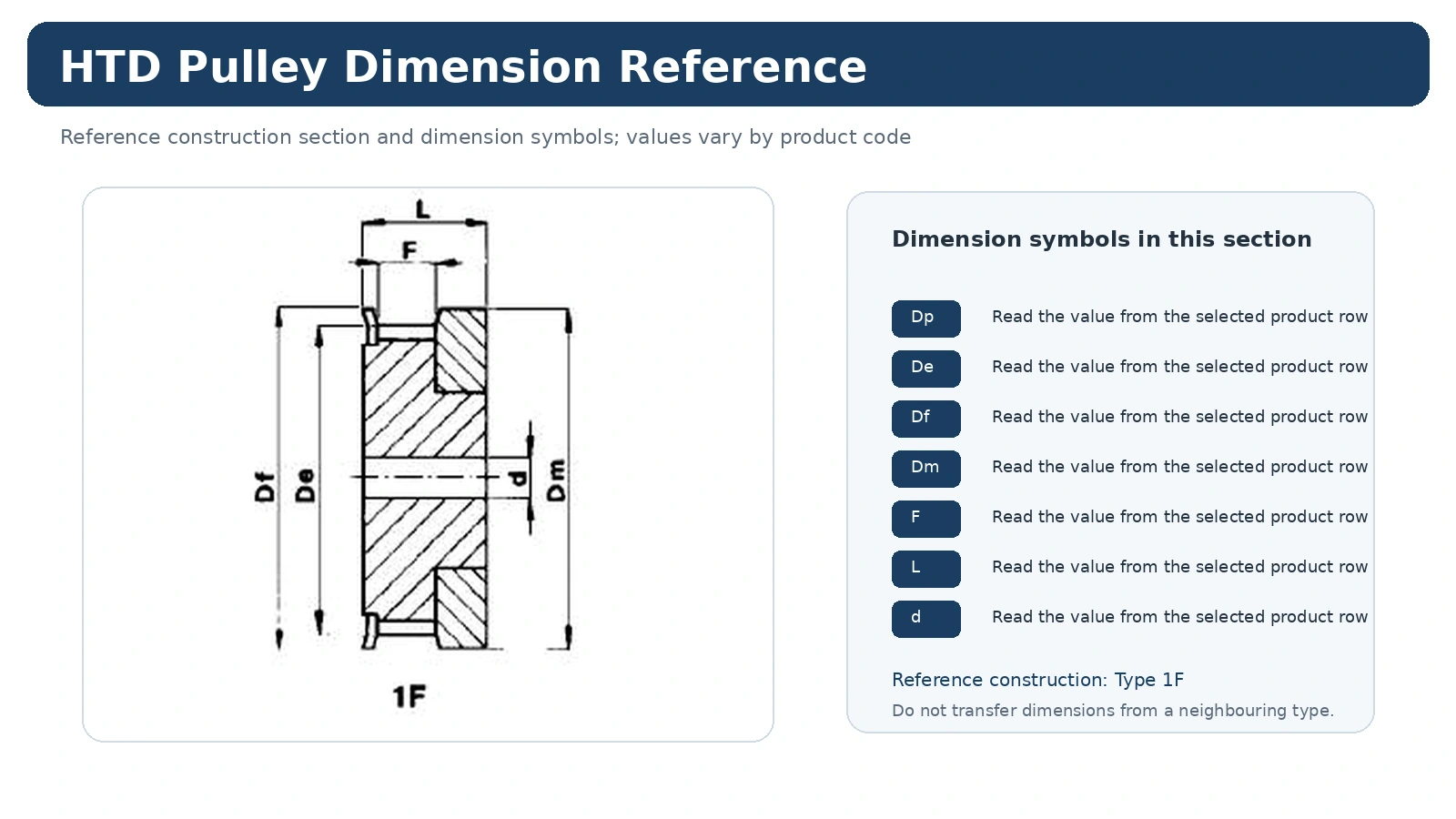
माप संबंधी रेखाचित्रों को पूर्ण पठनीय चौड़ाई में देखा जाना चाहिए। स्क्रीनशॉट को कभी भी स्केल न करें और फिर स्केल किए गए माप को माप के रूप में न मानें; मुद्रित मान और सही निर्माण प्रकार का उपयोग करें।
एक विफलता का तरीका जिससे बचना चाहिए
A common error is replacing the belt while leaving a damaged or misaligned pulley in service. That can produce a part that appears close in the catalogue yet changes ratio, belt line, mounting or service access. Resolve the conflicting feature before requesting price so the quotation refers to one mechanically coherent configuration.
यदि दो संभावित कॉन्फ़िगरेशन शेष रहते हैं, तो मशीन के माप और फ़ोटो तथा पसंदीदा विकल्प दोनों भेजें। इससे कोटेशन में यह स्पष्ट हो जाएगा कि किस इंटरफ़ेस को अभी भी पुष्टि की आवश्यकता है, बजाय इसके कि अनिश्चितता को चुपचाप विनिर्देश में बदल दिया जाए।
तकनीकी विकल्प को कोटेशन के लिए तैयार मद में बदलें
एचटीडी/प्रोफाइल परिवार और बेल्ट की पूरी जानकारी बताएं।
दांतों की संख्या, कार्य चौड़ाई और प्रासंगिक आयाम या ड्राइंग संदर्भ प्रदान करें।
जहां लागू हो, वहां बोर या बुश, शाफ्ट डेटा, हब प्रोजेक्शन और बेल्ट-लाइन की स्थिति को परिभाषित करें।
मात्रा, गंतव्य स्थान, आवश्यक दस्तावेज और अनुरोध के लिए उपयोग किए गए ड्राइंग संशोधन को शामिल करें।
जब ऊपर दिए गए बिंदुओं में से कोई एक बिंदु वास्तव में अज्ञात हो, तो पुष्टि के लिए उसे चिह्नित करें। एक सटीक खुला प्रश्न उस संभावित मान से कहीं अधिक उपयोगी होता है जिसे कभी मापा नहीं गया हो।
खरीदारों द्वारा आमतौर पर पूछे जाने वाले प्रश्न
सबसे पहले किस बात की पुष्टि करनी चाहिए?
Confirm tooth condition, belt wear, alignment, shaft security and contamination. That prevents later dimensions from being compared across the wrong product family or installation route.
किसी प्रतिस्थापन के लिए कौन सी जानकारी सबसे उपयोगी होती है?
Send wear pattern, tooth/flange condition, alignment, shaft movement and maintenance history, plus clear photographs before the old pulley is removed. The photographs preserve axial orientation and neighboring clearances that a loose part cannot show.
किसी चित्र का उपयोग कब करना चाहिए?
जब भी कैटलॉग पंक्ति शाफ्ट इंटरफ़ेस, हब/फ्लेंज व्यवस्था, फिनिश, टॉलरेंस या मशीन के लिए महत्वपूर्ण निरीक्षण आवश्यकता को पूरी तरह से परिभाषित नहीं करती है, तो नियंत्रित ड्राइंग का उपयोग करें।
पुली बदलने से पहले सिस्टम का निदान करें
ट्रैकिंग, किनारों का घिसना, शोर या बेल्ट का बार-बार क्षतिग्रस्त होना एक से अधिक कारणों से हो सकता है। नई पुली ऑर्डर करने से पहले, अलाइनमेंट, शाफ्ट और बेयरिंग की स्थिति, माउंटिंग की मजबूती, बेल्ट की स्थिति, गंदगी और फ्लैंज के सापेक्ष बेल्ट की स्थिति की जांच करें। पुली पर दिखाई देने वाला कोई भी लक्षण अपने आप में यह साबित नहीं करता कि पुली की बनावट ही मूल कारण है।
पुर्जे बदलने के कार्य के लिए, सबसे पहले इंस्टॉलेशन की स्थिति का दस्तावेजीकरण करें। पुली के दोनों सिरों और बेल्ट के पथ की तस्वीरें लें, बेल्ट पर निशान और दांतों की संख्या दर्ज करें, और ध्यान दें कि क्या समस्या लोड पड़ने पर, रिवर्स गियर में या गर्म होने के बाद दिखाई देती है। इन अवलोकनों से इंस्टॉलेशन की समस्या को घिसे हुए या गलत पुर्जे से अलग करना आसान हो जाता है।
इस निष्कर्ष को नियंत्रित मरम्मत में बदलें
यदि पुली को बदला जाता है, तो स्वीकृत मॉडल या ड्राइंग संशोधन को रखरखाव रिकॉर्ड के साथ रखें। मरम्मत के दौरान किए गए किसी भी शाफ्ट या हब मशीनिंग कार्य को रिकॉर्ड करें ताकि अगली बार पुली बदलते समय यह न मान लिया जाए कि मूल कैटलॉग इंटरफ़ेस अभी भी मौजूद है। यदि रनआउट या कोई आयामी विशेषता कार्यात्मक रूप से महत्वपूर्ण है, तो मरम्मत ड्राइंग या खरीद आवश्यकता पर माप संदर्भ और स्वीकृति मान परिभाषित करें।
स्थापना के बाद, मशीन को सामान्य सेवा में वापस लाने से पहले बेल्ट लाइन और ड्राइव की स्थिति की जांच करें। लक्ष्य केवल एक नया घटक लगाना नहीं है; बल्कि एक ट्रेस करने योग्य और सेवायोग्य ड्राइव कॉन्फ़िगरेशन को बहाल करना है।
Inspection Should Preserve the Evidence Needed for the Next Replacement
A useful inspection routine does more than look for broken teeth. Check the belt line, flange contact, tooth-surface condition, bore or bush security, visible fretting, debris accumulation and any sign that the pulley has moved axially. Compare both sides of the drive where possible because a tracking problem can originate at either pulley or at the shaft supports.
When wear is found, record photographs and measurements before cleaning or disassembly. The goal is to preserve enough context to decide whether the pulley itself is damaged, whether alignment or shaft movement contributed, or whether the belt and pulley family were mismatched. A loose part on a bench cannot reproduce all of that information.
Keep the accepted replacement code, belt identity and any updated drawing with the maintenance record. That turns inspection findings into a repeatable procurement reference instead of a one-time visual judgment.
Project-Specific Checks That Still Need to Be Recorded
Keep the belt identity, tooth count, working width and shaft interface together with the selected catalogue row. Record any machine-specific fit, finish or inspection requirement on the RFQ or drawing rather than turning it into a general claim for the whole product family.
For replacement work, photographs and measurements taken before disassembly preserve belt-line position, hub orientation and adjacent clearances. Mark direct field measurements separately from catalogue values so wear or damage is not copied into the new component.
Inspect the Drive in a Sequence That Preserves Useful Clues
Routine inspection should look at the belt, pulley teeth, flanges, hub or bush, shaft support and surrounding contamination as one drive system. Before cleaning, note belt dust, polished areas, flange rubbing, looseness or movement at the shaft interface. These observations can explain whether wear is caused by the component, alignment or another machine condition.
Avoid replacing parts solely because their surfaces look different from a new component. Compare wear with machine symptoms and measurements. If a dimension or runout limit is critical, use the equipment drawing or an agreed inspection requirement rather than applying one universal tolerance to every HTD pulley.
Record tooth wear, cracks, flange marks, debris and belt condition.
Check hub, bush, fasteners and any signs of movement on the shaft.
Review pulley planes, shaft condition and belt tracking.
Keep model, belt marking, measurement notes and replacement date together.
When inspection identifies a replacement need, use the recorded condition to prepare the RFQ. This helps distinguish a simple like-for-like part from a repair that also needs shaft, bearing or alignment work.