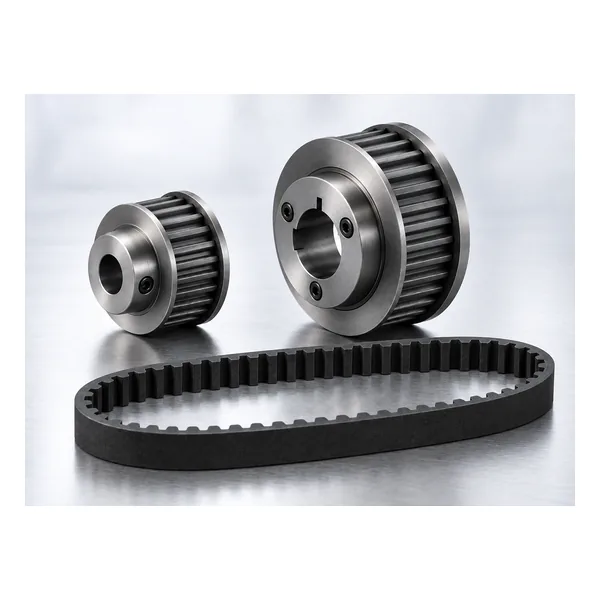
Correas de distribución HTD Aquí se organizan según las variables de selección que un ingeniero o comprador realmente necesita: perfil, número de dientes, ancho de la correa, interfaz del eje y construcción. Correas de distribución HTD compatibles con sistemas de poleas de 3M, 5M, 8M y 14M.
Cómo navegar por esta familia de productos
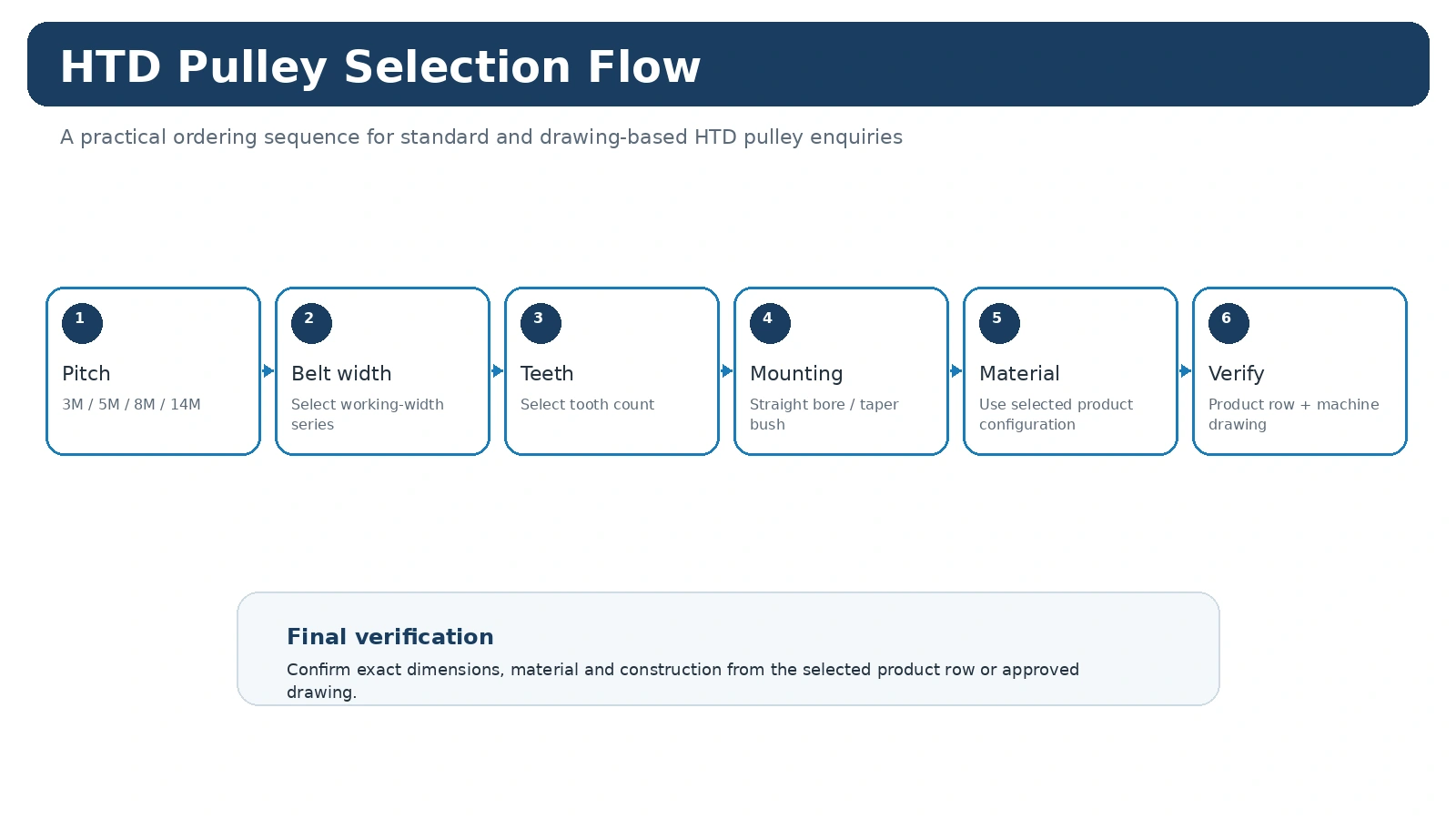
Comience con la designación completa de la correa. Luego, identifique el número de dientes o la relación de velocidad requerida, el ancho de la cara de la correa y la disposición del eje/montaje. No seleccione basándose únicamente en el diámetro exterior. Si se trata de un reemplazo, registre la proyección del cubo y la disposición de la brida desde ambos lados antes de comparar los productos.
Las fichas de producto que aparecen a continuación enlazan con páginas detalladas que incluyen tablas de catálogo, referencias de dimensiones y guías para solicitudes de presupuesto. Utilice la cuadrícula de productos que aparece más abajo para acceder a las páginas de producto detalladas y comparar las configuraciones de catálogo disponibles para esta familia.
Opciones de producto

Revisión de configuración
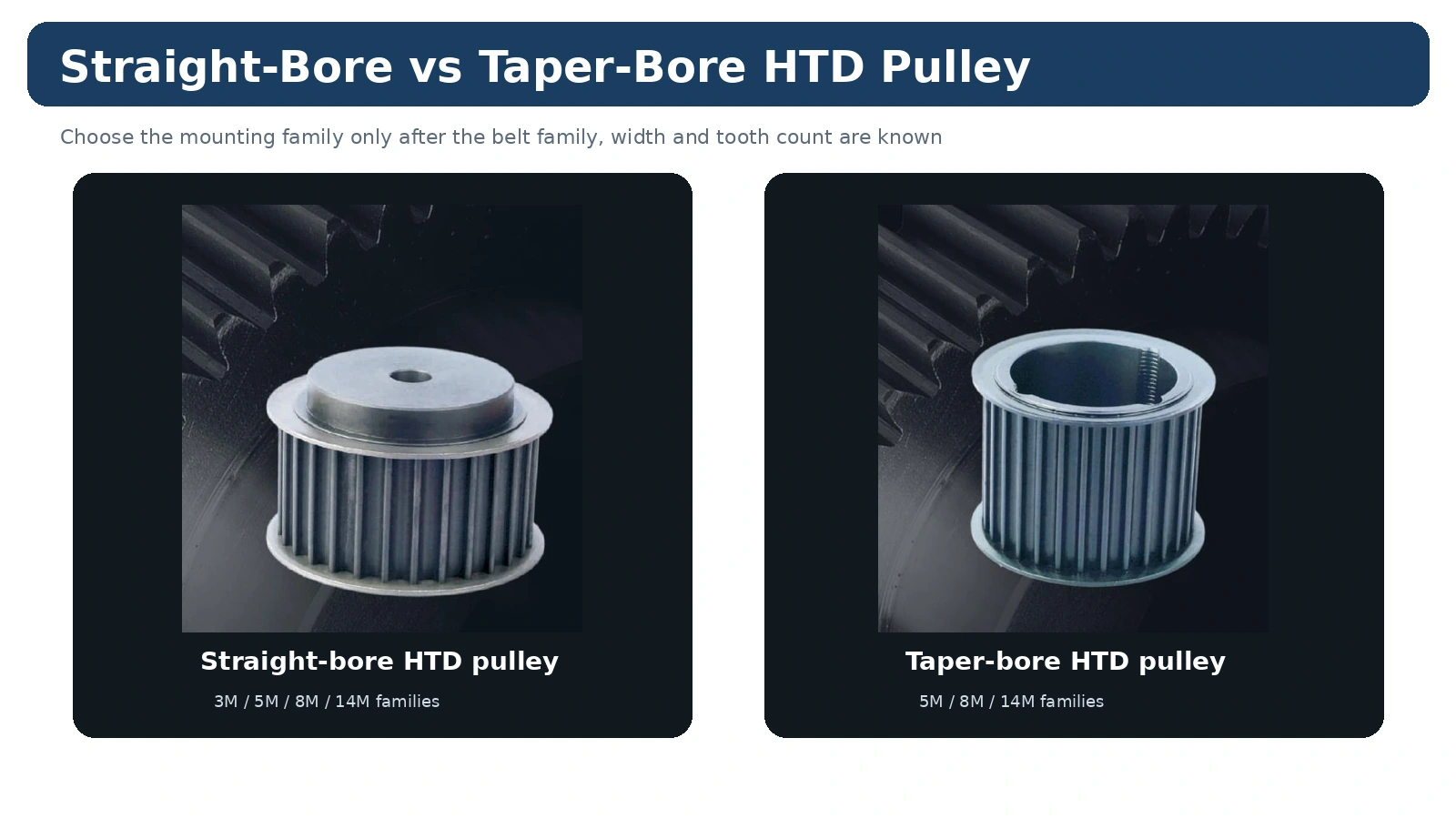
Utilice la correa de acoplamiento y la interfaz de la máquina como entradas de control. Si un producto estándar no se ajusta al eje o al contorno axial, proporcione un dibujo en lugar de adaptar dimensiones no relacionadas de varias piezas.
Comprobaciones de compatibilidad y medición
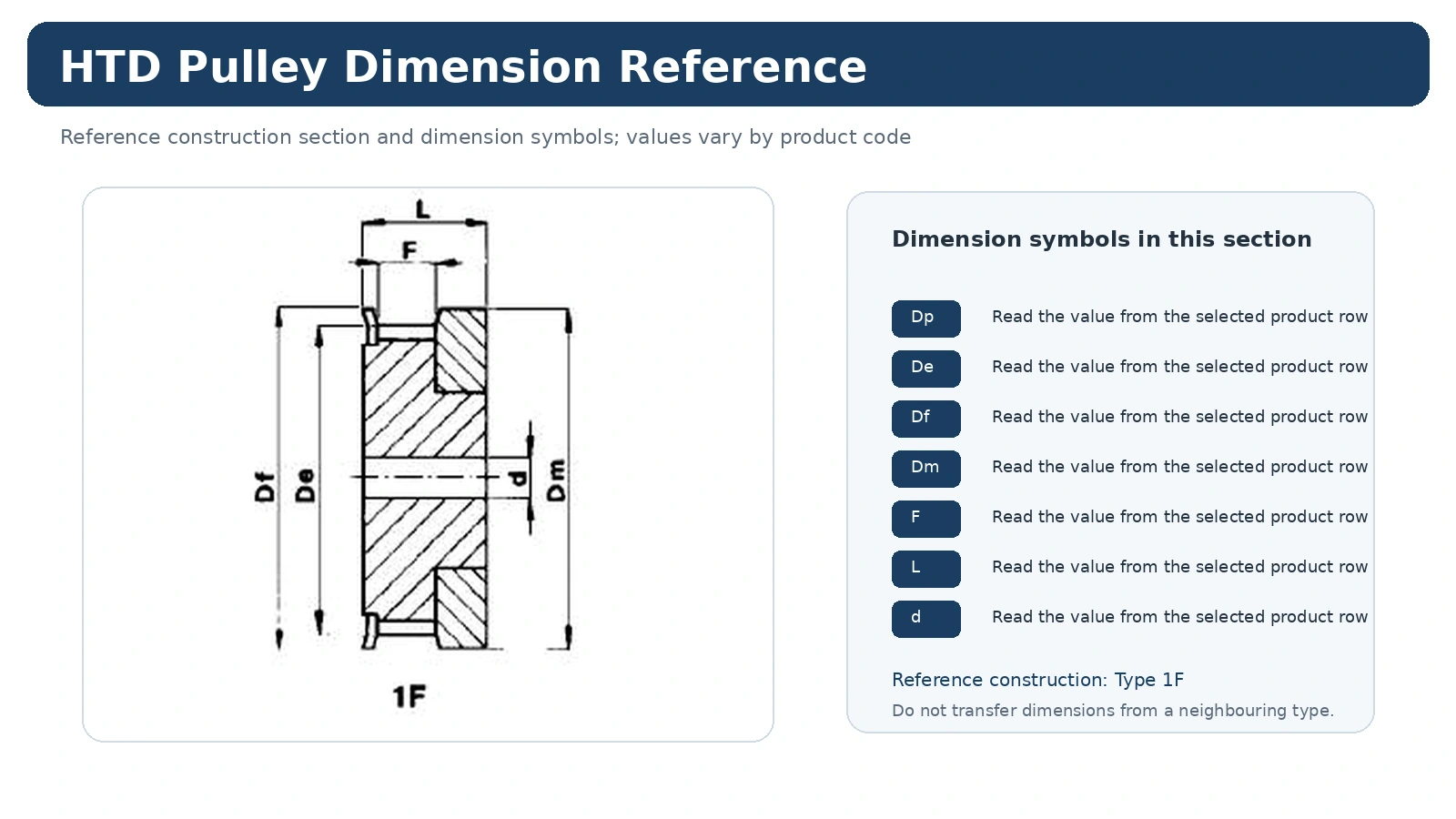
Antes de realizar el pedido, confirme el sistema de dientes, el número de dientes, el ancho de trabajo, el diámetro del orificio/casquillo, la proyección del cubo, la disposición de la brida y la ubicación de la línea de la correa. Registre en el plano cualquier requisito crítico de ajuste o excentricidad. Para proyectos de reemplazo, inspeccione la polea existente para detectar desgaste que pueda distorsionar las mediciones y verifique si se ha modificado la disposición del eje o del espaciador.
Guía de ingeniería relacionada
Utilice el Guía de selección de poleas HTD Para ver una secuencia de decisiones completa, consulte correa y polea coincidentes cuando se conoce el código del cinturón y se revisa páginas de la aplicación para comprobaciones específicas de la máquina.
Identificación de la correa antes de cotizar una polea compatible.
Cuando la marca de la correa sea legible, conserve la designación completa en la consulta en lugar de reducirla solo al número de paso. La identificación del ancho y la familia ayudan a mantener separada la decisión del lado de la correa de la interfaz del eje de la polea.
Si la correa está dañada o la marcación no es clara, envíe fotografías y la información de la polea actual. Para confirmar la idoneidad del juego de repuesto, consulte el historial completo de la transmisión y no solo la similitud visual.
Preguntas frecuentes sobre las correas de distribución HTD
¿Qué información se necesita para obtener un presupuesto?
Envíe la correa/perfil, los dientes, el ancho de la correa, los detalles del eje o buje, la cantidad y el destino. Incluya un dibujo para cubos, bridas, materiales, acabados o requisitos de inspección no estándar.
¿Es posible identificar una polea antigua a partir de una fotografía?
Una fotografía ayuda a identificar la construcción, pero se necesitan las dimensiones y la marca de la correa correspondiente antes de poder confirmar un reemplazo.
¿Son intercambiables todas las poleas con el mismo paso nominal?
No. Confirme la familia de dientes y la interfaz mecánica exactas. El paso nominal por sí solo no es suficiente para decidir si se debe reemplazar el diente.
Asegúrese de que la correa y la polea coincidan antes de finalizar el pedido.
Utilice el marcado completo de la correa para identificar la familia HTD y el ancho de trabajo antes de seleccionar una fila de poleas. Un número de paso compartido no sustituye la confirmación de la familia de dientes prevista, especialmente cuando se trata de perfiles curvilíneos antiguos o adyacentes.
Para los reemplazos, inspeccione el desgaste tanto de la correa como de la polea. Los daños en los bordes, el pulido de la brida o el contacto irregular de los dientes pueden indicar problemas de alineación o de posición del eje que deben corregirse en lugar de copiarlos en un nuevo juego de componentes.
El cinturón es la primera comprobación de compatibilidad
No es posible seleccionar una polea síncrona de forma segura basándose únicamente en el diámetro primitivo. Comience por la designación completa de la correa y confirme la familia de pasos HTD; luego, confirme el ancho de la correa. El número de dientes de la polea establece la relación de velocidad y el tamaño físico, mientras que la interfaz del eje determina cómo se instala la polea seleccionada. No se debe asumir que una correa con el mismo número de pasos nominales, pero con un sistema de dientes diferente, es compatible.
Para trabajos de reemplazo, conserve la información de la correa y la polea antiguas hasta que se confirme la familia. Si la marca de la correa ha desaparecido, el número de dientes, las medidas relacionadas con el paso, el ancho y las fotografías claras del perfil de los dientes son más útiles que una estimación basada en el diámetro exterior.
Secuencia coincidente
- Lea el marcado completo de la correa e identifique la familia HTD.
- Registre el ancho de la correa y el número de dientes de las poleas motriz y conducida.
- Confirme el ancho y la construcción de la serie de productos en el catálogo de poleas.
- Verifique la distancia entre ejes, la línea de la correa, las interfaces del eje y el acceso para la instalación.
- Publique la fila de poleas o el dibujo exacto junto con la referencia de la correa correspondiente.
Al diseñar un nuevo sistema de transmisión, proporcione la relación de velocidad, el ciclo de trabajo y la distancia entre centros para que la disposición de la correa y la polea pueda revisarse como un solo sistema.
Qué no se debe inferir de un código de cinturón
La familia de correas ayuda a identificar la geometría de los dientes, pero no define el diámetro interior, el cubo, la brida ni el material de la polea. Estos aspectos dependen de la selección de la polea. Del mismo modo, el código de producto de una polea no confirma por sí solo la longitud de la correa ni la distancia entre centros de instalación. La identificación del componente y la geometría del sistema deben verificarse por separado.
Los datos de la correa de repuesto deben permanecer con el registro de la polea.
Cuando los equipos de mantenimiento reemplazan las correas y poleas en momentos diferentes, se puede perder la identidad del producto. Almacene la familia de correas aceptada, el ancho, el número de dientes de la polea y la referencia de la distancia entre centros en el registro de mantenimiento. Si cambia la construcción de una correa, revise los requisitos de tensión y aplicación en lugar de asumir que la configuración de instalación anterior se mantiene sin cambios.
Para una solicitud de cotización, envíe la marca de la correa tal como está impresa, siempre que sea legible. Evite abreviar la designación a solo el paso, ya que la información omitida sobre la familia o el ancho puede ser lo que distinga la polea compatible.
Mantenga los registros de la unidad completos después de la instalación.
Guarde el código de la correa instalada, el número de dientes de la polea y la información de la serie de anchos junto con la documentación de la máquina. Si se reajusta la tensión de la transmisión o se modifica la construcción de la correa durante el mantenimiento, anote el cambio y consulte las instrucciones de instalación correspondientes. Un futuro comprador debería poder identificar ambos componentes sin necesidad de desmontar la máquina.
Al solicitar una correa y una polea juntas, incluya ambas referencias en la misma solicitud de cotización. Esto permite verificar la familia de pasos y el ancho de trabajo como un conjunto, mientras que la interfaz del eje de la polea sigue siendo un requisito explícito e independiente.