Ремни ГРМ HTD Здесь они организованы по параметрам выбора, которые действительно необходимы инженеру или покупателю: профиль, количество зубьев, ширина ремня, интерфейс вала и конструкция. Подходящие зубчатые ремни HTD для шкивных систем 3M, 5M, 8M и 14M.
Как ориентироваться в этом семействе продуктов
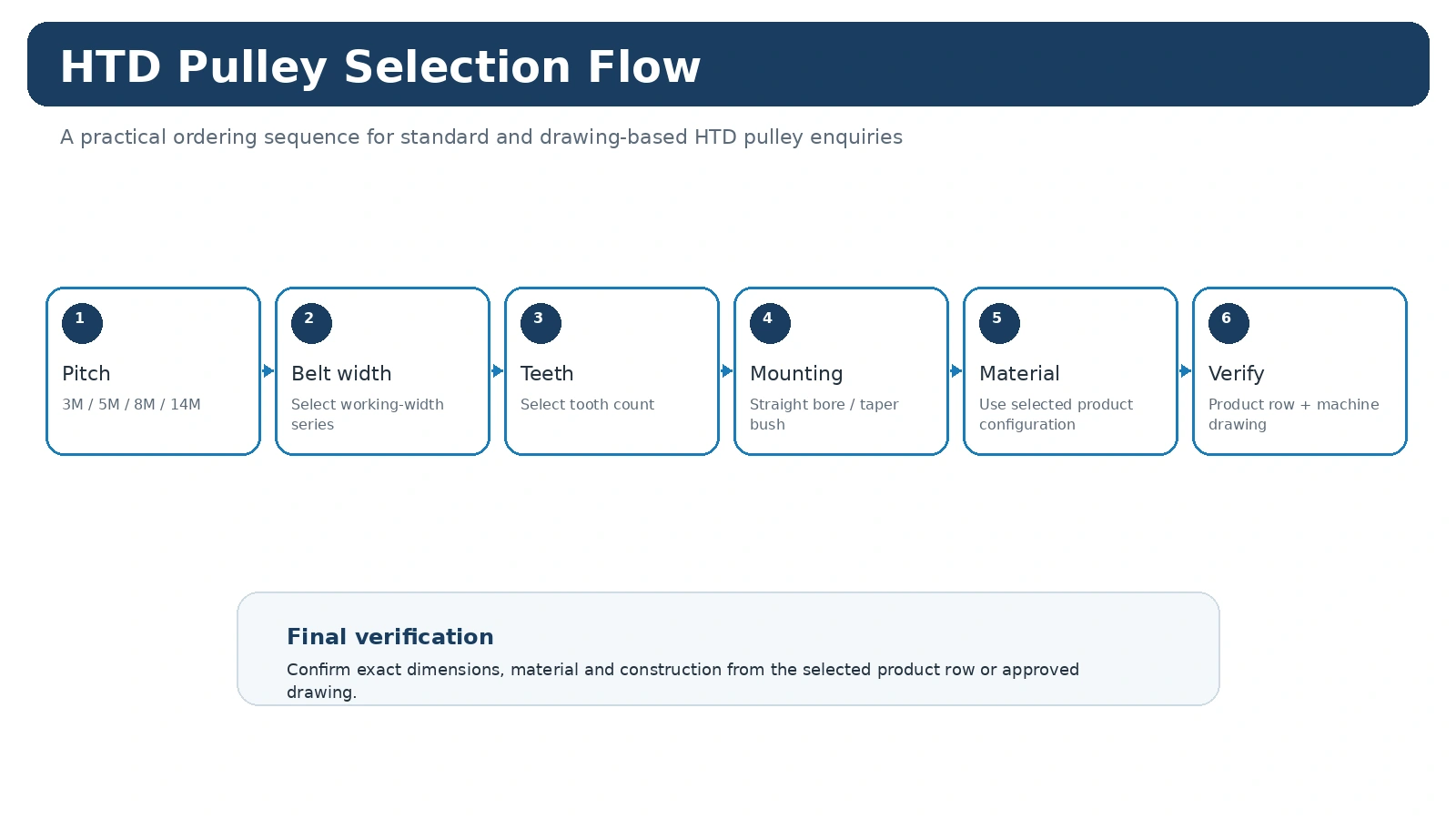
Начните с полного обозначения ремня. Затем определите количество зубьев или требуемое передаточное число, ширину рабочей поверхности ремня и способ крепления к валу. Не выбирайте ремень только по внешнему диаметру. Если это замена, запишите выступающую часть ступицы и расположение фланцев с обеих сторон, прежде чем сравнивать изделия.
Приведенные ниже карточки товаров ведут на страницы с подробным описанием, таблицами каталога, указанием размеров и рекомендациями по запросу коммерческого предложения. Используйте приведенную ниже таблицу товаров, чтобы открыть страницы с подробным описанием товаров и сравнить доступные конфигурации каталога в этом семействе.
Варианты продукта

Проверка конфигурации
Используйте соединительный ремень и интерфейс станка в качестве управляющих входных сигналов. Если стандартное изделие не подходит к валу или осевому узлу, предоставьте чертеж, а не подбирайте несвязанные размеры из нескольких деталей.
Проверка совместимости и измерений
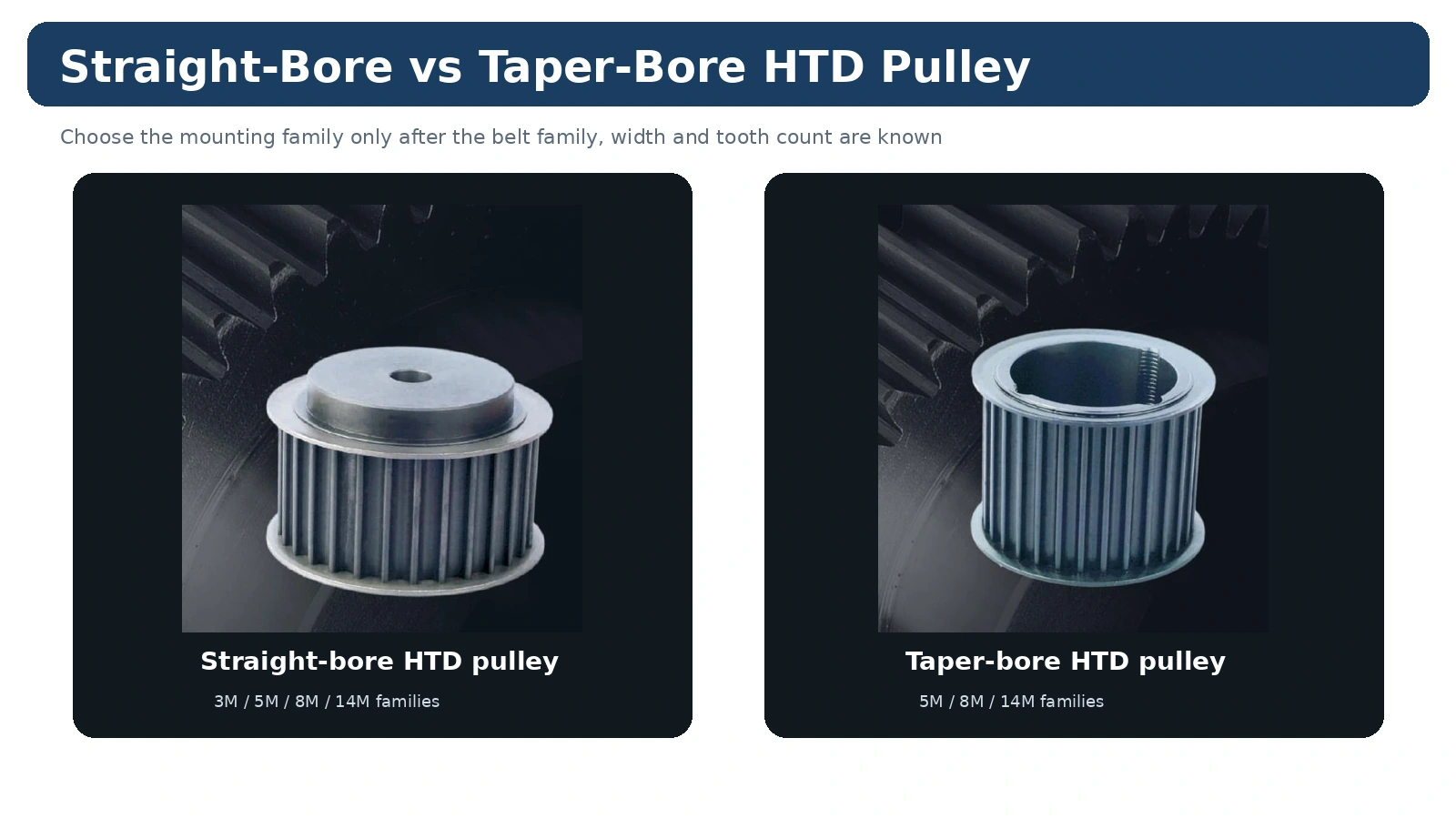
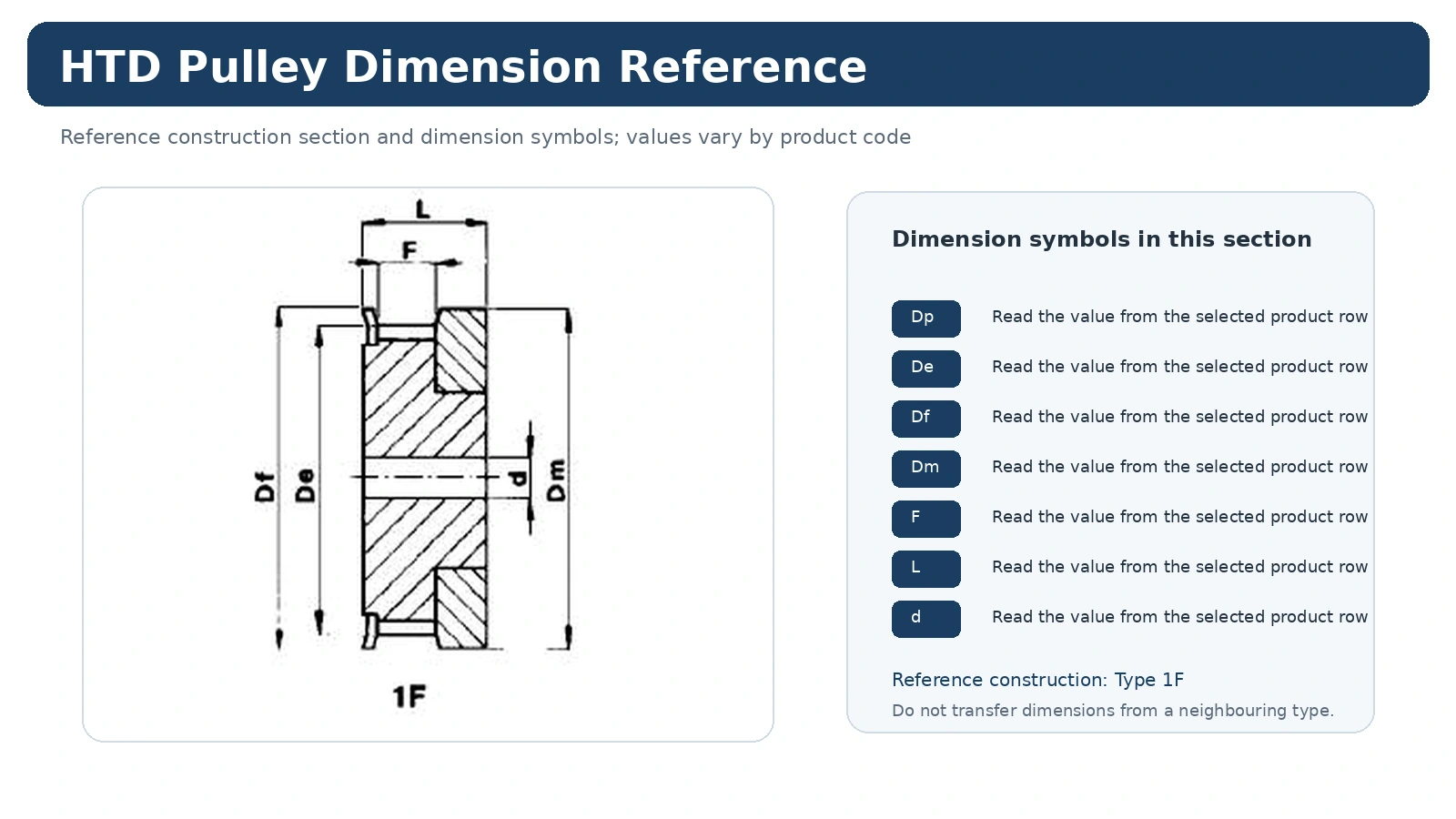
Перед заказом подтвердите зубчатую систему, количество зубьев, рабочую ширину, диаметр отверстия/втулки, выступ ступицы, расположение фланцев и положение линии ремня. Запишите на чертеже все критически важные параметры посадки или биения. При замене шкива проверьте существующий шкив на износ, который может исказить размеры, и убедитесь, что конструкция вала или проставки не была изменена.
Соответствующие инженерные рекомендации
Используйте Руководство по выбору шкивов HTD Полную последовательность принятия решений см. в [ссылка]. соответствие ремня и шкива когда код ремня известен, и провести проверку. страницы приложений для проверок, специфичных для конкретного оборудования.
Перед тем как будет предложена цена на подходящий шкив, необходимо определить тип ремня.
Если маркировка ремня читаема, сохраняйте полное обозначение в запросе, а не сводите его только к номеру шага. Идентификация ширины и семейства помогает отделить решение о месте крепления ремня от решения о месте соединения с валом шкива.
Если ремень поврежден или маркировка нечеткая, пришлите фотографии и информацию о имеющемся шкиве вместе. Необходимо подтвердить совместимость комплекта ремней, исходя из полной истории эксплуатации привода, а не только по визуальному сходству.
Часто задаваемые вопросы о ремнях ГРМ HTD
Какая информация необходима для составления коммерческого предложения?
Укажите характеристики ремня/профиля, количество зубьев, ширину ремня, вал или втулку, количество и место назначения. Приложите чертеж для нестандартных ступиц, фланцев, материалов, отделки или требований к контролю качества.
Можно ли определить подлинность старого шкива по фотографии?
Фотография помогает определить конструкцию, но для подтверждения возможности замены необходимы размеры и маркировка соединительного ремня.
Взаимозаменяемы ли все шкивы с одинаковым номинальным шагом?
Нет. Необходимо точно определить семейство зубьев и тип механического интерфейса. Одного лишь номинального шага недостаточно для принятия решения о замене.
Перед окончательным оформлением заказа подберите ремень и шкив в нужном порядке.
Используйте полную маркировку ремня, чтобы определить семейство HTD и рабочую ширину перед выбором ряда шкивов. Общее число шага не заменяет подтверждения нужного семейства зубьев, особенно если речь идет о старых или соседних криволинейных профилях.
При замене проверьте износ ремня и шкива. Повреждения кромок, полировка фланца или неравномерный контакт зубьев могут указывать на проблемы с соосностью или положением вала, которые следует устранить, а не переносить на новый комплект компонентов.
Ремень — это первая проверка совместимости.
Выбор синхронного шкива только по диаметру шага не является безопасным. Начните с полного обозначения ремня и подтвердите семейство шага HTD, затем подтвердите ширину ремня. Количество зубьев шкива определяет соотношение скоростей и физические размеры, а способ установки выбранного шкива определяется местом его соединения с валом. Не следует считать совместимым ремень с одинаковым номинальным числом шага, но разной системой зубьев.
При замене ремня и шкива храните старую информацию о ремне и шкиве вместе, пока не будет подтверждена их принадлежность к той или иной группе. Если маркировка ремня стерлась, количество зубьев, размеры, связанные с шагом, ширина и четкие фотографии профиля зубьев будут более полезны, чем предположение, основанное на внешнем диаметре.
Соответствующая последовательность
- Внимательно изучите маркировку ремня и определите семейство HTD.
- Запишите ширину ремня и количество зубьев ведущего и ведомого шкивов.
- Уточните ширину и конструкцию изделия в каталоге шкивов.
- Проверьте межосевое расстояние, линию ремня, сопряжение валов и доступ для установки.
- Найдите точно такой же ряд шкивов или на чертеже вместе с соответствующим номером ремня.
При проектировании нового привода необходимо указать соотношение скоростей, режим работы и межосевое расстояние, чтобы можно было рассматривать ременную передачу и расположение шкивов как единую систему.
Что не следует выводить из кода ремня
Семейство ремней помогает определить геометрию зубьев, но не определяет диаметр отверстия шкива, ступицы, фланца или материала. Эти параметры остаются предметом выбора шкива. Аналогично, код изделия шкива сам по себе не подтверждает длину ремня или межосевое расстояние при установке. Идентификацию компонентов и геометрию системы следует проверять отдельно.
Данные о замене ремня должны храниться вместе с данными о шкиве.
Когда ремонтные бригады заменяют ремни и шкивы в разное время, может быть утеряна идентификация изделия. В журнале технического обслуживания следует хранить вместе информацию о принятом семействе ремней, ширине, количестве зубьев шкива и межосевом расстоянии. Если конструкция ремня меняется, следует пересмотреть требования к натяжению и применению, а не предполагать, что предыдущие параметры установки остаются неизменными.
При отправке запроса на коммерческое предложение (RFQ) указывайте маркировку ремня точно так, как она напечатана, если она разборчива. Избегайте сокращения обозначения до одного только шага, поскольку пропущенная информация о семействе или ширине может быть той частью, которая отличает совместимый шкив.
Сохраняйте полные записи на диске после установки.
Сохраните код установленного ремня, количество зубьев шкива и информацию о ширине серии вместе с документацией к станку. Если во время технического обслуживания производится перенатяжение привода или изменяется конструкция ремня, отметьте это изменение и ознакомьтесь с соответствующими инструкциями по установке. Будущий покупатель должен иметь возможность идентифицировать оба сопрягаемых компонента без разборки станка.
При заказе ремня и шкива одновременно укажите оба параметра в одном запросе на коммерческое предложение. Это позволит проверить семейство шагов и рабочую ширину в паре, в то время как интерфейс вала шкива останется отдельным, явно заданным требованием.