Utilice el centro de recursos para navegar entre familias de productos, guías de ingeniería, contexto de aplicación y preparación de solicitudes de cotización sin perder los datos a nivel de modelo que controlan la polea final.
Elige la ruta más corta para obtener la información que necesitas.
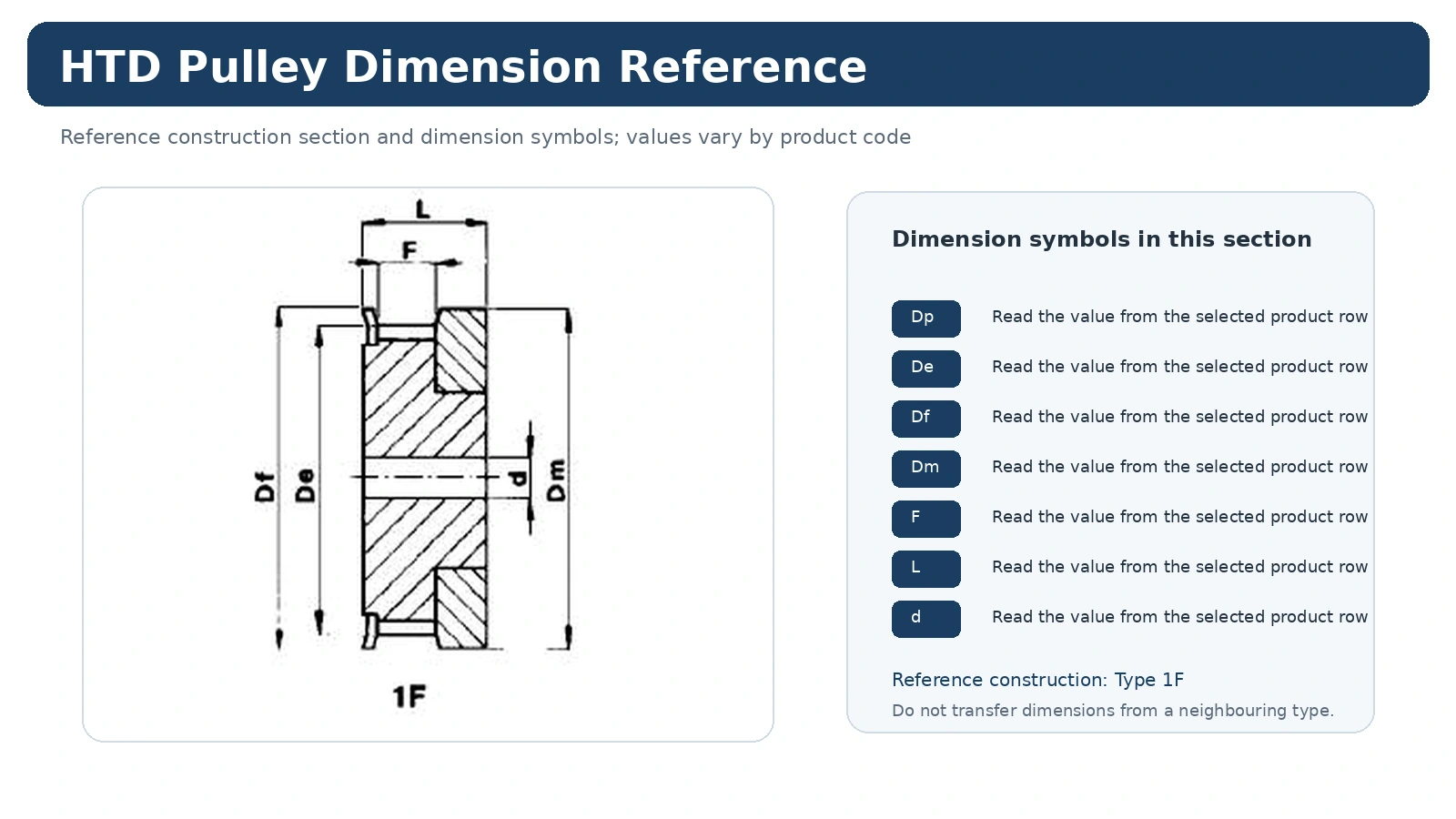
Mantenga juntos los símbolos de dimensión y los valores del modelo.
No copie un diámetro de un dibujo sin verificar qué símbolo representa. Utilice la vista de construcción asociada al modelo y consulte la fila correspondiente de la tabla. Para reemplazos, compare esas referencias con las mediciones reales realizadas en campo a ambos lados de la polea instalada.
Prepare los insumos técnicos antes de la revisión comercial.
Una consulta completa suele incluir la correa/perfil, el número de dientes, el ancho de trabajo, la interfaz del eje, las restricciones del cubo o la brida, la cantidad, el destino y la aplicación. Se debe adjuntar un plano cuando la geometría no sea estándar o cuando sea necesario acordar dimensiones controladas, material o documentación de inspección antes de la producción.
Utilice la biblioteca de recursos según la pregunta que necesite responder.
Comience con las guías de paso y compatibilidad de correas cuando conozca la correa compatible pero no la polea. Utilice las guías de medición y referencia dimensional cuando deba reemplazar una polea antigua. Las guías de orificio, brida, casquillo cónico y material son más útiles una vez que se ha identificado la geometría del lado de la correa. Los artículos de aplicación añaden el contexto de la máquina sin modificar la fila de producto principal.
Cada guía distingue entre los valores del catálogo y los requisitos específicos del proyecto. Los ajustes, tolerancias, solicitudes de documentación y límites operativos que no estén definidos por el modelo seleccionado deben confirmarse en la solicitud de cotización o en el plano. Esto permite que los artículos técnicos sean útiles para la preparación, sin convertir las directrices generales en una clasificación de producto sin respaldo.
Rutas de lectura recomendadas
Guía de medición → explicación de las dimensiones → compatibilidad de la correa → casquillo recto o cónico.
Comparación de paso → número y relación de dientes → selección de ancho → interfaz del eje.
Lista de verificación de planos personalizados → guía de orificios y ejes → requisitos de inspección.
Guías de seguimiento, mantenimiento y verificación de funcionamiento → registre el estado de la unidad antes de reemplazar componentes.
Los artículos técnicos y las tablas de productos cumplen diferentes funciones.
Los artículos explican cómo tomar una decisión: qué medir, qué comparar y qué incluir en un plano o solicitud de cotización. Las páginas de productos contienen los datos del catálogo específicos del modelo. Cuando un artículo y una tabla de productos abordan la misma dimensión, la fila del producto seleccionado sigue siendo la referencia para realizar el pedido. Esta separación permite que la biblioteca de recursos siga siendo útil sin imponer límites universales que el catálogo no contempla.
Si un guía plantea una pregunta que su máquina no puede responder con los registros disponibles, incluya esa duda en la consulta. Un dato desconocido, como un código de buje ilegible o un perfil de correa incierto, es más seguro que un valor supuesto.