Browse HTD timing pulleys by pitch family and width series, then open the product page for the catalogue table, construction reference, application notes and RFQ inputs. Tooth counts remain model rows inside the appropriate series page so the catalogue stays usable without creating thin duplicate pages.
Browse by HTD Pitch and Mounting Style
Start with the mating belt designation, not the outside appearance of the pulley.
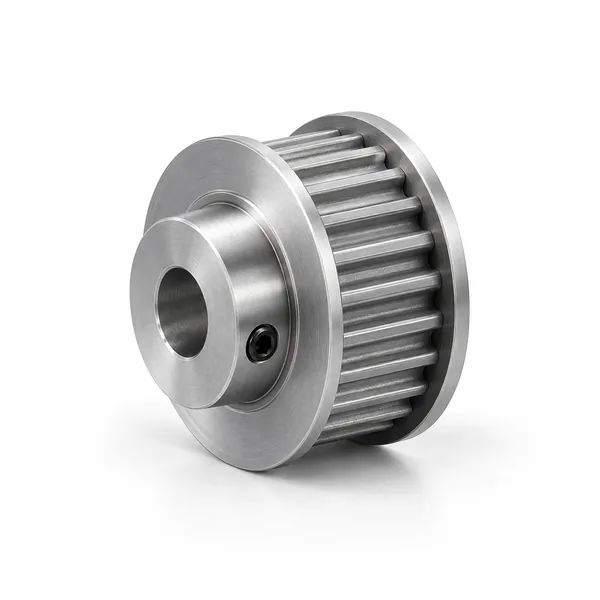
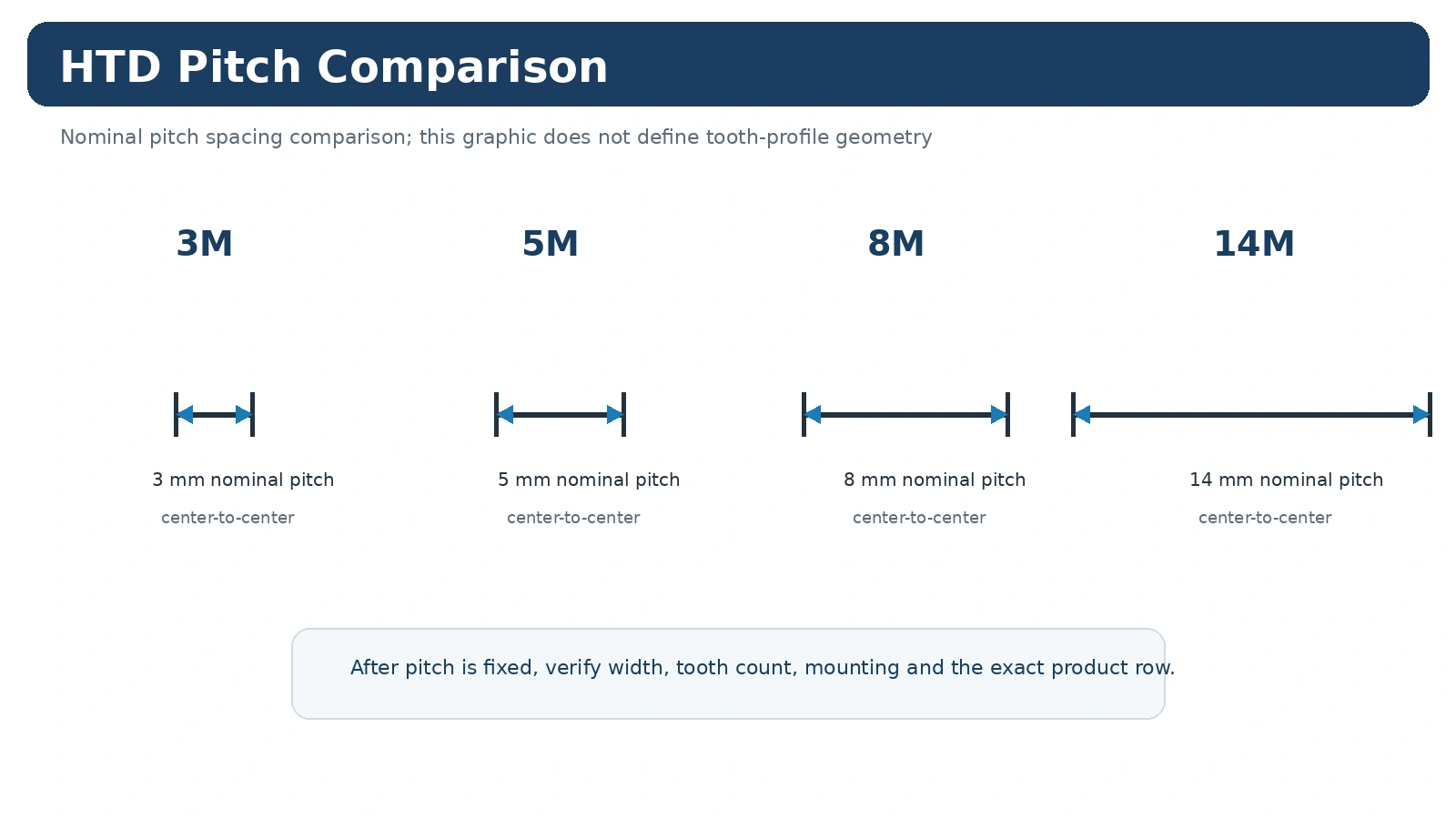
HTD 3M Timing Pulleys
Compact synchronous pulley families for small automation and positioning drives.
Explore Family →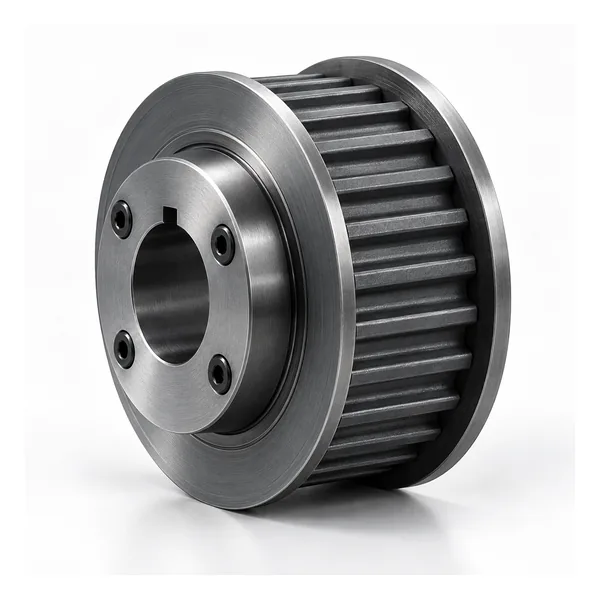
HTD 5M Timing Pulleys
5M timing-pulley families balancing compact geometry with a wider industrial application range.
Explore Family →
Puli định thời HTD 8M
8M industrial timing pulleys for machine tools, conveying and production equipment.
Explore Family →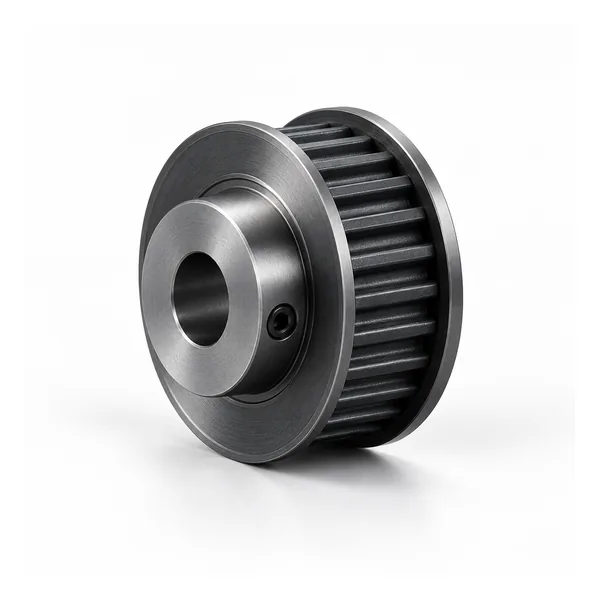
HTD 14M Timing Pulleys
Larger HTD pulley families for industrial drives where shaft interface and hub construction become especially important.
Explore Family →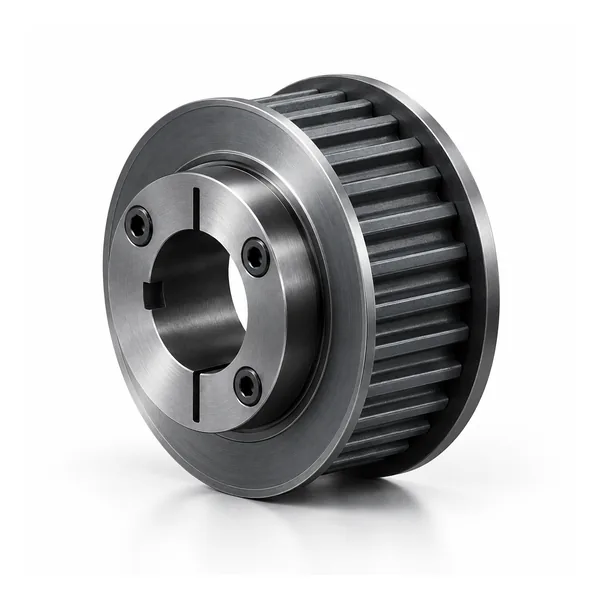
Taper Bush HTD Timing Pulleys
Taper-bush HTD pulley families with catalogue-defined bush codes and bore ranges.
Explore Family →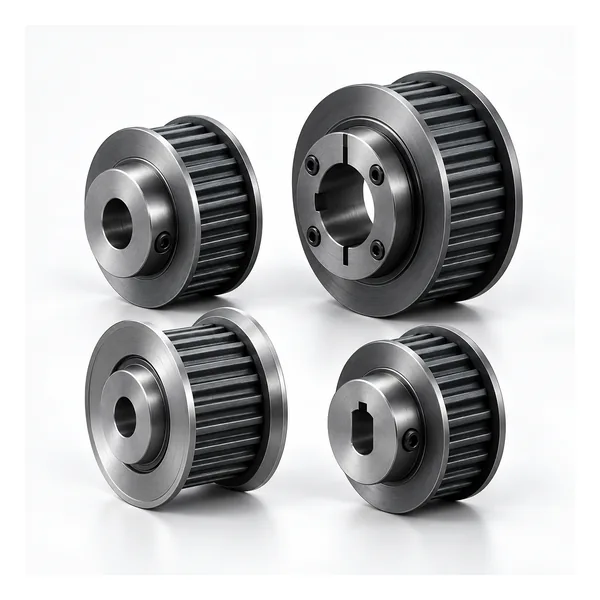
Custom HTD Timing Pulleys
Drawing-controlled HTD pulley machining for nonstandard shaft, hub, flange and inspection requirements.
Explore Family →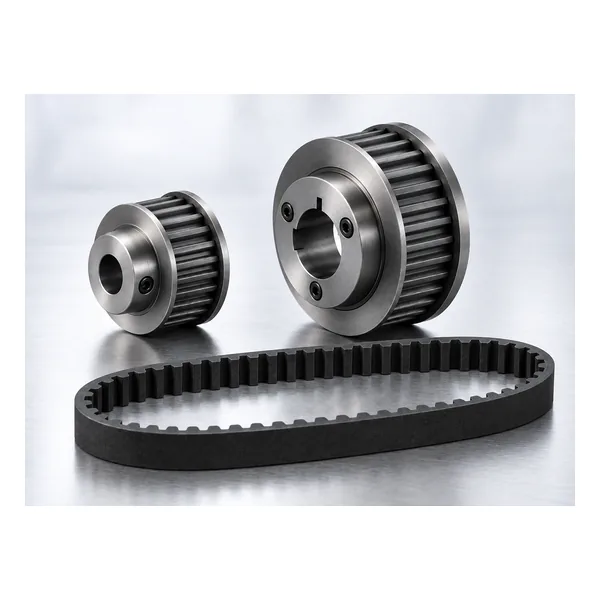
HTD Timing Belts
Matching HTD timing belts for 3M, 5M, 8M and 14M pulley systems.
Explore Family →Use Measurable Drive Data Before Comparing Model Rows
Confirm the HTD profile, working width and required tooth count or speed ratio. Next, define the shaft interface: straight bore, drawing-controlled finished features or a supported taper-bush configuration. Replacement work should preserve hub projection, flange arrangement and the axial belt line.
Do not use nominal pitch alone to claim interchangeability with another curvilinear profile. Keep the full belt designation with the order record and verify the final model row or drawing before release.
All Published HTD Products
Use the live product grid to move directly from the family page to the exact width series and specification table.
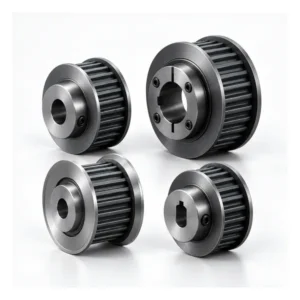
Custom HTD Timing Pulley
Custom HTD pulley machining for drawing-defined bore, hub, flange and inspection requirements.
Xem chi tiết →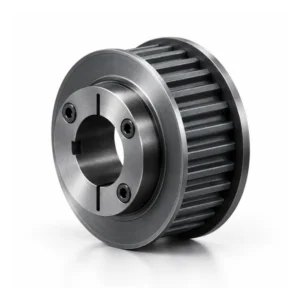
HTD 14M-115 Taper Bush Timing Pulley
14M HTD timing pulley in the 14M-115 taper-bush family. Select tooth count and the matching bush code from the catalogue row.
Xem chi tiết →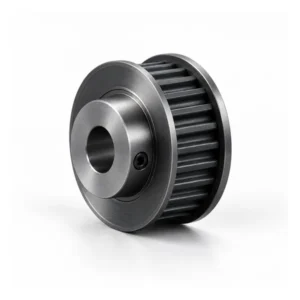
HTD 14M-115 Timing Pulley
14M curvilinear synchronous timing pulley, 14M-115 series. Select tooth count, belt width and shaft interface from the catalogue table or approved drawing.
Xem chi tiết →HTD 14M-170 Taper Bush Timing Pulley
14M HTD timing pulley in the 14M-170 taper-bush family. Select tooth count and the matching bush code from the catalogue row.
Xem chi tiết →HTD 14M-170 Timing Pulley
14M curvilinear synchronous timing pulley, 14M-170 series. Select tooth count, belt width and shaft interface from the catalogue table or approved drawing.
Xem chi tiết →HTD 14M-40 Taper Bush Timing Pulley
14M HTD timing pulley in the 14M-40 taper-bush family. Select tooth count and the matching bush code from the catalogue row.
Xem chi tiết →HTD 14M-40 Timing Pulley
14M curvilinear synchronous timing pulley, 14M-40 series. Select tooth count, belt width and shaft interface from the catalogue table or approved drawing.
Xem chi tiết →HTD 14M-55 Taper Bush Timing Pulley
14M HTD timing pulley in the 14M-55 taper-bush family. Select tooth count and the matching bush code from the catalogue row.
Xem chi tiết →HTD 14M-55 Timing Pulley
14M curvilinear synchronous timing pulley, 14M-55 series. Select tooth count, belt width and shaft interface from the catalogue table or approved drawing.
Xem chi tiết →HTD 14M-85 Taper Bush Timing Pulley
14M HTD timing pulley in the 14M-85 taper-bush family. Select tooth count and the matching bush code from the catalogue row.
Xem chi tiết →HTD 14M-85 Timing Pulley
14M curvilinear synchronous timing pulley, 14M-85 series. Select tooth count, belt width and shaft interface from the catalogue table or approved drawing.
Xem chi tiết →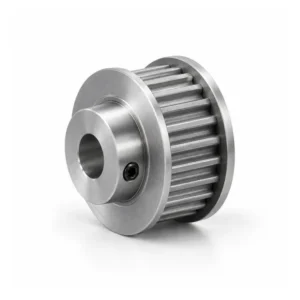
HTD 3M-06 Timing Pulley
3M curvilinear synchronous timing pulley, 3M-06 series. Select tooth count, belt width and shaft interface from the catalogue table or approved drawing.
Xem chi tiết →HTD 3M-09 Timing Pulley
3M curvilinear synchronous timing pulley, 3M-09 series. Select tooth count, belt width and shaft interface from the catalogue table or approved drawing.
Xem chi tiết →HTD 3M-15 Timing Pulley
3M curvilinear synchronous timing pulley, 3M-15 series. Select tooth count, belt width and shaft interface from the catalogue table or approved drawing.
Xem chi tiết →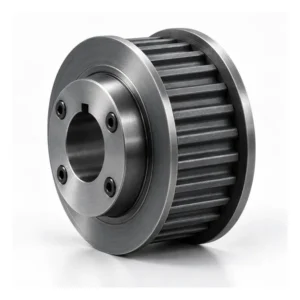
HTD 5M-09 Timing Pulley
5M curvilinear synchronous timing pulley, 5M-09 series. Select tooth count, belt width and shaft interface from the catalogue table or approved drawing.
Xem chi tiết →HTD 5M-15 Taper Bush Timing Pulley
5M HTD timing pulley in the 5M-15 taper-bush family. Select tooth count and the matching bush code from the catalogue row.
Xem chi tiết →HTD 5M-15 Timing Pulley
5M curvilinear synchronous timing pulley, 5M-15 series. Select tooth count, belt width and shaft interface from the catalogue table or approved drawing.
Xem chi tiết →HTD 5M-25 Timing Pulley
5M curvilinear synchronous timing pulley, 5M-25 series. Select tooth count, belt width and shaft interface from the catalogue table or approved drawing.
Xem chi tiết →HTD 8M-20 Taper Bush Timing Pulley
8M HTD timing pulley in the 8M-20 taper-bush family. Select tooth count and the matching bush code from the catalogue row.
Xem chi tiết →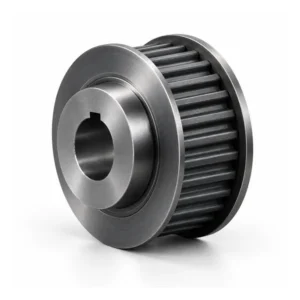
Puli định thời HTD 8M-20
Puli định thời đồng bộ cong 8M, dòng 8M-20. Chọn số răng, chiều rộng đai và giao diện trục từ bảng trong danh mục hoặc bản vẽ đã được phê duyệt.
Xem chi tiết →HTD 8M-30 Taper Bush Timing Pulley
8M HTD timing pulley in the 8M-30 taper-bush family. Select tooth count and the matching bush code from the catalogue row.
Xem chi tiết →Puli định thời HTD 8M-30
Puli định thời đồng bộ cong 8M, dòng 8M-30. Chọn số răng, chiều rộng đai và giao diện trục từ bảng trong danh mục hoặc bản vẽ đã được phê duyệt.
Xem chi tiết →HTD 8M-50 Taper Bush Timing Pulley
8M HTD timing pulley in the 8M-50 taper-bush family. Select tooth count and the matching bush code from the catalogue row.
Xem chi tiết →Puli định thời HTD 8M-50
Puli định thời đồng bộ cong 8M, dòng 8M-50. Chọn số răng, chiều rộng đai và giao diện trục từ bảng trong danh mục hoặc bản vẽ đã được phê duyệt.
Xem chi tiết →HTD 8M-85 Taper Bush Timing Pulley
8M HTD timing pulley in the 8M-85 taper-bush family. Select tooth count and the matching bush code from the catalogue row.
Xem chi tiết →Puli định thời HTD 8M-85
Puli định thời đồng bộ cong 8M, dòng 8M-85. Chọn số răng, chiều rộng đai và giao diện trục từ bảng trong danh mục hoặc bản vẽ đã được phê duyệt.
Xem chi tiết →
HTD Timing Belts
Matching HTD timing belts for 3M, 5M, 8M and 14M pulley systems; belt identification is confirmed before pulley selection.
Xem chi tiết →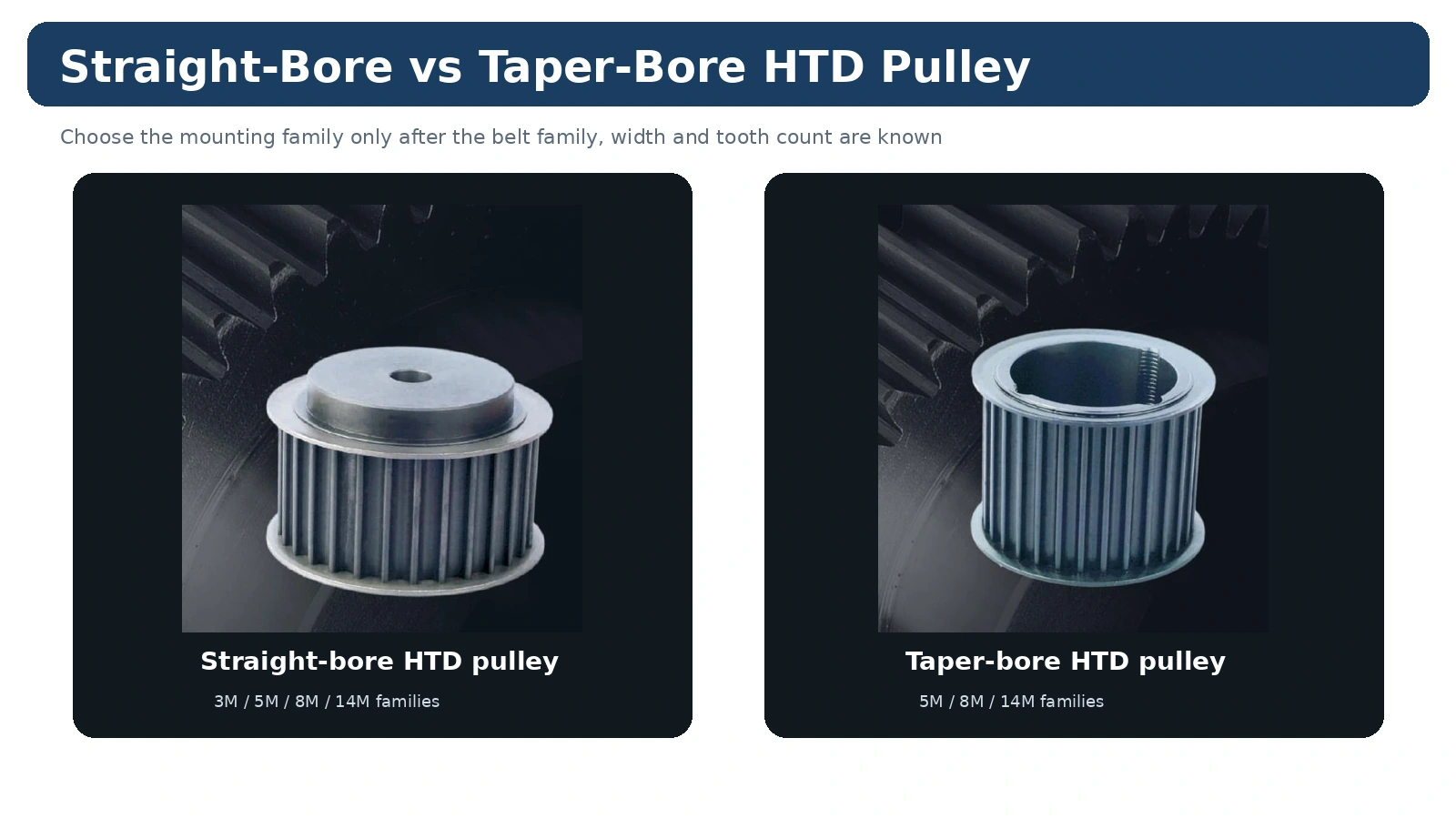
Straight-Bore and Taper-Bush Routes Are Not the Same Decision
Straight-bore families and taper-bush families use different catalogue structures. Use the configuration that matches the shaft connection and service requirements. Taper-bush coverage in this catalogue is limited to the supported 5M, 8M and 14M series shown on the dedicated family page.
Move to a Drawing-Controlled Custom Pulley
Where the belt-side geometry can remain standard but the bore, keyway, hub, flange, material or inspection requirement changes, send a drawing and project inputs for review.
How the HTD Product Families Are Organized
The catalogue is organized by the belt-side geometry that must remain compatible with the mating synchronous belt. HTD 3M, 5M, 8M and 14M are separate pitch families, and each family is divided by working-width series. Within a series, the tooth-count table controls pitch diameter and can also change hub, flange, material or mounting details. For that reason, a series page is the correct place to compare tooth-count rows; creating a different product page for every tooth count would hide these construction changes instead of explaining them.
Straight-bore and taper-bush constructions are treated separately. A taper-bush code is not a decorative accessory: it is part of the shaft-interface definition and varies with the pulley row. When an exact catalogue combination does not fit the machine envelope, the custom-pulley route keeps the standard HTD belt geometry while moving the nonstandard bore, hub, flange, material or inspection requirement onto a controlled drawing.
What to Compare on a Product Page
Confirm the complete HTD family from the belt or approved drive specification.
Use the series width that matches the belt; do not infer it from overall flange width.
Select the row that produces the required drive ratio and physical envelope.
Check straight bore, taper bush, hub projection and any drawing-controlled shaft features.
Specification Tables Are the Ordering Reference
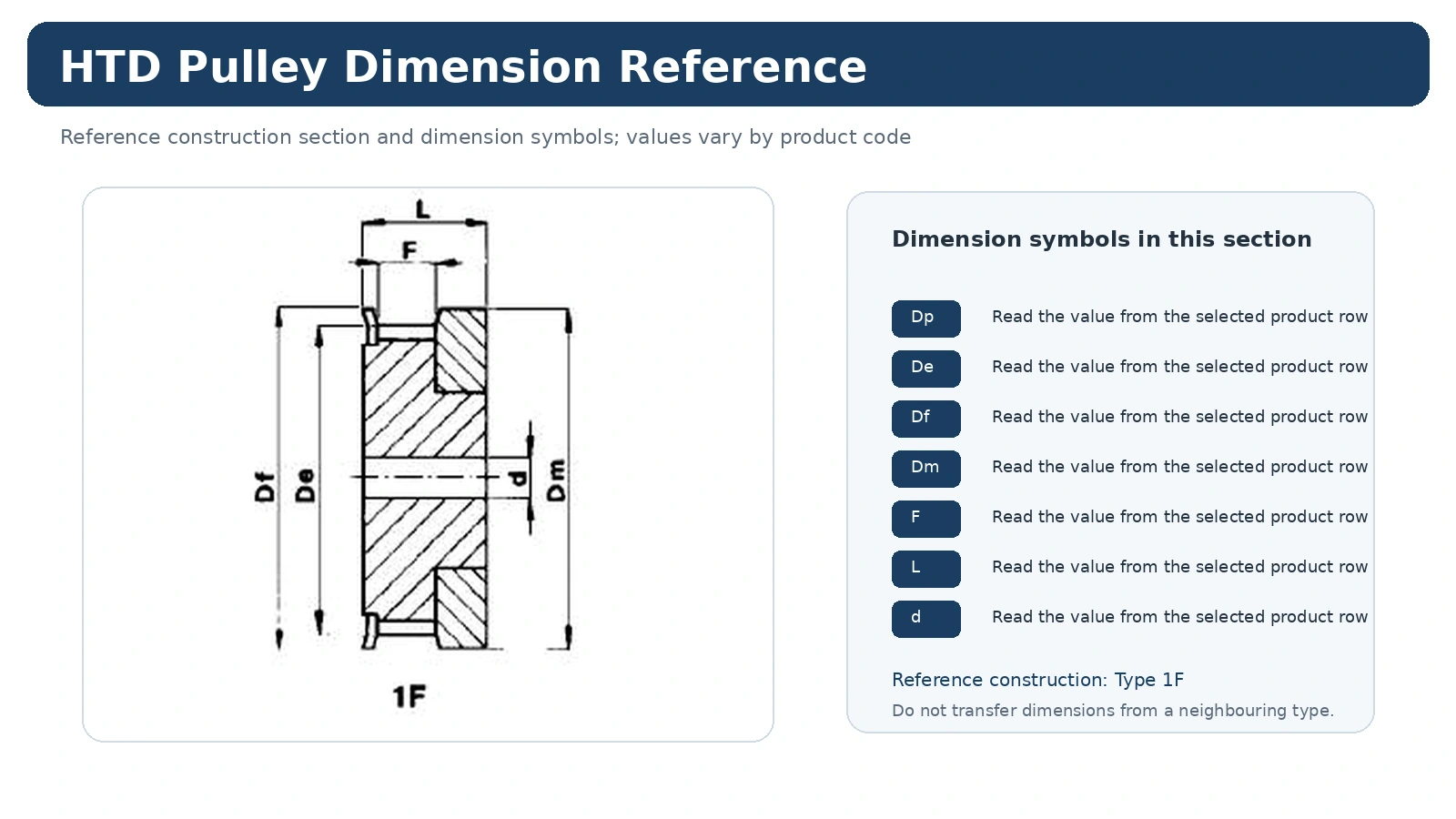
Each product page places the dimension reference immediately before its catalogue table. Values such as pitch diameter, outside diameter, flange diameter and hub dimensions must be read in the context of the construction type shown for that row. A dash means that the catalogue does not state a value for that field; it should never be converted to zero.
Use the model code, tooth count and complete shaft-interface requirement together in an RFQ. If the order needs a special finish, controlled runout, inspection record, material document or marking requirement, state it separately rather than assuming it applies to every pulley in the family.
Common Reasons a Pulley Enquiry Needs Clarification
The most common gaps are an incomplete belt identity, an unknown working width, a shaft diameter without the mounting style, or a photo with no tooth count. Another frequent problem is assuming that a pulley with the same outside diameter will keep the same speed ratio. The RFQ should separate what is known from what still needs confirmation. That lets engineering resolve the missing point without rebuilding the entire enquiry.
If you are unsure which product family applies, send the belt marking and clear photographs of the pulley teeth, both faces and the shaft connection. We can then compare the measurements and photographs with the HTD product families before a specific code is used.
Before You Open a Specification Table
Know whether the project is a replacement or a new drive. Replacement work should preserve the installed belt line, shaft interface and machine envelope unless a controlled change is intended. New-drive work should add speed relationship, torque or power, center distance and duty. That distinction changes which questions matter before a catalogue row is selected.
If the existing part cannot be identified confidently, use photographs and dimensions to narrow the family first. It is better to quote a drawing-controlled replacement after clarification than to create false certainty from one matching diameter.