HTD 8M Timing Pulley Selection Guide should be approached as a drive-system decision. The useful starting point is the mating belt and machine interface, followed by tooth count, working width, shaft mounting and duty conditions. This guide explains the checks that help an engineer or buyer turn HTD 8M timing pulley selection into an RFQ that can be verified against a catalogue row or drawing.
طول و عرض کا موازنہ کرنے سے پہلے ڈرائیو کی شناخت کریں۔
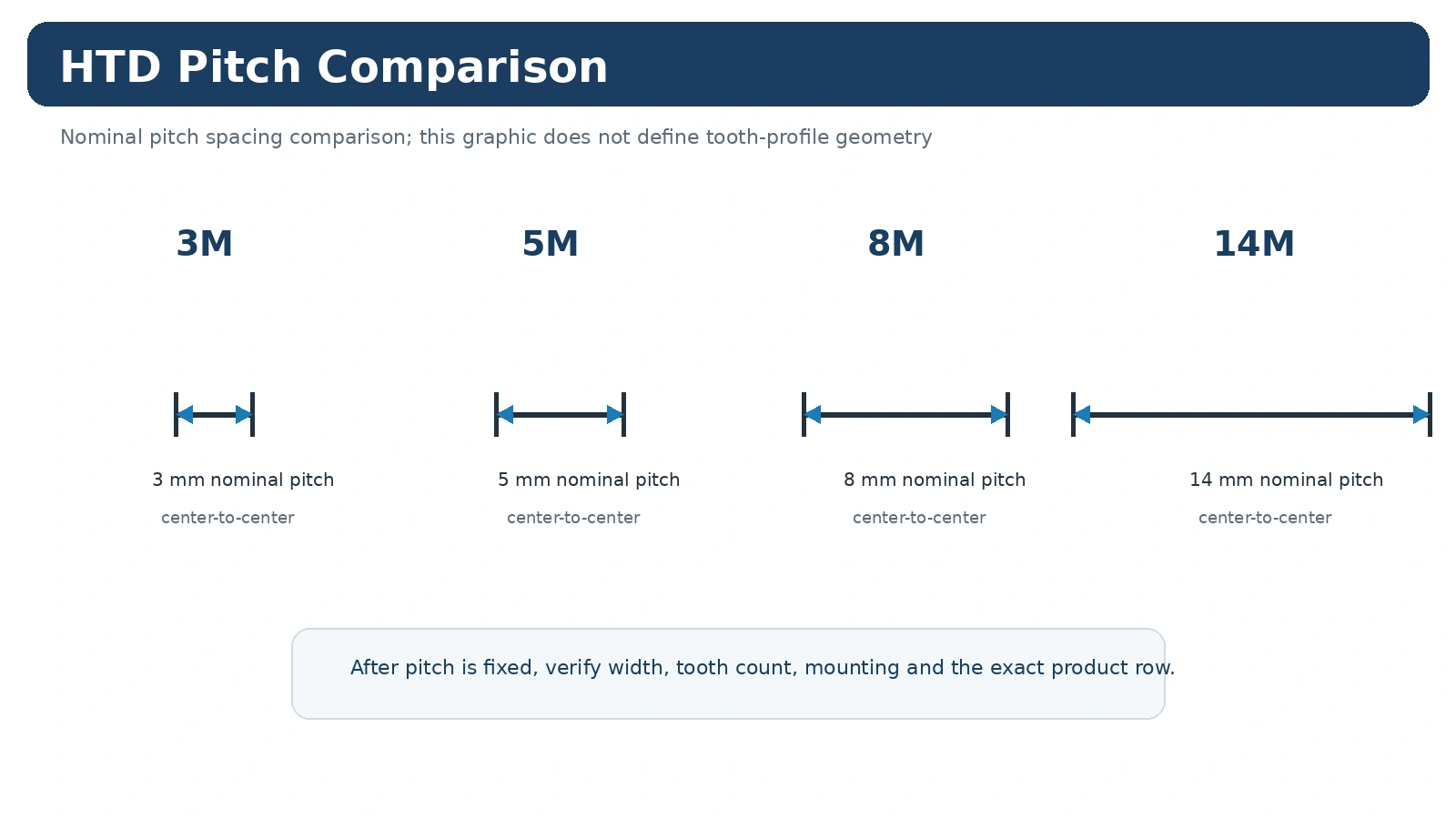
For HTD 8M timing pulley selection, identify the complete belt marking before comparing pulley diameters. HTD is a curvilinear synchronous system and the nominal pitch must stay associated with its profile family. Record the driver and driven tooth counts when an existing ratio must be preserved. For a new drive, document the target speed ratio, driver speed and expected load before choosing tooth counts. This prevents a component-level decision from overriding the machine requirement.
متبادل پروجیکٹ کے لیے، کیٹلاگ کی قطار کے مساوی ہونے کا فیصلہ کرنے سے پہلے نصب شدہ بیلٹ اور مشین کے انتظام کے ساتھ ناپی گئی قدر کا موازنہ کریں۔ ایک نئے پروجیکٹ کے لیے، ڈیزائن کی بنیاد کو دستاویز کریں تاکہ بعد میں دیکھ بھال کرنے والی ٹیمیں سمجھ سکیں کہ پچ، دانتوں کی گنتی اور بڑھنے کا انداز کیوں منتخب کیا گیا تھا۔
طول و عرض جو انسٹالیشن کو کنٹرول کرتے ہیں۔
ایک گھرنی پچ اور دانتوں کی گنتی سے مماثل ہے لیکن پھر بھی مشین میں فٹ ہونے میں ناکام ہے کیونکہ بور، حب، فلینج یا محوری پوزیشن مختلف ہے۔ شافٹ انٹرفیس، بیلٹ کے چہرے کی چوڑائی، دونوں اطراف پر حب پروجیکشن اور ایک مستحکم مشین ڈیٹم کی نسبت بیلٹ لائن کی پیمائش کریں۔ جہاں ٹیپر بش کا استعمال کیا جاتا ہے، پللی سیریز اور بش کوڈ دونوں کو ریکارڈ کریں۔ جہاں ایک تیار شدہ بور کی ضرورت ہو، ڈرائنگ پر فٹ، کی وے اور برقرار رکھنے کا کوئی طریقہ شامل کریں۔
متبادل پروجیکٹ کے لیے، کیٹلاگ کی قطار کے مساوی ہونے کا فیصلہ کرنے سے پہلے نصب شدہ بیلٹ اور مشین کے انتظام کے ساتھ ناپی گئی قدر کا موازنہ کریں۔ ایک نئے پروجیکٹ کے لیے، ڈیزائن کی بنیاد کو دستاویز کریں تاکہ بعد میں دیکھ بھال کرنے والی ٹیمیں سمجھ سکیں کہ پچ، دانتوں کی گنتی اور بڑھنے کا انداز کیوں منتخب کیا گیا تھا۔
آپریٹنگ شرائط جو انتخاب میں شامل ہیں۔
The same nominal HTD 8M timing pulley selection component can see very different service depending on the machine. Starts per hour, reversing, shock loading, continuous operating time, temperature, contamination, cleaning and access for tensioning all influence the drive. A compact automation axis emphasizes repeatable motion and controlled alignment, while a conveyor or process machine may emphasize continuous duty and service access. Supply these conditions instead of asking the pulley to be selected from size alone.
متبادل پروجیکٹ کے لیے، کیٹلاگ کی قطار کے مساوی ہونے کا فیصلہ کرنے سے پہلے نصب شدہ بیلٹ اور مشین کے انتظام کے ساتھ ناپی گئی قدر کا موازنہ کریں۔ ایک نئے پروجیکٹ کے لیے، ڈیزائن کی بنیاد کو دستاویز کریں تاکہ بعد میں دیکھ بھال کرنے والی ٹیمیں سمجھ سکیں کہ پچ، دانتوں کی گنتی اور بڑھنے کا انداز کیوں منتخب کیا گیا تھا۔
تنصیب سے پہلے معائنہ پوائنٹس
معائنہ کو ڈرائیو کو متاثر کرنے والے طول و عرض پر توجہ مرکوز کرنی چاہئے: شافٹ انٹرفیس، محوری مقام، دانت کی حالت، چہرے کی چوڑائی اور کسی بھی ڈرائنگ کے زیر کنٹرول رن آؤٹ یا ڈیٹم رشتہ۔ عام معیار کا بیان قبولیت کی وضاحت نہیں کرتا ہے۔ اگر ایک جہتی رپورٹ، مادی دستاویز یا آرڈر کے لیے مخصوص ریکارڈ درکار ہے، تو پیداوار سے پہلے اس کی شناخت کریں۔ دیکھ بھال کے دوران، فلینج کو پہنچنے والے نقصان، کنارے پہننے، ملبے اور نشانات پر نظر رکھیں کہ گھرنی شافٹ پر چلی گئی ہے۔
متبادل پروجیکٹ کے لیے، کیٹلاگ کی قطار کے مساوی ہونے کا فیصلہ کرنے سے پہلے نصب شدہ بیلٹ اور مشین کے انتظام کے ساتھ ناپی گئی قدر کا موازنہ کریں۔ ایک نئے پروجیکٹ کے لیے، ڈیزائن کی بنیاد کو دستاویز کریں تاکہ بعد میں دیکھ بھال کرنے والی ٹیمیں سمجھ سکیں کہ پچ، دانتوں کی گنتی اور بڑھنے کا انداز کیوں منتخب کیا گیا تھا۔
آرڈر کرنے سے پہلے بند کرنے کے لیے سوالات کھولیں۔
کیا صحیح HTD پروفائل اور چوڑائی انسٹال یا بتائی گئی ہے؟
کیا تناسب یا موجودہ دانتوں کی گنتی کو محفوظ کیا جانا چاہیے؟
کس بور، فٹ، کی وے یا ٹیپر بش کے انتظام کی ضرورت ہے؟
کتنی حب پروجیکشن اور فلاج کلیئرنس دستیاب ہے؟
رفتار، لوڈ، شروع، ریورسنگ اور آپریٹنگ گھنٹے کیا ہیں؟
کون سا ڈرائنگ، مواد یا معائنہ کا ریکارڈ سپلائی کے ساتھ ہونا چاہیے؟
RFQ کے ساتھ کیا بھیجنا ہے۔
پروفائل، دانتوں کی گنتی، بیلٹ کی چوڑائی، شافٹ انٹرفیس، حب/فلنج کی تفصیلات، مقدار، منزل اور ایک ڈرائنگ یا تبدیلی کی پیمائش کا خاکہ بھیجیں۔ نئی ڈرائیو کے لیے رفتار، تناسب، بوجھ، مرکز کا فاصلہ اور ماحول شامل کریں۔ کا جائزہ لیں۔ ایچ ٹی ڈی پروڈکٹ فیملیز، استعمال کریں۔ انتخاب گائیڈ، یا متعلقہ کا موازنہ کریں۔ درخواست کے نوٹس.
8M Selection Priorities
The 8M range is organised as 8M-20, 8M-30, 8M-50 and 8M-85. Larger diameters and hubs make shaft interface, axial space and handling increasingly important as tooth count grows.
پیمائش شدہ اقدار، کیٹلاگ حوالہ جات اور پروجیکٹ کی ضروریات کو واضح طور پر الگ رکھیں۔ اگر متعلقہ کیٹلاگ ٹیبل یا منظور شدہ ڈرائنگ میں مطلوبہ نکتہ بیان نہیں کیا گیا ہے، تو اسے ایک قابل قدر لیکن غیر تصدیق شدہ قدر کے ساتھ خلا کو پُر کرنے کے بجائے RFQ سوال یا ڈرائنگ کی ضرورت کے طور پر شامل کریں۔
Separate Straight-Bore and Taper-Bush Choices
Both mounting routes exist in supported 8M families, but they are not the same product. Keep the selected construction and any bush designation with the tooth-count row.
خریداری کے ریکارڈ کو مشین کی ضرورت اور منتخب کردہ گھرنی کے درمیان ایک واضح ربط رکھنا چاہیے۔ اس کا مطلب ہے کہ مکمل بیلٹ یا پروفائل کی شناخت، دانتوں کی گنتی، ورکنگ چوڑائی اور شافٹ انٹرفیس کی معلومات پروڈکٹ کوڈ کے ساتھ ساتھ رہتی ہیں۔ کوئی خاص مواد، ختم، کنٹرول شدہ رواداری، مارکنگ یا رپورٹ کی ضرورت کو الگ سے بیان کیا جانا چاہیے تاکہ اسے پورے خاندان کی آفاقی خصوصیت نہ سمجھا جائے۔
حصولی اور دستاویزات
ایک بار جب انتخاب واضح ہو جائے تو، قبول شدہ پروڈکٹ کی شناخت، مقدار، منزل اور ڈرائنگ پر نظرثانی کو اسی خریداری لائن پر رکھیں۔ معیاری کیٹلاگ حصوں کی منصوبہ بندی عام طور پر پیداواری مقدار کی کم از کم کے حساب سے کی جاتی ہے، جبکہ بڑی یا زیادہ قیمت والی اشیاء کا عملی آرڈر ویلیو کے خلاف جائزہ لیا جا سکتا ہے۔ 1-5 ٹکڑوں کے اہل نئے کلائنٹ کے نمونوں کا نمونے کی قیمت پر جائزہ لیا جا سکتا ہے جب ترتیب اور مینوفیکچرنگ کا راستہ موزوں ہو۔
مخلوط ماڈل آرڈرز کو تقریباً USD 1,500 کی عملی آرڈر ویلیو کی طرف یکجا کیا جا سکتا ہے۔ خصوصی مواد اور خصوصی عمل اس عمل کے لیے درکار کم از کم مقدار کی پیروی کرتے ہیں۔ بہت چھوٹی ایک یا دو ٹکڑوں کی درخواستوں کو خوردہ تبدیلی کے آرڈرز کے بجائے صرف انجینئرنگ کی توثیق یا ادا شدہ نمونہ کے معاملات کے طور پر ہینڈل کیا جاتا ہے۔
تکنیکی تعریف واضح ہونے کے بعد لیڈ ٹائم کی تصدیق ہوتی ہے۔ معیاری حصوں کی منصوبہ بندی عام طور پر 10-25 کاروباری دنوں میں، 20-45 کاروباری دنوں میں حسب ضرورت اجزاء، اور جہاں قابل اطلاق ہو وہاں پر 45-120 کاروباری دنوں میں پروجیکٹ پر مبنی اسمبلیوں یا متعلقہ آلات کی منصوبہ بندی کی جاتی ہے۔ EXW، FOB، CIF اور DAP عام طور پر تعاون یافتہ ہیں۔ مناسب ترسیل کے لیے FCA، CFR، CPT، CIP اور DDP پر تبادلہ خیال کیا جا سکتا ہے۔ ان کو منصوبہ بندی کی حدود کے طور پر سمجھیں، آرڈر کا جائزہ لینے سے پہلے شپمنٹ کا وعدہ نہیں۔
ایک عملی فیصلے کی ترتیب
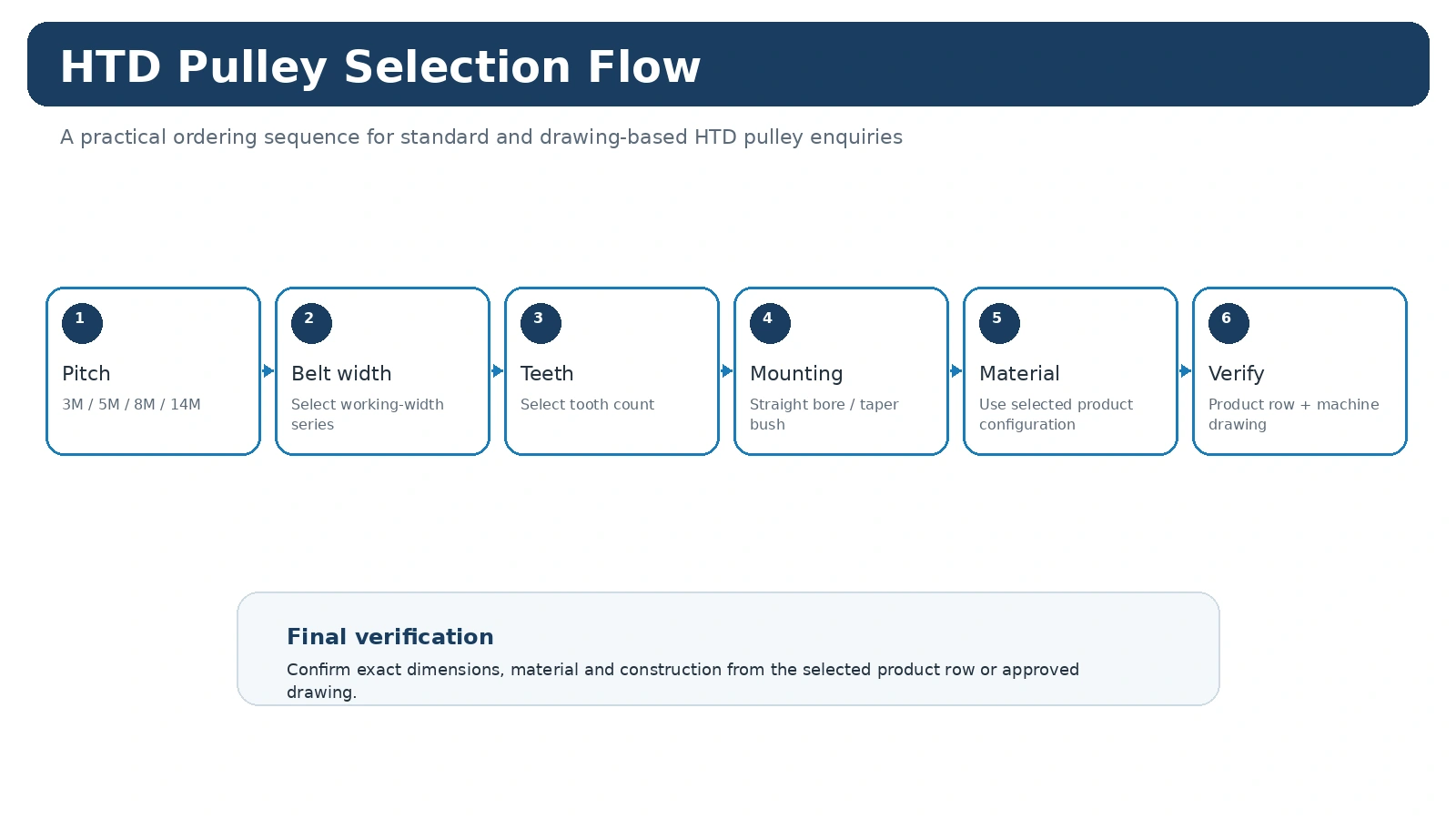
Start with 8 mm HTD family, width code, tooth count and shaft interface. Keep the machine requirement separate from the catalogue choice: first identify what the drive must preserve, then compare only the rows or drawings that match that identity. This keeps a familiar-looking pulley from being accepted before its functional interfaces have been checked.
For an existing machine, preserve the original relationship before making changes. For a new design, record the target ratio, operating context and installation envelope so the 8M selection can be reviewed later without relying on memory or a photograph alone.
پیمائش کا ریکارڈ بنائیں
The most useful measurement set contains 8M belt marking, tooth count, width series, construction type and bore/bush. Mark which values were measured on the machine and which values came from a catalogue or released drawing. When a feature is inaccessible, photograph its relationship to a stable datum and identify it as confirmation-required rather than filling the gap with an assumed value.
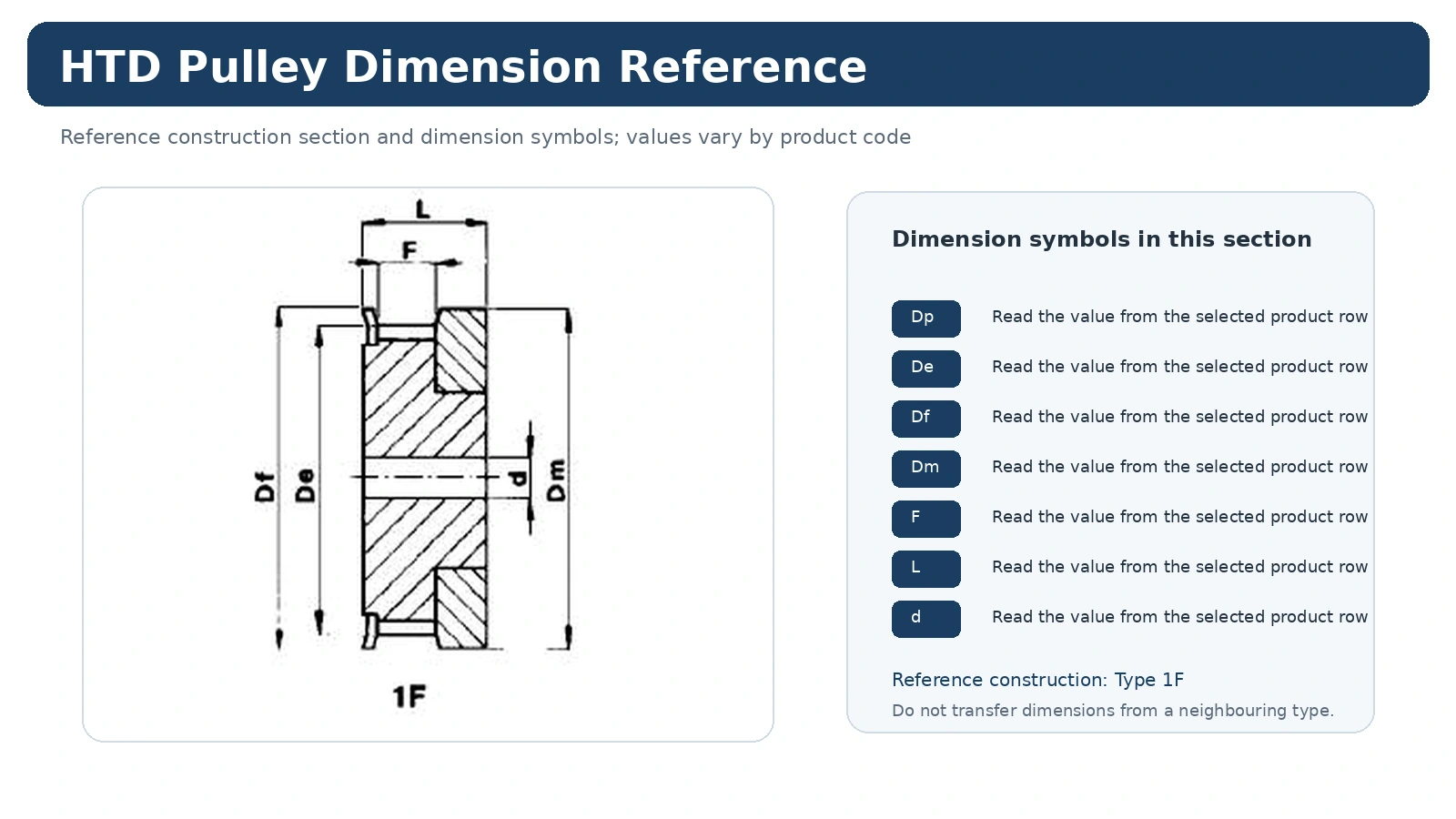
طول و عرض کی ڈرائنگ کو پوری پڑھنے کے قابل چوڑائی میں دیکھا جانا چاہئے۔ کبھی بھی اسکرین شاٹ کو پیمانہ نہ کریں اور پھر اسکیل کردہ جہت کو پیمائش کے طور پر نہ سمجھیں۔ پرنٹ شدہ قیمت اور صحیح تعمیراتی قسم کا استعمال کریں۔
ایک ناکامی موڈ سے بچنے کے قابل
A common error is choosing from pitch diameter while ignoring construction type. That can produce a part that appears close in the catalogue yet changes ratio, belt line, mounting or service access. Resolve the conflicting feature before requesting price so the quotation refers to one mechanically coherent configuration.
اگر دو امیدواروں کی تشکیل ممکن رہتی ہے تو، مشین کی پیمائش اور تصاویر اور ترجیحی آپشن دونوں بھیجیں۔ اس کے بعد کوٹیشن اس بات کی نشاندہی کر سکتا ہے کہ کس انٹرفیس کو خاموشی سے غیر یقینی صورتحال کو تصریح میں تبدیل کرنے کی بجائے تصدیق کی ضرورت ہے۔
تکنیکی انتخاب کو اقتباس کے لیے تیار لائن آئٹم میں تبدیل کریں۔
HTD/ پروفائل فیملی اور بیلٹ کی مکمل معلومات بتائیں۔
دانتوں کی گنتی، کام کی چوڑائی اور متعلقہ طول و عرض یا ڈرائنگ کے حوالے فراہم کریں۔
جہاں قابل اطلاق ہو بور یا بش، شافٹ ڈیٹا، حب پروجیکشن اور بیلٹ لائن پوزیشن کی وضاحت کریں۔
مقدار، منزل، مطلوبہ دستاویزات اور درخواست کے لیے استعمال کردہ ڈرائنگ نظرثانی شامل کریں۔
جب اوپر ایک آئٹم حقیقی طور پر نامعلوم ہو، تو تصدیق کے لیے اس پر لیبل لگائیں۔ ایک واضح کھلا سوال قابل قدر قیمت سے زیادہ مفید ہے جس کی کبھی پیمائش نہیں کی گئی تھی۔
سوالات جو خریدار عام طور پر پوچھتے ہیں۔
سب سے پہلے کس چیز کی تصدیق کرنی چاہیے؟
Confirm 8 mm HTD family, width code, tooth count and shaft interface. That prevents later dimensions from being compared across the wrong product family or installation route.
متبادل کے لیے کون سی معلومات سب سے زیادہ مفید ہے؟
Send 8M belt marking, tooth count, width series, construction type and bore/bush, plus clear photographs before the old pulley is removed. The photographs preserve axial orientation and neighboring clearances that a loose part cannot show.
ڈرائنگ کب استعمال کی جائے؟
ایک کنٹرول شدہ ڈرائنگ کا استعمال کریں جب بھی کیٹلاگ کی قطار شافٹ انٹرفیس، حب/فلاج ترتیب، تکمیل، رواداری یا معائنہ کی ضرورت کو مکمل طور پر متعین نہ کرے جو مشین کے لیے اہم ہے۔
Pitch Family Is Only the First Branch of the Selection
8M selection still requires working width, tooth count and mounting geometry. Tooth count changes pitch diameter and can also coincide with changes in body type, hub and material across a catalogue family. The correct comparison therefore stays row-specific after the pitch has been chosen. For a new drive, ratio and center distance must be reviewed together with available diameter and guard clearance.
For a replacement, begin with the mating belt and the installed part. If the belt identity is uncertain, avoid choosing a new family only because the measured pitch appears close. Obtain enough measurements and identification detail to identify the tooth system before comparing product rows.
When to Escalate From a Catalogue Row to a Drawing
Use a drawing-controlled order when the shaft connection, hub position, flange arrangement, material, finish or inspection requirement differs from the normal catalogue configuration. Keep standard HTD tooth geometry explicit on the drawing so the custom machining request does not accidentally obscure the mating-belt requirement.
On mixed-model RFQs, keep every width and tooth count on its own line. A general note such as “same as above” can become unsafe once one model uses a different construction type or bush.
Compare the 8M Row Against the Installed Envelope
An 8M replacement should be compared in a simple sequence: first the belt-side identity, then the radial envelope, then the axial envelope. Confirm the 8M belt marking and working width, count the pulley teeth, and compare the corresponding catalogue row. Next check the diameter-related clearances to guards and adjacent components. Finally compare hub projection, overall width and shaft interface from both sides. This sequence is useful because a part can agree with the first two checks yet still move the belt line when the hub arrangement differs.
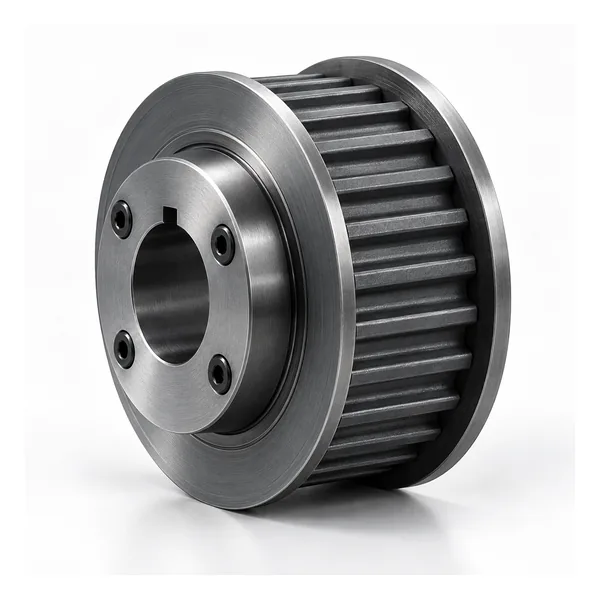
If the machine uses a taper-bush version, include the bush marking, shaft diameter and installation direction in the same record. Do not treat the bush as a separate purchasing accessory once the pulley row has been chosen; the supported combination is part of the mounting geometry. For straight-bore work, mark any finished bore or keyway requirement on the drawing if it is not already defined by the standard row.
When evaluating a new 8M drive, add the intended speed relationship, center distance, duty pattern and available service space. These inputs do not create a universal rating; they tell the supplier which machine-side constraints must be considered alongside the published component geometry.
Keep 8M Width Series and Tooth Count on the Same Purchase Line
For mixed 8M enquiries, write the width series and tooth count together for every model instead of using a shared note such as “same as above.” The 8M-20, 8M-30, 8M-50 and 8M-85 families do not describe one interchangeable body. Construction type, material and mounting details can change with the individual row, so each order line should preserve the complete identification used during comparison.
If a replacement is being sourced from photographs, use those photographs to establish orientation and surrounding clearance, not to infer hidden dimensions. Confirm the belt marking and take the shaft-side measurements before the old component is discarded. Where a standard row still leaves a machine-specific fit or tolerance undefined, attach the drawing requirement to that exact line.
Review the Larger 8M Envelope Together With Hub and Shaft Requirements
The 8M range includes 8M-20, 8M-30, 8M-50 and 8M-85 width-series pages in both straight-bore and selected taper-bush configurations. As tooth count increases, the pulley envelope and construction details can change substantially, so the model table should be read row by row rather than treated as one generic 8M pulley.
For replacements, record hub projection, flange position and shaft interface in addition to tooth count. Larger pulleys often sit close to guards, bearing housings or adjacent drive elements, and a seemingly minor axial change can prevent installation. For new designs, confirm service access and removal space before the surrounding machine layout is frozen.
Narrower 8M width families; compare exact construction type by tooth count.
Wider 8M families with larger axial envelopes.
Keep mounting family and shaft data with the selected product code.
Put any controlled runout, finish or document requirement on the RFQ or drawing.
Use the 8M page as a catalogue map, not as a universal performance claim. Drive sizing remains tied to the belt system and application conditions; the pulley table controls the geometry and ordering identity.