HTD Pulley Material and Flange Selection: Choose material and flange arrangement from the actual catalogue configuration and machine duty.
この決定が制御する範囲
Choose material and flange arrangement from the actual catalogue configuration and machine duty. The decision should be documented with the belt designation, product code or drawing because a timing pulley is part of a drive system. A visual match does not prove tooth compatibility or shaft fit.
推奨ワークフロー
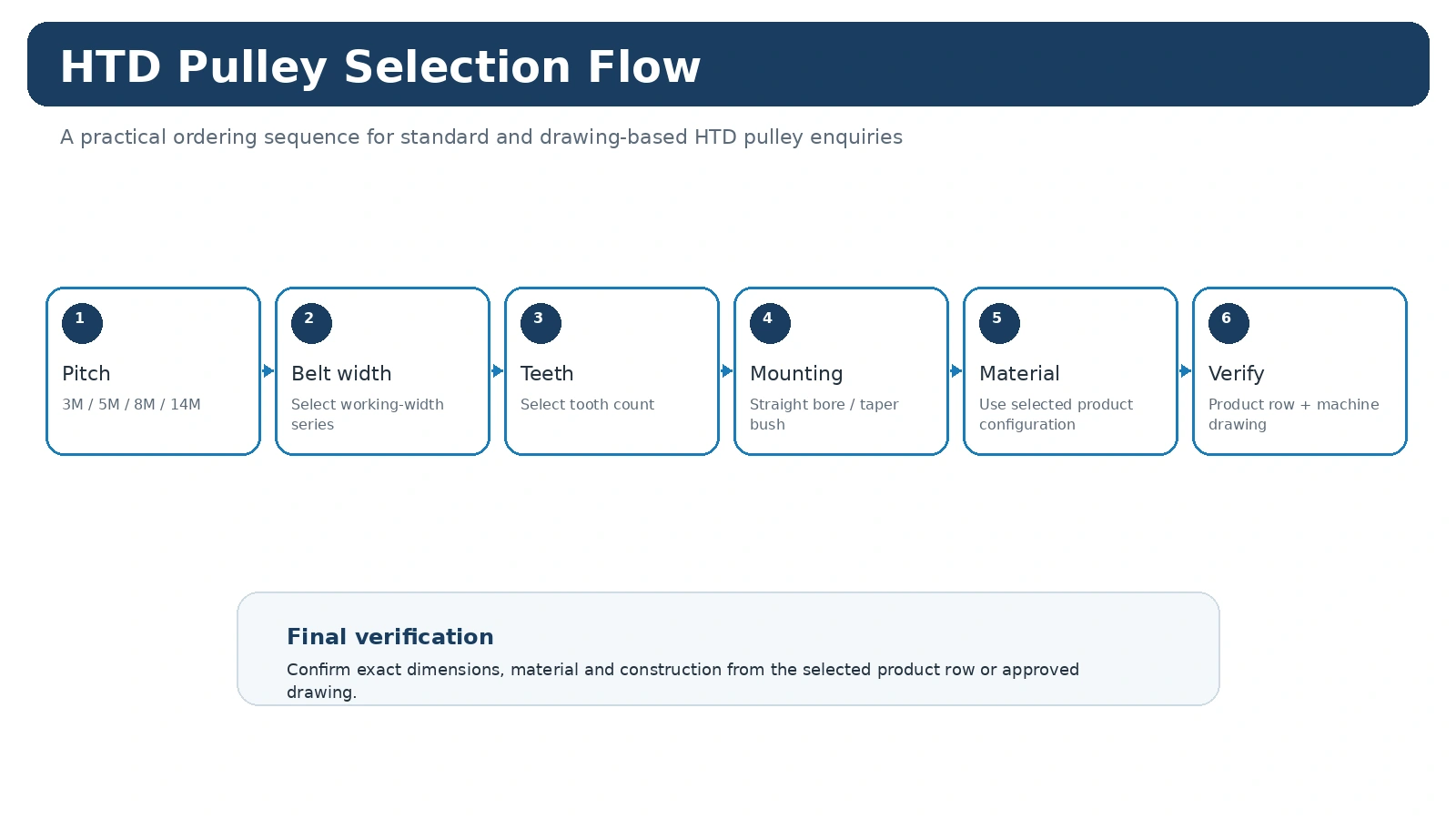
まず、適合するベルトと駆動系の要件を確認します。ピッチ/プロファイル、歯数、有効幅を確認してください。次に、シャフトの接合部、ハブとフランジの輪郭、材質、および必要な検査要件を確認します。交換部品の場合は、古い部品を両側から測定し、安定した機械基準面に対するベルトラインを記録します。
避けるべきよくある間違い
- 歯形を無視して外径で選択する。
- 同じ公称ピッチを持つ曲線形状はすべて互換性があると仮定する。
- 片側のみを測定しており、ハブの突出部やベルトラインのずれが考慮されていない。
- 穴の嵌合、キー溝、ブッシュ規格、または検査要件については、見積もり後に決定する。
- 機械やベルトの設計基準に基づかずに、汎用的なベルト張力値や許容値を使用すること。
見積依頼書でガイドを使用する
主要な変数が取得されたら、 HTD製品ファミリー関連するものを比較する アプリケーションコンテキストまたは、下記のフォームから図面と注文の詳細をお送りください。
Material and Flange Choices Follow the Actual Configuration
Material availability and flange construction can vary within a family as tooth count and construction type change. Use the individual product row before requesting a material or flange arrangement.
If the machine has persistent edge contact or corrosion concerns, document the actual condition. Alignment or shaft movement should be addressed separately from an order-specific material or finish requirement.
Material and Flanges Belong to the Exact Construction Row
Catalogues may change material and flange construction with size. Use the material stated for the selected row. Flanges guide the belt at the pulley edges, but persistent edge contact is also a reason to inspect belt line, alignment and shaft support.
既存の機械に関する決定を行う場合は、測定値、カタログ値、および新規プロジェクト要件を分けて管理してください。これにより、現場での測定値が公称寸法として扱われたり、希望する変更が標準ファミリ機能と誤解されたりするのを防ぐことができます。
図面と表を一緒に使用する
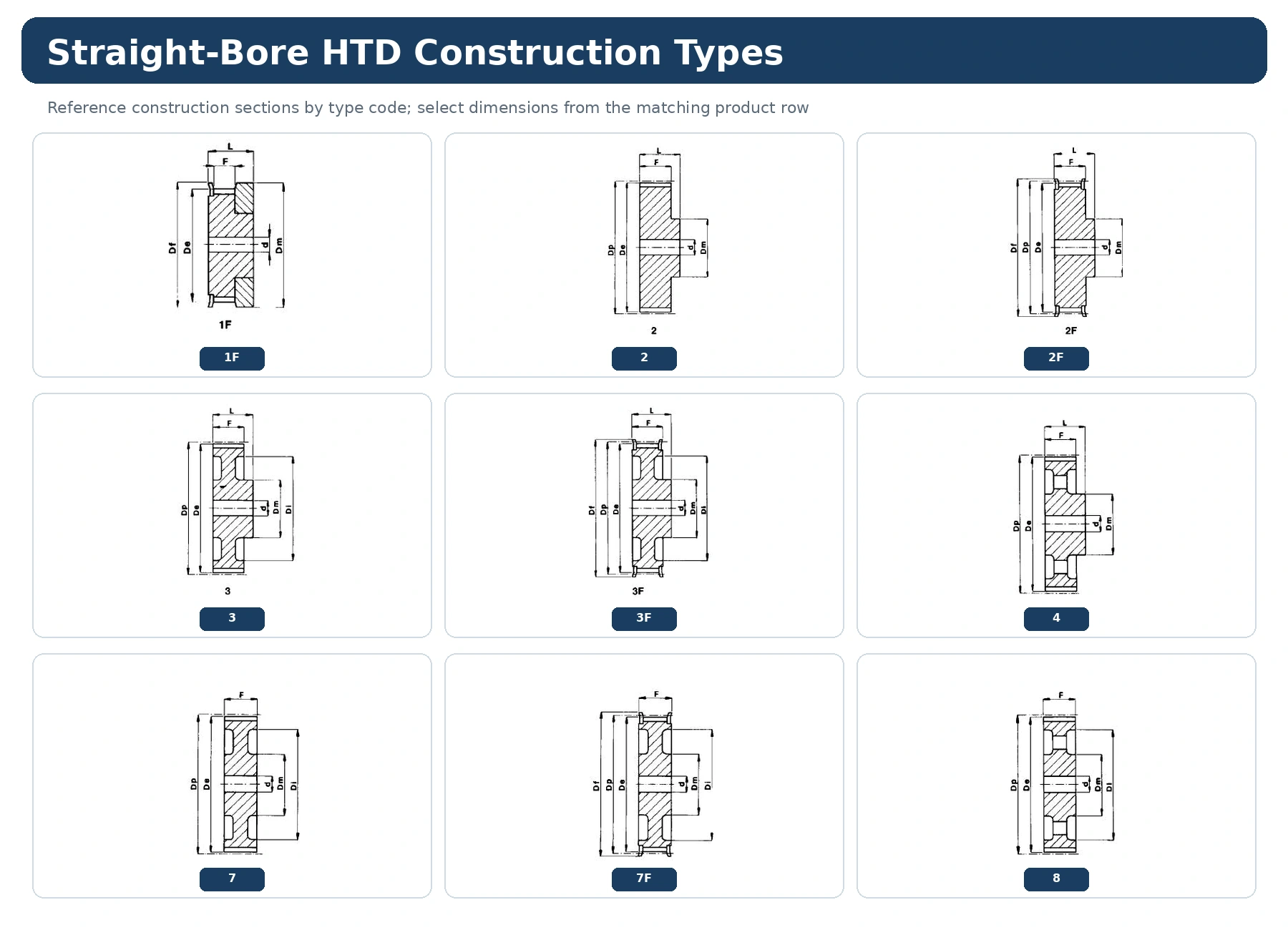
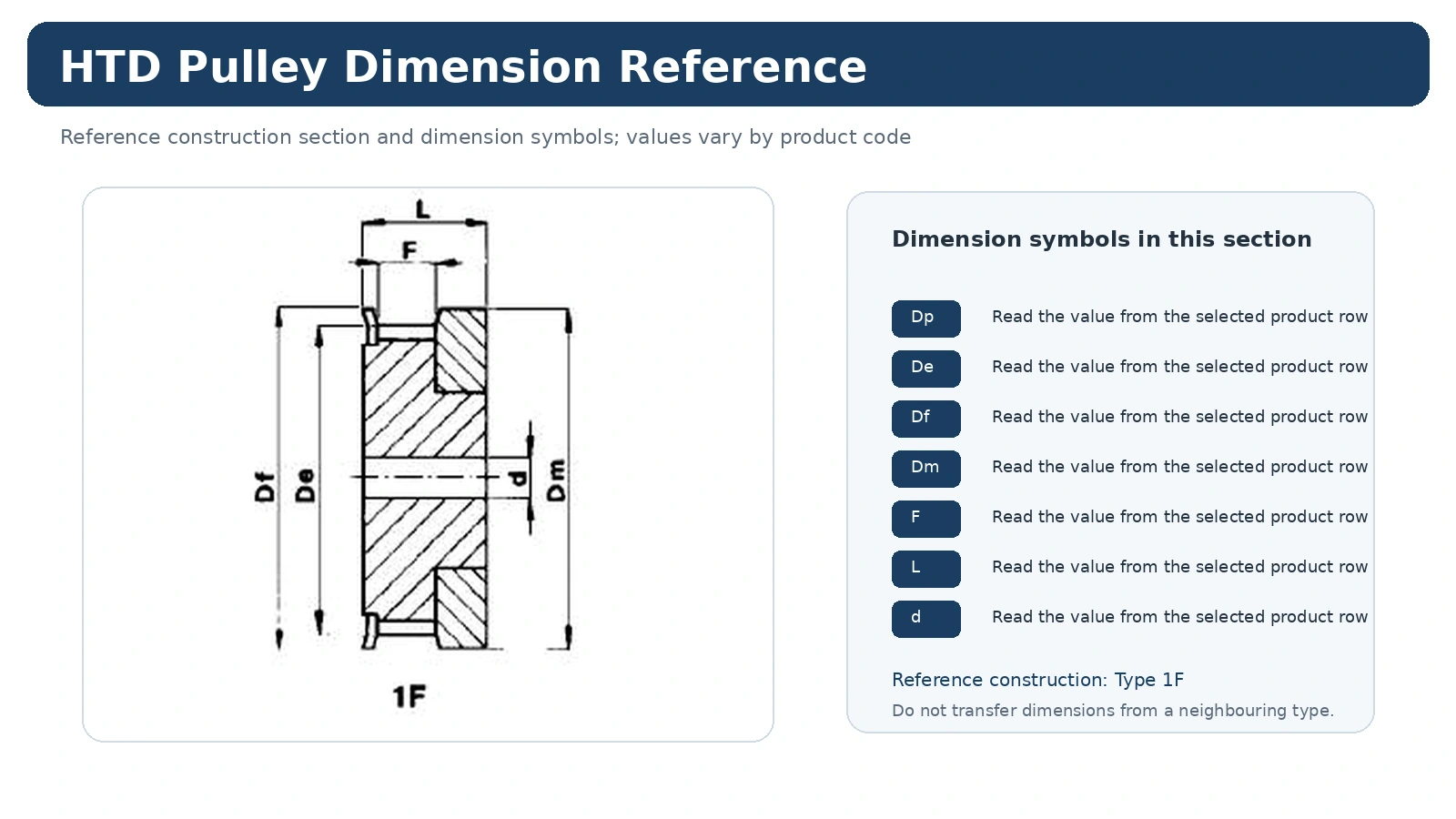
施工図には記号とその関係性が説明されています。行ごとの表には、選択したモデルの実際の値が記載されています。製品が似ているからといって、図を拡大縮小したり、別の幅や歯数の寸法を転用したりしないでください。
カタログで必要な嵌合、振れ、公差、仕上げ、または文書が規定されていない場合は、その要件をプロジェクト図面または見積依頼書に記載し、注文審査の一部としてください。
リリースチェックリスト
ベルト/プロファイル識別情報、有効幅、歯数、取り付け方法、数量、図面改訂履歴は、同一の技術注文行に記載してください。新規ドライブの場合は機械の仕様を追加し、交換作業の場合は鮮明な写真と寸法を追加してください。これにより、バラバラの寸法の羅列ではなく、確認可能な構成で購入手続きを進めることができます。
このガイドが代替しないもの
このガイドは、選定および測定プロセスを整理するためのものであり、正確な製品一覧、ベルトデータ、またはプロジェクト図面に取って代わるものではありません。必要な出力、トルク、速度、適合性、公差、または使用限界が関連するカタログ表または承認済み図面に記載されていない場合は、設計または見積依頼の入力情報として保管し、実際の駆動装置で確認してください。
その境界線は調達時に役立ちます。なぜなら、一般的な技術的説明が、あたかもすべてのHTDプーリー構成に対して保証された値であるかのように後から引用されるのを防ぐからです。
Apply the Material And Flange Review to a Real Machine
Collect exact product code, catalogue material, flange arrangement, environment and any requested finish. Use the catalogue or dimension drawing to name features consistently, then separate measured machine values from catalogue values. The working rule is simple: do not infer material from color or use flanges to compensate for an unresolved alignment problem. If the old component is worn or modified, treat its measurements as field data rather than assuming they are the original nominal dimensions.
交換作業の場合は、フロントハブとリアハブの関係を比較し、どちらの面がベルトラインを定めるかを確認してください。新規設計の場合は、製品コードを選択する前に、速度関係、中心距離、デューティサイクル、および設置範囲を記録してください。これにより、後日ドライブを修理する際に、選択内容を追跡できます。
図面を使用して残りの隙間を埋める
標準製品行では、ピッチファミリー、歯数、および多くの外形寸法を定義できますが、プロジェクト固有の軸嵌め合い、キーの詳細、ハブの変更、仕上げ、または検査限界については、図面が必要になる場合があります。図面を管理されていない参照寸法で埋め尽くすのではなく、機械基準と実際に組み立てを制御する寸法を表示してください。
カタログに掲載されている構成のうち、2つが候補として考えられる場合は、まだ不明な点を特定し、その特徴を直接測定してください。これは、外径が最も近い構成や、最も馴染みのある写真を選ぶよりも信頼性が高い方法です。
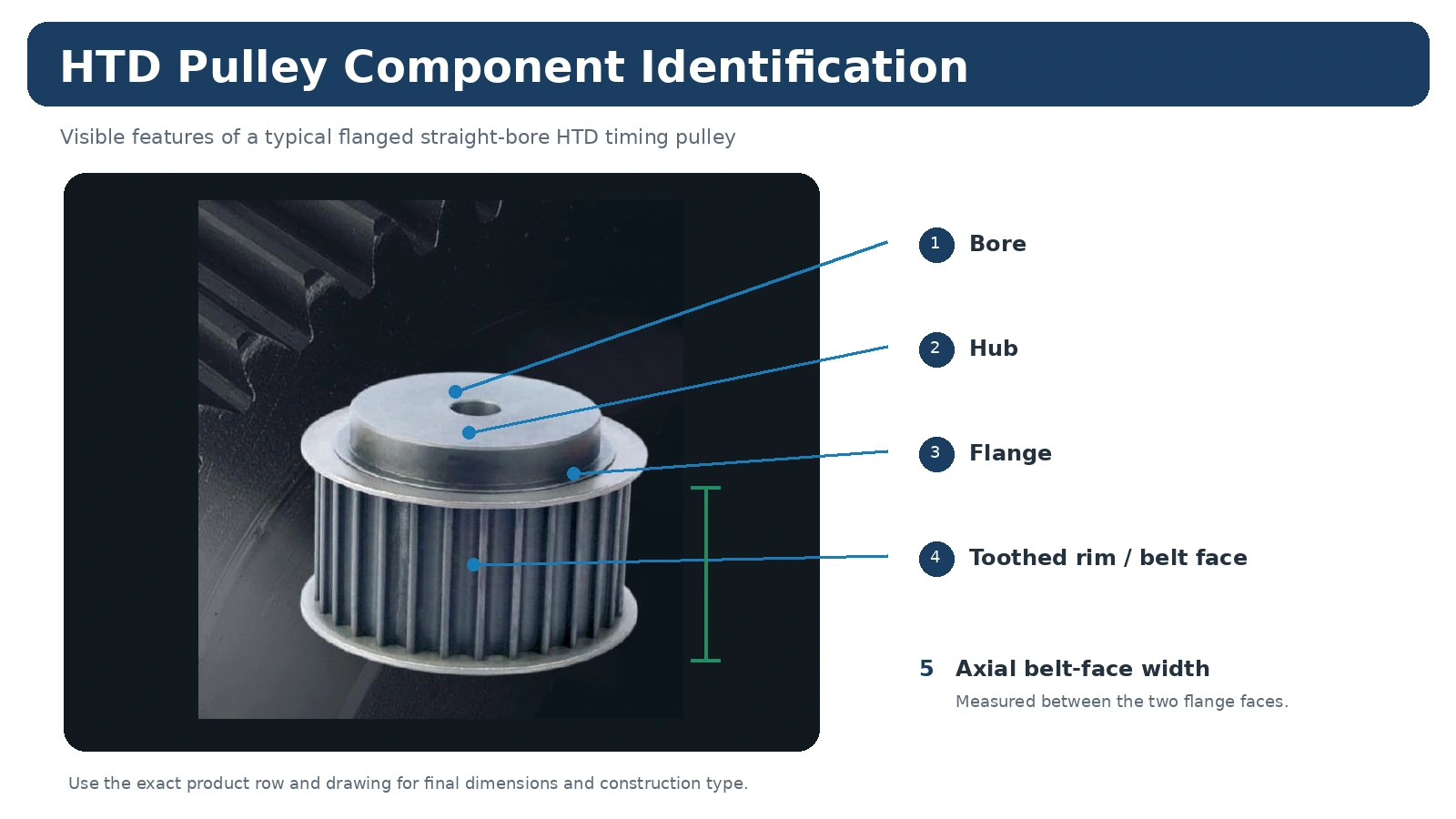
Release Data for Material And Flange Review
購入明細には、HTDファミリー、幅シリーズ、歯数、ボアまたはブッシュ、数量、および図面改訂版(該当する場合)といった、製品の完全な識別情報を含めてください。注文固有の材料、仕上げ、検査、または文書化要件は別途追加してください。これにより、メール履歴から決定内容を再構築することなく、承認された構成を復元できるため、後々の交換作業が容易になります。
Separate Material Choice From Geometry Confirmation
Material and flange decisions should follow the real operating requirement, not a visual preference. Identify the supported material for the selected catalogue row first, then state any project requirement for inertia, corrosion environment, finish, tracking flange arrangement or special inspection. A requested material change can alter machining route and minimum quantity, so it should be reviewed before production release. Do not assume that two pulleys with similar appearance share the same material or flange construction.