HTD Pulley Material and Flange Selection: Choose material and flange arrangement from the actual catalogue configuration and machine duty.
这项决定控制着什么
Choose material and flange arrangement from the actual catalogue configuration and machine duty. The decision should be documented with the belt designation, product code or drawing because a timing pulley is part of a drive system. A visual match does not prove tooth compatibility or shaft fit.
推荐工作流程
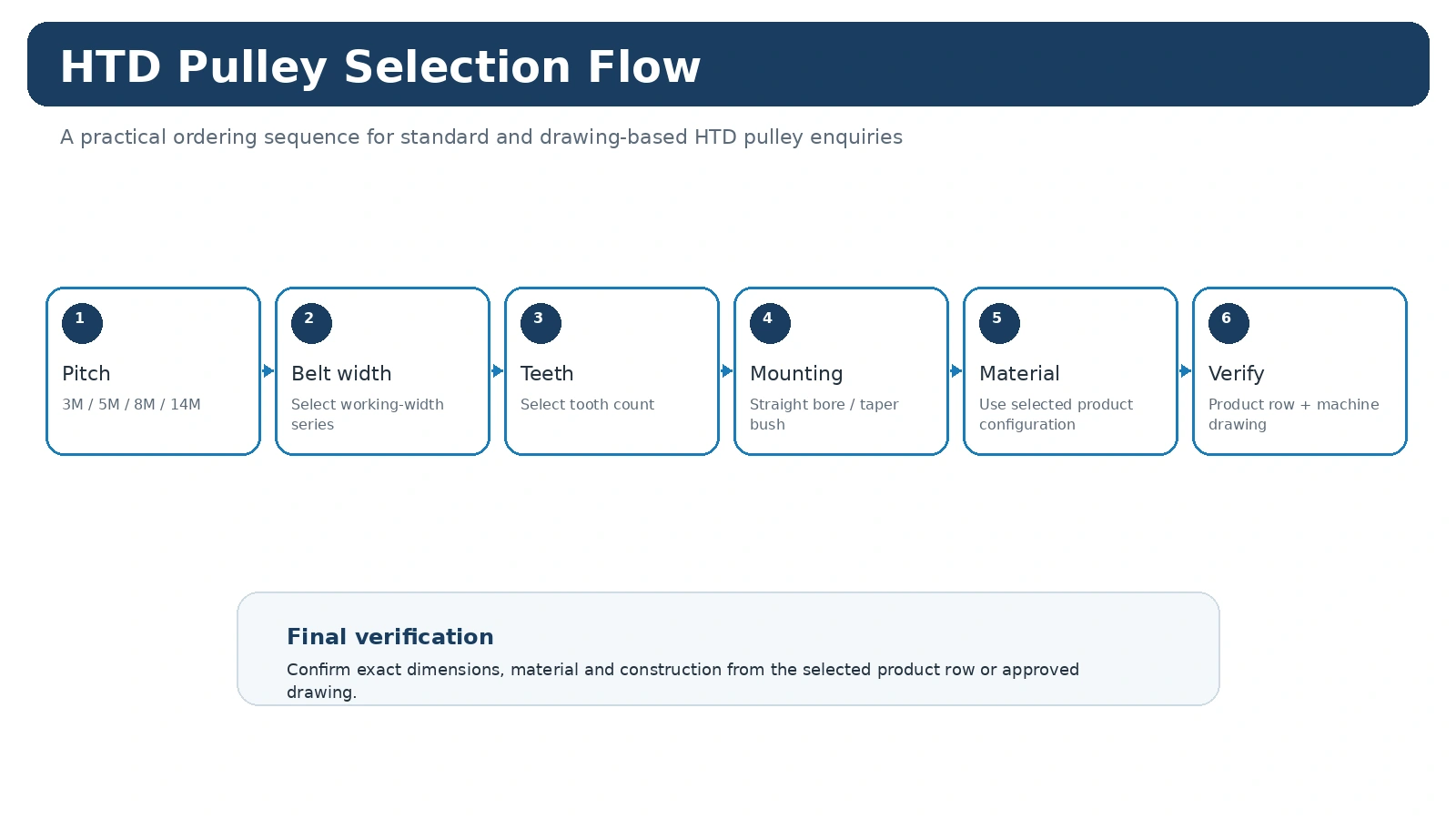
首先确认配套皮带和驱动装置的要求。确认节距/齿形、齿数和工作宽度。然后检查轴接口、轮毂和法兰轮廓、材料以及任何受控检验要求。对于更换件,测量旧件两侧的尺寸,并记录皮带线相对于稳定机器基准的位置。
避免常见错误
- 按外径选择,忽略齿形。
- 假设所有具有相同标称螺距的曲线轮廓均可互换。
- 仅测量一侧,且未测量轮毂凸起或偏移的皮带线。
- 孔配合、键槽、衬套规范或检验要求将在报价后再确定。
- 在没有机器和皮带设计依据的情况下,使用通用的皮带张力或公差值。
在询价单中使用本指南
Material and Flange Choices Follow the Actual Configuration
Material availability and flange construction can vary within a family as tooth count and construction type change. Use the individual product row before requesting a material or flange arrangement.
If the machine has persistent edge contact or corrosion concerns, document the actual condition. Alignment or shaft movement should be addressed separately from an order-specific material or finish requirement.
Material and Flanges Belong to the Exact Construction Row
Catalogues may change material and flange construction with size. Use the material stated for the selected row. Flanges guide the belt at the pulley edges, but persistent edge contact is also a reason to inspect belt line, alignment and shaft support.
当决策涉及现有机器时,务必将测量值、目录值和新项目需求分开。这样可以避免现场测量值被误认为是标称尺寸,或将所需变更误认为是标准系列特征。
结合使用图纸和表格
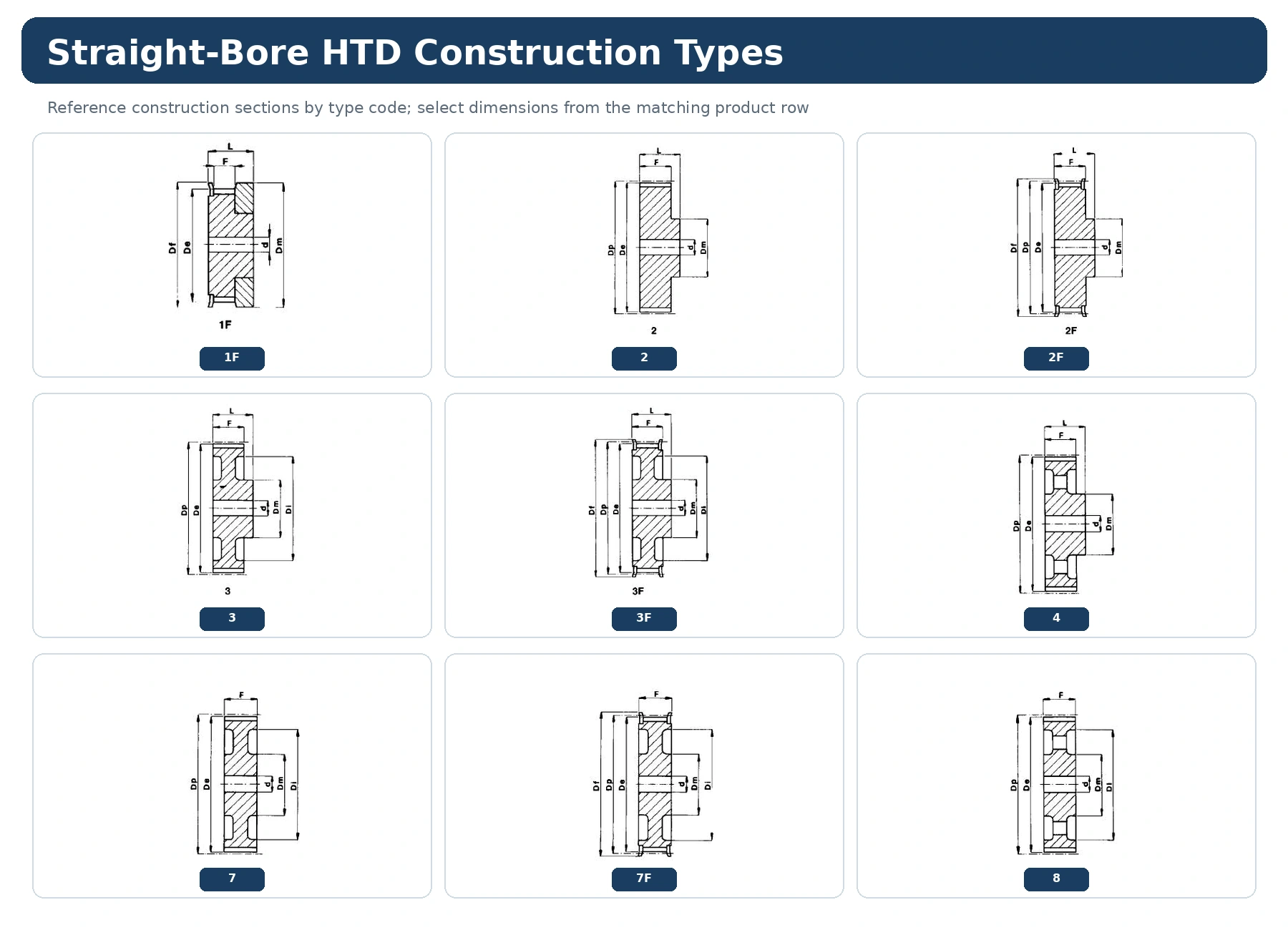
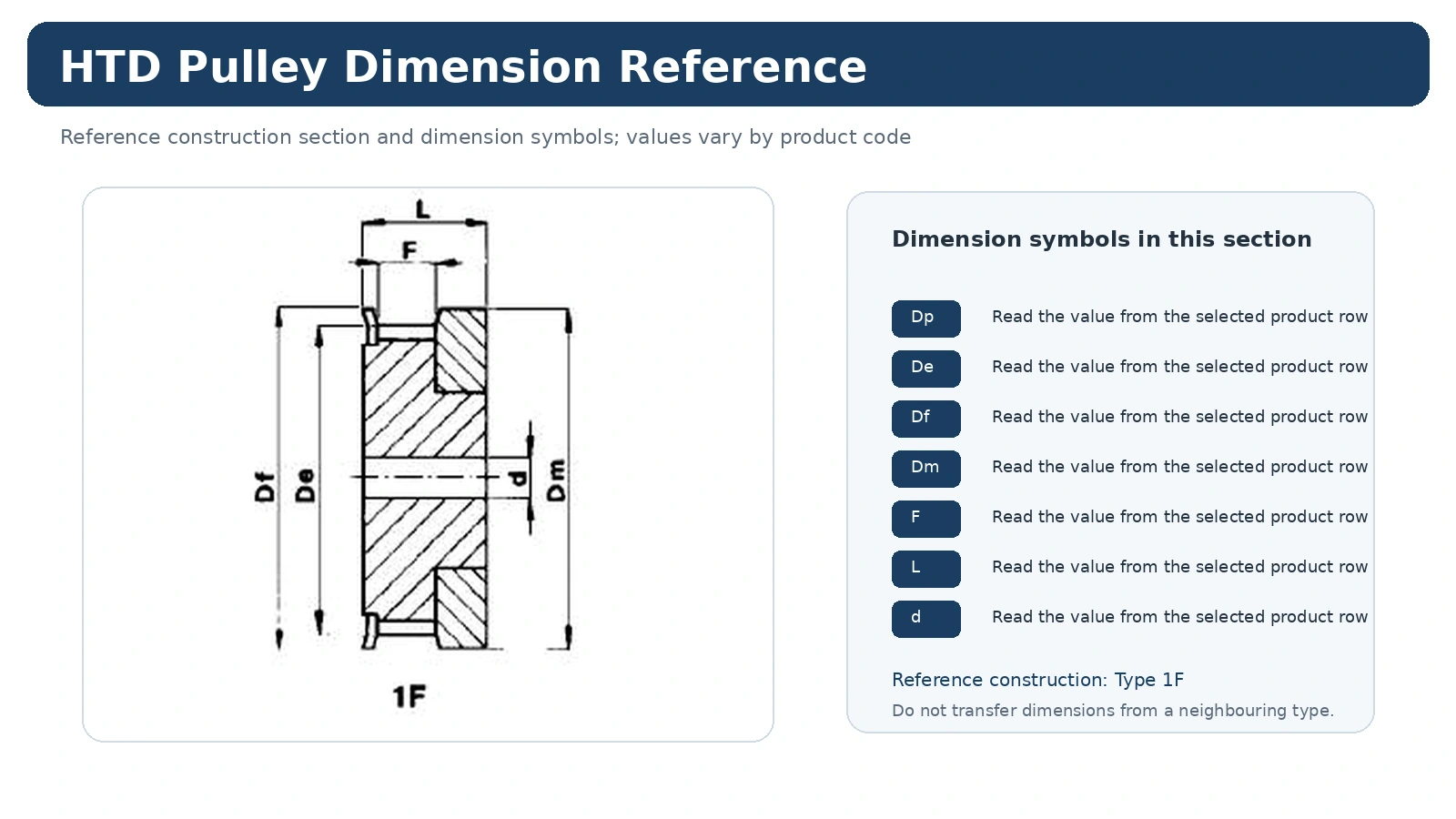
施工图解释了各种符号及其关系。行对应的表格提供了所选型号的实际数值。请勿仅因产品外观相似而缩放图示或直接套用其他宽度或齿数的产品的尺寸。
如果产品目录没有规定所需的配合度、跳动量、公差、表面处理或文件,则应将该要求写在项目图纸或询价单中,并作为订单审查的一部分。
发布清单
在同一技术订单行中保留皮带/型材标识、工作宽度、齿数、安装方式、数量和图纸版本等信息。对于新驱动装置,请添加机器额定功率;对于更换工作,请提供清晰的照片和尺寸信息。这样,采购部门就能获得可核对的配置信息,而不是一堆零散的尺寸数据。
本指南不能替代的内容
本指南旨在帮助您组织选型和测量流程;但它不能替代具体的产品目录、皮带数据或项目图纸。如果相关产品目录或已批准的图纸中未列明所需的功率、扭矩、速度、配合度、公差或使用限制,请将其作为设计或询价单的输入信息,并在实际驱动系统中进行验证。
该边界在采购过程中很有用,因为它可以防止以后引用一般的工程解释,就好像它是每个 HTD 滑轮配置的保证值一样。
Apply the Material And Flange Review to a Real Machine
Collect exact product code, catalogue material, flange arrangement, environment and any requested finish. Use the catalogue or dimension drawing to name features consistently, then separate measured machine values from catalogue values. The working rule is simple: do not infer material from color or use flanges to compensate for an unresolved alignment problem. If the old component is worn or modified, treat its measurements as field data rather than assuming they are the original nominal dimensions.
对于更换工作,请比较前后轮毂的相对位置,并记录哪个轮毂面决定了皮带走向。对于新设计,在选择产品代码之前,请记录速度关系、中心距、负载特性和安装范围。这样,在日后维修驱动装置时,可以追溯所选产品。
利用图纸填补剩余缝隙
标准产品行可以定义节距族、齿数和许多包络尺寸,但项目特定的轴配合、关键细节、轮毂变更、表面处理或检验限值可能仍然需要图纸。应标明机床基准和实际控制装配的尺寸,而不是在图纸中填充不受控制的参考尺寸。
如果两种目录配置看起来都可行,请找出未知的部分并直接测量该特征。这种方法比选择外径最接近或照片最熟悉的配置更可靠。
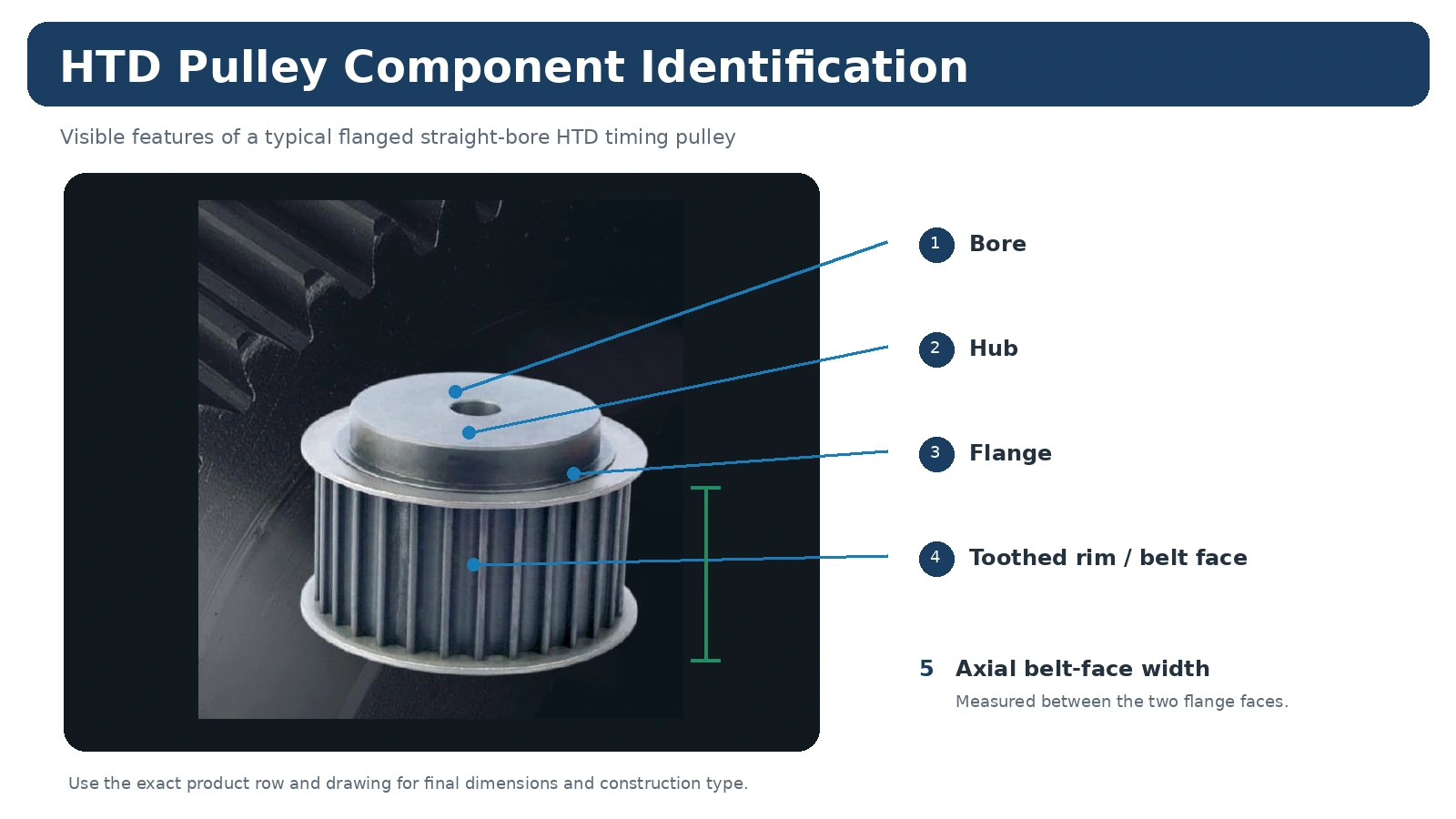
Release Data for Material And Flange Review
采购订单中应包含完整的产品标识信息:HTD 系列、宽度系列、齿数、孔径或衬套、数量以及图纸版本(如适用)。另行添加订单特定的材料、表面处理、检验或文档要求。这样可以简化后续的更换工作,因为无需从邮件历史记录中重新构建决策,即可恢复已确认的配置。
Separate Material Choice From Geometry Confirmation
Material and flange decisions should follow the real operating requirement, not a visual preference. Identify the supported material for the selected catalogue row first, then state any project requirement for inertia, corrosion environment, finish, tracking flange arrangement or special inspection. A requested material change can alter machining route and minimum quantity, so it should be reviewed before production release. Do not assume that two pulleys with similar appearance share the same material or flange construction.