Ремни ГРМ HTD are organized here by the selection variables an engineer or buyer actually needs: profile, tooth count, belt width, shaft interface and construction. Matching HTD timing belts for 3M, 5M, 8M and 14M pulley systems.
Как ориентироваться в этом семействе продуктов
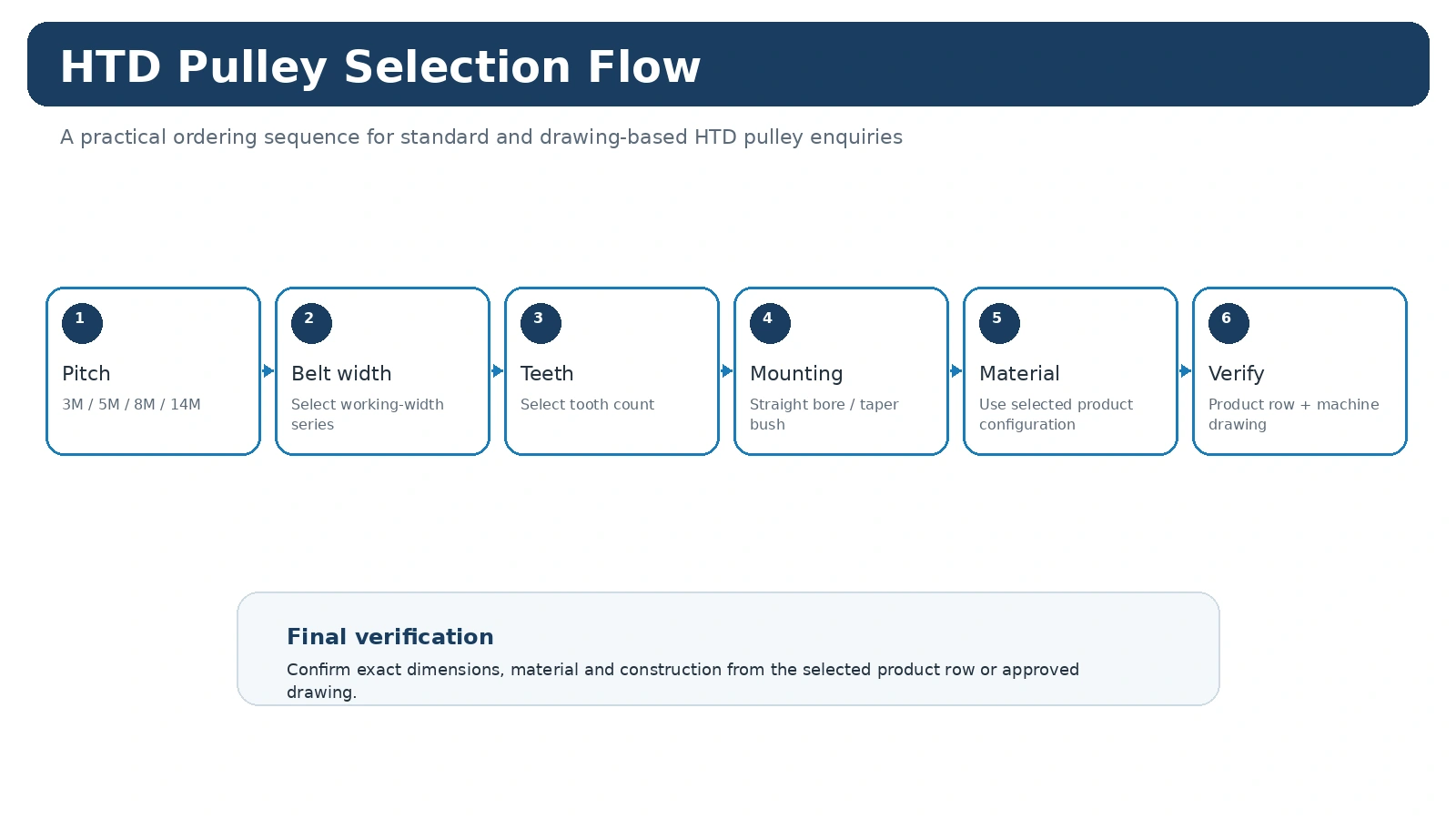
Начните с полного обозначения ремня. Затем определите количество зубьев или требуемое передаточное число, ширину рабочей поверхности ремня и способ крепления к валу. Не выбирайте ремень только по внешнему диаметру. Если это замена, запишите выступающую часть ступицы и расположение фланцев с обеих сторон, прежде чем сравнивать изделия.
Приведенные ниже карточки товаров ведут на страницы с подробным описанием, таблицами каталога, указанием размеров и рекомендациями по запросу коммерческого предложения. Используйте приведенную ниже таблицу товаров, чтобы открыть страницы с подробным описанием товаров и сравнить доступные конфигурации каталога в этом семействе.
Варианты продукта

Configuration Review
Use the mating belt and machine interface as the controlling inputs. Where a standard product does not fit the shaft or axial envelope, provide a drawing rather than adapting unrelated dimensions from several parts.
Проверка совместимости и измерений
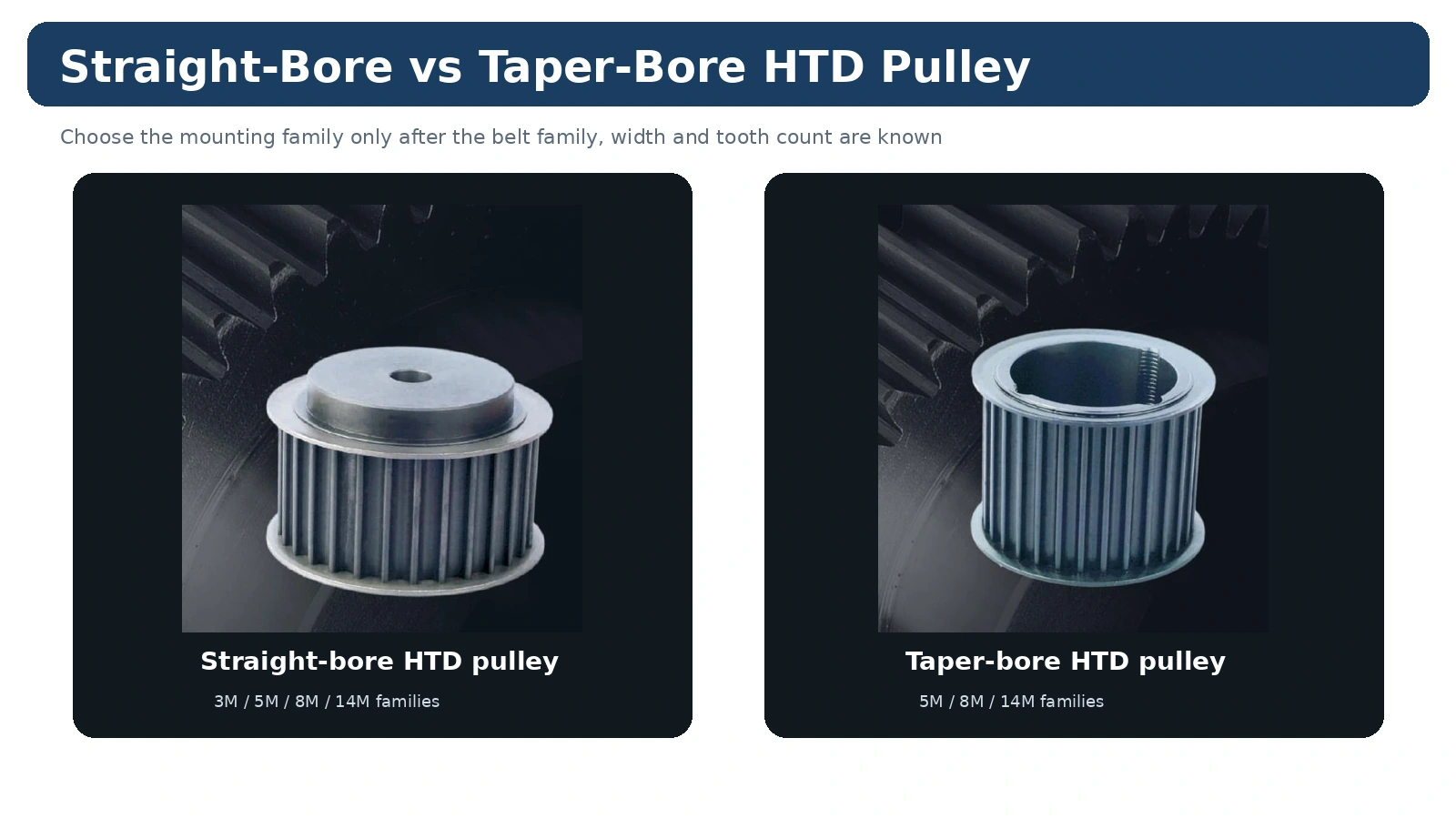
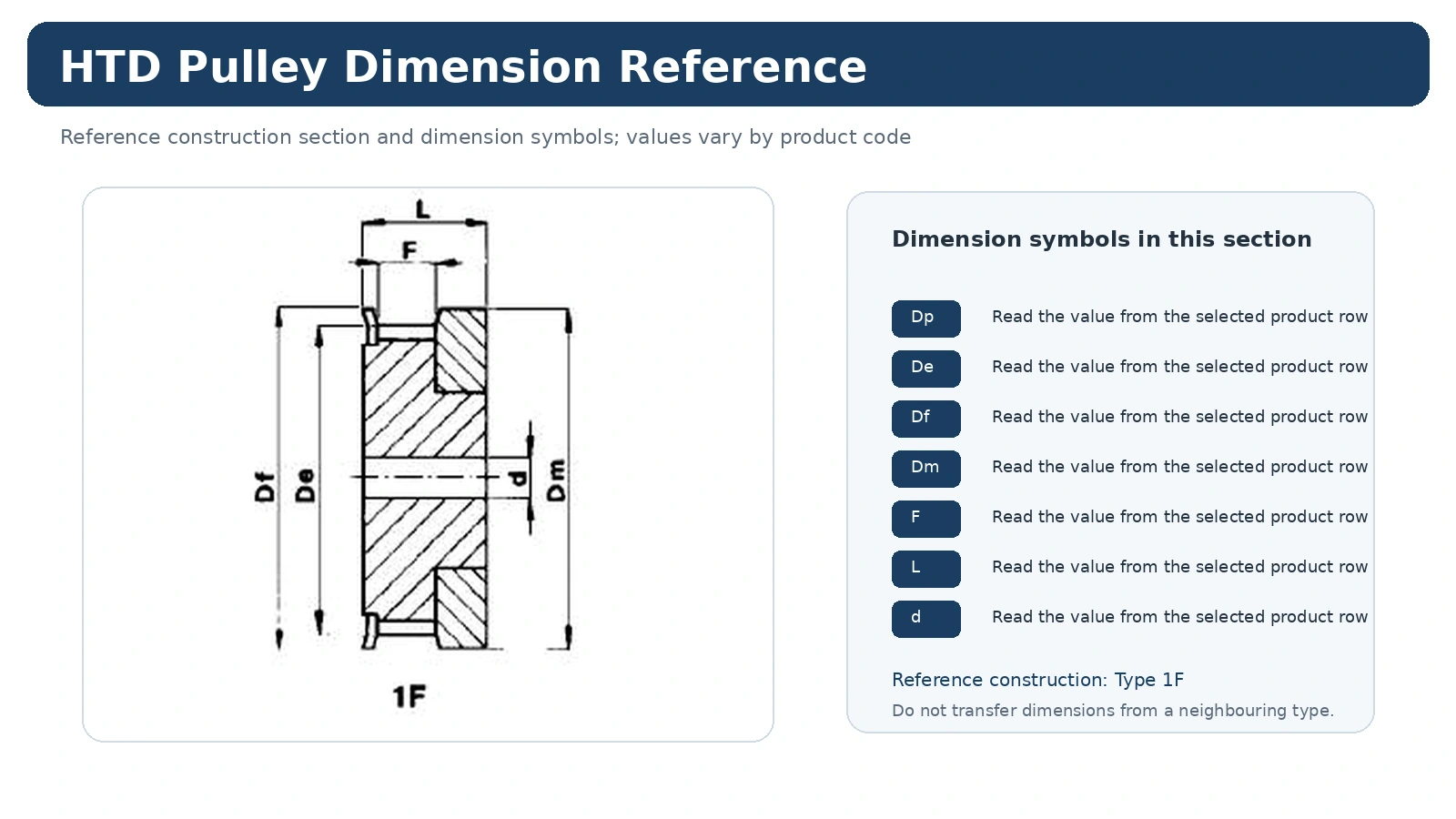
Перед заказом подтвердите зубчатую систему, количество зубьев, рабочую ширину, диаметр отверстия/втулки, выступ ступицы, расположение фланцев и положение линии ремня. Запишите на чертеже все критически важные параметры посадки или биения. При замене шкива проверьте существующий шкив на износ, который может исказить размеры, и убедитесь, что конструкция вала или проставки не была изменена.
Соответствующие инженерные рекомендации
Используйте Руководство по выбору шкивов HTD Полную последовательность принятия решений см. в [ссылка]. соответствие ремня и шкива когда код ремня известен, и провести проверку. страницы приложений для проверок, специфичных для конкретного оборудования.
Belt Identification Before a Matching Pulley Is Quoted
When the belt marking is readable, preserve the complete designation in the enquiry rather than reducing it to only the pitch number. Width and family identification help keep the belt-side decision separate from the pulley shaft interface.
If the belt is damaged or the marking is unclear, send photographs and the existing pulley information together. A replacement set should be confirmed from the complete drive record rather than from visual similarity alone.
HTD Timing Belts FAQ
Какая информация необходима для составления коммерческого предложения?
Укажите характеристики ремня/профиля, количество зубьев, ширину ремня, вал или втулку, количество и место назначения. Приложите чертеж для нестандартных ступиц, фланцев, материалов, отделки или требований к контролю качества.
Можно ли определить подлинность старого шкива по фотографии?
Фотография помогает определить конструкцию, но для подтверждения возможности замены необходимы размеры и маркировка соединительного ремня.
Взаимозаменяемы ли все шкивы с одинаковым номинальным шагом?
Нет. Необходимо точно определить семейство зубьев и тип механического интерфейса. Одного лишь номинального шага недостаточно для принятия решения о замене.
Match the Belt and Pulley Before Finalizing the Order
Use the complete belt marking to identify the HTD family and working width before choosing a pulley row. A shared pitch number is not a substitute for confirming the intended tooth family, especially when legacy or neighboring curvilinear profiles are involved.
For replacements, inspect both belt and pulley wear. Edge damage, flange polishing or uneven tooth contact can point to alignment or shaft-position problems that should be corrected rather than copied into a new set of components.
The Belt Is the First Compatibility Check
A synchronous pulley cannot be selected safely from pitch diameter alone. Start with the complete belt designation and confirm the HTD pitch family, then confirm belt width. The pulley tooth count establishes the speed relationship and physical size, while the shaft interface determines how the selected pulley is installed. A belt with the same nominal pitch number but a different tooth system should not be assumed compatible.
For replacement work, keep the old belt and pulley information together until the family is confirmed. If the belt marking has disappeared, tooth count, pitch-related measurements, width and clear tooth-profile photographs are more useful than a guess based on outside diameter.
Matching Sequence
- Read the complete belt marking and identify the HTD family.
- Record belt width and the tooth counts of driver and driven pulleys.
- Confirm the product-series width and construction in the pulley catalogue.
- Check center distance, belt line, shaft interfaces and installation access.
- Release the exact pulley row or drawing together with the matching belt reference.
When a new drive is being designed, provide speed relationship, duty and center distance so the belt and pulley arrangement can be reviewed as one system.
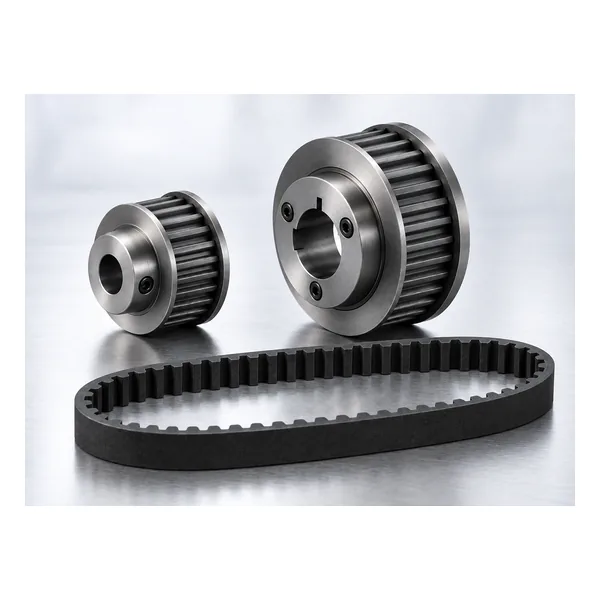
What Not to Infer From a Belt Code
The belt family helps identify the tooth geometry, but it does not define the pulley bore, hub, flange or material. Those remain pulley-selection decisions. Likewise, a pulley product code does not by itself confirm belt length or the installed center distance. Keep component identity and system geometry as separate checks.
Replacement Belt Data Should Stay With the Pulley Record
When maintenance teams replace belts and pulleys at different times, product identity can be lost. Store the accepted belt family, width, pulley tooth counts and center-distance reference together in the maintenance record. If a belt construction changes, review tensioning and application requirements rather than assuming the previous installation settings carry over unchanged.
For an RFQ, send the belt marking exactly as printed when it is legible. Avoid shortening the designation to pitch alone because the omitted family or width information may be the part that distinguishes the compatible pulley.
Keep Drive Records Complete After Installation
Store the installed belt code, pulley tooth counts and width-series information with the machine documentation. If the drive is retensioned or a belt construction changes during maintenance, note the change and review the relevant installation guidance. A future buyer should be able to identify both mating components without dismantling the machine.
When ordering a belt and pulley together, put both references on the same RFQ. That allows the pitch family and working width to be checked as a pair while the pulley shaft interface remains a separate, explicit requirement.