Polias de sincronização HTD para máquinas têxteis e de papel A seleção da polia deve levar em consideração a capacidade de serviço da máquina e o sistema de correias, e não apenas o diâmetro. Em processos de manuseio de materiais em bobina, rolos coordenados e máquinas de processo contínuo, a precisão e a facilidade de manutenção da polia sincronizadora dependem do conjunto completo composto por eixo, correia, rolamentos e sistema de tensionamento.
Contexto da máquina e ciclo de trabalho
Registre a velocidade do motor, a velocidade ou relação de transmissão, o torque ou a potência esperados, as partidas por hora, o tempo de reversão, a distância entre centros e as horas de operação. Documente também a contaminação, a temperatura, a lavagem ou a exposição à poeira e o acesso disponível para manutenção. Essas condições orientam se o projeto deve utilizar uma polia padrão de catálogo ou uma interface controlada por desenho.
Variáveis de seleção
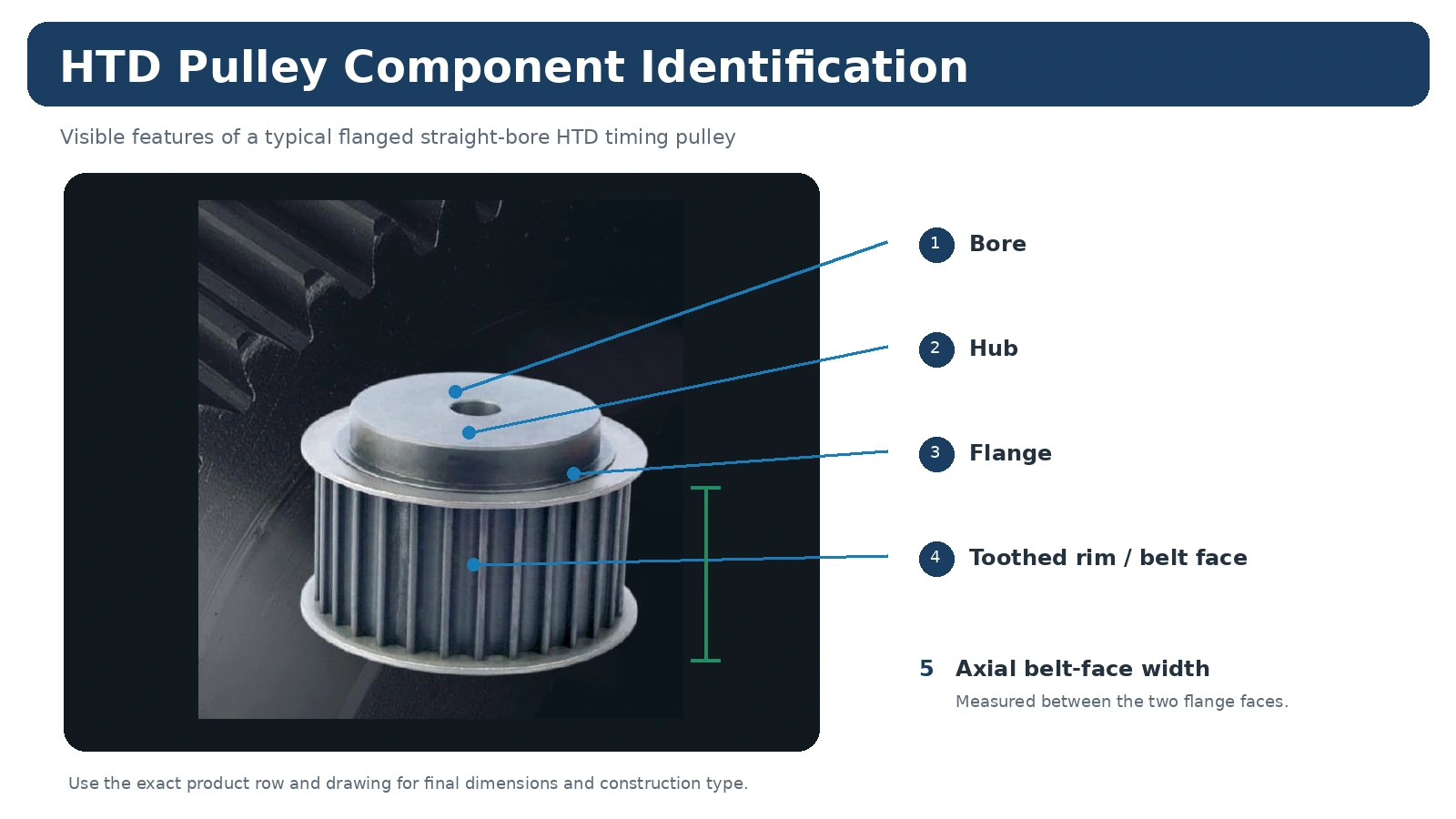
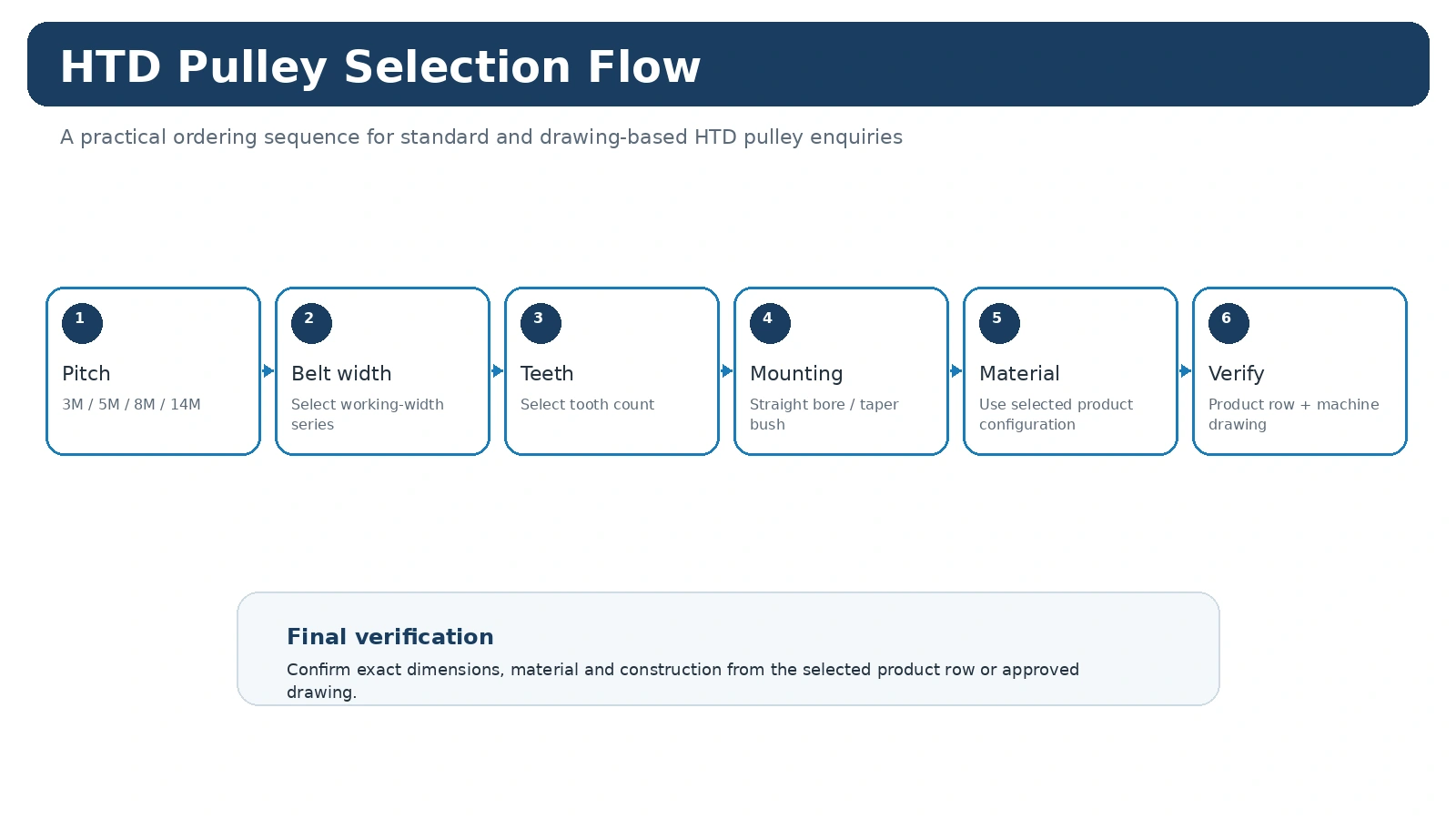
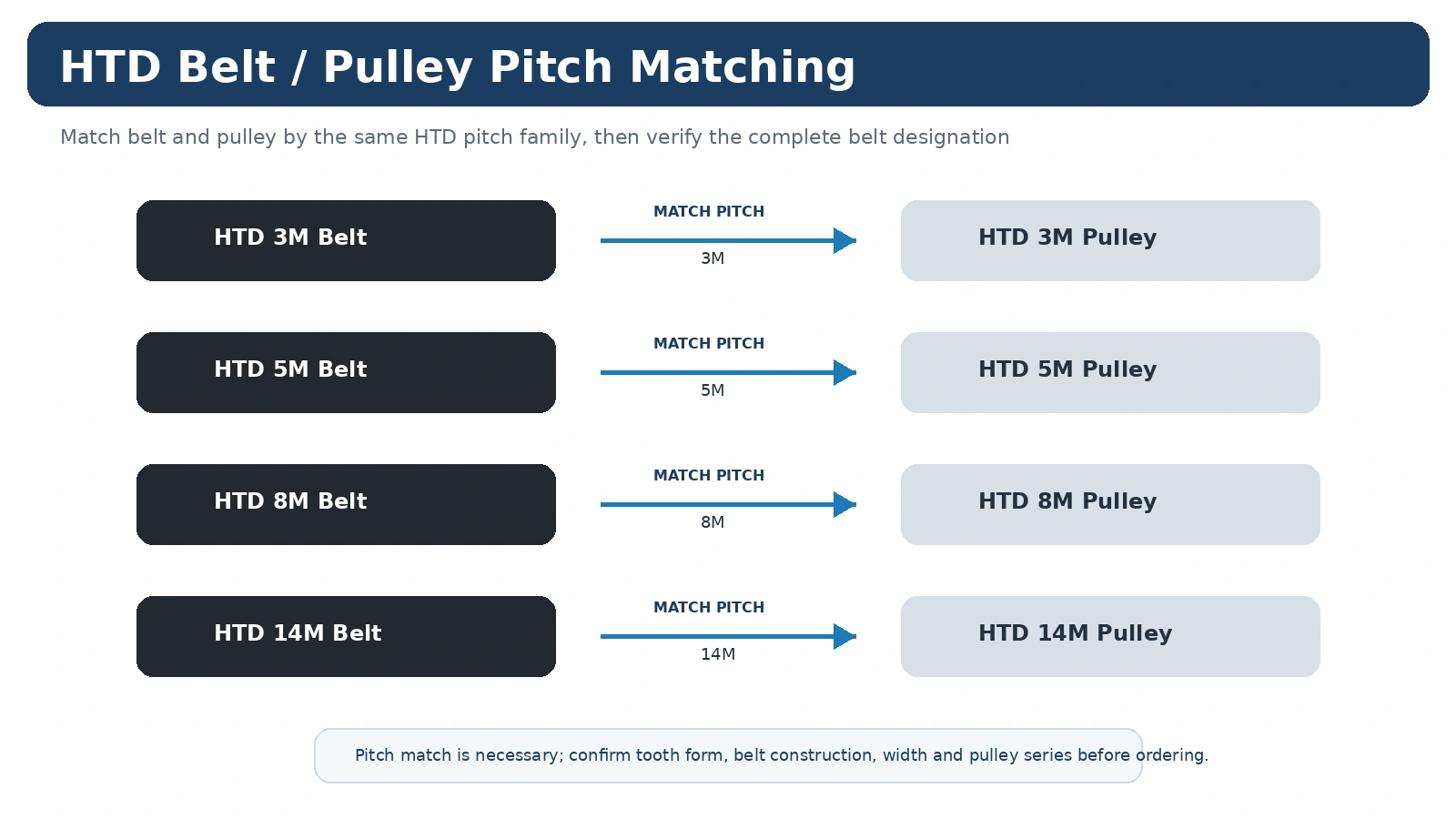
Primeiro, confirme a família exata da correia HTD. Em seguida, selecione o número de dentes, a largura de trabalho e a montagem do eixo. As correias 3M e 5M são adequadas para acionamentos compactos; as correias 8M e 14M são mais indicadas para configurações industriais maiores, mas a escolha final depende do cálculo do acionamento e dos dados da correia. A projeção do cubo e a disposição do flange devem ser compatíveis com as dimensões físicas da máquina.
Integração e verificações de segurança
Alinhe as faces e os eixos das polias, mantenha as proteções e os componentes adjacentes afastados da trajetória da correia e utilize as especificações do fornecedor da correia ou as bases de projeto da máquina para o tensionamento. Inspecione o alinhamento das bordas e a retenção das polias após o comissionamento. Se o acionamento desempenhar uma função crítica para a segurança, aplique os requisitos de avaliação de risco e validação do fabricante da máquina, em vez de se basear em uma página genérica de especificações do componente.
Preparação da Solicitação de Cotação
Envie a marcação da correia, a relação desejada ou o número de dentes da polia, a largura da correia, a interface do eixo, a distância entre centros, as informações de serviço, a quantidade e um desenho ou esboço da máquina. Compare. famílias de polias HTD, use o guia de seleçãoou revisão planejamento de inspeção antes de fazer o pedido.
Preserve a linha de correia em equipamentos de manuseio de fibras e bobinas.
As máquinas têxteis e de papel podem combinar operação contínua com restrições relacionadas a fibras, poeira de papel ou manuseio de bobinas. A escolha do produto ainda começa com a família de correias, a relação de transmissão, a interface do eixo e o tamanho disponível, em vez de uma etiqueta da indústria.
Para trabalhos de substituição, registre a posição da face de trabalho e inspecione o contato do flange antes da desmontagem. Informe a contaminação local ou as condições de umidade somente quando forem realmente aplicáveis à estação da máquina.
Traduzir a capacidade de serviço da máquina em uma solicitação de cotação para polias.
Em seções de manuseio de bobinas, alimentação e produção coordenada, a polia deve ser selecionada como parte do acionamento síncrono, e não como uma roda isolada. Registre a operação contínua, a presença de fiapos ou poeira, a sensibilidade de alinhamento e o acesso para inspeção periódica. Para um novo acionamento, informe também a velocidade do motor, a velocidade ou relação de transmissão necessária, o torque ou a potência, a distância entre centros e as horas de operação. Essas informações definem o contexto em que a família de correias e o número de dentes irão operar; elas não substituem a geometria do catálogo.
Para trabalhos de substituição, fotografe o percurso da correia instalada e ambos os lados da polia antes da desmontagem. A marcação da correia, a face de trabalho, o número de dentes, a interface com o eixo e a projeção do cubo são geralmente mais úteis do que apenas o diâmetro externo.

Verificações de integração antes do lançamento
Confirme se a polia selecionada mantém a correia no plano da máquina existente e deixa espaço livre para proteções, rolamentos e componentes adjacentes. Analise como a peça será instalada e removida; um cubo que, de outra forma, seria adequado pode ser impraticável se bloquear o acesso para manutenção.
Se a aplicação apresentar problemas recorrentes de alinhamento, desgaste nas bordas ou tensão, registre esses sintomas antes de alterar a geometria da polia. Alinhamento, suporte do rolamento, condição do eixo e instalação podem gerar sintomas que não devem ser automaticamente atribuídos à polia.
O que enviar com a consulta
Forneça a identificação completa da correia ou do dispositivo de transferência térmica (HTD), incluindo número de dentes, largura de trabalho, diâmetro do furo ou bucha cônica, quantidade e destino. Para uma máquina nova, adicione os principais dados de operação; para uma peça de reposição, adicione fotos e as dimensões da peça antiga. Inclua no desenho quaisquer requisitos especiais de material, acabamento, tolerância ou inspeção para que possam ser comparados com a família de produtos selecionada.
Informações de manutenção importantes para polias de sincronização HTD em máquinas têxteis e de papel.
Após o comissionamento do acionamento, registre a designação da correia instalada, a série da polia, o número de dentes e os detalhes de montagem na documentação da máquina. Anote qualquer revisão de desenho utilizada para um cubo ou furo personalizado. Se uma manutenção posterior alterar o eixo, a bucha ou a família da correia, atualize o registro em vez de confiar no histórico de compras antigo.
Esse pequeno registro torna a resolução de problemas futuros mais confiável, pois a equipe de manutenção pode distinguir o desgaste normal de uma alteração de configuração ocorrida durante um reparo anterior.
Questões operacionais para o acionamento de máquinas têxteis ou de papel
Antes de selecionar uma família de polias, documente as velocidades dos rolos interligados, o percurso da bobina ou do fio, a distância entre centros, a presença de fibras ou poeira no ar, o acesso e a quantidade original de dentes. Essas informações definem o que o acionamento síncrono deve preservar. A tabela de produtos pode então ser usada para comparar a quantidade de dentes, as séries de largura e a geometria de montagem, sem presumir que apenas o nome da aplicação determine a capacidade.
O objetivo prático é o movimento coordenado dos rolos e a geometria estável da linha da correia. Analise toda a transmissão após qualquer alteração proposta, pois sistemas com eixos largos ou múltiplos podem ser sensíveis à posição axial e ao alinhamento em diversas polias. Caso a máquina existente não possua um desenho técnico, guarde as marcações da correia e as fotografias tiradas antes da remoção, juntamente com o registro de medidas, para que a substituição possa ser comparada com a instalação real.
Contexto de Instalação e Manutenção
Verifique o alinhamento da correia entre a polia motora e a polia movida, confirme se os eixos estão apoiados e alinhados e certifique-se de que as proteções, os componentes adjacentes e as ferramentas de serviço tenham folga adequada. Uma polia com dimensões próximas às originais ainda pode ser inadequada se um cubo mais longo, uma bucha diferente ou um arranjo de flange deslocar a correia do seu plano original.
Durante a manutenção, inspecione o estado dos dentes e flanges, bem como o desgaste da correia. Desgaste anormal nas bordas, acúmulo de poeira ou correções repetidas de alinhamento podem indicar um problema de alinhamento, suporte ou contaminação que deve ser resolvido antes da instalação do novo componente.
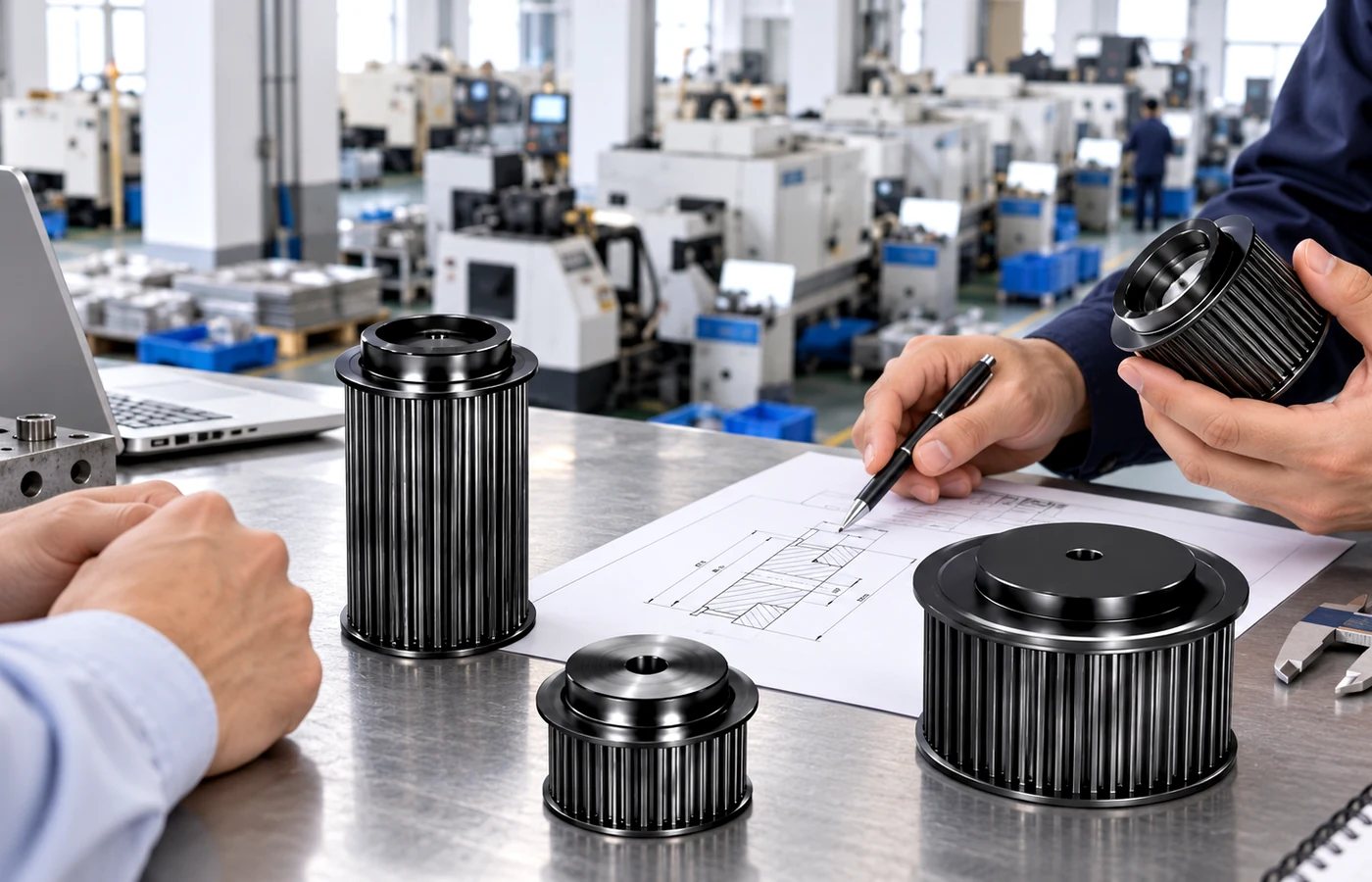
Dados de solicitação de cotação para o acionamento de máquinas têxteis ou de papel
Envie a especificação HTD/família de perfil, número de dentes, largura da correia, informações sobre o eixo ou bucha, quantidade e destino. Para uma nova transmissão, adicione a relação de velocidade, distância entre centros e condições de operação. Para substituições, inclua fotografias nítidas e as dimensões que controlam a linha da correia e a posição do cubo. Inclua quaisquer requisitos especiais de material, acabamento, marcação, inspeção ou documentação na solicitação de cotação ou no desenho antes da revisão da produção.