
Taper Bush HTD Timing Pulleys are organized here by the selection variables an engineer or buyer actually needs: profile, tooth count, belt width, shaft interface and construction. Taper-bush HTD pulley families with catalogue-defined bush codes and bore ranges.
How to Navigate This Product Family
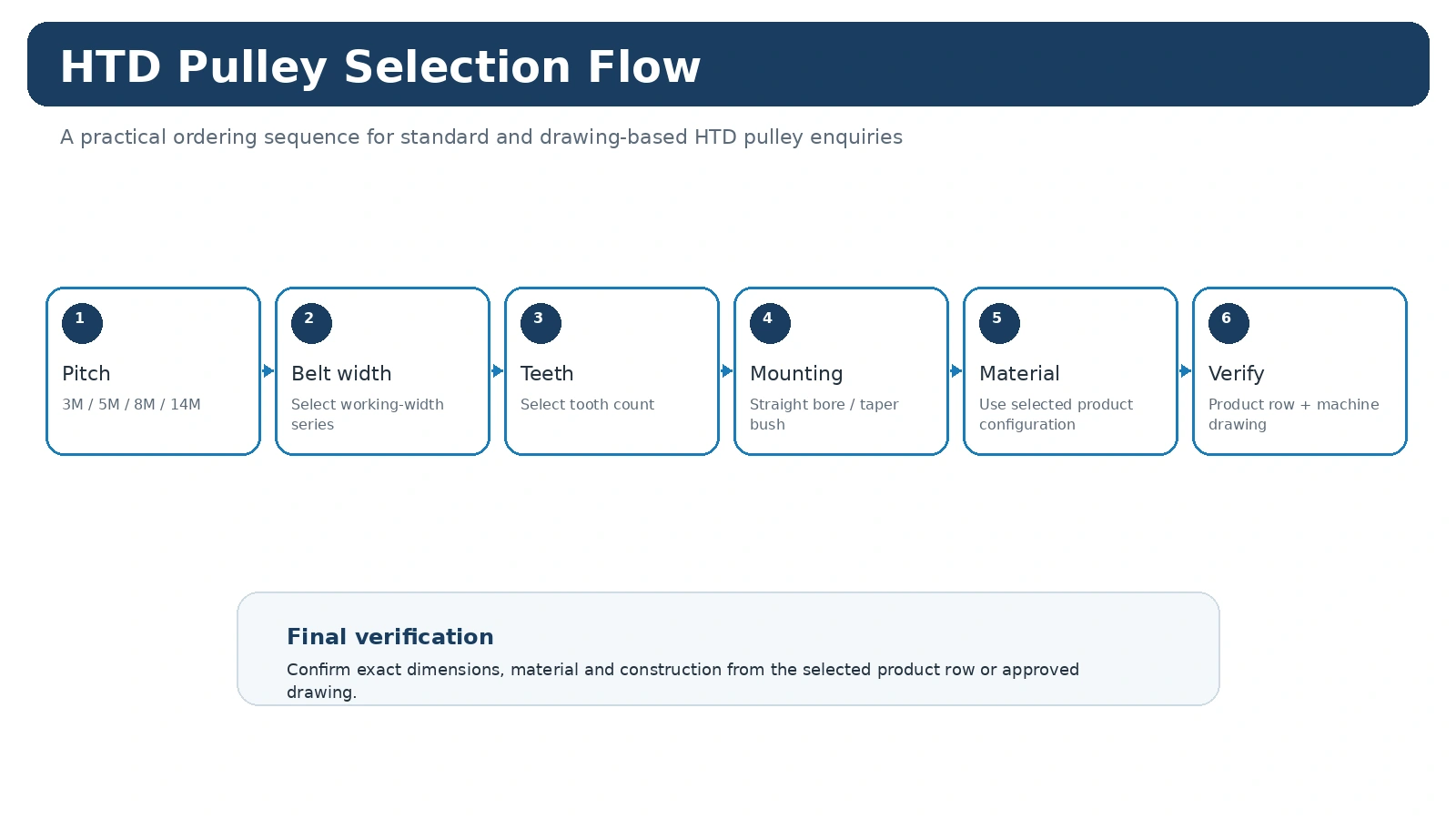
Start with the complete belt designation. Then identify tooth count or required speed ratio, belt face width and the shaft/mounting arrangement. Do not select by outside diameter alone. If this is a replacement, record hub projection and flange arrangement from both sides before comparing products.
The product cards below lead to detailed pages with catalogue tables, dimension references and RFQ guidance. Use the product grid below to open the detailed product pages and compare the available catalogue configurations in this family.
Product Options
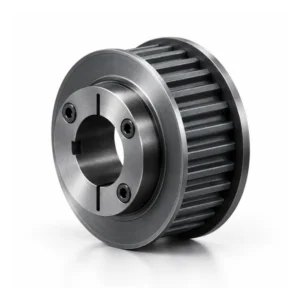
HTD 14M-115 Taper Bush Timing Pulley
14M HTD timing pulley in the 14M-115 taper-bush family. Select tooth count and the matching bush code from the catalogue row.
View Details →HTD 14M-170 Taper Bush Timing Pulley
14M HTD timing pulley in the 14M-170 taper-bush family. Select tooth count and the matching bush code from the catalogue row.
View Details →HTD 14M-40 Taper Bush Timing Pulley
14M HTD timing pulley in the 14M-40 taper-bush family. Select tooth count and the matching bush code from the catalogue row.
View Details →HTD 14M-55 Taper Bush Timing Pulley
14M HTD timing pulley in the 14M-55 taper-bush family. Select tooth count and the matching bush code from the catalogue row.
View Details →HTD 14M-85 Taper Bush Timing Pulley
14M HTD timing pulley in the 14M-85 taper-bush family. Select tooth count and the matching bush code from the catalogue row.
View Details →HTD 5M-15 Taper Bush Timing Pulley
5M HTD timing pulley in the 5M-15 taper-bush family. Select tooth count and the matching bush code from the catalogue row.
View Details →HTD 8M-20 Taper Bush Timing Pulley
8M HTD timing pulley in the 8M-20 taper-bush family. Select tooth count and the matching bush code from the catalogue row.
View Details →HTD 8M-30 Taper Bush Timing Pulley
8M HTD timing pulley in the 8M-30 taper-bush family. Select tooth count and the matching bush code from the catalogue row.
View Details →HTD 8M-50 Taper Bush Timing Pulley
8M HTD timing pulley in the 8M-50 taper-bush family. Select tooth count and the matching bush code from the catalogue row.
View Details →HTD 8M-85 Taper Bush Timing Pulley
8M HTD timing pulley in the 8M-85 taper-bush family. Select tooth count and the matching bush code from the catalogue row.
View Details →When a Taper Bush Arrangement Helps
A taper-bush pulley can simplify standardized shaft mounting when the pulley series, bush code and maximum bore all align. The bush number is not independent of the pulley row, so verify tooth count, construction type, bush and maximum bore together.
Compatibility and Measurement Checks
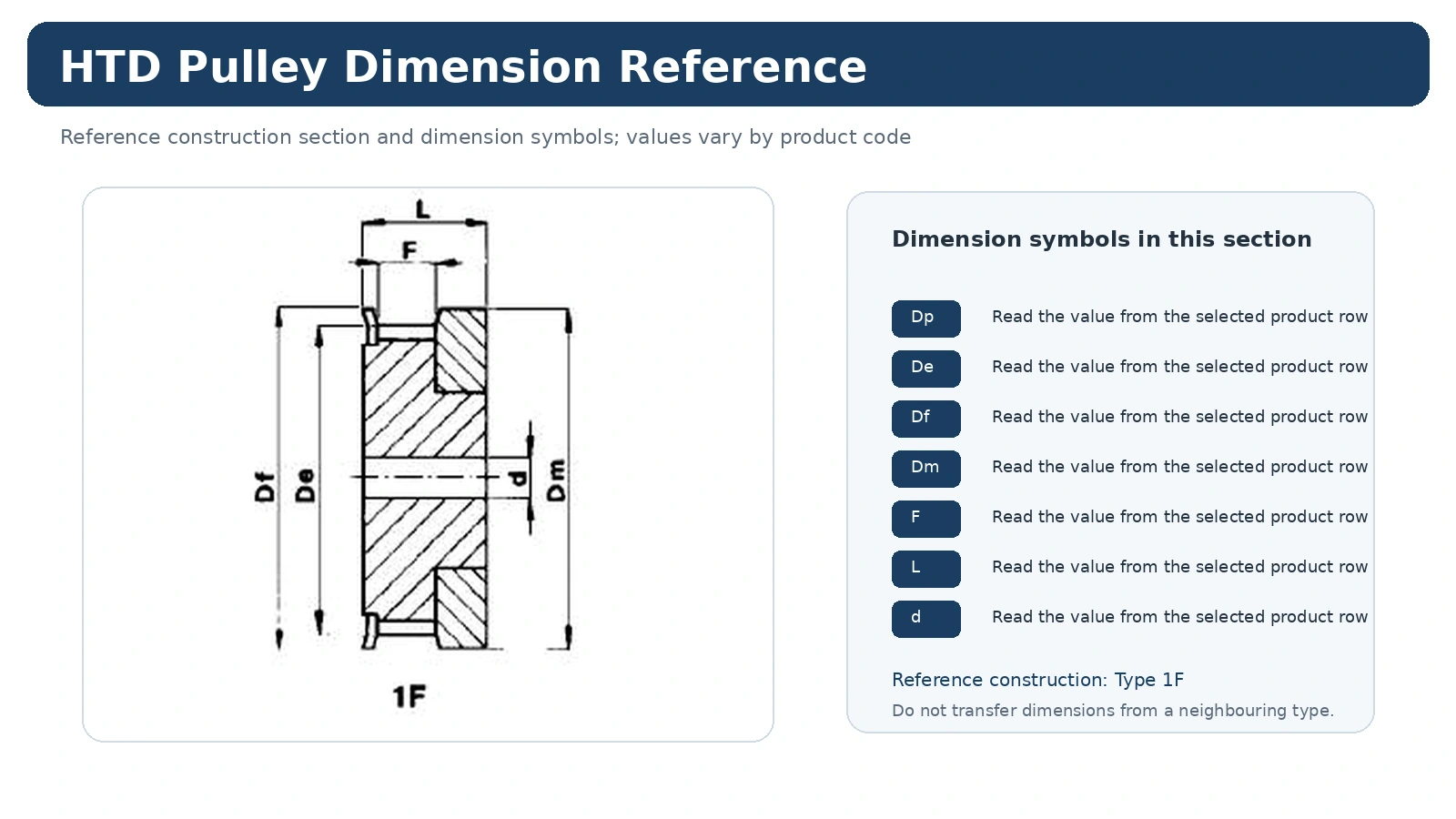
Before ordering, confirm tooth system, tooth count, working width, bore/bush, hub projection, flange arrangement and the belt-line location. Record any critical fit or runout requirement on the drawing. For replacement projects, inspect the existing pulley for wear that could distort measurements and check whether the shaft or spacer arrangement has been modified.
Related Engineering Guidance
Use the HTD pulley selection guide for a complete decision sequence, see belt and pulley matching when the belt code is known, and review application pages for machine-specific checks.
Taper Bush HTD Timing Pulleys FAQ
What information is needed for quotation?
Send the belt/profile, teeth, belt width, shaft or bush details, quantity and destination. Include a drawing for nonstandard hub, flange, material, finish or inspection requirements.
Can an old pulley be cross-referenced from a photo?
A photo helps identify construction, but dimensions and the mating belt marking are needed before a replacement can be confirmed.
Are all pulleys of the same nominal pitch interchangeable?
No. Confirm the exact tooth family and mechanical interface. Nominal pitch alone is not enough for a replacement decision.
Treat the Bush and Pulley as One Mounting Decision
A taper-bush HTD pulley is selected from the supported pulley series together with the bush designation and actual shaft. The bush should not be chosen as a visually similar accessory after the pulley has already been fixed.
For maintenance replacement, photograph the installed orientation, note the bush marking and record removal space before disassembly. Include the shaft diameter and any keyway condition on the RFQ so the mounting system can be reviewed as a complete interface.
Taper-Bush Availability Is Controlled by the Product Row
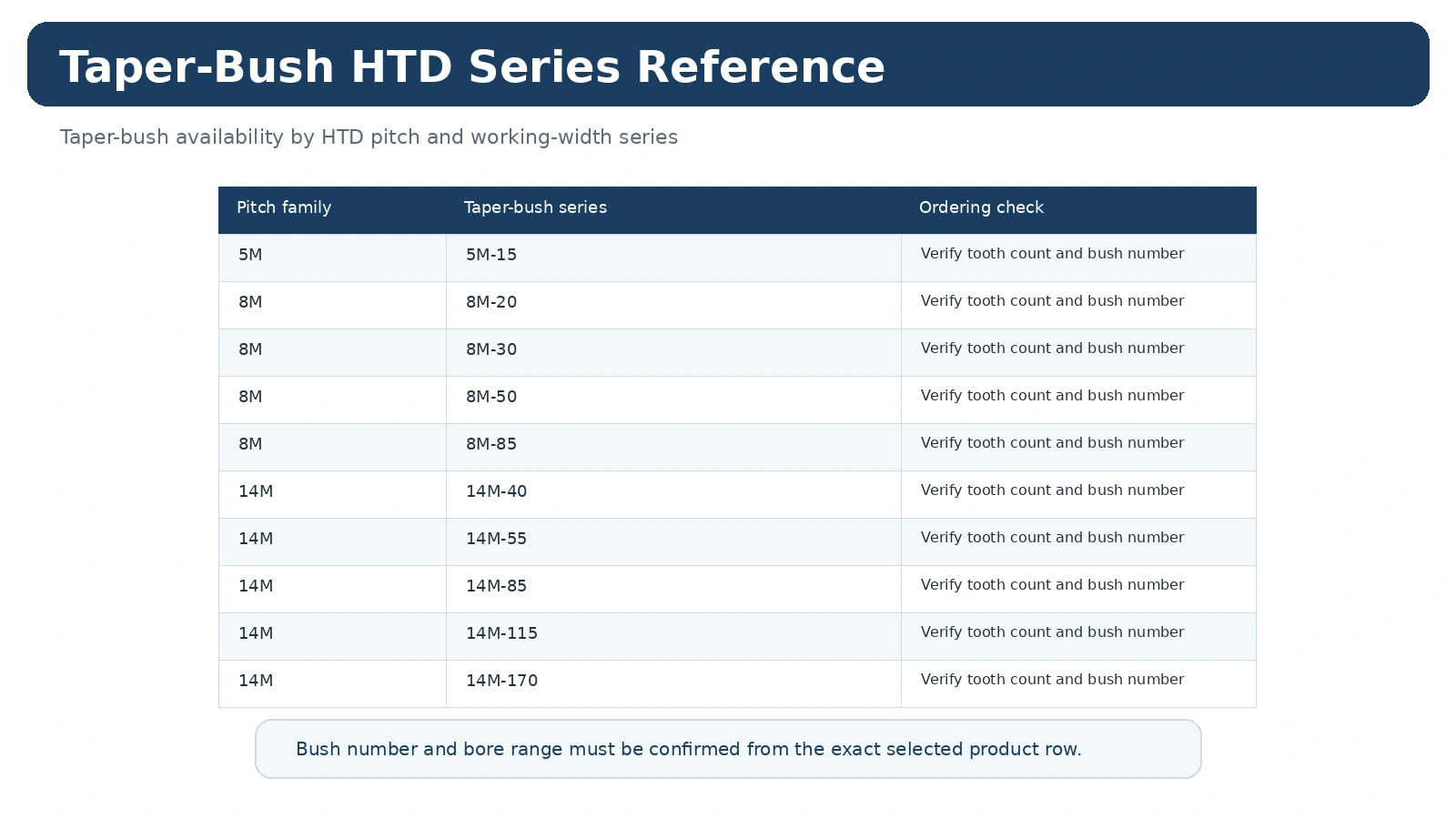
The taper-bush HTD catalogue does not simply duplicate every straight-bore series. The available taper-bush range on this site covers 5M-15; 8M-20, 8M-30, 8M-50 and 8M-85; and 14M-40, 14M-55, 14M-85, 14M-115 and 14M-170 families. Within those families, the supported bush designation changes with tooth count and construction type. The bush code must therefore stay attached to the exact pulley row during RFQ and ordering.
A stated maximum bore is a limit for the referenced bush arrangement, not the buyer’s ordered shaft diameter. Send the actual shaft size and required bush designation or ask for the interface to be checked from the shaft data.

Why the Bush and Pulley Must Be Reviewed Together
The taper interface positions and grips the pulley on the shaft, while the pulley body establishes the belt plane and tooth geometry. Changing the bush family, hub style or axial position can alter the installation even when the HTD pitch and tooth count are unchanged. Check guard clearance, adjacent bearings and the required belt centerline before releasing a replacement.
For a maintenance job, record the existing bush marking before disassembly. If the marking is unreadable, measure the shaft and pulley envelope and send photographs instead of guessing a bush number from apparent size.
Taper-Bush RFQ Checklist
HTD pitch, width series and tooth count.
Existing bush code where known, plus the actual shaft diameter.
Hub orientation, flange position, belt line and available clearance.
Quantity, drawing revision and any material, finish or inspection requirements.
Do Not Substitute Bush Codes by Appearance
Taper bushes with similar outside form can differ in size, bore range and installation dimensions. Read the bush designation from the existing component when possible and verify it against the exact pulley row. If the old marking is unreadable, send the shaft diameter and clear dimensional photographs instead of selecting a bush by visual similarity.
When a new bush/pulley pair is being specified, check axial clearance and the intended belt centerline at the same time. The mounting method solves the shaft connection; it does not remove the need to verify pulley width, tooth count, flange arrangement and machine clearance.
Service and Reordering
Keep the pulley code, tooth count, bush designation and actual shaft diameter together in the maintenance record. If a bush is changed during repair, update the record so a future replacement does not assume the original mounting remains in service. Also note the orientation of the hub and the belt-line datum used by the machine.
For mixed taper-bush orders, place each pulley/bush combination on its own line. Similar-looking bush parts should not be packed or recorded only by shaft diameter because the bush series is part of the interface definition.