HTD 3M Timing Pulley Selection Guide should be approached as a drive-system decision. The useful starting point is the mating belt and machine interface, followed by tooth count, working width, shaft mounting and duty conditions. This guide explains the checks that help an engineer or buyer turn HTD 3M timing pulley selection into an RFQ that can be verified against a catalogue row or drawing.
Identifiser drevet før du sammenligner dimensjoner
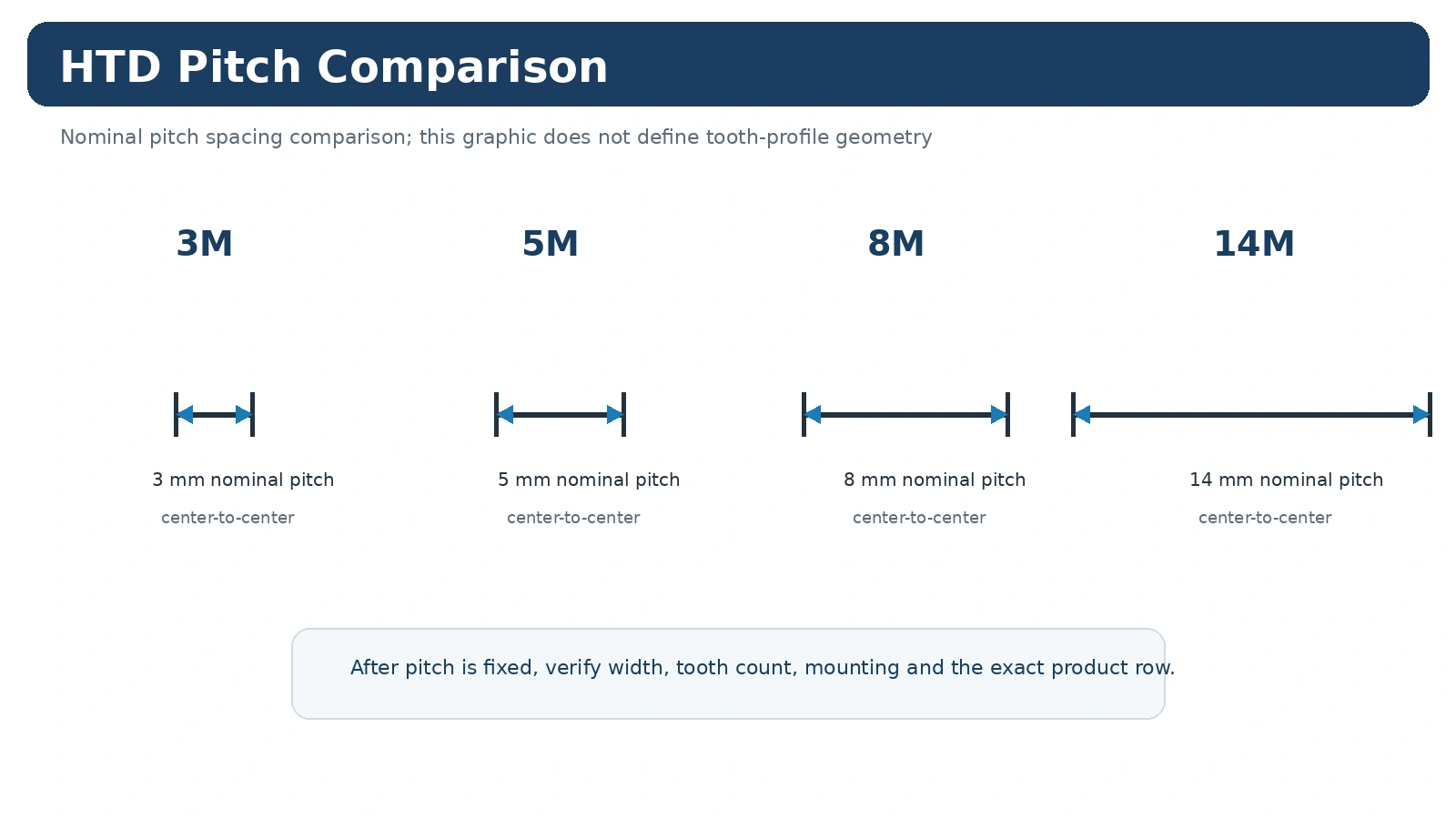
For HTD 3M timing pulley selection, identify the complete belt marking before comparing pulley diameters. HTD is a curvilinear synchronous system and the nominal pitch must stay associated with its profile family. Record the driver and driven tooth counts when an existing ratio must be preserved. For a new drive, document the target speed ratio, driver speed and expected load before choosing tooth counts. This prevents a component-level decision from overriding the machine requirement.
For et erstatningsprosjekt, sammenlign den målte verdien med det installerte beltet og maskinarrangementet før du bestemmer at en katalograd er likeverdig. For et nytt prosjekt, dokumenter designgrunnlaget slik at senere vedlikeholdsteam kan forstå hvorfor stigning, tanntall og monteringsstil ble valgt.
Dimensjoner som styrer installasjonen
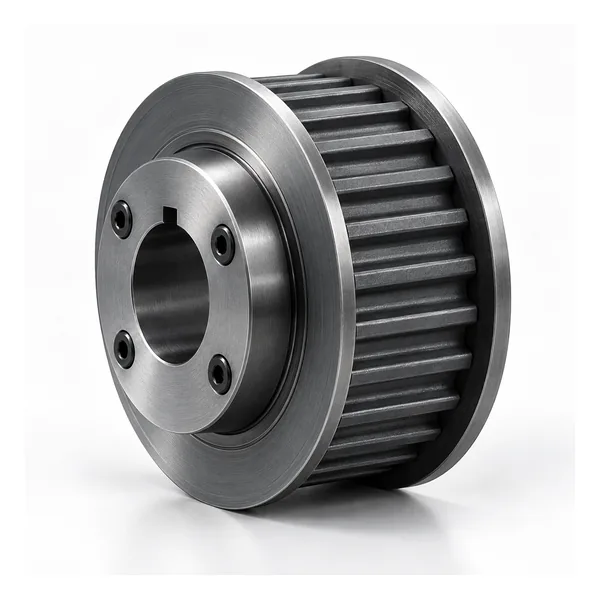
En trinse kan matche stigning og tanntall, men likevel ikke passe til maskinen fordi boringen, navet, flensen eller aksialposisjonen er forskjellig. Mål akselgrensesnittet, remflatebredden, navprojeksjonen på begge sider og remlinjen i forhold til et stabilt maskinnullpunkt. Der det brukes en konisk bøssing, registrer både trinseserien og bøssingkoden. Der det kreves et ferdig boring, inkluder pasform, kilespor og eventuell festemetode på tegningen.
For et erstatningsprosjekt, sammenlign den målte verdien med det installerte beltet og maskinarrangementet før du bestemmer at en katalograd er likeverdig. For et nytt prosjekt, dokumenter designgrunnlaget slik at senere vedlikeholdsteam kan forstå hvorfor stigning, tanntall og monteringsstil ble valgt.
Driftsforhold som hører hjemme i utvalget
The same nominal HTD 3M timing pulley selection component can see very different service depending on the machine. Starts per hour, reversing, shock loading, continuous operating time, temperature, contamination, cleaning and access for tensioning all influence the drive. A compact automation axis emphasizes repeatable motion and controlled alignment, while a conveyor or process machine may emphasize continuous duty and service access. Supply these conditions instead of asking the pulley to be selected from size alone.
For et erstatningsprosjekt, sammenlign den målte verdien med det installerte beltet og maskinarrangementet før du bestemmer at en katalograd er likeverdig. For et nytt prosjekt, dokumenter designgrunnlaget slik at senere vedlikeholdsteam kan forstå hvorfor stigning, tanntall og monteringsstil ble valgt.
Inspeksjonspunkter før installasjon
Inspeksjonen bør fokusere på dimensjoner som påvirker drivenheten: akselgrensesnittet, aksial plassering, tanntilstand, overflatebredde og eventuelle tegningskontrollerte rundløp eller nullpunktforhold. En generell kvalitetserklæring definerer ikke aksept. Hvis en dimensjonsrapport, et materialdokument eller en ordrespesifikk registrering er nødvendig, må den identifiseres før produksjon. Under vedlikehold må du se etter flensskader, kantslitasje, rusk og tegn på at remskiven har beveget seg på akselen.
For et erstatningsprosjekt, sammenlign den målte verdien med det installerte beltet og maskinarrangementet før du bestemmer at en katalograd er likeverdig. For et nytt prosjekt, dokumenter designgrunnlaget slik at senere vedlikeholdsteam kan forstå hvorfor stigning, tanntall og monteringsstil ble valgt.
Åpne spørsmål for å lukke før bestilling
Hvilken nøyaktig HTD-profil og bredde er installert eller spesifisert?
Hvilket forholdstall eller eksisterende tanntall må bevares?
Hvilket arrangement av boring, pasning, kilespor eller konisk foring kreves?
Hvor mye navutstikk og flensklaring er tilgjengelig?
Hva er hastighet, belastning, starter, reversering og driftstimer?
Hvilke tegninger, materialer eller inspeksjonsprotokoller må følge med leveransen?
Hva som skal sendes med tilbudet
Send profil, tannantall, rembredde, akselgrensesnitt, nav-/flensdetaljer, antall, destinasjon og en tegning eller en målskisse for erstatning. Legg til hastighet, utvekslingsforhold, last, senteravstand og miljø for en ny drivenhet. Se gjennom HTD-produktfamilier, bruk utvalgsguide, eller sammenlign de relevante applikasjonsnotater.
3M Selection Priorities
HTD 3M is the smallest nominal pitch family in this site. The compact geometry makes correct belt identification, working width and small-bore/hub constraints especially important. Use the 3M-06, 3M-09 and 3M-15 product pages for the actual catalogue rows.
Hold måleverdier, katalogreferanser og prosjektkrav tydelig atskilt. Hvis et obligatorisk punkt ikke er oppgitt i den relevante katalogtabellen eller godkjente tegningen, ta det med som et tilbudsspørsmål eller tegningskrav i stedet for å fylle tomrommet med en plausibel, men ubekreftet verdi.
Compact Drives Still Need Full Interface Data
Small automation does not remove the need to record shaft fit, flange arrangement and belt-line position. Where a replacement pulley is small, a few millimetres of hub or flange difference can be a significant part of the installation envelope.
Innkjøpsregistreringen bør ha en tydelig kobling mellom maskinkravet og den valgte trinsen. Det betyr at fullstendig rem- eller profilidentitet, tannantall, arbeidsbredde og akselgrensesnittinformasjon forblir sammen med produktkoden. Eventuelle spesielle materialer, overflater, kontrollerte toleranser, merkinger eller rapportkrav bør oppgis separat, slik at de ikke kan forveksles med en universell egenskap for hele familien.
Innkjøp og dokumentasjon
Når utvalget er klart, behold den aksepterte produktidentiteten, mengden, destinasjonen og tegningsrevisjonen på samme innkjøpslinje. Standard katalogdeler planlegges vanligvis rundt minimumsmengder for produksjon, mens større eller mer verdifulle varer kan gjennomgås mot den praktiske ordreverdien. Kvalifiserte vareprøver fra nye kunder på 1–5 deler kan gjennomgås til prøvepriser når konfigurasjonen og produksjonsruten er passende.
Bestillinger med blandede modeller kan konsolideres mot en praktisk ordreverdi på omtrent 1500 USD. Spesialmaterialer og spesialprosesser følger minimumsmengden som kreves av den prosessen. Svært små forespørsler om ett eller to deler håndteres kun som kvalifisert teknisk validering eller betalte vareprøver i stedet for erstatningsbestillinger fra detaljhandelen.
Ledetiden bekreftes etter at den tekniske definisjonen er klar. Standarddeler planlegges vanligvis til 10–25 virkedager, tilpassede komponenter til 20–45 virkedager, og prosjektbaserte sammenstillinger eller relatert utstyr til 45–120 virkedager der det er aktuelt. EXW, FOB, CIF og DAP støttes vanligvis; FCA, CFR, CPT, CIP og DDP kan diskuteres for passende forsendelser. Behandle disse som planleggingsintervaller, ikke et forsendelsesløfte før ordregjennomgang.
En praktisk beslutningssekvens
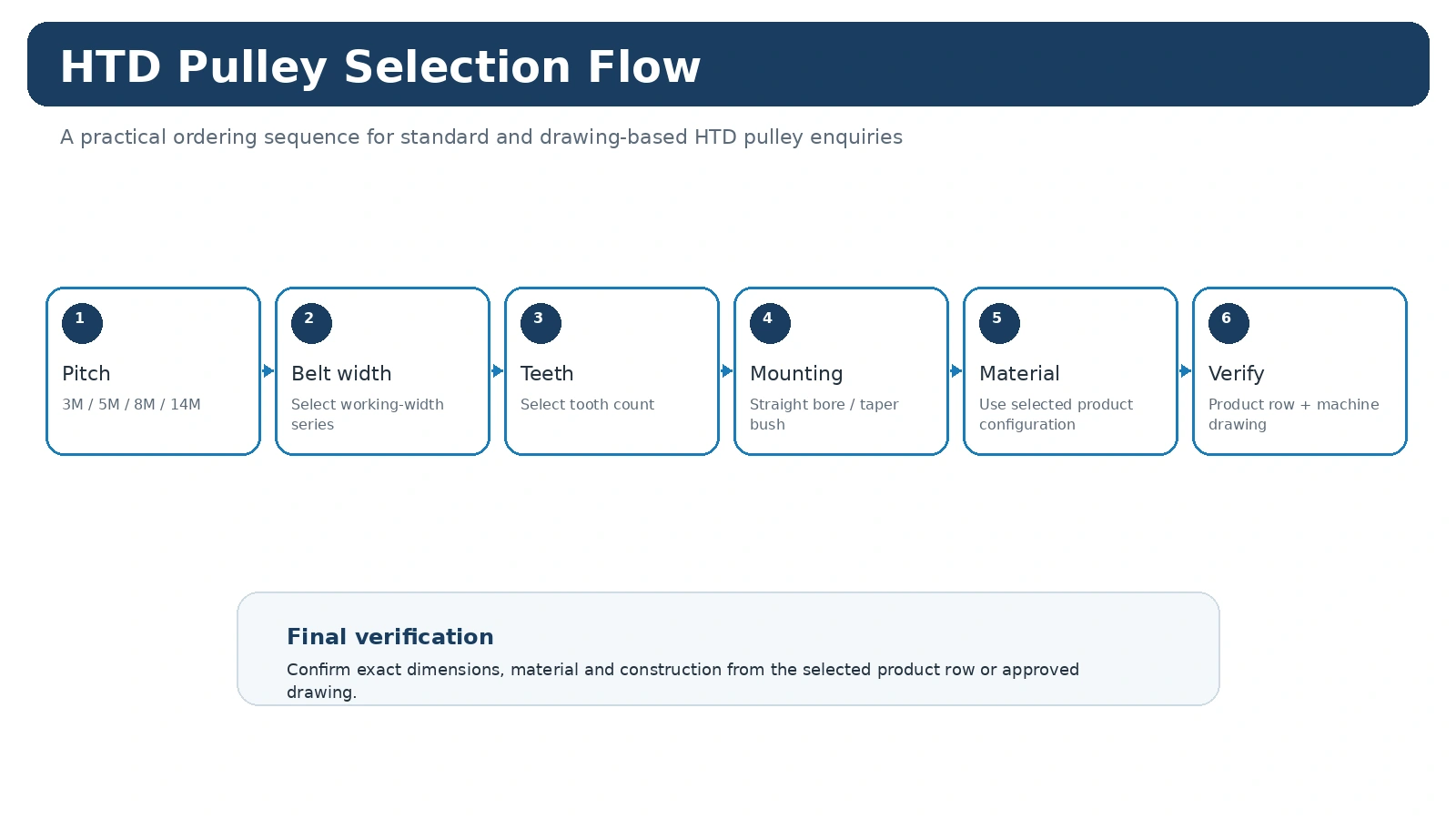
Start with 3 mm HTD family, width code, tooth count and compact shaft interface. Keep the machine requirement separate from the catalogue choice: first identify what the drive must preserve, then compare only the rows or drawings that match that identity. This keeps a familiar-looking pulley from being accepted before its functional interfaces have been checked.
For an existing machine, preserve the original relationship before making changes. For a new design, record the target ratio, operating context and installation envelope so the 3M selection can be reviewed later without relying on memory or a photograph alone.
Lag en målelogg
The most useful measurement set contains 3M belt marking, tooth count, width code, bore and hub envelope. Mark which values were measured on the machine and which values came from a catalogue or released drawing. When a feature is inaccessible, photograph its relationship to a stable datum and identify it as confirmation-required rather than filling the gap with an assumed value.
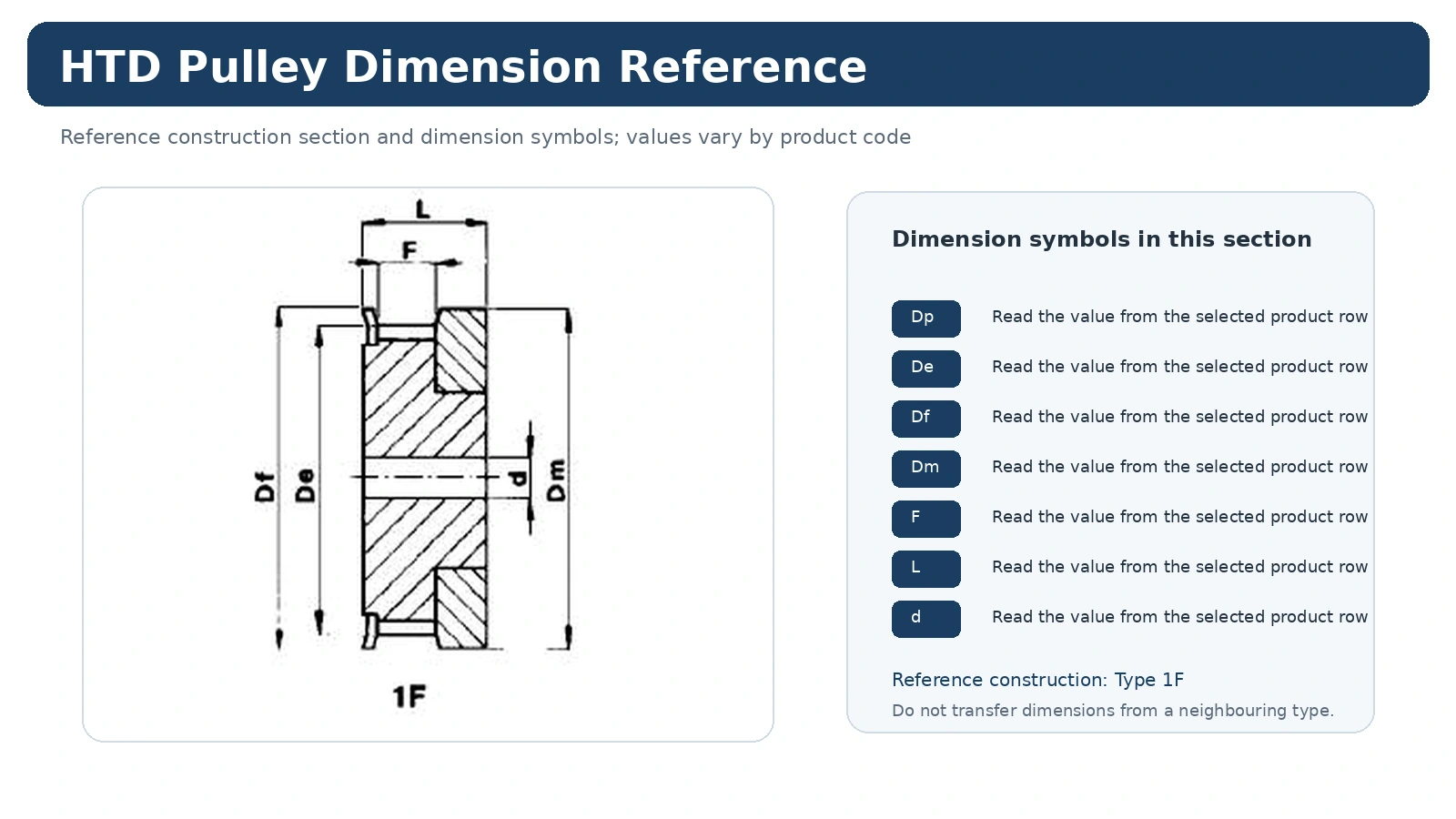
Måltegninger bør vises i full lesbar bredde. Skaler aldri et skjermbilde og bruk deretter den skalerte dimensjonen som et mål. Bruk den trykte verdien og riktig konstruksjonstype.
Én feilmodus verdt å unngå
A common error is substituting another 3 mm curvilinear profile without confirmation. That can produce a part that appears close in the catalogue yet changes ratio, belt line, mounting or service access. Resolve the conflicting feature before requesting price so the quotation refers to one mechanically coherent configuration.
Hvis to mulige konfigurasjoner fortsatt er mulige, send både maskinmål og fotografier og det foretrukne alternativet. Tilbudet kan da identifisere hvilket grensesnitt som fortsatt trenger bekreftelse i stedet for å stille konvertere usikkerhet til en spesifikasjon.
Gjør det tekniske valget om til en tilbudsklar linjepost
Oppgi HTD-/profilfamilien og fullfør belteinformasjonen.
Oppgi tannantall, arbeidsbredde og relevante dimensjoner eller tegningsreferanser.
Definer boring eller bøssing, akseldata, navprojeksjon og beltelinjeposisjon der det er aktuelt.
Legg til antall, destinasjon, nødvendige dokumenter og tegningsrevisjonen som ble brukt for forespørselen.
Når ett av elementene ovenfor er genuint ukjent, merk det for bekreftelse. Et presist åpent spørsmål er mer nyttig enn en plausibel verdi som aldri ble målt.
Spørsmål kjøpere ofte stiller
Hva bør bekreftes først?
Confirm 3 mm HTD family, width code, tooth count and compact shaft interface. That prevents later dimensions from being compared across the wrong product family or installation route.
Hvilken informasjon er mest nyttig for en erstatning?
Send 3M belt marking, tooth count, width code, bore and hub envelope, plus clear photographs before the old pulley is removed. The photographs preserve axial orientation and neighboring clearances that a loose part cannot show.
Når bør en tegning brukes?
Bruk en kontrollert tegning når katalograden ikke fullstendig definerer akselgrensesnittet, nav-/flensarrangementet, overflaten, toleransen eller inspeksjonskravet som er viktig for maskinen.
Pitch Family Is Only the First Branch of the Selection
3M selection still requires working width, tooth count and mounting geometry. Tooth count changes pitch diameter and can also coincide with changes in body type, hub and material across a catalogue family. The correct comparison therefore stays row-specific after the pitch has been chosen. For a new drive, ratio and center distance must be reviewed together with available diameter and guard clearance.
For a replacement, begin with the mating belt and the installed part. If the belt identity is uncertain, avoid choosing a new family only because the measured pitch appears close. Obtain enough measurements and identification detail to identify the tooth system before comparing product rows.
When to Escalate From a Catalogue Row to a Drawing
Use a drawing-controlled order when the shaft connection, hub position, flange arrangement, material, finish or inspection requirement differs from the normal catalogue configuration. Keep standard HTD tooth geometry explicit on the drawing so the custom machining request does not accidentally obscure the mating-belt requirement.
On mixed-model RFQs, keep every width and tooth count on its own line. A general note such as “same as above” can become unsafe once one model uses a different construction type or bush.
Use 3M Where the Compact Drive Geometry Is Deliberate
The 3M family is the smallest pitch family covered by this project catalogue and includes 3M-06, 3M-09 and 3M-15 width-series pages. That makes it relevant to compact synchronous mechanisms, but the choice still has to be made from the actual machine envelope and mating belt. Do not treat 3M as a universal “precision” label; its suitability comes from the complete drive geometry, duty and shaft support.
Within the family, confirm tooth count and width series before comparing hub and flange construction. Small pulleys leave less room for assumptions around the shaft interface, so a replacement record should include both-side photographs, bore information and the axial position of the toothed face. If the standard row does not define the finished shaft connection, control it on a drawing.
For a new axis, provide speed or ratio, center distance and duty with the RFQ. That lets the component selection stay connected to the belt system instead of being reduced to a small-diameter visual match.
Small Pulleys Make Identification Errors More Consequential
On a compact 3M drive, a small change in hub or flange arrangement can consume a meaningful share of the available installation space. Photograph the pulley in place with a scale reference where practical and record both faces before removal. This helps preserve axial orientation when the component itself is too small to carry a clear marking.
When a custom finished bore is needed, keep the standard 3M family and tooth count explicit on the drawing. The drawing should define the machine-side change without obscuring the belt-side geometry that makes the pulley part of the HTD 3M system.
Keep 3M Selection Focused on Compact Geometry and Complete Identification
HTD 3M pulleys occupy the compact end of this catalogue family. Small diameters and narrow working widths make the shaft interface, flange arrangement and available installation space especially important. The 3M designation establishes nominal pitch, while the individual 3M-06, 3M-09 and 3M-15 pages contain the model rows that control the actual part.
For a replacement, record the belt marking and tooth count before relying on a measured outside diameter. Small components are easy to misidentify when wear has rounded tooth edges or when another curvilinear system has similar scale. For a new drive, treat ratio, center distance and belt sizing as system inputs before choosing the final catalogue row.
Choose 3M-06, 3M-09 or 3M-15 from the belt and machine envelope.
Use the exact tooth count required by the ratio and selected belt geometry.
Confirm bore, hub and flange details from the relevant row or drawing.
Send belt identity, teeth, width, shaft data, quantity and destination.
The compact size of 3M components is not a reason to simplify the specification. A short, complete RFQ is more useful than a long description with missing shaft or belt information.