HTD 3M Timing Pulley Selection Guide should be approached as a drive-system decision. The useful starting point is the mating belt and machine interface, followed by tooth count, working width, shaft mounting and duty conditions. This guide explains the checks that help an engineer or buyer turn HTD 3M timing pulley selection into an RFQ that can be verified against a catalogue row or drawing.
寸法を比較する前にドライブを特定してください
For HTD 3M timing pulley selection, identify the complete belt marking before comparing pulley diameters. HTD is a curvilinear synchronous system and the nominal pitch must stay associated with its profile family. Record the driver and driven tooth counts when an existing ratio must be preserved. For a new drive, document the target speed ratio, driver speed and expected load before choosing tooth counts. This prevents a component-level decision from overriding the machine requirement.
交換プロジェクトの場合は、カタログの行が同等かどうかを判断する前に、測定値を既存のベルトと機械の配置と比較してください。新規プロジェクトの場合は、設計基準を文書化し、後々の保守チームがピッチ、歯数、取り付け方式が選択された理由を理解できるようにしてください。
設置を左右する寸法
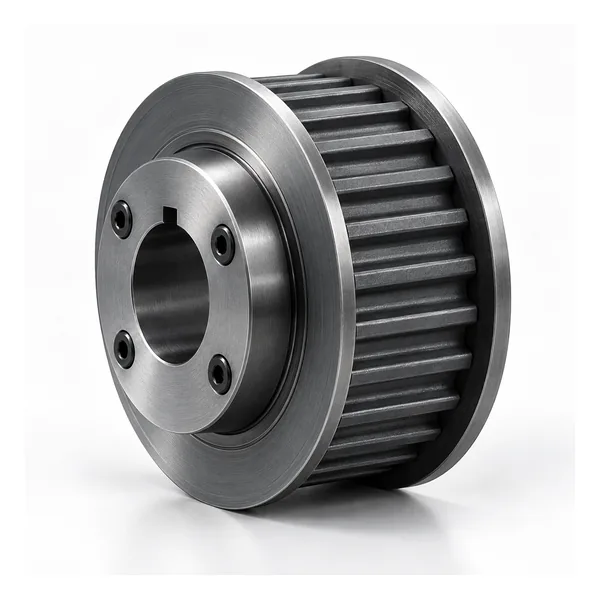
プーリーはピッチと歯数が一致していても、穴径、ハブ、フランジ、または軸方向の位置が異なると、機械に適合しない場合があります。シャフトとの接合部、ベルト面幅、両側のハブ突出部、および安定した機械基準面に対するベルトラインを測定してください。テーパーブッシュを使用する場合は、プーリーシリーズとブッシュコードの両方を記録してください。仕上げ穴が必要な場合は、はめあい、キー溝、および保持方法を図面に記入してください。
交換プロジェクトの場合は、カタログの行が同等かどうかを判断する前に、測定値を既存のベルトと機械の配置と比較してください。新規プロジェクトの場合は、設計基準を文書化し、後々の保守チームがピッチ、歯数、取り付け方式が選択された理由を理解できるようにしてください。
選定に含めるべき運転条件
The same nominal HTD 3M timing pulley selection component can see very different service depending on the machine. Starts per hour, reversing, shock loading, continuous operating time, temperature, contamination, cleaning and access for tensioning all influence the drive. A compact automation axis emphasizes repeatable motion and controlled alignment, while a conveyor or process machine may emphasize continuous duty and service access. Supply these conditions instead of asking the pulley to be selected from size alone.
交換プロジェクトの場合は、カタログの行が同等かどうかを判断する前に、測定値を既存のベルトと機械の配置と比較してください。新規プロジェクトの場合は、設計基準を文書化し、後々の保守チームがピッチ、歯数、取り付け方式が選択された理由を理解できるようにしてください。
設置前の点検ポイント
検査は、駆動部に影響を与える寸法、すなわち、シャフトの接合部、軸方向の位置、歯の状態、歯幅、および図面で規定された振れや基準点との関係に重点を置く必要があります。一般的な品質基準では、合格の定義は示されません。寸法報告書、材料文書、または注文固有の記録が必要な場合は、製造前にそれらを特定してください。メンテナンス中は、フランジの損傷、エッジの摩耗、異物、およびプーリーがシャフト上で移動した痕跡に注意してください。
交換プロジェクトの場合は、カタログの行が同等かどうかを判断する前に、測定値を既存のベルトと機械の配置と比較してください。新規プロジェクトの場合は、設計基準を文書化し、後々の保守チームがピッチ、歯数、取り付け方式が選択された理由を理解できるようにしてください。
ご注文前に解決すべき疑問点
具体的にどのようなHTDプロファイルと幅がインストールまたは指定されていますか?
どの程度の比率、あるいは既存の歯の本数を維持しなければならないか?
どのような穴径、嵌合、キー溝、またはテーパーブッシュの配置が必要ですか?
ハブの突出量とフランジのクリアランスはどれくらい確保されていますか?
速度、負荷、始動回数、逆転回数、および稼働時間はどれくらいですか?
納品物には、どの図面、材料記録、または検査記録を添付する必要がありますか?
見積依頼書に添付すべきもの
プロファイル、歯数、ベルト幅、シャフトインターフェース、ハブ/フランジの詳細、数量、宛先、図面または交換測定スケッチを送信してください。新しいドライブの場合は、速度、比率、負荷、中心距離、環境を追加してください。 HTD製品ファミリー使用する 選択ガイドまたは関連するものを比較する アプリケーションノート.
3M Selection Priorities
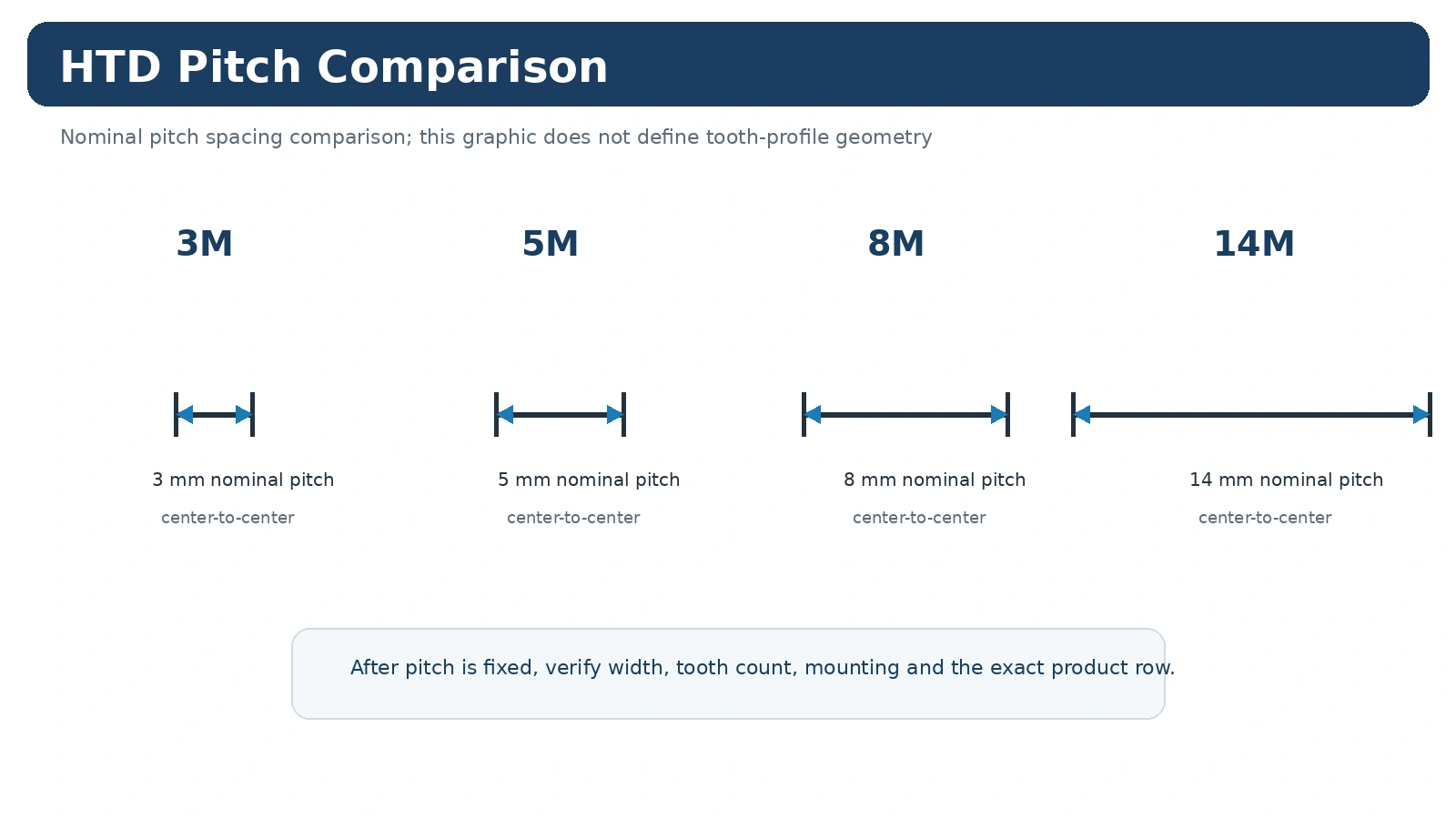
HTD 3M is the smallest nominal pitch family in this site. The compact geometry makes correct belt identification, working width and small-bore/hub constraints especially important. Use the 3M-06, 3M-09 and 3M-15 product pages for the actual catalogue rows.
測定値、カタログ参照値、およびプロジェクト要件は明確に区別してください。必要なポイントが関連するカタログ表または承認済み図面に記載されていない場合は、妥当ではあるものの検証されていない値で不足分を埋めるのではなく、見積依頼書(RFQ)の質問または図面要件として含めてください。
Compact Drives Still Need Full Interface Data
Small automation does not remove the need to record shaft fit, flange arrangement and belt-line position. Where a replacement pulley is small, a few millimetres of hub or flange difference can be a significant part of the installation envelope.
購入記録には、機械の要件と選択されたプーリーとの明確な関連性を記載する必要があります。つまり、ベルトまたはプロファイルの完全な識別情報、歯数、有効幅、およびシャフトインターフェース情報が製品コードとともに記録される必要があります。特殊な材質、仕上げ、公差管理、マーキング、またはレポート要件は、製品ファミリー全体に共通する特徴と誤解されないように、個別に記載する必要があります。
調達と文書化
選定が確定したら、承認された製品名、数量、配送先、図面改訂版を同じ購買明細行に記載してください。標準カタログ部品は通常、生産数量の最小値に基づいて計画されますが、大型品や高額品は実際の注文金額に基づいて検討できます。構成と製造ルートが適切な場合、新規顧客向けの1~5個のサンプルはサンプル価格で検討できます。
複数のモデルを組み合わせた注文は、実質的な注文金額が約1,500米ドルになるように統合できます。特殊な材料や特殊な工程については、その工程で必要とされる最小数量に従います。ごく少量(1個または2個)の注文は、小売交換注文ではなく、適格な技術検証または有料サンプルとしてのみ処理されます。
納期は技術的な定義が明確になった後に確定します。標準部品は通常10~25営業日、カスタム部品は20~45営業日、プロジェクトベースの組立品または関連機器は該当する場合45~120営業日を予定しています。EXW、FOB、CIF、DAPは一般的に対応可能です。FCA、CFR、CPT、CIP、DDPについては、適切な出荷条件についてご相談ください。これらはあくまで予定期間であり、注文内容を確認する前の出荷確約ではありませんのでご注意ください。
実践的な意思決定の手順
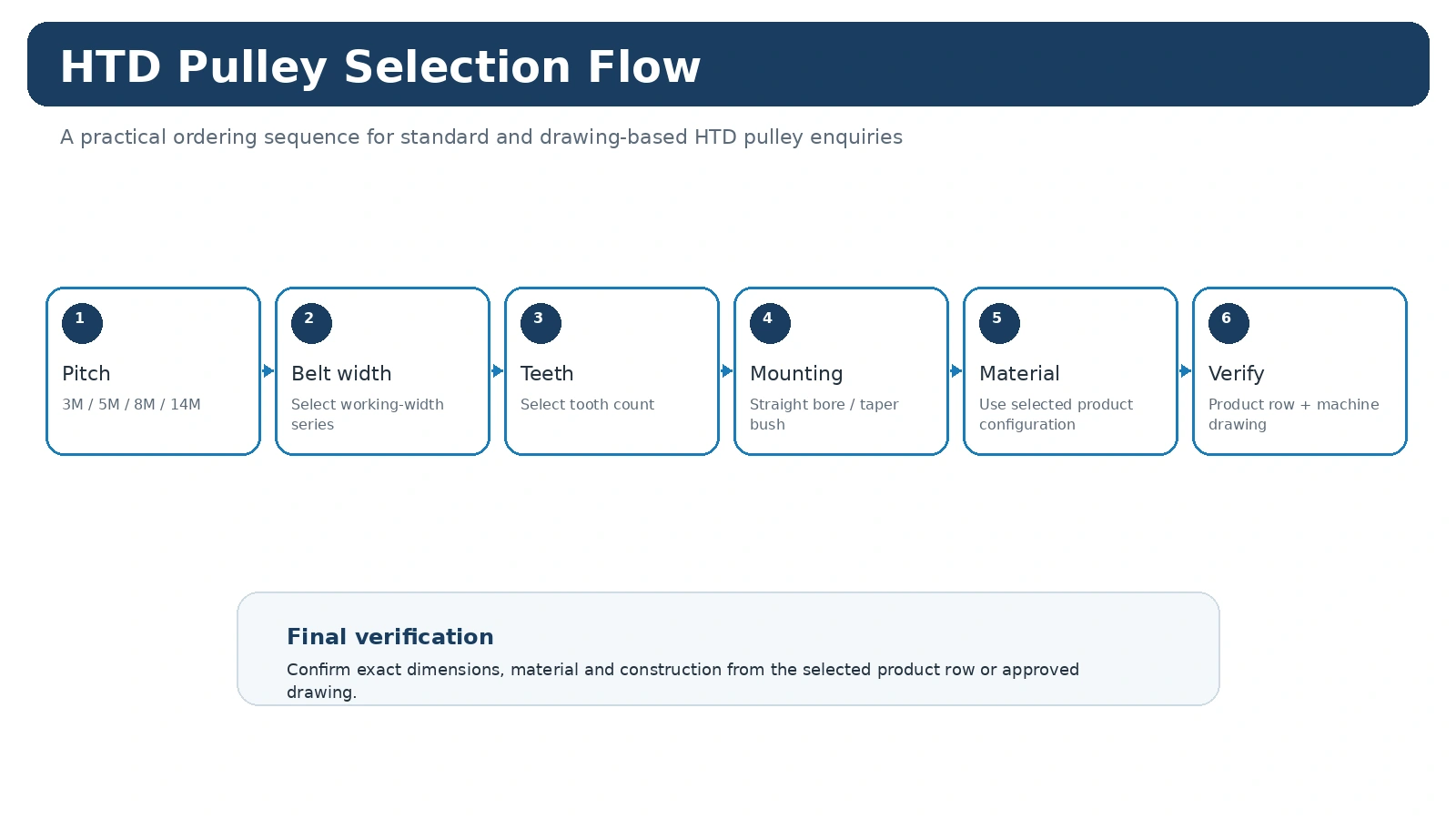
Start with 3 mm HTD family, width code, tooth count and compact shaft interface. Keep the machine requirement separate from the catalogue choice: first identify what the drive must preserve, then compare only the rows or drawings that match that identity. This keeps a familiar-looking pulley from being accepted before its functional interfaces have been checked.
For an existing machine, preserve the original relationship before making changes. For a new design, record the target ratio, operating context and installation envelope so the 3M selection can be reviewed later without relying on memory or a photograph alone.
測定記録を作成する
The most useful measurement set contains 3M belt marking, tooth count, width code, bore and hub envelope. Mark which values were measured on the machine and which values came from a catalogue or released drawing. When a feature is inaccessible, photograph its relationship to a stable datum and identify it as confirmation-required rather than filling the gap with an assumed value.
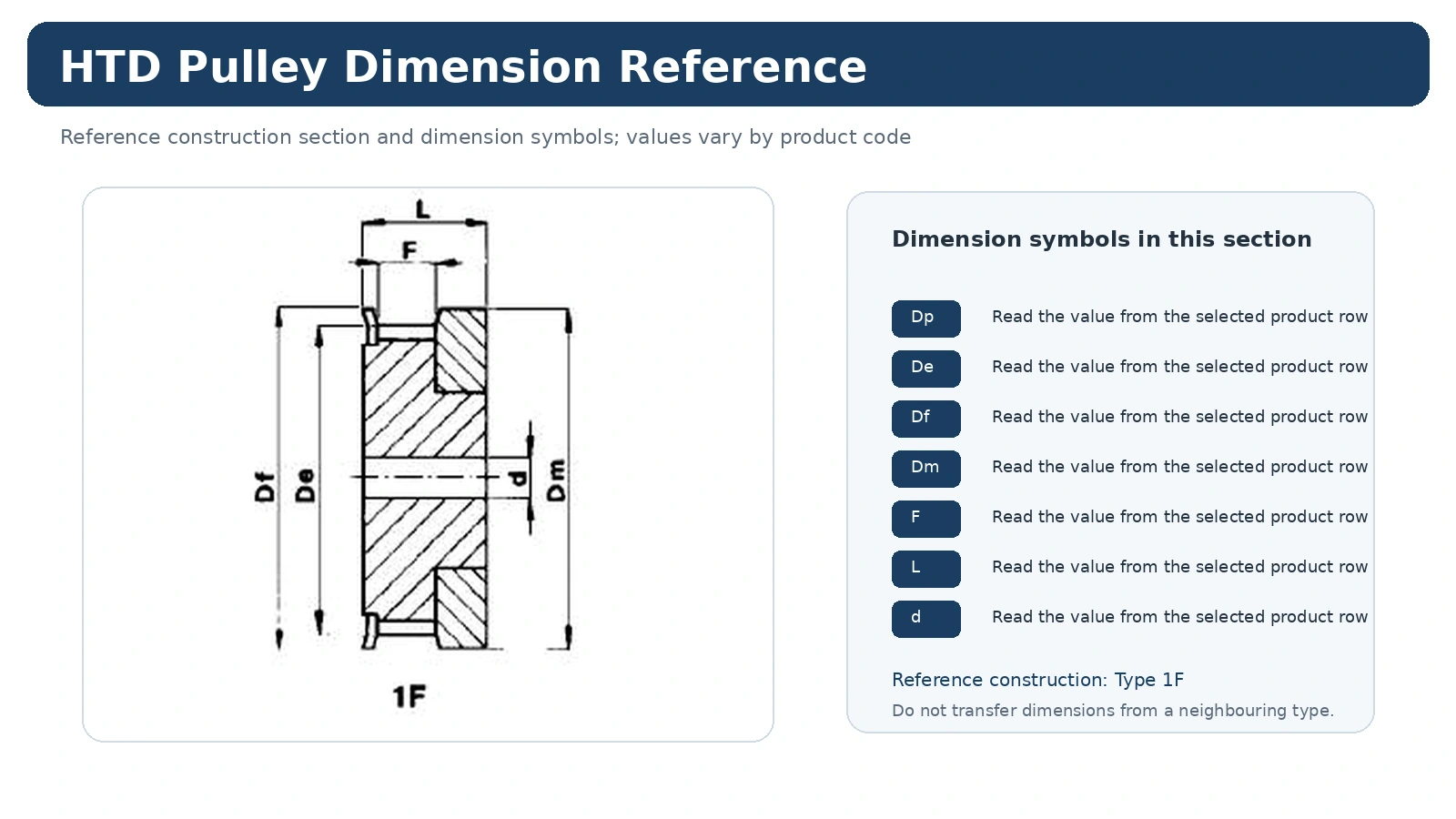
寸法図は、読みやすい最大幅で表示してください。スクリーンショットを拡大縮小して、その拡大縮小後の寸法を測定値として扱うことは絶対に避けてください。印刷された値と適切な施工方法を使用してください。
避けるべき故障モードが1つ
A common error is substituting another 3 mm curvilinear profile without confirmation. That can produce a part that appears close in the catalogue yet changes ratio, belt line, mounting or service access. Resolve the conflicting feature before requesting price so the quotation refers to one mechanically coherent configuration.
2つの構成案が考えられる場合は、機械の寸法と写真、そして希望する構成案の両方をお送りください。そうすることで、見積もり担当者は、不確実性を仕様にそのまま反映させるのではなく、どのインターフェースの確認が必要かを明確に特定できます。
技術的な選択を、見積もり作成可能な項目に変換する
HTD/プロファイルファミリーとベルトに関する詳細情報を明記してください。
歯数、有効幅、および関連する寸法または図面参照を提供してください。
該当する場合は、穴またはブッシュ、シャフトデータ、ハブ突出量、およびベルトライン位置を定義します。
数量、配送先、必要書類、および依頼に使用した図面の改訂版を追加してください。
上記項目のうち、真に不明な項目がある場合は、確認のためにその旨を明記してください。測定されていない可能性のある値よりも、明確な未解決の疑問の方がはるかに有用です。
購入者がよく尋ねる質問
まず最初に確認すべきことは何ですか?
Confirm 3 mm HTD family, width code, tooth count and compact shaft interface. That prevents later dimensions from being compared across the wrong product family or installation route.
交換部品を探す上で最も役立つ情報は何ですか?
Send 3M belt marking, tooth count, width code, bore and hub envelope, plus clear photographs before the old pulley is removed. The photographs preserve axial orientation and neighboring clearances that a loose part cannot show.
図面はどのような場合に使用すべきでしょうか?
カタログの記載内容で、機械にとって重要なシャフトインターフェース、ハブ/フランジ配置、仕上げ、公差、または検査要件が完全に定義されていない場合は、必ず管理図面を使用してください。
Pitch Family Is Only the First Branch of the Selection
3M selection still requires working width, tooth count and mounting geometry. Tooth count changes pitch diameter and can also coincide with changes in body type, hub and material across a catalogue family. The correct comparison therefore stays row-specific after the pitch has been chosen. For a new drive, ratio and center distance must be reviewed together with available diameter and guard clearance.
For a replacement, begin with the mating belt and the installed part. If the belt identity is uncertain, avoid choosing a new family only because the measured pitch appears close. Obtain enough measurements and identification detail to identify the tooth system before comparing product rows.
When to Escalate From a Catalogue Row to a Drawing
Use a drawing-controlled order when the shaft connection, hub position, flange arrangement, material, finish or inspection requirement differs from the normal catalogue configuration. Keep standard HTD tooth geometry explicit on the drawing so the custom machining request does not accidentally obscure the mating-belt requirement.
On mixed-model RFQs, keep every width and tooth count on its own line. A general note such as “same as above” can become unsafe once one model uses a different construction type or bush.
Use 3M Where the Compact Drive Geometry Is Deliberate
The 3M family is the smallest pitch family covered by this project catalogue and includes 3M-06, 3M-09 and 3M-15 width-series pages. That makes it relevant to compact synchronous mechanisms, but the choice still has to be made from the actual machine envelope and mating belt. Do not treat 3M as a universal “precision” label; its suitability comes from the complete drive geometry, duty and shaft support.
Within the family, confirm tooth count and width series before comparing hub and flange construction. Small pulleys leave less room for assumptions around the shaft interface, so a replacement record should include both-side photographs, bore information and the axial position of the toothed face. If the standard row does not define the finished shaft connection, control it on a drawing.
For a new axis, provide speed or ratio, center distance and duty with the RFQ. That lets the component selection stay connected to the belt system instead of being reduced to a small-diameter visual match.
Small Pulleys Make Identification Errors More Consequential
On a compact 3M drive, a small change in hub or flange arrangement can consume a meaningful share of the available installation space. Photograph the pulley in place with a scale reference where practical and record both faces before removal. This helps preserve axial orientation when the component itself is too small to carry a clear marking.
When a custom finished bore is needed, keep the standard 3M family and tooth count explicit on the drawing. The drawing should define the machine-side change without obscuring the belt-side geometry that makes the pulley part of the HTD 3M system.
Keep 3M Selection Focused on Compact Geometry and Complete Identification
HTD 3M pulleys occupy the compact end of this catalogue family. Small diameters and narrow working widths make the shaft interface, flange arrangement and available installation space especially important. The 3M designation establishes nominal pitch, while the individual 3M-06, 3M-09 and 3M-15 pages contain the model rows that control the actual part.
For a replacement, record the belt marking and tooth count before relying on a measured outside diameter. Small components are easy to misidentify when wear has rounded tooth edges or when another curvilinear system has similar scale. For a new drive, treat ratio, center distance and belt sizing as system inputs before choosing the final catalogue row.
Choose 3M-06, 3M-09 or 3M-15 from the belt and machine envelope.
Use the exact tooth count required by the ratio and selected belt geometry.
Confirm bore, hub and flange details from the relevant row or drawing.
Send belt identity, teeth, width, shaft data, quantity and destination.
The compact size of 3M components is not a reason to simplify the specification. A short, complete RFQ is more useful than a long description with missing shaft or belt information.