Takal Pemasaan HTD untuk Jentera Pemprosesan should be approached as a drive-system decision. The useful starting point is the mating belt and machine interface, followed by tooth count, working width, shaft mounting and duty conditions. This guide explains the checks that help an engineer or buyer turn timing pulley processing machinery into an RFQ that can be verified against a catalogue row or drawing.
Kenal pasti Pemacu Sebelum Membandingkan Dimensi
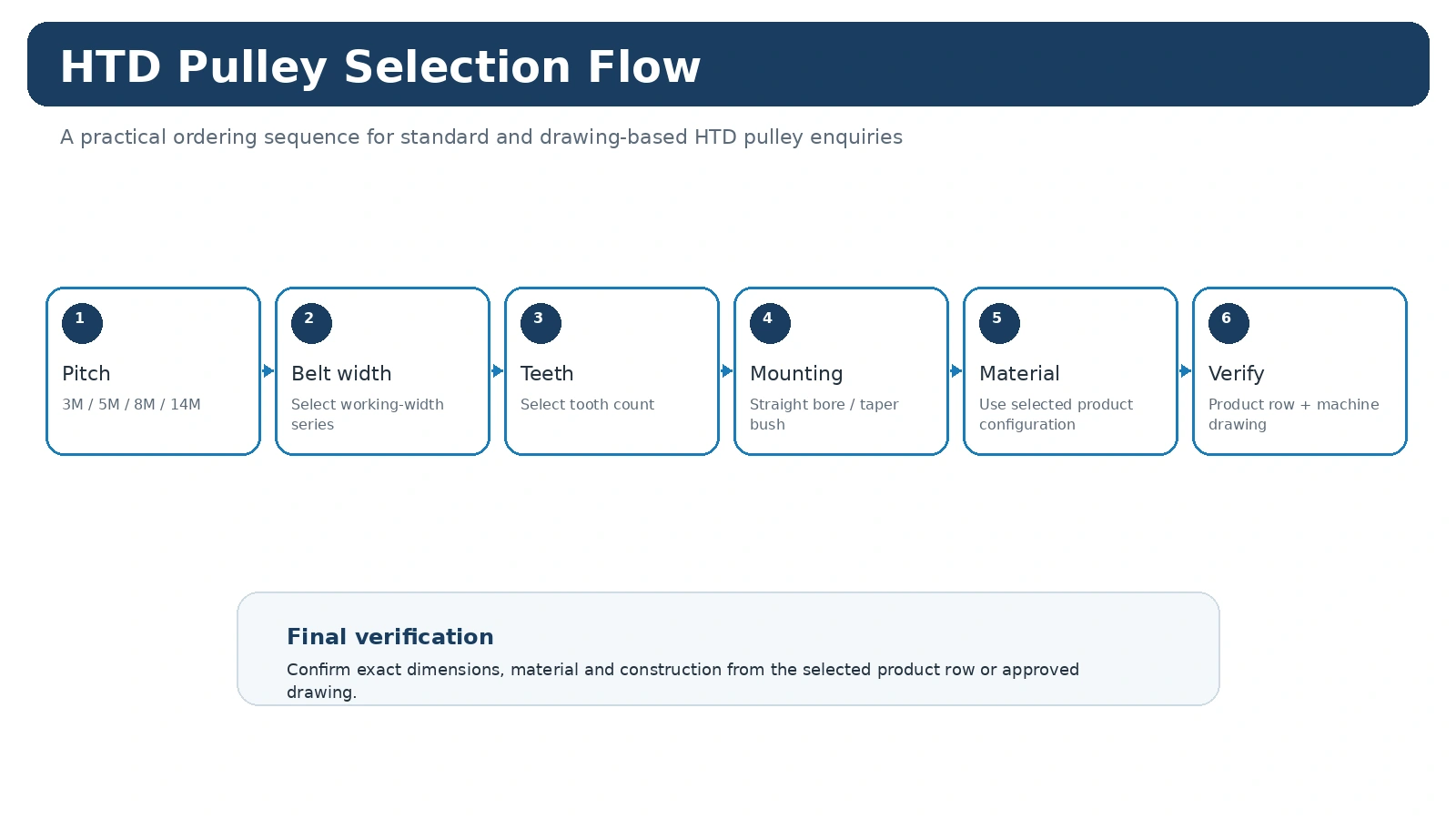
For timing pulley processing machinery, identify the complete belt marking before comparing pulley diameters. HTD is a curvilinear synchronous system and the nominal pitch must stay associated with its profile family. Record the driver and driven tooth counts when an existing ratio must be preserved. For a new drive, document the target speed ratio, driver speed and expected load before choosing tooth counts. This prevents a component-level decision from overriding the machine requirement.
Untuk projek penggantian, bandingkan nilai yang diukur dengan susunan tali pinggang dan mesin yang dipasang sebelum memutuskan bahawa baris katalog adalah setara. Untuk projek baharu, dokumentasikan asas reka bentuk supaya pasukan penyelenggaraan kemudian dapat memahami mengapa pitch, kiraan gigi dan gaya pemasangan dipilih.
Dimensi Yang Mengawal Pemasangan
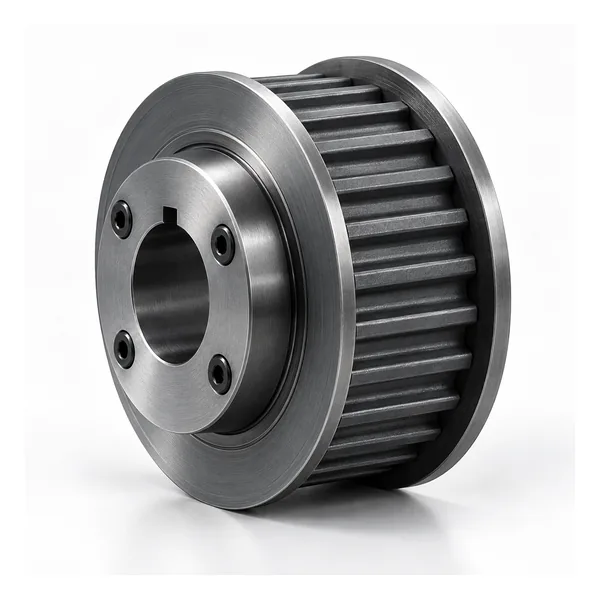
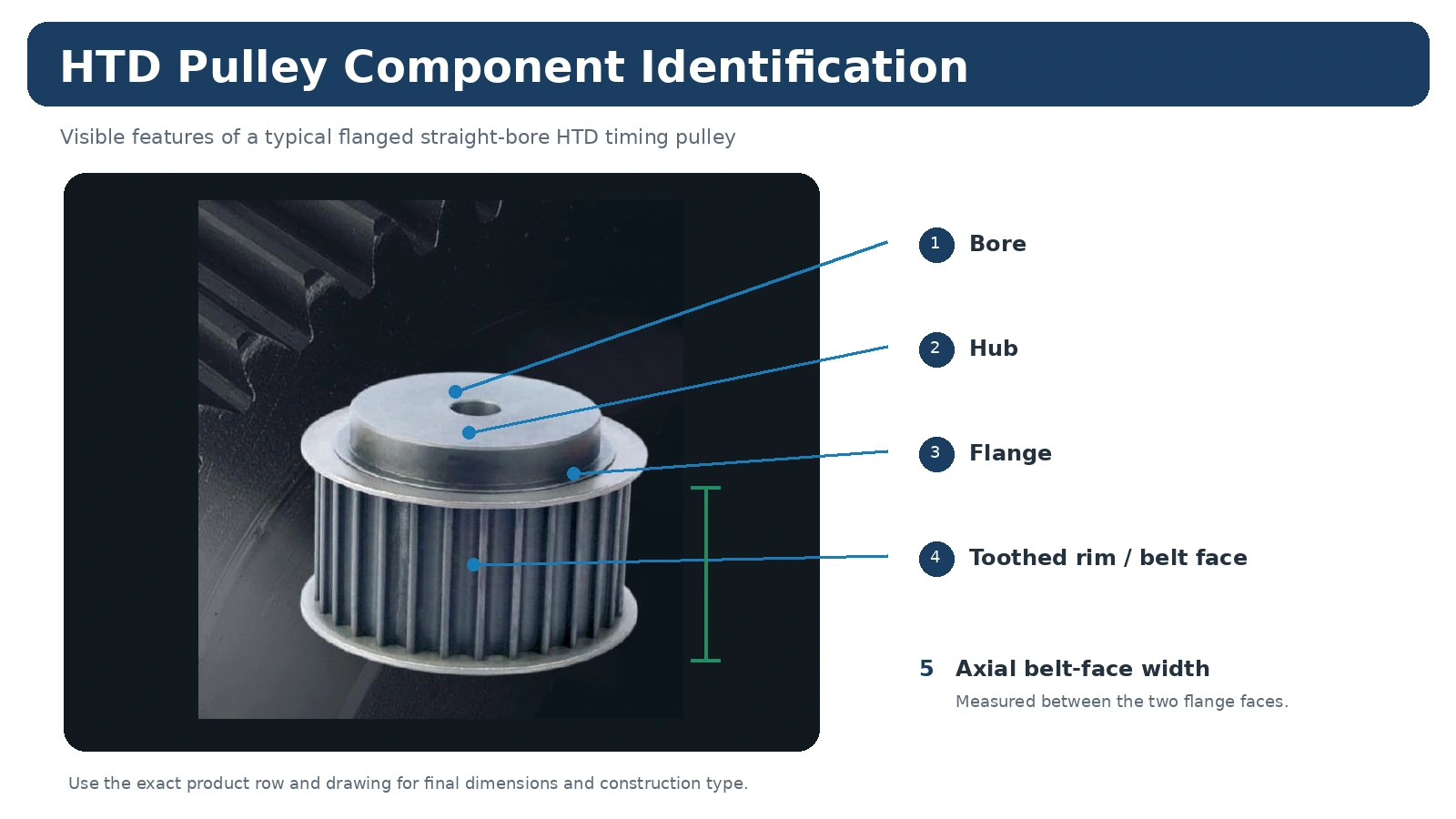
Takal boleh sepadan dengan kiraan pic dan gigi tetapi masih gagal dimuatkan pada mesin kerana kedudukan lubang, hab, bebibir atau paksi berbeza. Ukur antara muka aci, lebar tali sawat-muka, unjuran hab pada kedua-dua sisi dan garisan tali sawat relatif kepada datum mesin yang stabil. Jika sesendal tirus digunakan, catatkan kedua-dua siri takal dan kod sesendal. Jika lubang siap diperlukan, sertakan padanan, laluan kunci dan sebarang kaedah penahan pada lukisan.
Untuk projek penggantian, bandingkan nilai yang diukur dengan susunan tali pinggang dan mesin yang dipasang sebelum memutuskan bahawa baris katalog adalah setara. Untuk projek baharu, dokumentasikan asas reka bentuk supaya pasukan penyelenggaraan kemudian dapat memahami mengapa pitch, kiraan gigi dan gaya pemasangan dipilih.
Keadaan Operasi Yang Termasuk dalam Pemilihan
The same nominal timing pulley processing machinery component can see very different service depending on the machine. Starts per hour, reversing, shock loading, continuous operating time, temperature, contamination, cleaning and access for tensioning all influence the drive. A compact automation axis emphasizes repeatable motion and controlled alignment, while a conveyor or process machine may emphasize continuous duty and service access. Supply these conditions instead of asking the pulley to be selected from size alone.
Untuk projek penggantian, bandingkan nilai yang diukur dengan susunan tali pinggang dan mesin yang dipasang sebelum memutuskan bahawa baris katalog adalah setara. Untuk projek baharu, dokumentasikan asas reka bentuk supaya pasukan penyelenggaraan kemudian dapat memahami mengapa pitch, kiraan gigi dan gaya pemasangan dipilih.
Titik Pemeriksaan Sebelum Pemasangan
Pemeriksaan harus tertumpu pada dimensi yang mempengaruhi pemacu: antara muka aci, lokasi paksi, keadaan gigi, lebar muka dan sebarang hubungan larian atau datum yang dikawal oleh lukisan. Pernyataan kualiti generik tidak mentakrifkan penerimaan. Jika laporan dimensi, dokumen bahan atau rekod khusus pesanan diperlukan, kenal pastinya sebelum pengeluaran. Semasa penyelenggaraan, perhatikan kerosakan bebibir, haus tepi, serpihan dan tanda-tanda bahawa takal telah bergerak pada aci.
Untuk projek penggantian, bandingkan nilai yang diukur dengan susunan tali pinggang dan mesin yang dipasang sebelum memutuskan bahawa baris katalog adalah setara. Untuk projek baharu, dokumentasikan asas reka bentuk supaya pasukan penyelenggaraan kemudian dapat memahami mengapa pitch, kiraan gigi dan gaya pemasangan dipilih.
Soalan Terbuka untuk Ditutup Sebelum Memesan
Apakah profil dan lebar HTD yang tepat yang dipasang atau dinyatakan?
Apakah nisbah atau kiraan gigi sedia ada yang mesti dikekalkan?
Apakah susunan lubang, padanan, laluan kunci atau semak tirus yang diperlukan?
Berapakah unjuran hab dan kelegaan bebibir yang tersedia?
Apakah kelajuan, beban, permulaan, pengunduran dan waktu operasi?
Lukisan, bahan atau rekod pemeriksaan yang manakah mesti disertakan dengan bekalan?
Apa yang Perlu Dihantar Dengan RFQ
Hantar profil, kiraan gigi, lebar tali sawat, antara muka aci, butiran hab/flange, kuantiti, destinasi dan lakaran lukisan atau ukuran penggantian. Tambah kelajuan, nisbah, beban, jarak pusat dan persekitaran untuk pemacu baharu. Semak semula Keluarga produk HTD, gunakan panduan pemilihan, atau bandingkan yang berkaitan nota permohonan.
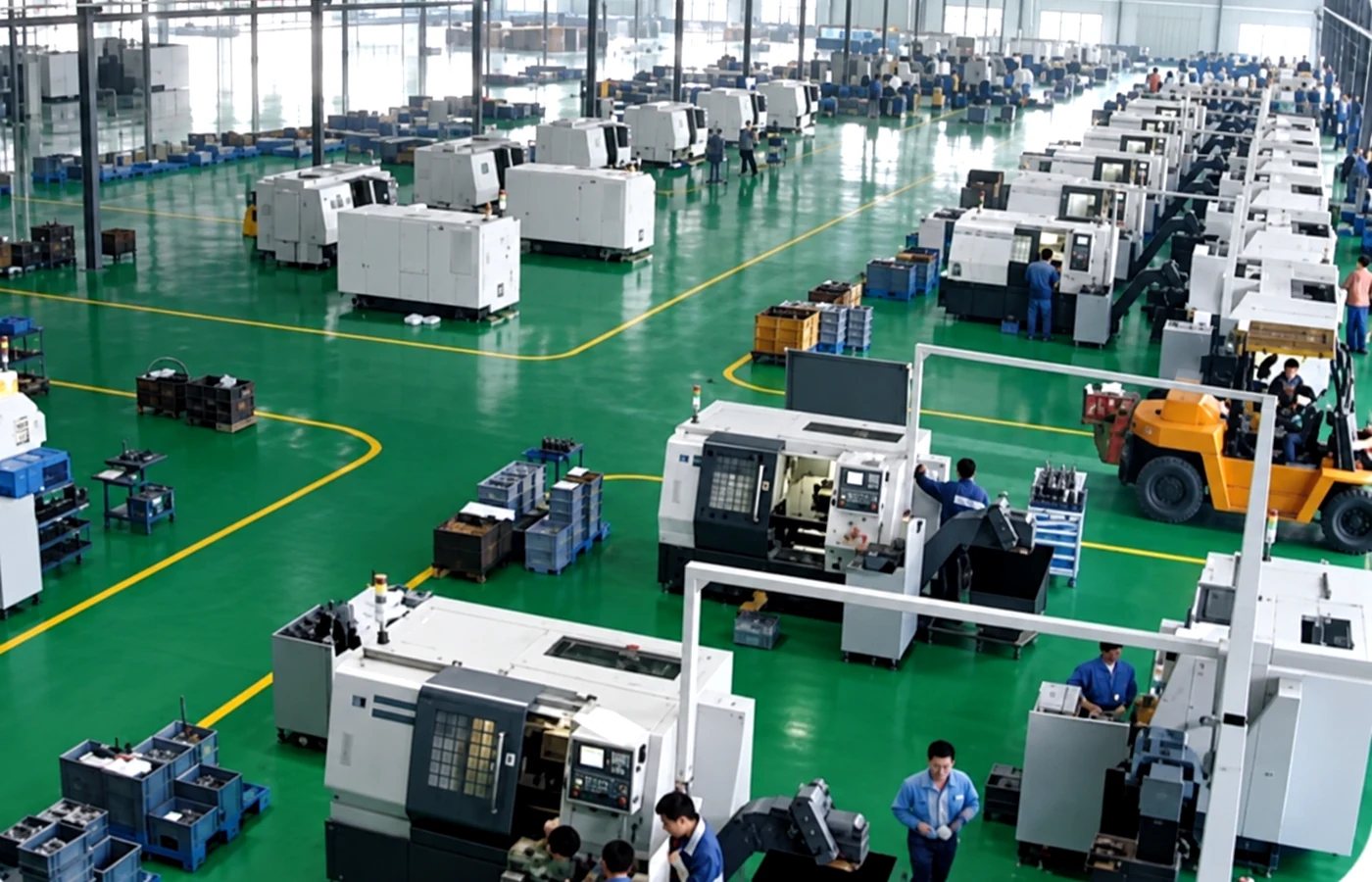
Processing Equipment Varies Widely
Mixers, feeders, handling machines and other processing equipment can impose very different start-stop and environmental conditions. Give the actual machine function and duty rather than selecting from the phrase “processing machinery” alone.
Capture operating hours, starts and stops, reversal if present, nearby guards and the condition of the shaft support. These details provide the application context for the pulley without turning the page into an unsupported power or life-rating claim.
Use the RFQ to Separate Standard Geometry From Project Requirements
If the pulley needs a special material, finish, inspection record or custom shaft feature, list that change independently from the standard HTD family so the quotation remains clear.
Rekod pembelian harus menyimpan hubungan yang jelas antara keperluan mesin dan takal yang dipilih. Ini bermakna identiti tali sawat atau profil yang lengkap, kiraan gigi, lebar kerja dan maklumat antara muka aci kekal bersama kod produk. Sebarang bahan khas, kemasan, toleransi terkawal, penandaan atau keperluan laporan harus dinyatakan secara berasingan supaya ia tidak boleh disalah anggap sebagai ciri universal seluruh keluarga.
Perolehan dan Dokumentasi
Setelah pilihan jelas, kekalkan identiti produk, kuantiti, destinasi dan semakan lukisan yang diterima pada baris pembelian yang sama. Bahagian katalog standard biasanya dirancang sekitar minimum kuantiti pengeluaran, manakala item yang lebih besar atau bernilai lebih tinggi boleh disemak berdasarkan nilai pesanan praktikal. Sampel pelanggan baharu yang layak sebanyak 1–5 keping boleh disemak pada harga sampel apabila konfigurasi dan laluan pembuatan sesuai.
Pesanan model campuran boleh disatukan ke arah nilai pesanan praktikal kira-kira USD 1,500. Bahan khas dan proses khas mengikut kuantiti minimum yang diperlukan oleh proses tersebut. Permintaan satu atau dua keping yang sangat kecil hanya dikendalikan sebagai pengesahan kejuruteraan yang layak atau kes sampel berbayar dan bukannya pesanan penggantian runcit.
Masa penghantaran disahkan selepas definisi teknikal jelas. Bahagian standard biasanya dirancang pada 10–25 hari bekerja, komponen tersuai pada 20–45 hari bekerja dan pemasangan berasaskan projek atau peralatan berkaitan pada 45–120 hari bekerja jika berkenaan. EXW, FOB, CIF dan DAP biasanya disokong; FCA, CFR, CPT, CIP dan DDP boleh dibincangkan untuk penghantaran yang sesuai. Anggap ini sebagai julat perancangan, bukan janji penghantaran sebelum semakan pesanan.
Urutan Keputusan Praktikal
Start with process sequence, load cycle, cleanliness and drive envelope. Keep the machine requirement separate from the catalogue choice: first identify what the drive must preserve, then compare only the rows or drawings that match that identity. This keeps a familiar-looking pulley from being accepted before its functional interfaces have been checked.
For an existing machine, preserve the original relationship before making changes. For a new design, record the target ratio, operating context and installation envelope so the processing-drive definition can be reviewed later without relying on memory or a photograph alone.
Bina Rekod Pengukuran
The most useful measurement set contains speed ratio, load cycle, pitch family, width, shaft interface and environment. Mark which values were measured on the machine and which values came from a catalogue or released drawing. When a feature is inaccessible, photograph its relationship to a stable datum and identify it as confirmation-required rather than filling the gap with an assumed value.
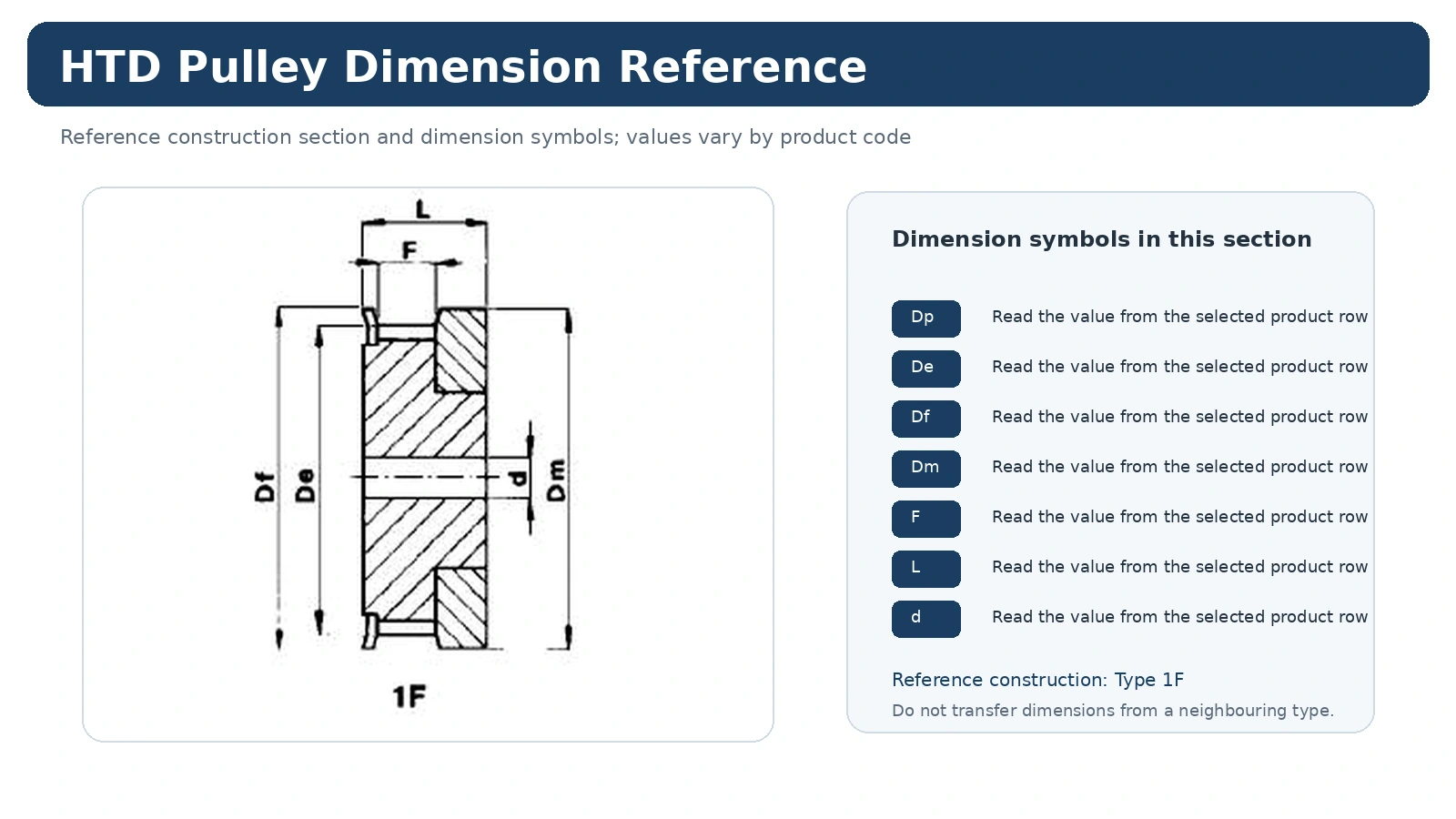
Lukisan dimensi hendaklah dilihat pada lebar penuh yang boleh dibaca. Jangan sekali-kali skala tangkapan skrin dan kemudian anggap dimensi berskala sebagai ukuran; gunakan nilai bercetak dan jenis pembinaan yang betul.
Satu Mod Kegagalan yang Patut Dielakkan
A common error is assuming an application label alone determines pulley size. That can produce a part that appears close in the catalogue yet changes ratio, belt line, mounting or service access. Resolve the conflicting feature before requesting price so the quotation refers to one mechanically coherent configuration.
Jika dua konfigurasi calon masih boleh dilakukan, hantarkan kedua-dua ukuran mesin dan gambar serta pilihan yang diutamakan. Sebut harga kemudiannya boleh mengenal pasti antara muka yang masih memerlukan pengesahan dan bukannya menukar ketidakpastian kepada spesifikasi secara senyap.
Tukarkan Pilihan Teknikal Menjadi Item Baris Sedia Sebut Harga
Nyatakan keluarga HTD/profil dan maklumat tali pinggang yang lengkap.
Berikan kiraan gigi, lebar kerja dan dimensi atau rujukan lukisan yang berkaitan.
Tentukan lubang atau semak, data aci, unjuran hab dan kedudukan garisan tali sawat jika berkenaan.
Tambahkan kuantiti, destinasi, dokumen yang diperlukan dan semakan lukisan yang digunakan untuk permintaan tersebut.
Apabila satu item di atas benar-benar tidak diketahui, labelkannya untuk pengesahan. Soalan terbuka yang tepat adalah lebih berguna daripada nilai munasabah yang tidak pernah diukur.
Soalan yang Lazim Ditanya oleh Pembeli
Apa yang perlu disahkan dahulu?
Confirm process sequence, load cycle, cleanliness and drive envelope. That prevents later dimensions from being compared across the wrong product family or installation route.
Maklumat apakah yang paling berguna untuk penggantian?
Send speed ratio, load cycle, pitch family, width, shaft interface and environment, plus clear photographs before the old pulley is removed. The photographs preserve axial orientation and neighboring clearances that a loose part cannot show.
Bilakah lukisan perlu digunakan?
Gunakan lukisan terkawal apabila baris katalog tidak mentakrifkan sepenuhnya antara muka aci, susunan hab/bebibir, kemasan, toleransi atau keperluan pemeriksaan yang penting kepada mesin.
Machine Conditions to Record for Processing Machinery
Do not select a pulley from the industry name alone. Record the operating pattern of the actual machine: driver and driven speeds or ratio, torque or power where available, center distance, hours per day, start/stop frequency, reversal, contamination and the available guard/shaft envelope. These details explain the duty without turning a general article into an unsupported product rating.
For maintenance replacement, add the installed belt marking, tooth count, working face, hub projection and shaft interface. If there has been edge wear or tracking trouble, capture the belt line and bearing/shaft condition before altering pulley geometry.
Installation Planning for Processing Machinery
Confirm that the selected pulley can be fitted and removed with the available service access. A hub that is technically compatible can still cause downtime if adjacent bearings or guards block installation. Maintain the intended belt plane and review flange clearance so the belt is guided without using persistent flange contact as a substitute for alignment.
Where washdown, dust, fibers, chips or process residue are present, include the environment in the RFQ. Material and maintenance decisions should be reviewed against the actual configuration and environment rather than copied from another application.
Processing Equipment Should Be Described by Its Local Drive Conditions, Not the Industry Label
“Processing machinery” covers many very different machines, so it is especially important to define the individual timing drive. Record the driven function, speed relationship, duty, center distance, shaft arrangement and environmental conditions at that location. The correct HTD family cannot be selected reliably from the industry label alone.
For replacements, inspect the belt, flange and shaft position before disassembly. If washdown, dust, product residue, heat or chemical exposure is relevant, identify the actual condition and the requested material or documentation rather than assuming one specification for the whole plant. Keep the belt marking and pulley measurements in the same record.
For new designs, treat the published catalogue geometry as the component definition and the machine data as the project definition. Where the two meet—shaft, hub, belt line and available envelope—is where the RFQ needs the most detail.
Separate Process Environment Requirements From Basic Pulley Identification
When heat, washdown, abrasive residue or chemical exposure matters, add it after the pulley has been identified from pitch, width, tooth count and mounting geometry. This order avoids letting an environmental requirement obscure the fundamental belt-side match. It also makes quotation clearer: the supplier can distinguish the standard component geometry from any requested material, finish or documentation needed for the process zone.
For replacement investigations, record whether the old component shows corrosion, product buildup, flange wear or fretting at the shaft interface. Those observations may influence the project discussion, but they should be kept separate from measured dimensions so damage is not copied into the new part.
Use Process Conditions to Complete the Pulley Specification
Processing machinery covers a wide range of mixers, feeders, cutters, pumps and production equipment. The pulley can be selected only after the drive function is clear: belt family, ratio, center distance, working width and shaft connection come first, followed by the environmental and maintenance constraints that matter to the actual process.
Do not assume that every processing application needs the same material or finish. Cleaning chemicals, food-contact boundaries, dust, heat or corrosion concerns should be stated when they genuinely apply. Those requirements may change the feasible manufacturing route and order quantity, so they belong in the RFQ before production is planned.
Identify what the timing drive powers and whether the motion is continuous or cyclic.
Provide belt family, teeth, width, center distance or installed geometry.
State temperature, contamination, cleaning or corrosion constraints where relevant.
Check guard removal, shaft access and space for the selected mounting method.
For replacements, preserve the original belt line and ratio unless the process engineer has approved a change. A clear machine-side description prevents a component substitution from unintentionally changing process speed or maintenance access.