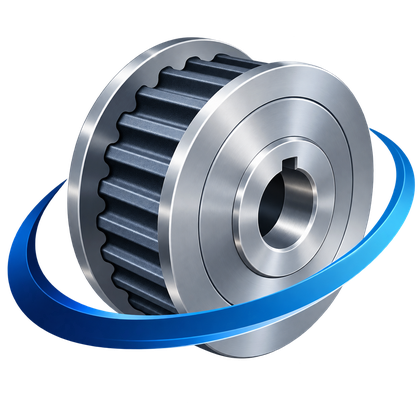
用于加工机械的HTD同步带轮 should be approached as a drive-system decision. The useful starting point is the mating belt and machine interface, followed by tooth count, working width, shaft mounting and duty conditions. This guide explains the checks that help an engineer or buyer turn timing pulley processing machinery into an RFQ that can be verified against a catalogue row or drawing.
比较尺寸前,请先确定驱动方式。
For timing pulley processing machinery, identify the complete belt marking before comparing pulley diameters. HTD is a curvilinear synchronous system and the nominal pitch must stay associated with its profile family. Record the driver and driven tooth counts when an existing ratio must be preserved. For a new drive, document the target speed ratio, driver speed and expected load before choosing tooth counts. This prevents a component-level decision from overriding the machine requirement.
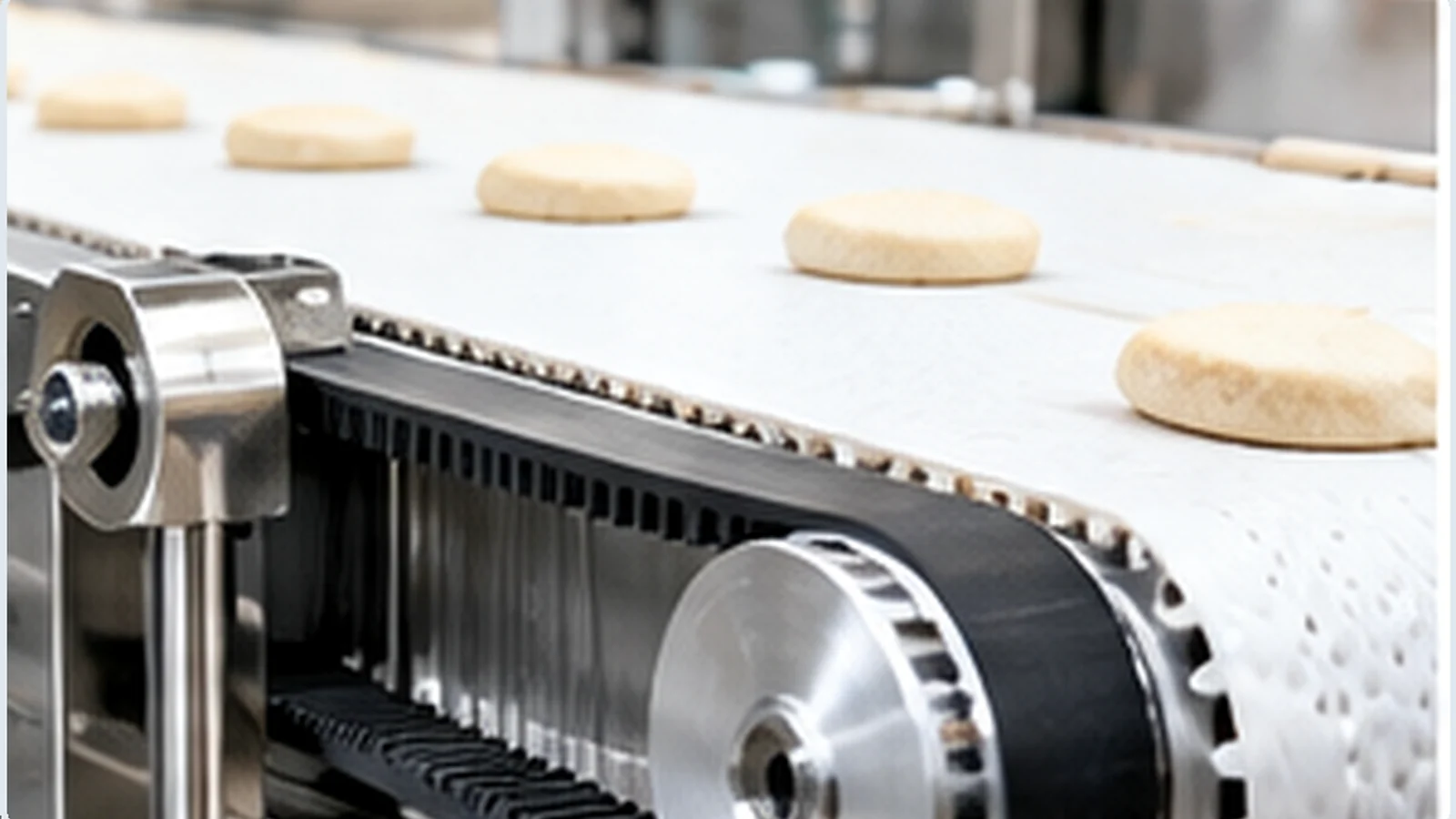
对于更换项目,在确定产品目录中的某款产品是否等效之前,应将测量值与已安装的皮带和机器配置进行比较。对于新项目,应记录设计依据,以便后续维护团队了解节距、齿数和安装方式的选择原因。
控制安装的尺寸
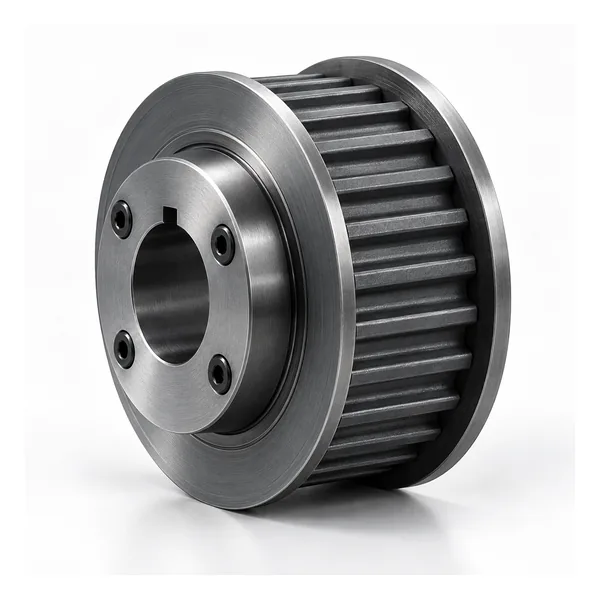
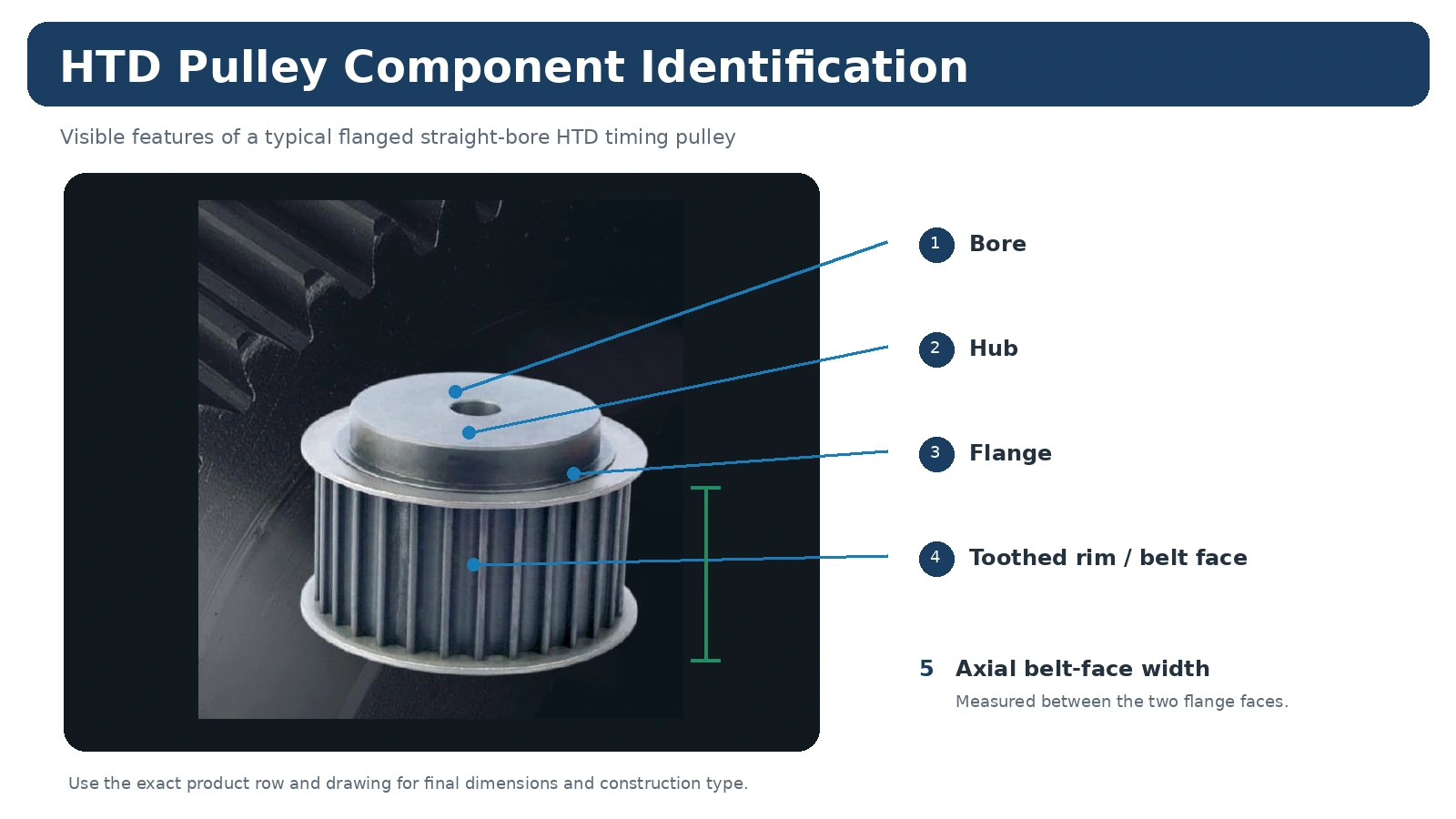
即使皮带轮的节距和齿数相同,也可能因为孔径、轮毂、法兰或轴向位置不同而无法安装到机器上。测量轴接口、皮带端面宽度、轮毂两侧的突出部分以及皮带线相对于稳定机器基准面的位置。如果使用锥形衬套,请记录皮带轮系列和衬套代码。如果需要精加工孔,请在图纸上标明配合方式、键槽以及任何固定方式。
对于更换项目,在确定产品目录中的某款产品是否等效之前,应将测量值与已安装的皮带和机器配置进行比较。对于新项目,应记录设计依据,以便后续维护团队了解节距、齿数和安装方式的选择原因。
属于选择范围的操作条件
The same nominal timing pulley processing machinery component can see very different service depending on the machine. Starts per hour, reversing, shock loading, continuous operating time, temperature, contamination, cleaning and access for tensioning all influence the drive. A compact automation axis emphasizes repeatable motion and controlled alignment, while a conveyor or process machine may emphasize continuous duty and service access. Supply these conditions instead of asking the pulley to be selected from size alone.
对于更换项目,在确定产品目录中的某款产品是否等效之前,应将测量值与已安装的皮带和机器配置进行比较。对于新项目,应记录设计依据,以便后续维护团队了解节距、齿数和安装方式的选择原因。
安装前检查要点
检验应重点关注影响驱动的尺寸:轴接口、轴向位置、齿况、齿宽以及任何图纸控制的跳动或基准关系。通用质量声明不构成验收标准。如果需要尺寸报告、材料文件或订单特定记录,请在生产前明确。维护期间,注意法兰损坏、边缘磨损、碎屑以及皮带轮在轴上移动的迹象。
对于更换项目,在确定产品目录中的某款产品是否等效之前,应将测量值与已安装的皮带和机器配置进行比较。对于新项目,应记录设计依据,以便后续维护团队了解节距、齿数和安装方式的选择原因。
下单前需解决的开放性问题
安装或指定的具体HTD型材规格和宽度是多少?
必须保留多少比例或多少颗现有牙齿?
需要什么样的孔径、配合、键槽或锥套结构?
轮毂凸出长度和法兰间隙分别是多少?
速度、负载、启动次数、反转次数和运行小时数是多少?
供货时必须附带哪些图纸、材料或检验记录?
询价单需要附带哪些内容
请提供配置信息,包括齿数、皮带宽度、轴接口、轮毂/法兰详情、数量、目的地以及图纸或更换尺寸草图。对于新的驱动装置,请添加速度、传动比、负载、中心距和环境信息。请审核。 HTD产品系列使用 选购指南或者比较相关内容 应用说明.
Processing Equipment Varies Widely
Mixers, feeders, handling machines and other processing equipment can impose very different start-stop and environmental conditions. Give the actual machine function and duty rather than selecting from the phrase “processing machinery” alone.
Capture operating hours, starts and stops, reversal if present, nearby guards and the condition of the shaft support. These details provide the application context for the pulley without turning the page into an unsupported power or life-rating claim.
Use the RFQ to Separate Standard Geometry From Project Requirements
If the pulley needs a special material, finish, inspection record or custom shaft feature, list that change independently from the standard HTD family so the quotation remains clear.
采购记录应清晰地记录机器需求与所选皮带轮之间的对应关系。这意味着完整的皮带或型材标识、齿数、工作宽度和轴接口信息应与产品代码一同记录。任何特殊的材料、表面处理、公差控制、标记或报告要求都应单独注明,以免被误认为是整个系列产品的通用特性。
采购和文件
一旦选型确定,请将已确认的产品标识、数量、目的地和图纸版本保留在同一采购行中。标准目录零件通常根据最低生产量进行计划,而较大或较高价值的零件则可根据实际订单金额进行评估。如果配置和制造工艺合适,合格的新客户可以按样品价格订购 1-5 件样品。
混合型号订单可以合并,实际订单金额约为 1,500 美元。特殊材料和特殊工艺的订单遵循该工艺所需的最低订购量。极少量的单件或两件订单仅作为合格的工程验证或付费样品订单处理,而非零售替换订单。
技术定义明确后,交货周期方可确认。标准件的计划交货周期通常为 10-25 个工作日,定制组件为 20-45 个工作日,项目装配或相关设备(如适用)为 45-120 个工作日。我们通常支持 EXW、FOB、CIF 和 DAP 等贸易条款;FCA、CFR、CPT、CIP 和 DDP 等条款可根据具体情况进行商议。请注意,以上交货周期仅为计划交货范围,并非订单审核前的交货承诺。
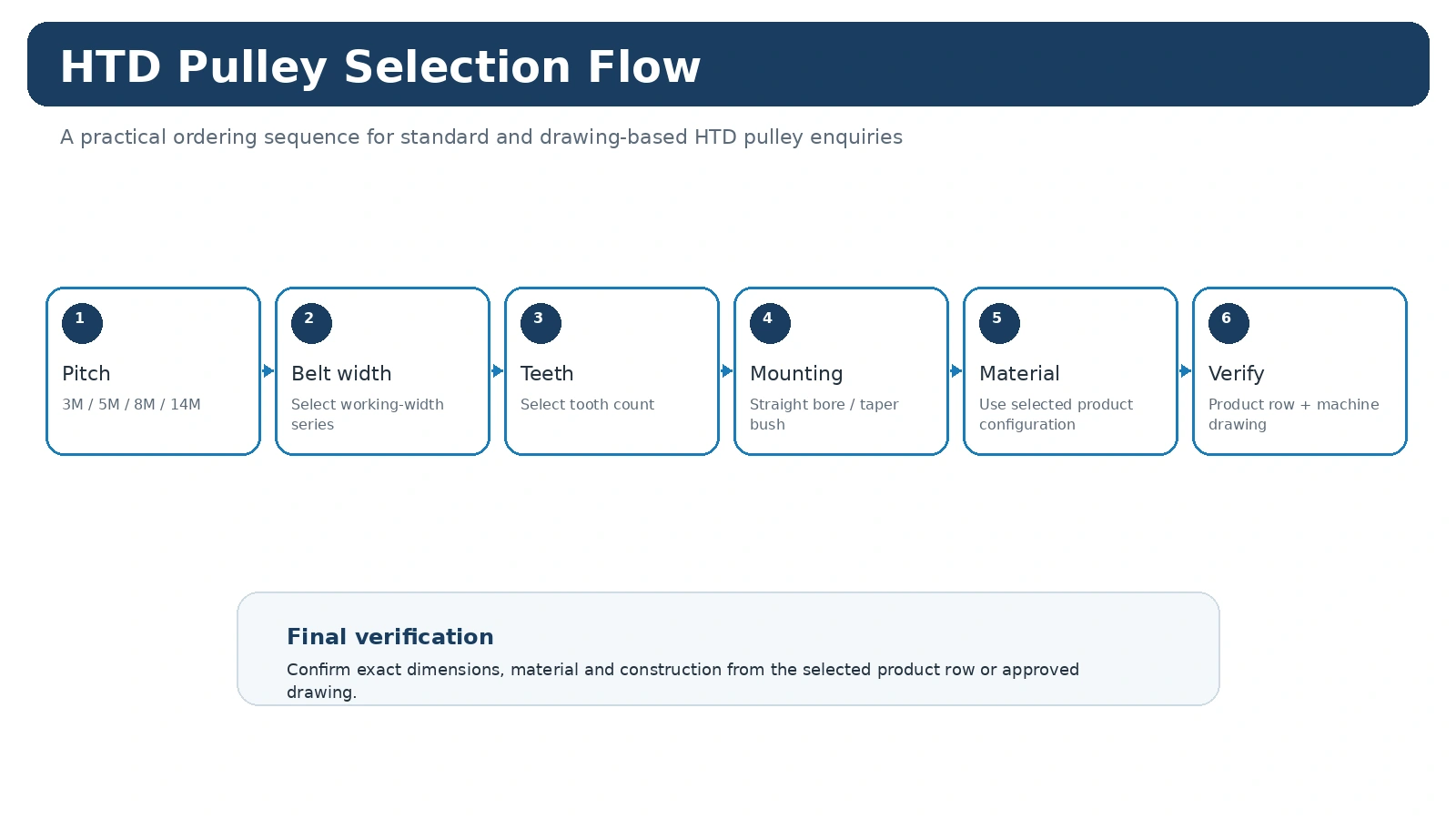
实用决策顺序
Start with process sequence, load cycle, cleanliness and drive envelope. Keep the machine requirement separate from the catalogue choice: first identify what the drive must preserve, then compare only the rows or drawings that match that identity. This keeps a familiar-looking pulley from being accepted before its functional interfaces have been checked.
For an existing machine, preserve the original relationship before making changes. For a new design, record the target ratio, operating context and installation envelope so the processing-drive definition can be reviewed later without relying on memory or a photograph alone.
建立测量记录
The most useful measurement set contains speed ratio, load cycle, pitch family, width, shaft interface and environment. Mark which values were measured on the machine and which values came from a catalogue or released drawing. When a feature is inaccessible, photograph its relationship to a stable datum and identify it as confirmation-required rather than filling the gap with an assumed value.
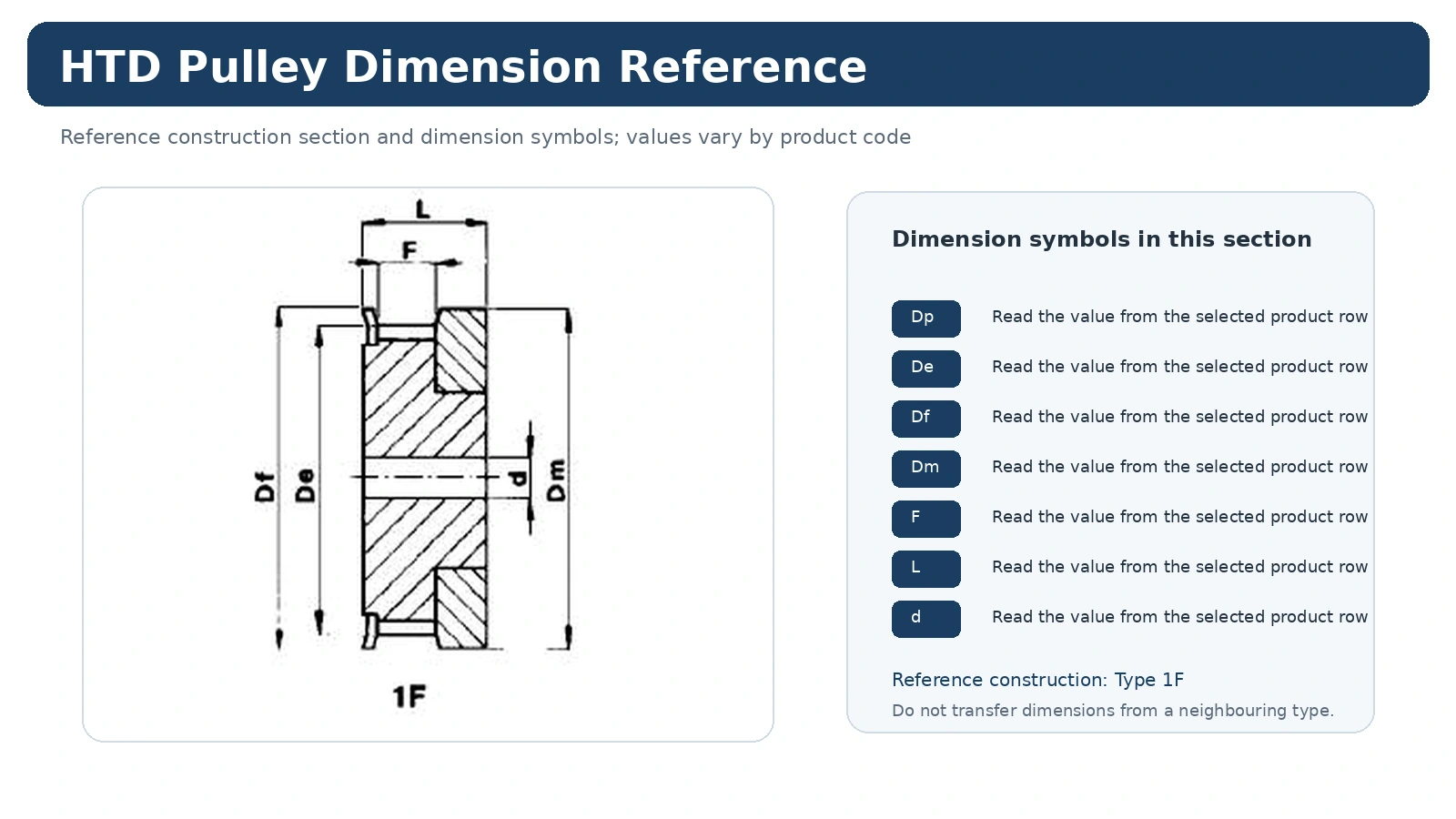
尺寸图应以完整可读宽度查看。切勿缩放屏幕截图,然后将缩放后的尺寸视为测量值;请使用打印值和正确的结构类型。
一种值得避免的故障模式
A common error is assuming an application label alone determines pulley size. That can produce a part that appears close in the catalogue yet changes ratio, belt line, mounting or service access. Resolve the conflicting feature before requesting price so the quotation refers to one mechanically coherent configuration.
如果仍有两种可能的配置方案,请同时发送机器尺寸、照片以及首选方案。这样,报价单就能明确指出哪个接口仍需确认,而不是将不确定性悄悄地转化为规格说明。
将技术选择转化为可用于报价的条目
请说明HTD/规格系列及完整的皮带信息。
请提供齿数、工作宽度以及相关的尺寸或图纸参考。
确定孔或衬套、轴数据、轮毂突出部分和皮带线位置(如适用)。
请添加数量、目的地、所需文件以及申请时使用的图纸版本。
如果上述某项确实未知,请加以标记以待确认。一个明确的开放式问题比一个从未测量过的、看似合理的数值更有用。
买家常问的问题
首先应该确认什么?
Confirm process sequence, load cycle, cleanliness and drive envelope. That prevents later dimensions from being compared across the wrong product family or installation route.
对于更换人员来说,哪些信息最有用?
Send speed ratio, load cycle, pitch family, width, shaft interface and environment, plus clear photographs before the old pulley is removed. The photographs preserve axial orientation and neighboring clearances that a loose part cannot show.
什么时候应该使用图纸?
当产品目录中的图纸无法完全定义对机器重要的轴接口、轮毂/法兰布置、表面处理、公差或检验要求时,请使用受控图纸。
Machine Conditions to Record for Processing Machinery
Do not select a pulley from the industry name alone. Record the operating pattern of the actual machine: driver and driven speeds or ratio, torque or power where available, center distance, hours per day, start/stop frequency, reversal, contamination and the available guard/shaft envelope. These details explain the duty without turning a general article into an unsupported product rating.
For maintenance replacement, add the installed belt marking, tooth count, working face, hub projection and shaft interface. If there has been edge wear or tracking trouble, capture the belt line and bearing/shaft condition before altering pulley geometry.
Installation Planning for Processing Machinery
Confirm that the selected pulley can be fitted and removed with the available service access. A hub that is technically compatible can still cause downtime if adjacent bearings or guards block installation. Maintain the intended belt plane and review flange clearance so the belt is guided without using persistent flange contact as a substitute for alignment.
Where washdown, dust, fibers, chips or process residue are present, include the environment in the RFQ. Material and maintenance decisions should be reviewed against the actual configuration and environment rather than copied from another application.
Processing Equipment Should Be Described by Its Local Drive Conditions, Not the Industry Label
“Processing machinery” covers many very different machines, so it is especially important to define the individual timing drive. Record the driven function, speed relationship, duty, center distance, shaft arrangement and environmental conditions at that location. The correct HTD family cannot be selected reliably from the industry label alone.
For replacements, inspect the belt, flange and shaft position before disassembly. If washdown, dust, product residue, heat or chemical exposure is relevant, identify the actual condition and the requested material or documentation rather than assuming one specification for the whole plant. Keep the belt marking and pulley measurements in the same record.
For new designs, treat the published catalogue geometry as the component definition and the machine data as the project definition. Where the two meet—shaft, hub, belt line and available envelope—is where the RFQ needs the most detail.
Separate Process Environment Requirements From Basic Pulley Identification
When heat, washdown, abrasive residue or chemical exposure matters, add it after the pulley has been identified from pitch, width, tooth count and mounting geometry. This order avoids letting an environmental requirement obscure the fundamental belt-side match. It also makes quotation clearer: the supplier can distinguish the standard component geometry from any requested material, finish or documentation needed for the process zone.
For replacement investigations, record whether the old component shows corrosion, product buildup, flange wear or fretting at the shaft interface. Those observations may influence the project discussion, but they should be kept separate from measured dimensions so damage is not copied into the new part.
Use Process Conditions to Complete the Pulley Specification
Processing machinery covers a wide range of mixers, feeders, cutters, pumps and production equipment. The pulley can be selected only after the drive function is clear: belt family, ratio, center distance, working width and shaft connection come first, followed by the environmental and maintenance constraints that matter to the actual process.
Do not assume that every processing application needs the same material or finish. Cleaning chemicals, food-contact boundaries, dust, heat or corrosion concerns should be stated when they genuinely apply. Those requirements may change the feasible manufacturing route and order quantity, so they belong in the RFQ before production is planned.
Identify what the timing drive powers and whether the motion is continuous or cyclic.
Provide belt family, teeth, width, center distance or installed geometry.
State temperature, contamination, cleaning or corrosion constraints where relevant.
Check guard removal, shaft access and space for the selected mounting method.
For replacements, preserve the original belt line and ratio unless the process engineer has approved a change. A clear machine-side description prevents a component substitution from unintentionally changing process speed or maintenance access.