

HTD 8M-50 Timing Pulley
Takal pemasaan segerak lengkung 8M, siri 8M-50. Pilih kiraan gigi, lebar tali sawat dan antara muka aci daripada jadual katalog atau lukisan yang diluluskan.
HTD 8M-50 Timing Pulley Configuration Overview
Takal Pemasaan HTD 8M-50 ialah keluarga takal segerak pic 8 mm dengan rujukan muka tali pinggang nominal 50 dalam sistem penamaan katalog. Halaman ini menganggap siri ini sebagai komponen perindustrian yang boleh dikonfigurasikan dan bukannya SKU tetap tunggal. Kiraan gigi mengubah diameter takal dan juga boleh mengubah hab, bebibir, bahan atau butiran pemasangan, jadi pesanan mesti terikat pada baris katalog tertentu atau lukisan yang diluluskan.
Untuk perolehan, mulakan dengan penetapan tali sawat yang lengkap dan sahkan bahawa tali sawat padanan menggunakan profil HTD 8M yang sama. Pitch sahaja bukanlah peraturan pertukaran yang selamat untuk setiap keluarga tali sawat lengkung. Selepas pengesahan profil, pilih kiraan gigi dan lebar kerja, kemudian semak antara muka aci, unjuran hab, susunan bebibir dan bahan yang tersedia. Urutan ini mengurangkan ralat penggantian biasa yang hanya memadankan diameter luar sambil mengabaikan sistem gigi atau geometri pelekap.
The straight-bore construction shown for this family is intended for positive synchronous power transmission. Typical enquiries come from machine tools, conveyors and higher-duty industrial motion. Actual suitability depends on speed, transmitted load, center distance, belt construction, alignment, environment and shaft support. Those duty inputs should be supplied for a new drive or when an existing machine has recurring belt-tracking or wear problems.
Pembinaan dan Antara Muka Aci 8M-50
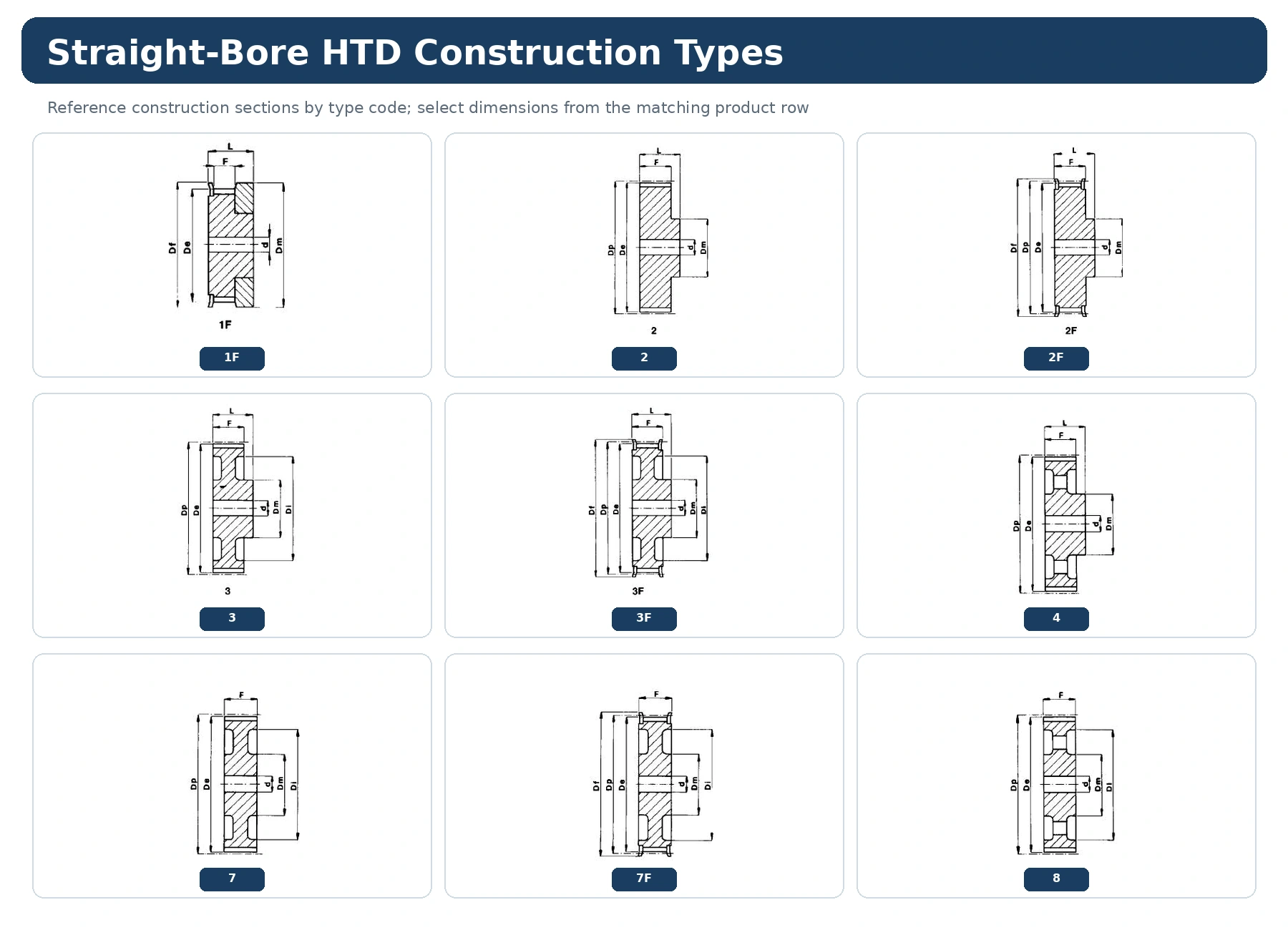
8M-50 belongs to the 8M HTD family and this page covers straight-bore construction. The catalogue table on this page spans 22–192 teeth. Construction codes visible in the table include 2F, 7F, 7, 8. Use the exact product code with the tooth count because the hub/flange arrangement can change inside one width series.
Kod lebar 50 mengenal pasti keluarga katalog ini; ia bukan pengganti untuk memeriksa tanda tali pinggang padanan dan lukisan dimensi. Untuk kerja penggantian, kekalkan garisan tali pinggang yang dipasang dan ukur geometri sisi aci sebelum memutuskan bahawa baris dengan gigi yang betul adalah pengganti mekanikal.
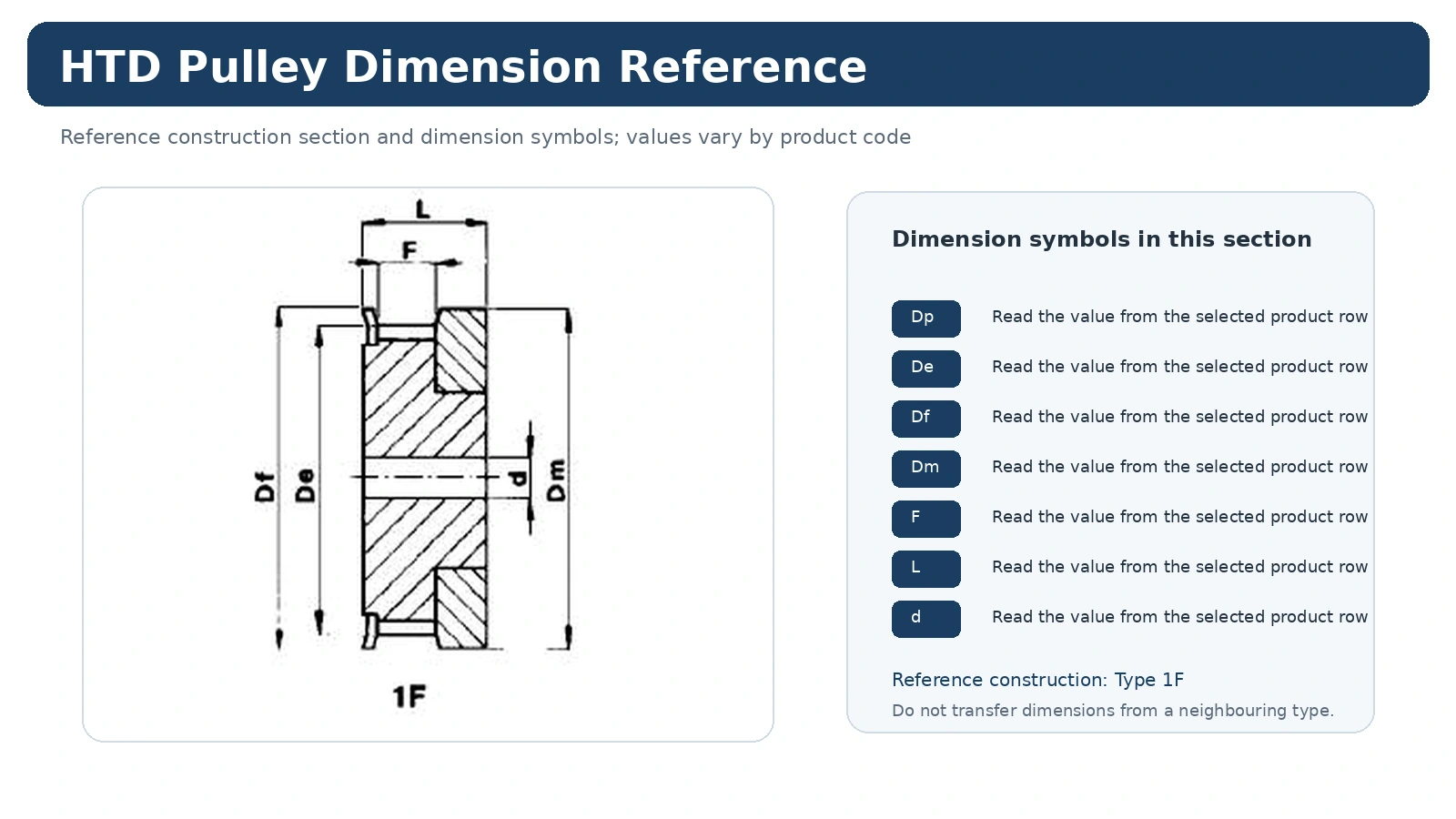
Baca Paparan Dimensi 8M-50 Sebelum Meja
Paparan dimensi menerangkan bagaimana simbol seperti Dp, De, Df, Dm, Di, F, L dan medan berkaitan lubang berkaitan dengan lukisan pembinaan. Gunakan lukisan dan baris produk yang sama bersama-sama; jangan pindahkan dimensi daripada jenis pembinaan lain hanya kerana kiraan pic dan gigi sepadan.
Untuk 8M-50, rekodkan nilai yang mengawal pemasangan—muka kerja, unjuran hab, sampul bebibir dan sambungan aci—terhadap datum mesin yang stabil. Jika lubang siap, laluan kunci atau toleransi tidak ditakrifkan oleh baris katalog, tambahkannya pada RFQ atau lukisan terkawal dan bukannya menganggap nilai universal.
Jadual Spesifikasi Teknikal 8M-50
Nilai berikut ditranskripsikan daripada katalog takal pemasaan yang dipilih untuk siri ini. Gunakan kod dan kiraan gigi bersama-sama apabila meminta sebut harga. Dimensi adalah nilai katalog; kesesuaian aci akhir, laluan kunci, kemasan permukaan dan keperluan pemeriksaan hendaklah dinyatakan pada RFQ atau lukisan.
| Kod | Jenis | Gigi | Dp | De | Df | Dm | Di | F | L | d | Bebibir | Lebih kurang kg |
|---|---|---|---|---|---|---|---|---|---|---|---|---|
| 22-8M-50 | 2F | 22 | 56,02 | 54,65 | 60 | 43 | – | 60 | 70 | 12 | 308 | 1,10 |
| 24-8M-50 | 2F | 24 | 61,11 | 59,74 | 66 | 45 | – | 60 | 70 | 12 | 310 | 1,30 |
| 26-8M-50 | 2F | 26 | 66,21 | 64,84 | 71 | 48 | – | 60 | 70 | 12 | 311 | 1,60 |
| 28-8M-50 | 2F | 28 | 71,30 | 70,08 | 75 | 50 | – | 60 | 70 | 14 | 312 | 1,70 |
| 30-8M-50 | 2F | 30 | 76,39 | 75,13 | 83 | 55 | – | 60 | 70 | 14 | 314 | 2,00 |
| 32-8M-50 | 2F | 32 | 81,49 | 80,16 | 87 | 60 | – | 60 | 70 | 14 | 315 | 2,35 |
| 34-8M-50 | 2F | 34 | 86,58 | 85,21 | 91 | 66 | – | 60 | 70 | 14 | 316 | 2,80 |
| 36-8M-50 | 2F | 36 | 91,67 | 90,30 | 98,5 | 70 | – | 60 | 70 | 14 | 319 | 3,10 |
| 38-8M-50 | 2F | 38 | 96,77 | 95,39 | 103 | 75 | – | 60 | 70 | 14 | 320 | 3,30 |
| 40-8M-50 | 2F | 40 | 101,86 | 100,49 | 106 | 75 | – | 60 | 70 | 14 | 321 | 3,60 |
| 44-8M-50 | 2F | 44 | 112,05 | 110,67 | 119 | 75 | – | 60 | 70 | 14 | 325 | 4,40 |
| 48-8M-50 | 2F | 48 | 122,23 | 120,86 | 127 | 75 | – | 60 | 70 | 14 | 327 | 5,00 |
| 56-8M-50 | 7F | 56 | 142,60 | 141,23 | 148 | 90 | 116 | 60 | 60 | 18 | 333 | 5,68 |
| 64-8M-50 | 7F | 64 | 162,97 | 161,60 | 168 | 100 | 137 | 60 | 60 | 18 | 338 | 6,93 |
| 72-8M-50 | 7F | 72 | 183,35 | 181,97 | 192 | 100 | 158 | 60 | 60 | 18 | 340 | 7,95 |
| 80-8M-50 | 7 | 80 | 203,72 | 202,35 | – | 110 | 180 | 60 | 60 | 18 | – | 7,96 |
| 90-8M-50 | 7 | 90 | 229,18 | 227,81 | – | 110 | 204 | 60 | 60 | 18 | – | 9,20 |
| 112-8M-50 | 8 | 112 | 285,21 | 283,83 | – | 110 | 254 | 60 | 60 | 18 | – | 12,16 |
| 144-8M-50 | 8 | 144 | 366,69 | 365,32 | – | 110 | 336 | 60 | 60 | 20 | – | 15,68 |
| 168-8M-50 | 8 | 168 | 427,81 | 426,44 | – | 120 | 400 | 60 | 60 | 20 | – | 18,99 |
| 192-8M-50 | 8 | 192 | 488,92 | 487,55 | – | 130 | 460 | 60 | 60 | 20 | – | 24,09 |
Di Mana Keluarga 8M-50 Sesuai
8M-50 adalah sebahagian daripada keluarga 8M yang digunakan untuk pemacu segerak perindustrian di mana kiraan gigi, jenis pembinaan, lubang atau semak dan ruang pemasangan paksi perlu dikaji semula bersama. Kesesuaian aplikasi tidak ditentukan oleh pic sahaja. Pemacu baharu masih memerlukan hubungan kelajuan, asas beban atau tork, jarak pusat, persekitaran dan keadaan perkhidmatan yang diperlukan sebelum baris takal dapat dimuktamadkan.
Untuk penggantian, titik permulaan yang paling selamat ialah identiti tali sawat/profil sedia ada serta kiraan gigi asal. Menukar kiraan gigi mengubah diameter pic dan nisbah pemacu, manakala menukar binaan pelekap boleh menggerakkan tali sawat atau mengubah akses penyingkiran.
Pilihan Bahan dan Pembinaan untuk 8M-50
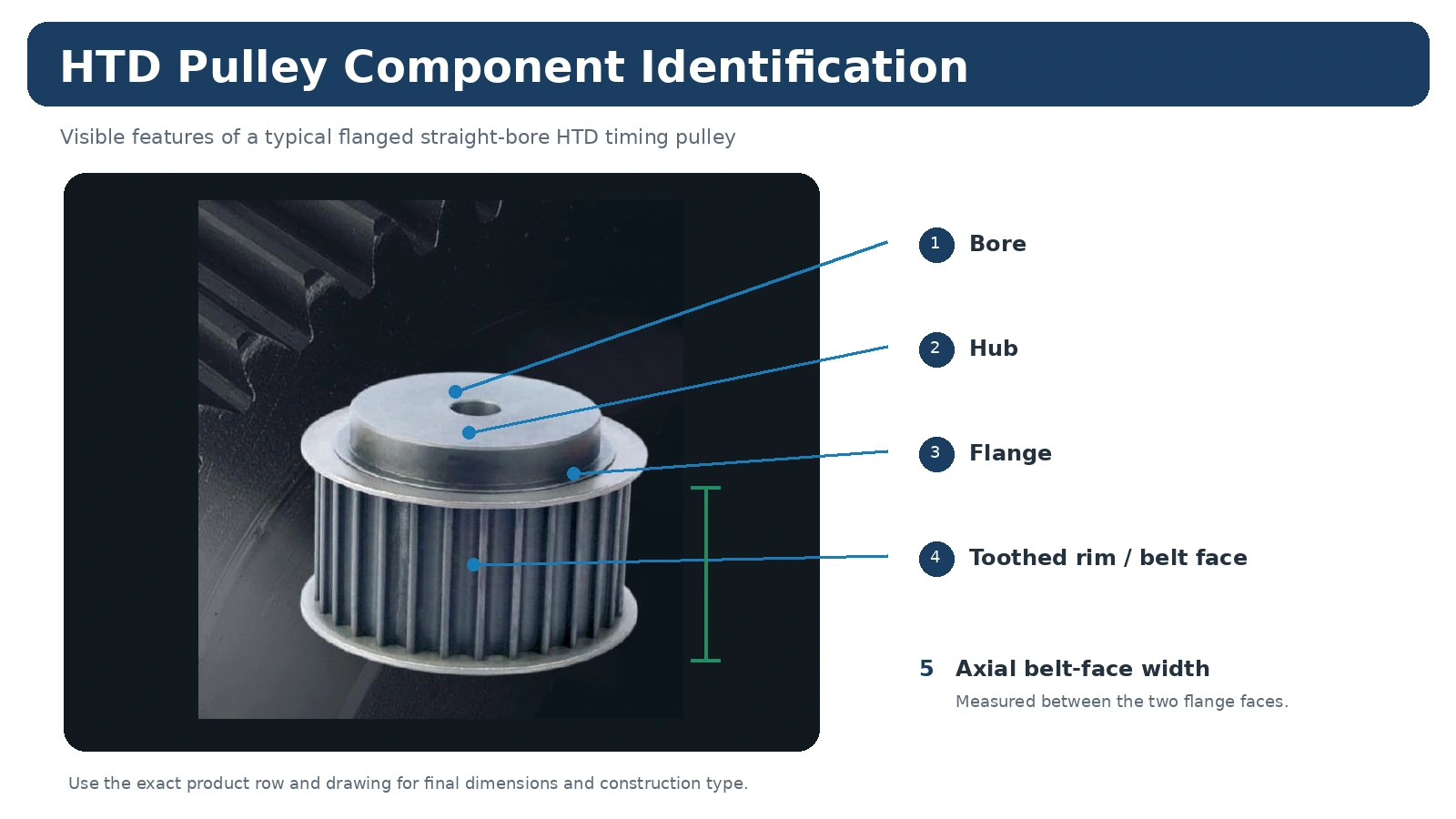
Gunakan bahan dan binaan yang ditunjukkan untuk kod produk 8M-50 yang tepat atau lukisan yang diluluskan. Jangan kenal pasti bahan takal daripada warna, rupa permukaan atau gambar. Jika projek meminta bahan, kemasan, hab, bebibir atau ciri aci yang berbeza, anggap itu sebagai keperluan tersuai dan semak kesannya terhadap dimensi dan pemeriksaan sebelum sebut harga.
Within the 22–192 teeth range, construction codes can vary. That variation is why the product code, tooth count and construction view should remain together in the order record.
Pemeriksaan Pemasangan untuk 8M-50
Sebelum pemasangan, bandingkan takal baharu dengan baris atau lukisan 8M-50 yang dilepaskan. Sahkan sambungan aci, kedudukan paksi, keadaan bebibir dan garisan tali sawat sebelum tegangan dikenakan. Tali sawat hendaklah memasuki takal tanpa dipaksa ke sisi oleh aci yang tidak sejajar, hab yang dialihkan atau susunan spacer yang salah.
Selepas pemasangan, periksa ciri-ciri yang penting kepada mesin sebenar—pemasangan selamat, penjajaran, putaran bebas, penjejakan tali sawat dan sebarang larian keluar atau kedudukan paksi yang dikawal lukisan. Jangan gunakan toleransi generik di mana peralatan atau lukisan pesanan mentakrifkan keperluan yang berbeza.
Pesanan, Sampel dan Perancangan Komersial
Kuantiti minimum ditetapkan mengikut jenis produk, laluan pembuatan dan jumlah nilai pesanan. Alat ganti katalog standard biasanya mengikut minimum kuantiti pengeluaran.
Pelanggan baharu boleh meminta 1–5 sampel apabila konfigurasi dan laluan pengeluaran sesuai. Harga sampel dinyatakan secara berasingan.
Model takal yang berbeza boleh digabungkan. Nilai pesanan gabungan kira-kira USD 1,500 adalah titik perancangan biasa untuk pesanan model campuran.
Kuantiti satu atau dua keping hanya boleh dipertimbangkan untuk pengesahan kejuruteraan atau keperluan sampel berbayar yang layak, bukan sebagai pesanan runcit; harga seunit adalah lebih tinggi.
Bahagian standard: biasanya 10–25 hari bekerja. Komponen tersuai: biasanya 20–45 hari bekerja. Pemasangan berasaskan projek atau peralatan berkaitan: 45–120 hari bekerja jika berkenaan. Masa akhir disahkan selepas lukisan, semakan bahan dan kuantiti.
EXW, FOB, CIF dan DAP biasanya tersedia. FCA, CFR, CPT, CIP dan DDP boleh dibincangkan untuk penghantaran dan destinasi yang sesuai.
Cara Menyediakan RFQ untuk 8M-50
Hantarkan tanda tali sawat yang lengkap, kiraan gigi yang diperlukan, lebar tali sawat, diameter dan kesesuaian aci, kaedah pemasangan, kuantiti dan destinasi. Tambahkan lukisan berdimensi atau gambar penggantian yang jelas apabila unjuran hab, geometri bebibir, laluan kunci, kemasan atau had pemeriksaan tidak standard. Jika anda menggantikan takal usang, sertakan ukuran hadapan, belakang dan sisi dan bukannya bergantung pada satu nilai diameter luar.
Untuk keputusan yang berkaitan, bandingkan Keluarga produk 8M, semak semula Panduan pemilihan takal HTD, atau lihat panduan permohonan untuk pertimbangan khusus mesin.
Soalan Lazim 8M-50
Adakah setiap takal 8M-50 boleh ditukar ganti?
Tidak. Kod siri menyempitkan keluarga pic dan lebar, tetapi kiraan gigi, jenis pembinaan, lubang atau semak, dimensi hab, susunan bebibir dan bahan mungkin berbeza. Sahkan baris atau lukisan katalog yang tepat.
Bolehkah anda memetik harga daripada takal sedia ada?
Ya, dengan syarat maklumat penggantian mencukupi. Hantar tanda tali sawat, kiraan gigi, lebar muka, butiran aci dan ukuran dari kedua-dua belah pihak. Lukisan adalah lebih baik untuk geometri bukan standard.
Bolehkah kuantiti yang kecil dibekalkan?
Sampel berbayar kecil boleh dipertimbangkan untuk pengesahan kejuruteraan yang berkelayakan. Laluan jualan biasa adalah bekalan pengeluaran perindustrian dan bukannya pembelian runcit satu atau dua keping.
Dokumen apa yang perlu diminta bersama pesanan tersebut?
Nyatakan pemeriksaan dimensi, dokumentasi bahan, penandaan atau rekod pematuhan khusus pesanan yang diperlukan pada peringkat RFQ supaya ketersediaan dan skop dapat disahkan sebelum pengeluaran.