HTD Timing Pulleys for Packaging Machinery should be selected from the machine duty and belt system, not from diameter alone. In feeders, indexers, sealing stations and synchronized packaging motion, timing-pulley accuracy and serviceability depend on the complete shaft, belt, bearing and tensioning arrangement.
Machine Context and Duty Cycle
Record driver speed, driven speed or ratio, expected torque or power, starts per hour, reversing duty, center distance and operating hours. Also document contamination, temperature, washdown or dust exposure and the available maintenance access. These conditions guide whether the project should stay with a standard catalogue pulley or use a drawing-controlled interface.
Selection Variables
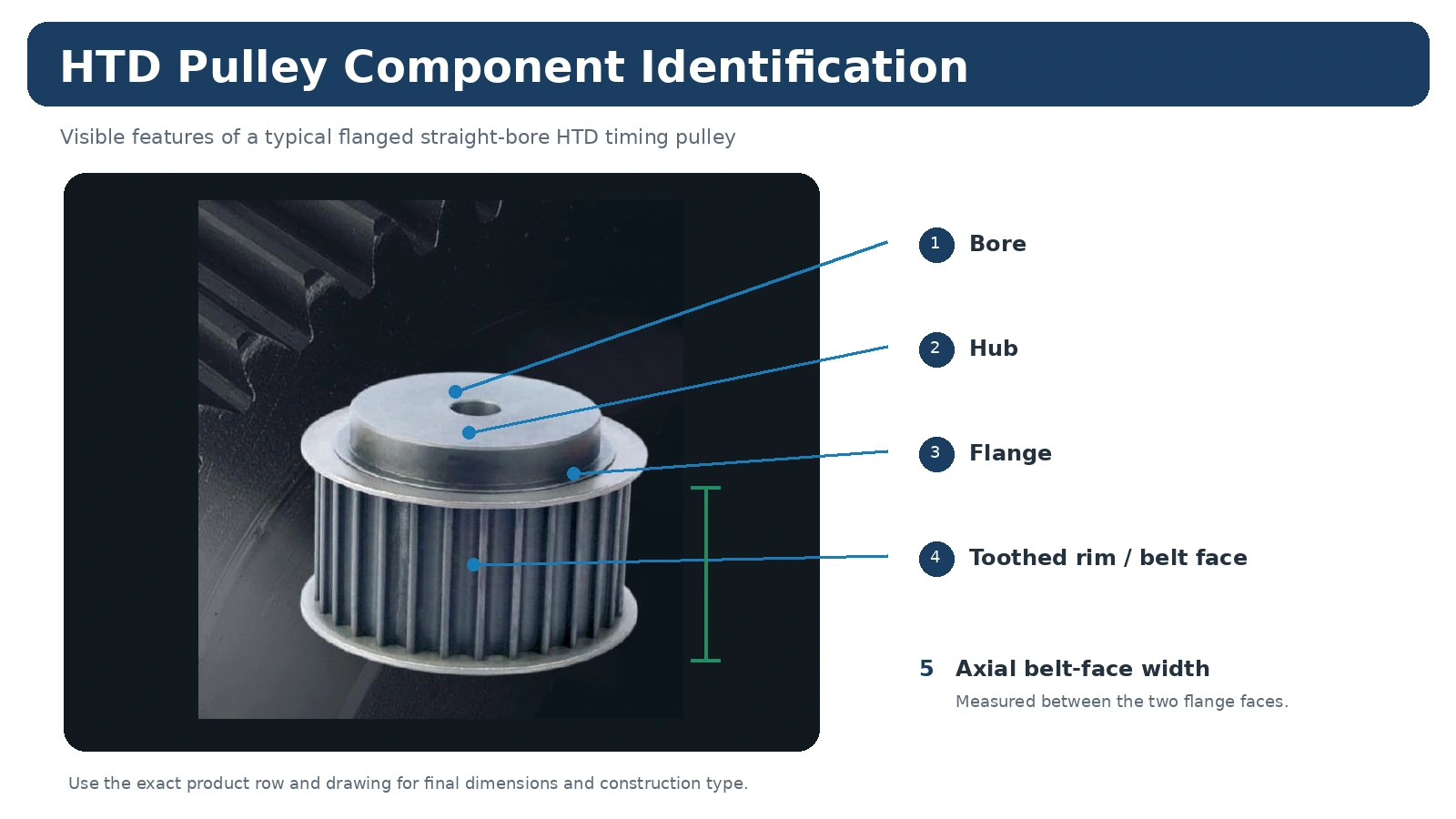
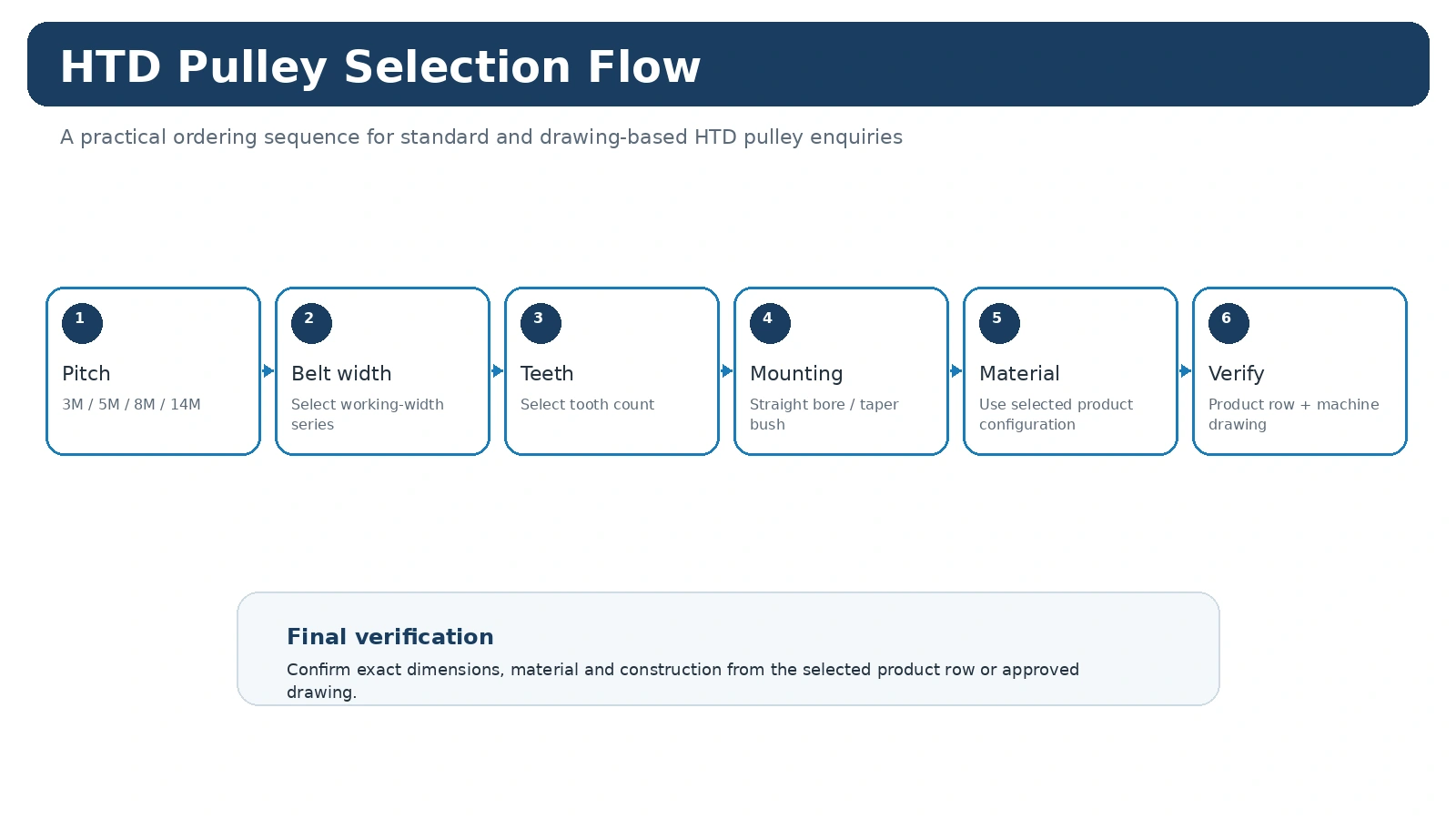
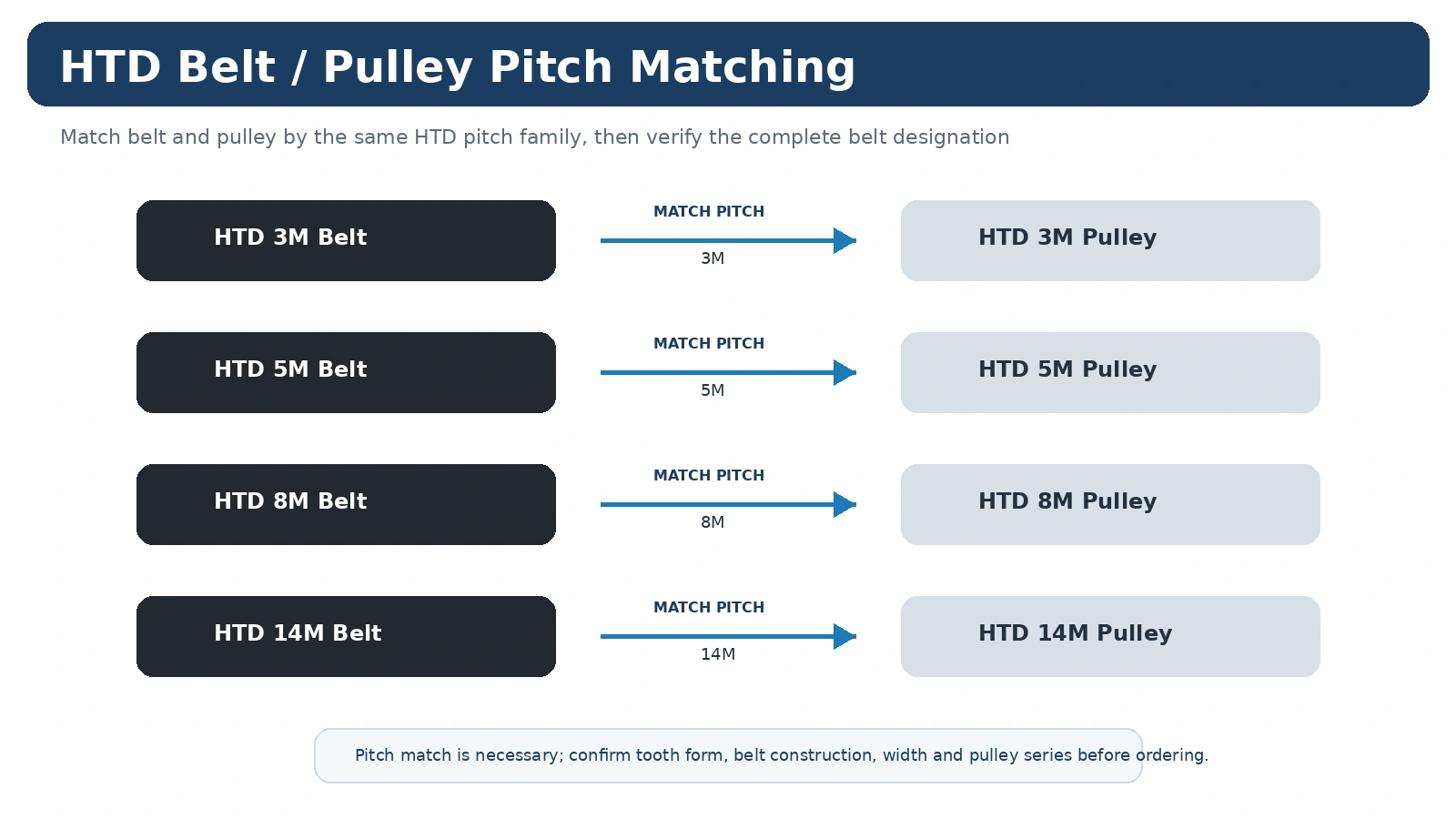
Confirm the exact HTD belt family first. Then select tooth count, working width and the shaft mounting. 3M and 5M suit compact drive envelopes; 8M and 14M cover larger industrial arrangements, but the final choice depends on the drive calculation and belt data. Hub projection and flange arrangement must fit the physical machine envelope.
Integration and Safety Checks
Align pulley faces and shafts, keep guards and adjacent components clear of the belt path, and use the belt supplier or machine design basis for tensioning. Inspect edge tracking and pulley retention after commissioning. If the drive carries a safety-critical function, apply the machine builder’s risk assessment and validation requirements rather than relying on a general component page.
RFQ Preparation
Send the belt marking, desired ratio or pulley tooth count, belt width, shaft interface, center distance, duty information, quantity and a drawing or machine sketch. Compare HTD pulley families, use the selection guide, or review inspection planning before placing the order.
Keep Indexing, Belt Line and Service Access in the Same Review
Packaging machines often place drives close to guards, feeders and neighboring stations. Record the belt family, tooth counts, center distance and hub/guard clearances before replacing a pulley.
Where dust, washdown or temperature is relevant, describe the actual station condition. Material, finish and maintenance decisions can then be reviewed for that location without turning a general application page into an unsupported product rating.
Translate the Machine Duty Into a Pulley RFQ
In feeders, indexing stations, sealing or handling modules, the pulley should be selected as part of the synchronous drive rather than as an isolated wheel. Record start-stop frequency, product changeover, washdown/cleaning exposure and access for tension checks. For a new drive, also provide driver speed, required driven speed or ratio, torque or power, center distance and operating hours. These inputs define the context in which the belt family and tooth count will operate; they do not replace the catalogue geometry.
For replacement work, photograph the installed belt path and both sides of the pulley before disassembly. The belt marking, working face, tooth count, shaft interface and hub projection are usually more useful than outside diameter alone.
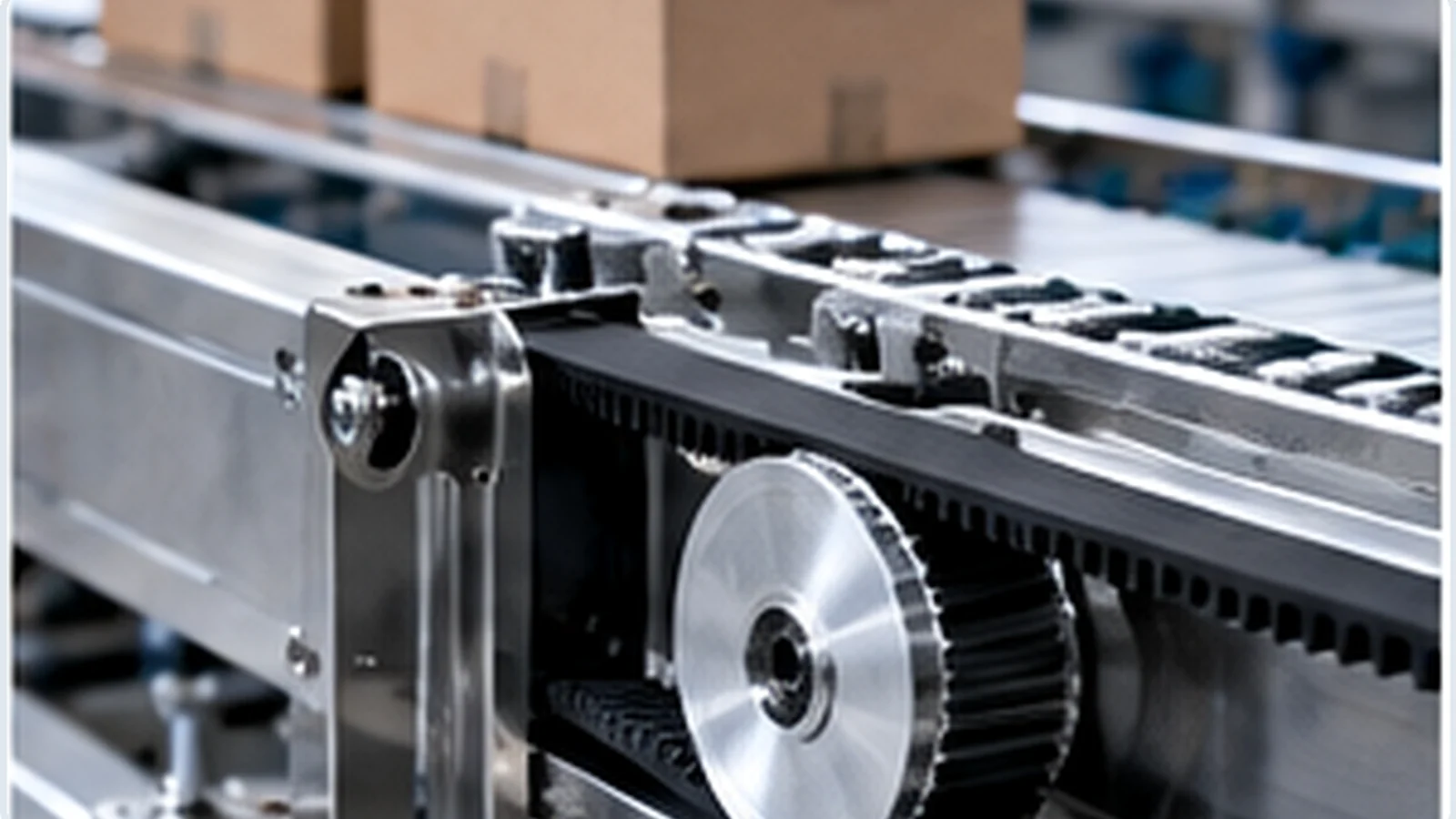
Integration Checks Before Release
Confirm that the selected pulley keeps the belt in the existing machine plane and leaves clearance for guards, bearings and adjacent hardware. Review how the part will be installed and removed; an otherwise correct hub can be impractical if it blocks service access.
If the application has repeated tracking, edge-wear or tension problems, record those symptoms before changing pulley geometry. Alignment, bearing support, shaft condition and installation can create symptoms that should not automatically be attributed to the pulley.
What to Send With the Enquiry
Provide the complete HTD or belt identity, tooth count, working width, bore or taper-bush information, quantity and destination. For a new machine add the key duty data; for a replacement add photos and the old part dimensions. Put any special material, finish, tolerance or inspection requirement on the drawing so it can be reviewed against the selected product family.
Maintenance Information Worth Keeping for HTD Timing Pulleys for Packaging Machinery
After the drive is commissioned, record the installed belt designation, pulley series, tooth count and mounting details with the machine documentation. Note any drawing revision used for a custom hub or bore. If a later service event changes the shaft, bush or belt family, update the record rather than relying on the old purchase history.
This small record makes future troubleshooting more reliable because maintenance can distinguish normal wear from a configuration change that occurred during a previous repair.
Operating Questions for the Packaging Machine
Before a pulley family is selected, document cycle rate, indexed stations, driver/driven tooth counts, center distance, washdown or product contamination exposure and access. These inputs define what the synchronous drive must preserve. The product table can then be used to compare tooth count, width series and mounting geometry without pretending that an application name alone establishes capacity.
The practical objective is synchronized feeding, sealing, indexing and transfer functions. Review the complete drive after any proposed change because a replacement that changes ratio can shift machine timing even if the pulley fits the shaft. Where an existing machine has no drawing, retain belt markings and before-removal photographs with the measurement record so the replacement can be checked against the actual installation.
Installation and Maintenance Context
Check the belt line from driver to driven pulley, confirm that the shafts are supported and aligned, and verify that guards, adjacent components and service tools have adequate clearance. A pulley that is dimensionally close can still be unsuitable if a longer hub, different bush or flange arrangement moves the belt out of its original plane.
During maintenance, inspect tooth and flange condition together with belt wear. Unusual edge wear, dust accumulation or repeated tracking correction can point to an alignment, support or contamination issue that should be resolved before the new component is installed.
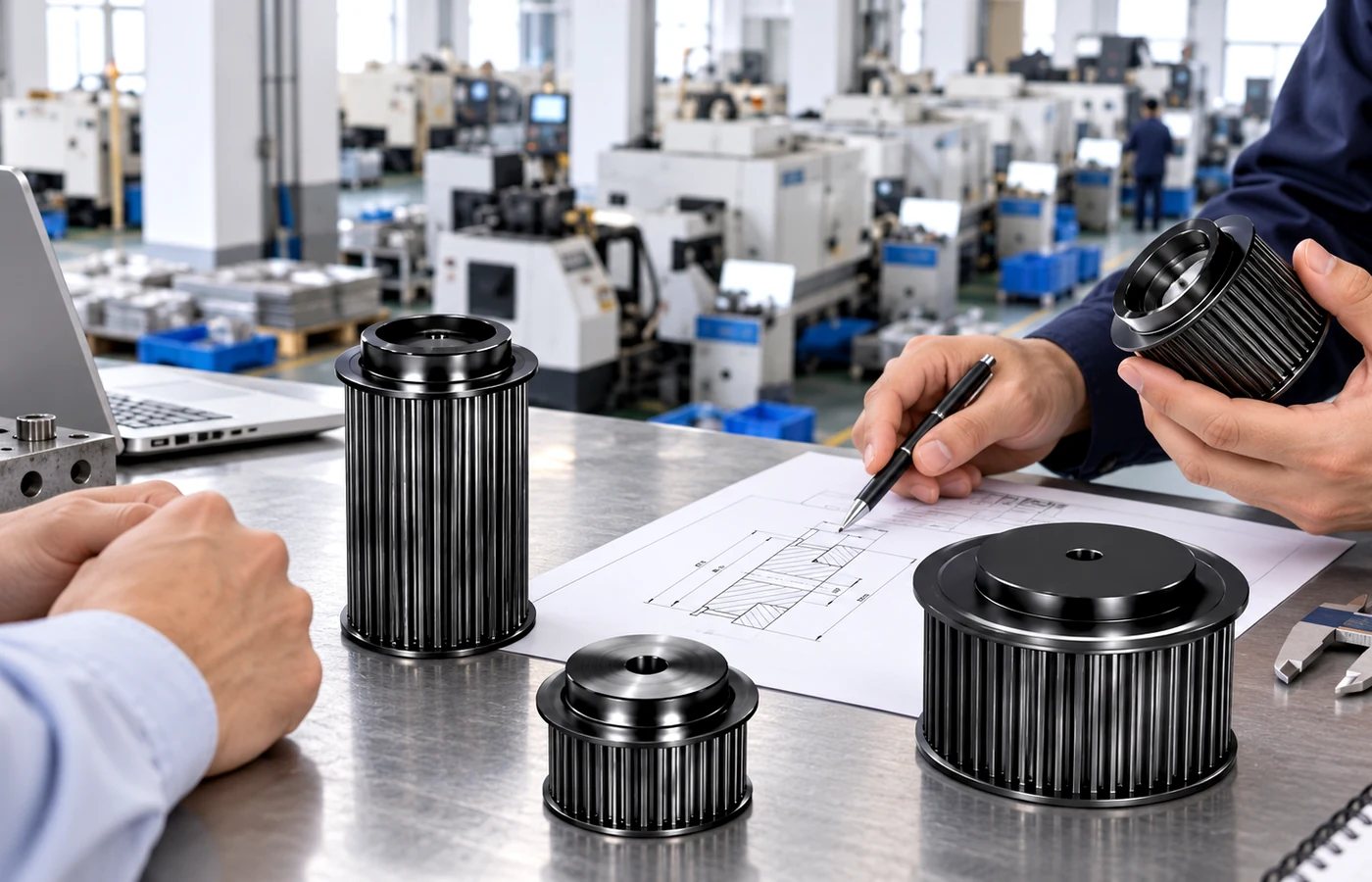
RFQ Data for the Packaging Machine
Send the HTD/profile family, tooth count, belt width, shaft or bush information, quantity and destination. For a new drive, add speed relationship, center distance and operating conditions. For replacement work, add clear photographs and the dimensions that control belt line and hub position. Put any special material, finish, marking, inspection or documentation requirement on the RFQ or drawing before production review.