HTD Timing Pulleys for Conveyor Systems should be approached as a drive-system decision. The useful starting point is the mating belt and machine interface, followed by tooth count, working width, shaft mounting and duty conditions. This guide explains the checks that help an engineer or buyer turn timing pulley conveyor into an RFQ that can be verified against a catalogue row or drawing.
Identify the Drive Before Comparing Dimensions
For timing pulley conveyor, identify the complete belt marking before comparing pulley diameters. HTD is a curvilinear synchronous system and the nominal pitch must stay associated with its profile family. Record the driver and driven tooth counts when an existing ratio must be preserved. For a new drive, document the target speed ratio, driver speed and expected load before choosing tooth counts. This prevents a component-level decision from overriding the machine requirement.
При замене ремней сравните измеренное значение с установленным ремнем и расположением деталей на станке, прежде чем принимать решение о эквивалентности строки в каталоге. При новом проекте задокументируйте обоснование конструкции, чтобы впоследствии ремонтные бригады могли понять, почему были выбраны шаг, количество зубьев и способ крепления.
Dimensions That Control the Installation
Шкив может соответствовать шагу и количеству зубьев, но при этом не подходить к станку из-за различий в отверстии, ступице, фланце или осевом положении. Измерьте зону соприкосновения вала, ширину поверхности ремня, выступ ступицы с обеих сторон и линию ремня относительно стабильной базовой точки станка. При использовании конической втулки запишите как серию шкива, так и код втулки. Если требуется чистовая обработка отверстия, укажите на чертеже посадку, шпоночный паз и любой способ крепления.
При замене ремней сравните измеренное значение с установленным ремнем и расположением деталей на станке, прежде чем принимать решение о эквивалентности строки в каталоге. При новом проекте задокументируйте обоснование конструкции, чтобы впоследствии ремонтные бригады могли понять, почему были выбраны шаг, количество зубьев и способ крепления.
Operating Conditions That Belong in the Selection
The same nominal timing pulley conveyor component can see very different service depending on the machine. Starts per hour, reversing, shock loading, continuous operating time, temperature, contamination, cleaning and access for tensioning all influence the drive. A compact automation axis emphasizes repeatable motion and controlled alignment, while a conveyor or process machine may emphasize continuous duty and service access. Supply these conditions instead of asking the pulley to be selected from size alone.

При замене ремней сравните измеренное значение с установленным ремнем и расположением деталей на станке, прежде чем принимать решение о эквивалентности строки в каталоге. При новом проекте задокументируйте обоснование конструкции, чтобы впоследствии ремонтные бригады могли понять, почему были выбраны шаг, количество зубьев и способ крепления.
Inspection Points Before Installation
При проверке следует сосредоточиться на размерах, влияющих на привод: сопряжение с валом, осевое положение, состояние зубьев, ширина торца и любое биение или базовое соотношение, определяемое чертежом. Общее описание качества не определяет приемлемость. Если требуется отчет о размерах, документация по материалам или запись, относящаяся к конкретному заказу, необходимо определить это до начала производства. Во время технического обслуживания следите за повреждениями фланцев, износом кромок, наличием мусора и признаками смещения шкива на валу.
При замене ремней сравните измеренное значение с установленным ремнем и расположением деталей на станке, прежде чем принимать решение о эквивалентности строки в каталоге. При новом проекте задокументируйте обоснование конструкции, чтобы впоследствии ремонтные бригады могли понять, почему были выбраны шаг, количество зубьев и способ крепления.
Open Questions to Close Before Ordering
Какой именно профиль и ширина HTD установлены или указаны?
Какое соотношение или количество имеющихся зубов необходимо сохранить?
Какое расположение отверстий, посадок, шпоночных пазов или конических втулок требуется?
Какой допустимый выступ ступицы и зазор между фланцем и ступицей?
Каковы скорость, нагрузка, количество запусков, режим реверса и количество часов работы?
Какие чертежи, документы по материалам или протоколы контроля качества должны прилагаться к поставке?
Что нужно отправить вместе с запросом предложений?
Отправьте профиль, количество зубьев, ширину ремня, интерфейс вала, детали ступицы/фланца, количество, место назначения и чертеж или эскиз размеров для замены. Добавьте скорость, передаточное число, нагрузку, межосевое расстояние и условия эксплуатации для нового привода. Проверьте семейства продуктов HTDиспользуйте руководство по выборуили сравните соответствующие примечания к приложению.
Conveyor Selection Starts With the Driven Equipment
Identify whether the pulley drive serves a belt conveyor, roller conveyor, feeder or auxiliary mechanism. Record starting conditions, load variation, operating hours and contamination because these change the service context around the synchronous drive.
Capture operating hours, starts and stops, reversal if present, nearby guards and the condition of the shaft support. These details provide the application context for the pulley without turning the page into an unsupported power or life-rating claim.
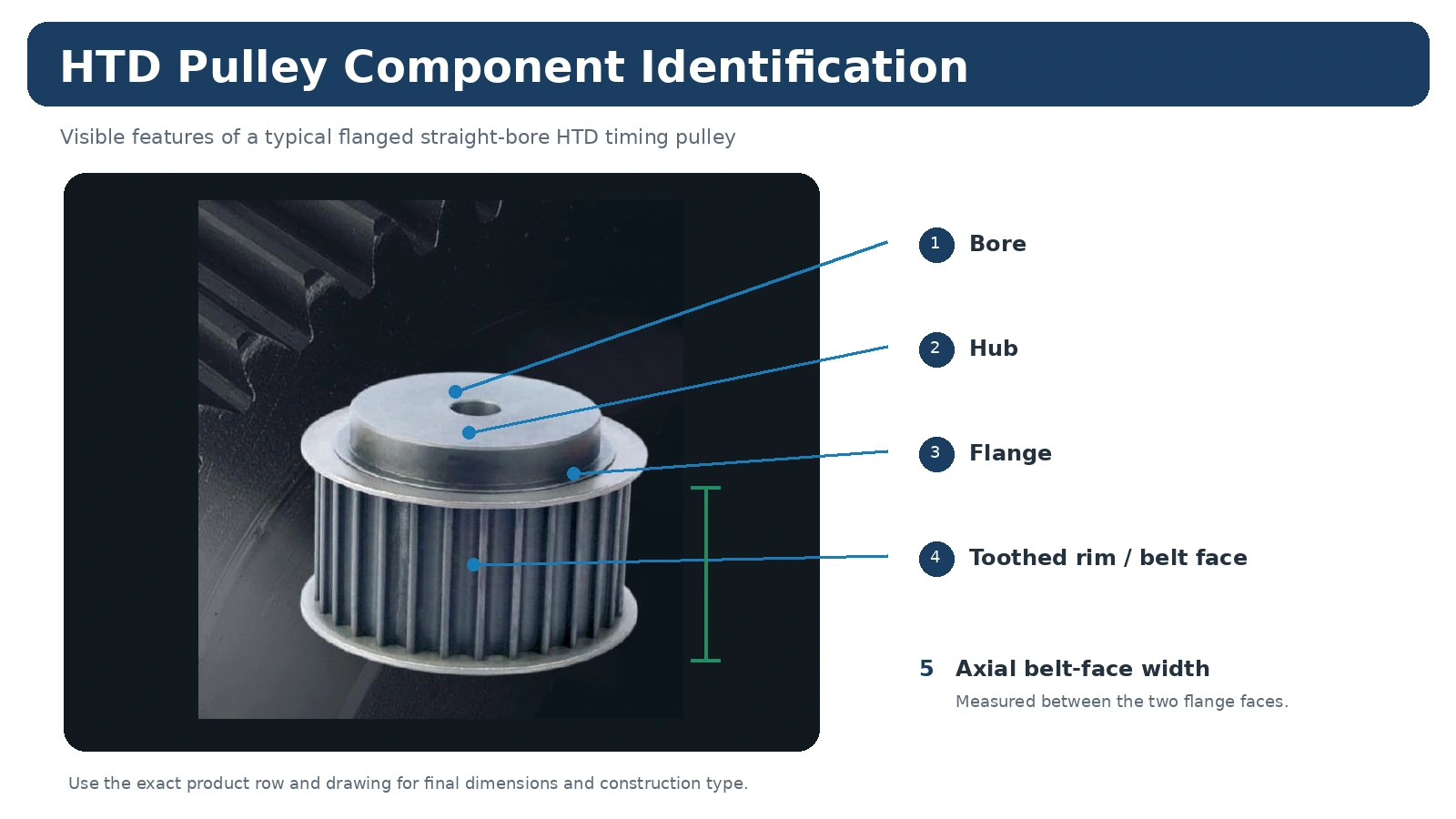
Maintenance Access Can Control the Mounting Choice
Where a shaft is difficult to remove, service strategy may influence the preferred mounting arrangement. Capture guard removal space and the accessible shaft end before changing from the installed construction.
В документации по закупке должна быть четко указана связь между требованиями к оборудованию и выбранным шкивом. Это означает, что полная информация о ремне или профиле, количестве зубьев, рабочей ширине и интерфейсе вала должна храниться вместе с кодом изделия. Любые особые требования к материалу, отделке, контролируемым допускам, маркировке или отчетности должны быть указаны отдельно, чтобы их нельзя было принять за универсальную характеристику всего семейства шкивов.
Закупки и документация
После того, как выбор определен, укажите в одной строке заказа принятые характеристики продукта, количество, место назначения и версию чертежа. Планирование производства стандартных каталожных деталей обычно осуществляется исходя из минимального объема производства, в то время как для более крупных или дорогостоящих изделий расчет может производиться исходя из фактической стоимости заказа. Образцы от 1 до 5 штук, соответствующие требованиям новых клиентов, могут быть рассмотрены по цене образцов, если конфигурация и способ производства это позволяют.
Заказы на изделия разных моделей могут быть объединены в заказы с практической стоимостью около 1500 долларов США. Для специальных материалов и технологических процессов требуется минимальное количество, соответствующее данному процессу. Очень небольшие заказы на одну или две единицы обрабатываются только в рамках квалифицированной инженерной проверки или в качестве платных образцов, а не как розничные заказы на замену.
Сроки поставки подтверждаются после уточнения технических характеристик. Стандартные детали обычно планируются на 10–25 рабочих дней, компоненты, изготовленные на заказ, — на 20–45 рабочих дней, а сборочные узлы или сопутствующее оборудование для проектов — на 45–120 рабочих дней, в зависимости от ситуации. Обычно поддерживаются условия поставки EXW, FOB, CIF и DAP; условия FCA, CFR, CPT, CIP и DDP могут быть обсуждены для согласования подходящих вариантов отгрузки. Рассматривайте эти сроки как плановые, а не как гарантию отгрузки до рассмотрения заказа.
Практическая последовательность принятия решений
Start with conveyor speed, load pattern, center distance and service environment. Keep the machine requirement separate from the catalogue choice: first identify what the drive must preserve, then compare only the rows or drawings that match that identity. This keeps a familiar-looking pulley from being accepted before its functional interfaces have been checked.
For an existing machine, preserve the original relationship before making changes. For a new design, record the target ratio, operating context and installation envelope so the conveyor-drive definition can be reviewed later without relying on memory or a photograph alone.
Создать запись измерений
The most useful measurement set contains driver speed, conveyor speed, load, center distance, pitch, width and mounting. Mark which values were measured on the machine and which values came from a catalogue or released drawing. When a feature is inaccessible, photograph its relationship to a stable datum and identify it as confirmation-required rather than filling the gap with an assumed value.
Размеры на чертежах следует просматривать во всей читаемой ширине. Никогда не масштабируйте скриншот, а затем не рассматривайте масштабированный размер как измерение; используйте напечатанное значение и правильный тип конструкции.
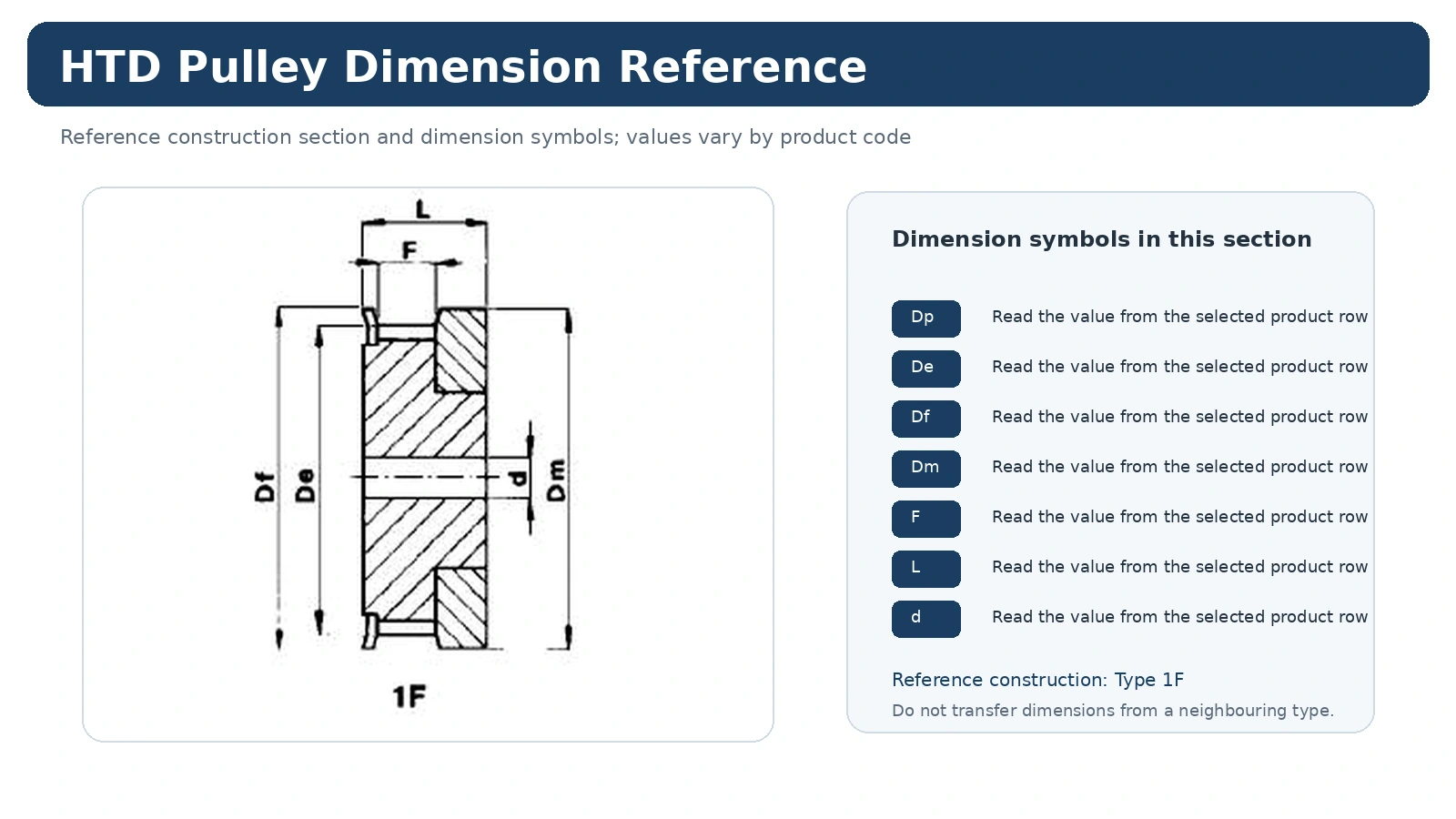
Один из видов сбоев, которого стоит избегать.
A common error is selecting only from shaft diameter without confirming ratio or belt family. That can produce a part that appears close in the catalogue yet changes ratio, belt line, mounting or service access. Resolve the conflicting feature before requesting price so the quotation refers to one mechanically coherent configuration.
Если остаются возможными две конфигурации-кандидата, отправьте как размеры оборудования и фотографии, так и предпочтительный вариант. В этом случае в коммерческом предложении можно будет указать, какой интерфейс еще требует подтверждения, вместо того чтобы молчаливо преобразовывать неопределенность в техническую спецификацию.
Превратите технический выбор в готовую к оформлению ценовую позицию.
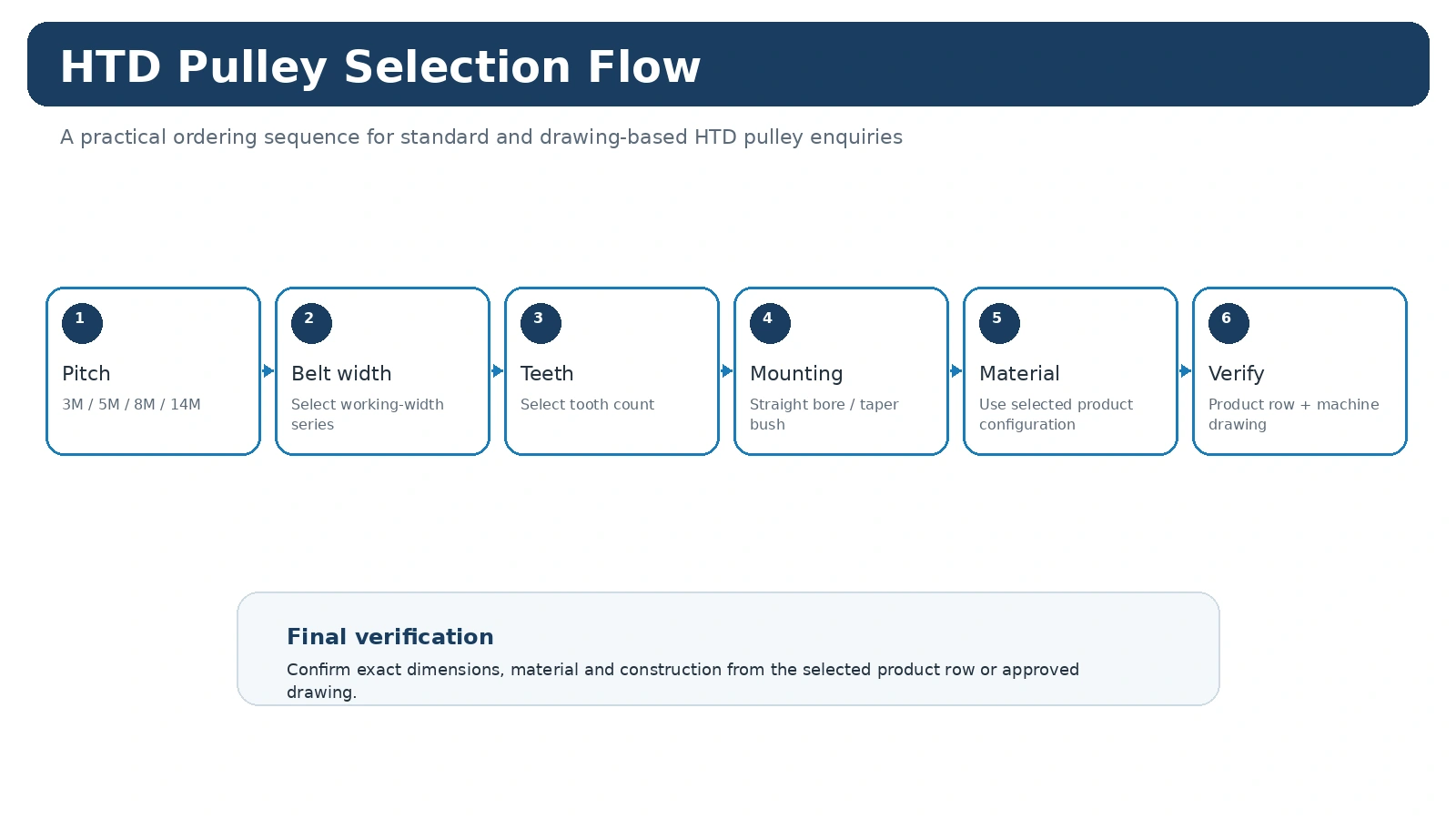
Укажите семейство HTD/профиля и полную информацию о ремне.
Укажите количество зубьев, рабочую ширину и соответствующие размеры или ссылки на чертеж.
Укажите диаметр отверстия или втулки, данные вала, выступ ступицы и положение линии пояса, если применимо.
Укажите количество, место назначения, необходимые документы и версию чертежа, использованную для запроса.
Если какой-либо из вышеперечисленных пунктов действительно неизвестен, пометьте его для подтверждения. Точный открытый вопрос полезнее, чем правдоподобное значение, которое никогда не измерялось.
Часто задаваемые покупателями вопросы
Что следует подтвердить в первую очередь?
Confirm conveyor speed, load pattern, center distance and service environment. That prevents later dimensions from being compared across the wrong product family or installation route.
Какая информация наиболее полезна для замены?
Send driver speed, conveyor speed, load, center distance, pitch, width and mounting, plus clear photographs before the old pulley is removed. The photographs preserve axial orientation and neighboring clearances that a loose part cannot show.
В каких случаях следует использовать чертеж?
Используйте чертеж, соответствующий требованиям, если строка в каталоге не полностью описывает интерфейс вала, расположение ступицы/фланца, качество обработки поверхности, допуски или требования к контролю, имеющие значение для машины.
Machine Conditions to Record for Conveyor Systems
Do not select a pulley from the industry name alone. Record the operating pattern of the actual machine: driver and driven speeds or ratio, torque or power where available, center distance, hours per day, start/stop frequency, reversal, contamination and the available guard/shaft envelope. These details explain the duty without turning a general article into an unsupported product rating.
For maintenance replacement, add the installed belt marking, tooth count, working face, hub projection and shaft interface. If there has been edge wear or tracking trouble, capture the belt line and bearing/shaft condition before altering pulley geometry.
Installation Planning for Conveyor Systems
Confirm that the selected pulley can be fitted and removed with the available service access. A hub that is technically compatible can still cause downtime if adjacent bearings or guards block installation. Maintain the intended belt plane and review flange clearance so the belt is guided without using persistent flange contact as a substitute for alignment.
Where washdown, dust, fibers, chips or process residue are present, include the environment in the RFQ. Material and maintenance decisions should be reviewed against the actual configuration and environment rather than copied from another application.
Conveyor Drives Need a Clear Distinction Between Timing Belts and Conveying Belts
In a conveyor machine, an HTD timing belt usually belongs to the drive or synchronization system; it is not the same thing as the belt or chain carrying the product. Keep those functions separate in the enquiry. Identify which shafts are synchronized, the driver/driven tooth counts, the timing-belt family and the center distance before selecting the pulley.
For replacement work, inspect the drive for contamination, misalignment and bearing movement because these conditions can produce belt-edge wear that looks like a pulley problem. Record shaft position and guard clearance before disassembly. If the drive uses a taper bush, include the exact bush and shaft information so the replacement maintains the intended mounting route.
For a new conveyor, add start/stop pattern, reversal if any, duty and environment to the RFQ. The product page provides geometry; the machine data determines whether that geometry belongs in the proposed drive.
Check Start-Stop and Reversal Conditions at the Actual Conveyor Section
Two conveyors in the same plant can impose very different drive behaviour. One may run continuously while another indexes, reverses or starts under product load. Include the local operating pattern with the RFQ so the drive can be reviewed without assuming that every conveyor uses the same duty. This is particularly important when a replacement is being considered because repeated start-stop events can expose looseness at the shaft interface or mounting hardware.
Keep the conveyor’s carrying element separate from the synchronous drive belt in drawings and maintenance notes. Label the HTD belt and pulley pair clearly, record center distance and shaft locations, and photograph the guard before disassembly. That avoids confusion when several belt or chain systems are visible in the same machine.
Include Shaft Support, Belt Line and Service Access in Conveyor RFQs
Conveyor timing drives can run continuously or cyclically and may be mounted in dusty, guarded or difficult-to-access locations. The first task is to identify the belt system and required speed relationship; the second is to make sure the selected pulley fits the actual shaft, bearing arrangement and available maintenance envelope.
A pulley replacement should not be used to mask a separate alignment, bearing or shaft problem. Record unusual noise, belt edge wear, shaft movement and flange contact before dismantling the drive. If the pulley is being changed to alter conveyor speed, review the paired tooth counts and downstream machine timing rather than changing one pulley in isolation.
State continuous, intermittent or indexed operation and the driven function.
Include dust, moisture, cleaning or temperature conditions where relevant.
Check bearing condition, shaft diameter and mounting security.
Confirm guard access and removal space for the selected hub or bush.
For long conveyor lines or mixed-model projects, identify the machine location on every order line. This improves replacement traceability when several HTD pulleys share the same pitch but use different teeth or shaft interfaces.