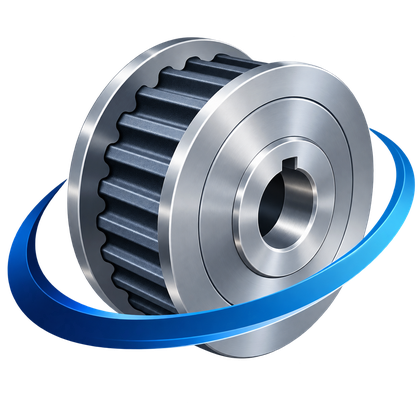
Checklist voor aanvraag en inkoop van distributiepoelies Dit moet worden benaderd als een beslissing over het aandrijfsysteem. Een nuttig uitgangspunt is de interface tussen de riem en de machine, gevolgd door het aantal tanden, de werkbreedte, de asbevestiging en de bedrijfsomstandigheden. Deze handleiding beschrijft de controles die een engineer of inkoper helpen om een offerteaanvraag voor een distributieriem om te zetten in een aanvraag die kan worden geverifieerd aan de hand van een catalogusregel of tekening.
Identificeer de drijfveer voordat u dimensies vergelijkt.
Voor een offerteaanvraag voor distributierollen is het belangrijk om de volledige riemmarkering te bepalen voordat de diameters van de rollen worden vergeleken. HTD is een gebogen synchroon systeem en de nominale steek moet overeenkomen met de profielfamilie. Noteer het aantal tanden van de aandrijf- en aangedreven rol wanneer een bestaande overbrengingsverhouding behouden moet blijven. Documenteer voor een nieuwe aandrijving de gewenste snelheidsverhouding, de aandrijfsnelheid en de verwachte belasting voordat het aantal tanden wordt gekozen. Dit voorkomt dat een beslissing op componentniveau de machinevereisten overschrijft.
Bij een vervangingsproject moet de gemeten waarde worden vergeleken met de geïnstalleerde riem en machineconfiguratie voordat wordt besloten of een catalogusregel equivalent is. Bij een nieuw project moet de ontwerpbasis worden gedocumenteerd, zodat latere onderhoudsteams kunnen begrijpen waarom de steek, het aantal tanden en de montagewijze zijn gekozen.
Afmetingen die de installatie bepalen
Een poelie kan qua steek en aantal tanden overeenkomen, maar toch niet op de machine passen omdat de boring, naaf, flens of axiale positie verschilt. Meet de asinterface, de breedte van het riemvlak, de naafuitsteeksel aan beide zijden en de riemlijn ten opzichte van een stabiel referentiepunt op de machine. Als een conische bus wordt gebruikt, noteer dan zowel de poelieserie als de buscode. Indien een afgewerkte boring vereist is, vermeld dan de passing, de spiebaan en eventuele bevestigingsmethode op de tekening.

Bij een vervangingsproject moet de gemeten waarde worden vergeleken met de geïnstalleerde riem en machineconfiguratie voordat wordt besloten of een catalogusregel equivalent is. Bij een nieuw project moet de ontwerpbasis worden gedocumenteerd, zodat latere onderhoudsteams kunnen begrijpen waarom de steek, het aantal tanden en de montagewijze zijn gekozen.
Bedrijfsomstandigheden die bij de selectie horen
Dezelfde nominale distributieriemschijf kan, afhankelijk van de machine, zeer uiteenlopende toepassingen hebben. Factoren zoals het aantal starts per uur, omkeerbewegingen, schokbelasting, continue bedrijfsduur, temperatuur, vervuiling, reiniging en toegang voor het spannen van de riem, beïnvloeden de aandrijving. Een compacte automatiseringsas legt de nadruk op herhaalbare bewegingen en gecontroleerde uitlijning, terwijl een transportband of procesmachine de nadruk kan leggen op continu bedrijf en goede toegankelijkheid voor onderhoud. Geef deze voorwaarden aan in plaats van de riemschijf alleen op basis van de afmetingen te selecteren.
Bij een vervangingsproject moet de gemeten waarde worden vergeleken met de geïnstalleerde riem en machineconfiguratie voordat wordt besloten of een catalogusregel equivalent is. Bij een nieuw project moet de ontwerpbasis worden gedocumenteerd, zodat latere onderhoudsteams kunnen begrijpen waarom de steek, het aantal tanden en de montagewijze zijn gekozen.
Controlepunten vóór installatie
De inspectie moet zich richten op afmetingen die van invloed zijn op de aandrijving: de asinterface, axiale positie, tandconditie, tandbreedte en eventuele door de tekening bepaalde slingering of referentiepuntrelatie. Een algemene kwaliteitsverklaring is geen garantie voor acceptatie. Indien een dimensionaal rapport, materiaaldocument of orderspecifiek document vereist is, dient u dit vóór de productie aan te geven. Let tijdens het onderhoud op beschadiging van de flens, slijtage van de randen, vuil en tekenen dat de poelie op de as is verschoven.
Bij een vervangingsproject moet de gemeten waarde worden vergeleken met de geïnstalleerde riem en machineconfiguratie voordat wordt besloten of een catalogusregel equivalent is. Bij een nieuw project moet de ontwerpbasis worden gedocumenteerd, zodat latere onderhoudsteams kunnen begrijpen waarom de steek, het aantal tanden en de montagewijze zijn gekozen.
Openstaande vragen die u moet beantwoorden voordat u bestelt.
Welk exact HTD-profiel en welke breedte is geïnstalleerd of gespecificeerd?
Welke verhouding of welk bestaand aantal tanden moet behouden blijven?
Welke boring, passing, spiebaan of conische busconstructie is vereist?
Hoeveel ruimte is er beschikbaar voor de naafuitsteeksels en flens?
Wat zijn de snelheid, belasting, starts, achteruitrijfunctie en bedrijfsuren?
Welke tekeningen, materiaal- of inspectierapporten moeten bij de levering worden gevoegd?
Commerciële planning zonder verlies van technische controle
Minimale bestelhoeveelheid (MOQ), monsters, levertijd en handelsvoorwaarden moeten worden besproken nadat de productdefinitie voldoende duidelijk is om het productieproces te kunnen inschatten. Bestellingen van gemengde modellen kunnen worden geconsolideerd, maar elke regel heeft nog steeds een eigen productcode of tekening nodig. Voorkom dat commerciële onderhandelingen een vervanging worden voor de verificatie van de interface.
Leg de conclusie vast in de offerteaanvraag of tekening, zodat dezelfde beslissing zichtbaar is voor de afdelingen engineering, inkoop en inspectie.
Wat u met de offerteaanvraag moet meesturen
Stuur het profiel, het aantal tanden, de riembreedte, de asinterface, de naaf-/flensdetails, de hoeveelheid, de bestemming en een tekening of een schets van de vervangingsafmetingen. Voeg voor een nieuwe aandrijving de snelheid, de overbrengingsverhouding, de belasting, de hartafstand en de omgeving toe. Controleer de HTD-productfamilies, gebruik de selectiegids, of vergelijk de relevante toepassingsnotities.
Zorg ervoor dat elk onderdeel van de regel technisch compleet is.
Bij bestellingen met gemengde modellen dient u de volledige identificatie van de poelie, het aantal en de asinterface op elke regel te vermelden. Plaats niet alle technische opmerkingen in één algemene alinea die los kan komen te staan van het model waarop deze betrekking heeft.
Houd meetwaarden, catalogusreferenties en projectvereisten duidelijk gescheiden. Als een vereist punt niet in de relevante catalogustabel of goedgekeurde tekening staat vermeld, neem het dan op als een vraag in de offerteaanvraag of als een tekeningvereiste, in plaats van de leemte op te vullen met een plausibele maar niet-geverifieerde waarde.
Commerciële voorwaarden volgen de technische definitie.
De levertijd, de route voor de samples en de verzendtermijn kunnen pas definitief worden vastgesteld nadat de productconfiguratie, de hoeveelheid en de benodigde documenten duidelijk zijn. Zorg voor technische verduidelijking vóór de definitieve commerciële lancering.
Het aankoopbewijs moet een duidelijke koppeling bewaren tussen de machinevereisten en de geselecteerde poelie. Dat betekent dat de volledige riem- of profielidentificatie, het aantal tanden, de werkbreedte en de asinterface-informatie samen met de productcode moeten worden vermeld. Eventuele speciale materiaal-, afwerkings-, tolerantie-, markerings- of rapportagevereisten moeten afzonderlijk worden vermeld, zodat ze niet kunnen worden aangezien voor een universeel kenmerk van de hele productfamilie.
Inkoop en documentatie
Zodra de selectie duidelijk is, dient u de geaccepteerde productidentiteit, hoeveelheid, bestemming en tekeningrevisie op dezelfde inkoopregel te bewaren. Standaard catalogusonderdelen worden doorgaans gepland op basis van minimale productieaantallen, terwijl grotere of duurdere artikelen kunnen worden beoordeeld op basis van de daadwerkelijke orderwaarde. Gekwalificeerde monsters van 1 tot 5 stuks voor nieuwe klanten kunnen tegen monsterprijs worden beoordeeld, mits de configuratie en het productieproces geschikt zijn.
Bestellingen van verschillende modellen kunnen worden samengevoegd tot een orderwaarde van ongeveer USD 1.500. Speciale materialen en processen volgen de minimale afnamehoeveelheid die voor dat proces vereist is. Zeer kleine bestellingen van één of twee stuks worden alleen behandeld als gekwalificeerde technische validatie of betaalde proefbestellingen, en niet als vervangingsbestellingen voor de detailhandel.
De levertijd wordt vastgesteld nadat de technische specificaties duidelijk zijn. Standaardonderdelen hebben doorgaans een levertijd van 10-25 werkdagen, maatwerkcomponenten 20-45 werkdagen en projectgebaseerde assemblages of bijbehorende apparatuur 45-120 werkdagen, indien van toepassing. EXW, FOB, CIF en DAP worden veelvuldig ondersteund; FCA, CFR, CPT, CIP en DDP kunnen worden besproken voor geschikte verzendmethoden. Beschouw deze levertijden als planningstermijnen, niet als een leveringsbelofte vóór de orderbeoordeling.
Een praktische beslissingsreeks
Begin met één complete technische orderregel, gekoppeld aan de hoeveelheid en de benodigde documentatie. Houd de machinevereisten gescheiden van de cataloguskeuze: bepaal eerst wat de aandrijving moet behouden en vergelijk vervolgens alleen de regels of tekeningen die aan die beschrijving voldoen. Zo voorkomt u dat een ogenschijnlijk bekende poelie wordt geaccepteerd voordat de functionele interfaces zijn gecontroleerd.
Voor een bestaande machine is het belangrijk de oorspronkelijke verhoudingen te behouden voordat er wijzigingen worden aangebracht. Voor een nieuw ontwerp is het raadzaam de gewenste verhouding, de gebruiksomgeving en de installatieruimte vast te leggen, zodat de offerteaanvraag later kan worden herzien zonder alleen op het geheugen of een foto te hoeven vertrouwen.
Stel een meetregistratie op.
De meest bruikbare meetgegevensset bevat productfamilie/code, aantal tanden, breedte, asaansluiting, hoeveelheid, bestemming en documenten. Markeer welke waarden op de machine zijn gemeten en welke waarden afkomstig zijn uit een catalogus of vrijgegeven tekening. Wanneer een kenmerk niet toegankelijk is, fotografeer dan de relatie ervan tot een stabiel referentiepunt en markeer het als 'bevestiging vereist' in plaats van de ontbrekende waarde aan te nemen.
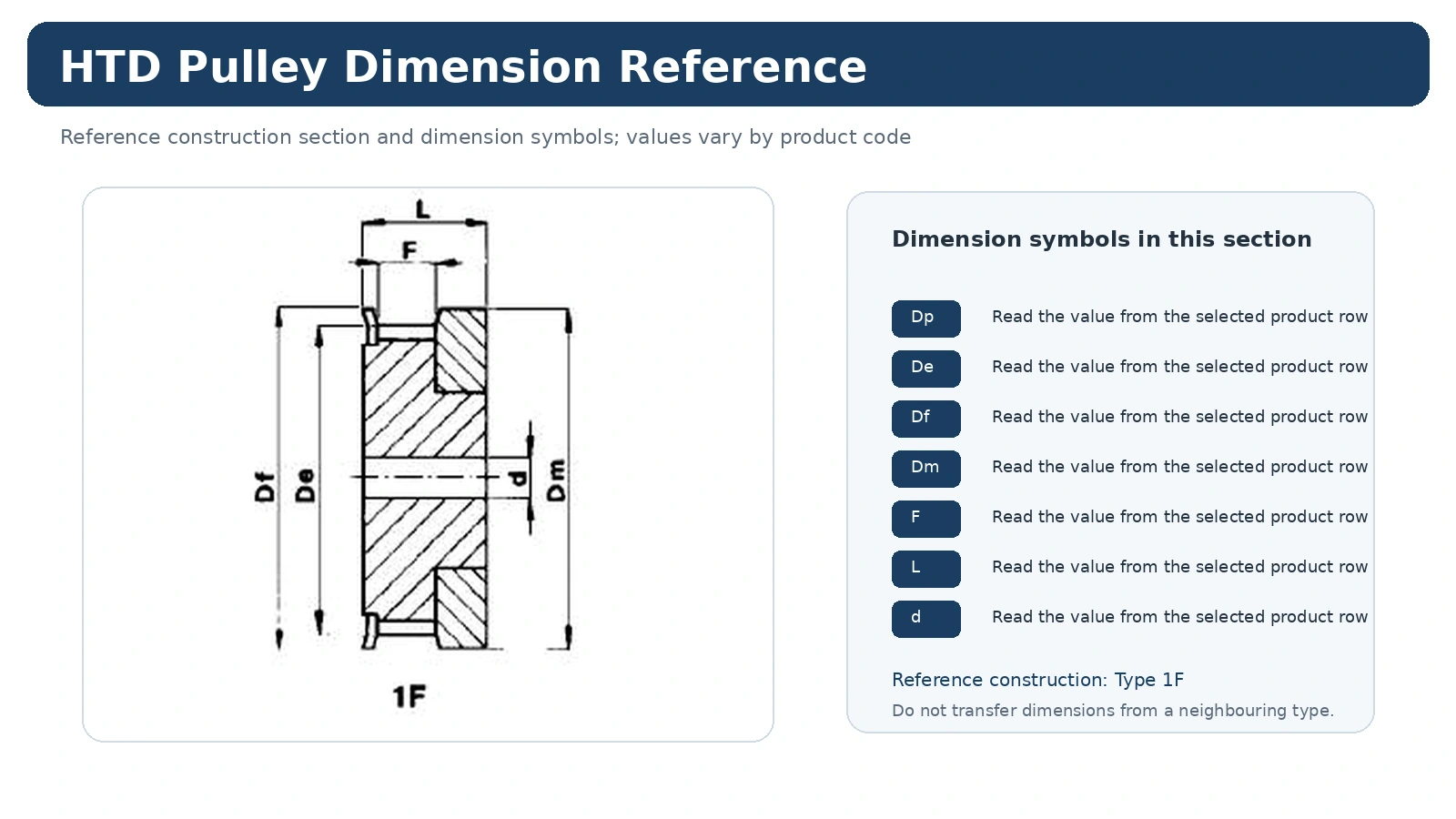
Maattekeningen moeten op volledige, leesbare breedte worden bekeken. Schaal nooit een schermafbeelding en gebruik de geschaalde afmeting vervolgens als maat; gebruik de afgedrukte waarde en het juiste constructietype.
Een storing die je beter kunt vermijden
Een veelgemaakte fout is het scheiden van technische specificaties in verschillende berichten, waardoor de geoffreerde configuratie onduidelijk wordt. Dit kan leiden tot een onderdeel dat in de catalogus weliswaar vergelijkbaar lijkt, maar in werkelijkheid afwijkt qua overbrengingsverhouding, riemlijn, montage of toegankelijkheid voor onderhoud. Los de tegenstrijdige kenmerken op voordat u een prijsaanvraag indient, zodat de offerte betrekking heeft op één mechanisch coherente configuratie.
Als er nog twee mogelijke configuraties overblijven, stuur dan zowel de machineafmetingen en foto's als de voorkeursoptie. De offerte kan dan aangeven welke interface nog bevestiging nodig heeft, in plaats van onzekerheid stilzwijgend in een specificatie te verwerken.
Zet de technische keuze om in een offerteklaar item.
Vermeld de HTD/profielfamilie en volledige rieminformatie.
Vermeld het aantal tanden, de werkbreedte en de relevante afmetingen of tekeningreferenties.
Definieer de boring of bus, asgegevens, naafuitsteeksel en riemlijnpositie waar van toepassing.
Voeg de hoeveelheid, bestemming, benodigde documenten en de gebruikte tekeningrevisie toe aan de aanvraag.
Als een van de bovenstaande items echt onbekend is, geef dit dan aan ter bevestiging. Een precieze, open vraag is nuttiger dan een plausibele waarde die nooit is gemeten.
Veelgestelde vragen van kopers
Wat moet er als eerste bevestigd worden?
Bevestig één complete technische orderregel, gekoppeld aan de hoeveelheid en de benodigde documenten. Dit voorkomt dat latere afmetingen worden vergeleken met de verkeerde productfamilie of installatiemethode.
Welke informatie is het meest nuttig voor een vervanging?
Stuur de productfamilie/code, het aantal tanden, de breedte, de asaansluiting, de hoeveelheid, de bestemming en de documenten, plus duidelijke foto's voordat de oude poelie wordt verwijderd. De foto's laten de axiale oriëntatie en de speling tussen aangrenzende onderdelen zien, wat bij een los onderdeel niet mogelijk is.
Wanneer moet een tekening worden gebruikt?
Gebruik een gecontroleerde tekening wanneer de catalogusregel de asinterface, de naaf-/flensconfiguratie, de afwerking, de tolerantie of de inspectie-eisen die voor de machine relevant zijn, niet volledig definieert.
Eén revisie van de tekening moet de aangepaste interface bepalen.
Een offerteklare tekening scheidt de standaard geometrie van de riemzijde van de op maat gemaakte kenmerken. Geef de HTD-familie, het aantal tanden en het werkvlak weer, en bemaat vervolgens de asverbinding, naafuitsteeksel en flensposities ten opzichte van duidelijke referentiepunten. Materiaal-, afwerkings-, markerings- en inspectie-eisen dienen alleen te worden vermeld indien deze door de order worden bepaald.
Vermeld de herziening zowel in de offerte als in de bestelling. Als het machineontwerp na de offerte verandert, stuur dan een nieuwe herziening in plaats van te vertrouwen op een e-mailbericht dat later van de tekening kan worden losgekoppeld.
Commerciële planning begint nadat de configuratie duidelijk is.
De minimale bestelhoeveelheid (MOQ), de monsterroute en de levertijd zijn afhankelijk van het gekozen model en de productieroute. Standaard catalogusonderdelen worden doorgaans gepland op basis van de productieaantallen. Gekwalificeerde monsters van 1 tot 5 stuks kunnen, indien mogelijk, tegen monsterprijs worden beoordeeld, terwijl gemengde modellen kunnen worden samengevoegd tot een bedrag van ongeveer USD 1.500. Voor speciale materialen en speciale processen gelden de bijbehorende minimale bestelhoeveelheden.
De gebruikelijke levertijd bedraagt 10-25 werkdagen voor standaardonderdelen en 20-45 werkdagen voor maatwerkcomponenten na technische goedkeuring. Leveringsvoorwaarden zoals EXW, FOB, CIF en DAP kunnen in overleg met de bestemming worden vastgesteld; FCA, CFR, CPT, CIP en DDP kunnen worden overwogen voor geschikte bestellingen. De definitieve leveringsovereenkomst volgt de vrijgegeven specificaties en hoeveelheid.
Een goede offerteaanvraag stelt de leverancier in staat het product te definiëren voordat de commerciële voorwaarden worden besproken.
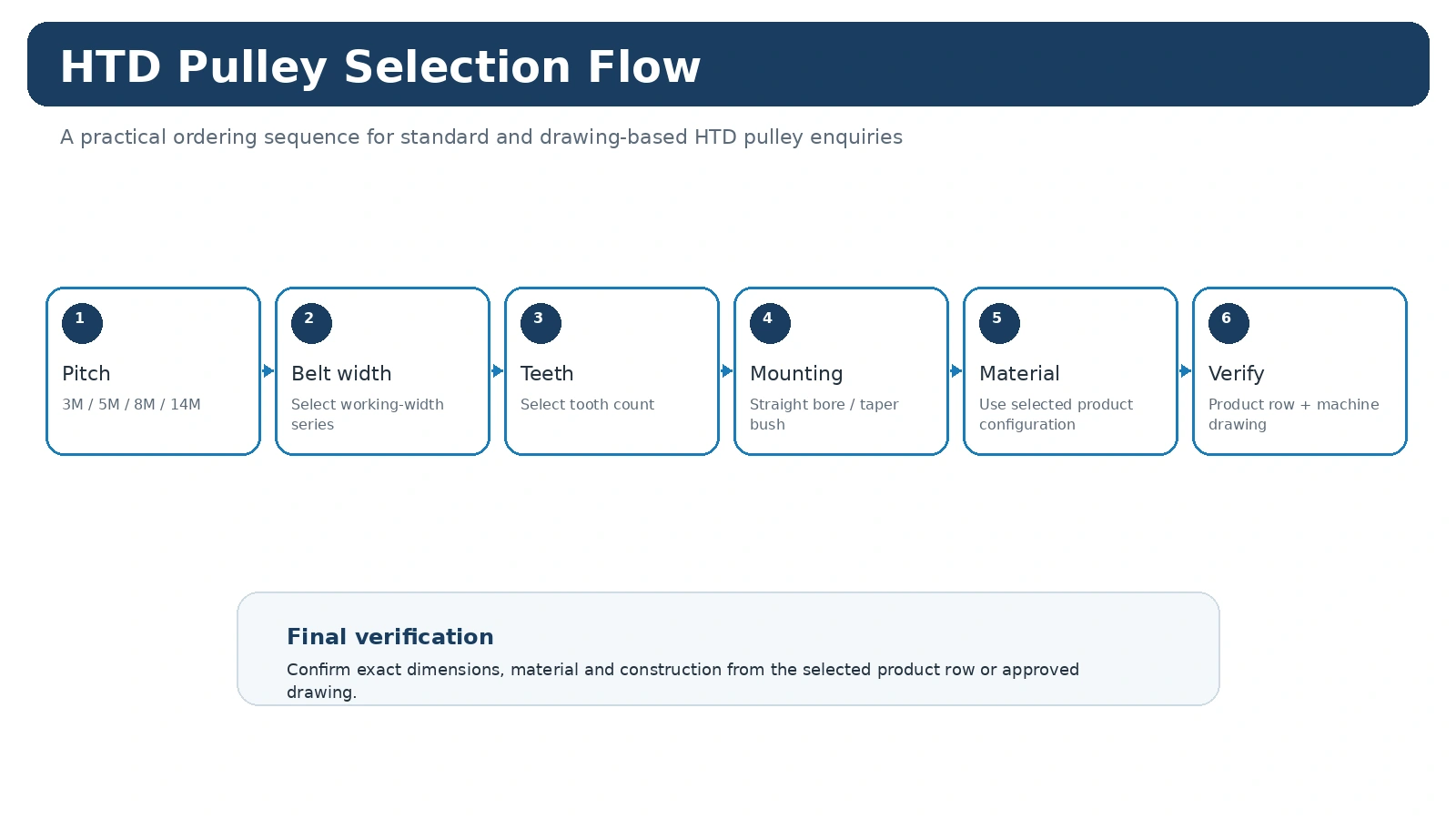
Begin de offerteaanvraag met de productidentificatie: HTD-familie, breedteserie, aantal tanden, rechte boring of conische bus en de informatie over de bijbehorende riem. Voeg vervolgens de machine-interface toe: as, boring/bus, naaf-/flensgeometrie en eventuele gecontroleerde tekeningen. De hoeveelheid, bestemming en vereiste documentatie volgen na de technische identificatie, zodat de commerciële planning aan de juiste configuratie kan worden gekoppeld.
Voor vervangingswerkzaamheden dient u foto's en afmetingen van vóór de demontage bij te voegen. Voor een nieuwe aandrijving dient u de snelheidsverhouding, hartafstand, toepassing en omgeving te vermelden. Indien een tolerantie, materiaal, afwerking of inspectierapport verplicht is, dient u dit expliciet te vermelden in plaats van te vragen om een algemeen "certificaat" dat mogelijk niet de functionele eigenschap dekt.
Aanvragen voor gemengde modellen zijn gemakkelijker te beoordelen wanneer elk model een eigen regel heeft met hoeveelheid en configuratie. Gebruik de tekeningrevisie of productcode als vaste referentie en vermijd afkortingen zoals "hetzelfde als vorige" wanneer breedtes, tandaantallen of montagemogelijkheden beginnen te verschillen.
Stel de offerteaanvraag zo op dat technische en commerciële beslissingen binnen dezelfde regel blijven.
Een nuttige offerteaanvraag (RFQ) stelt de leverancier in staat om één mechanische configuratie en één commerciële hoeveelheid te specificeren zonder door afzonderlijke berichten te hoeven zoeken. Vermeld voor elke poelie de riem-/profielfamilie, breedteserie, tandtelling, asinterface en hoeveelheid. Voeg toepassingsnotities en tekeningen toe waar deze van invloed zijn op de selectie, maar vermijd het vervangen van meetbare informatie door algemene termen zoals 'zware uitvoering' of 'hoge precisie'.
Commerciële planning wordt pas zinvol als de configuratie duidelijk is. Een bestelling met meerdere modellen kan verschillende katrollen combineren tot een totale orderwaarde, maar elk model moet nog steeds zijn eigen technische identificatie hebben. Monsters moeten bovendien worden aangemerkt als evaluatieonderdelen en niet worden behandeld als reserveonderdelen voor de detailhandel.
Profiel/spoed, seriebreedte, aantal tanden en exacte productcode indien bekend.
Boring of bus, asdiameter, spiebaan, naaf-/flensbeperkingen en tekeningrevisie.
Aantal per model, bestemming, gewenste handelsvoorwaarden en streefdatum.
Verstrek alleen materiaal-, inspectie- of orderspecifieke documenten wanneer dit vereist is.
Een beknopte offerteaanvraag met volledige afmetingen is nuttiger dan een lang bericht met een onduidelijk model. Als een onderdeel onbekend is, geef dit dan duidelijk aan en voeg een foto of machinemeting toe die gebruikt kan worden om dit tijdens de offertefase op te lossen.