How to Select Timing Pulley Tooth Count should be approached as a drive-system decision. The useful starting point is the mating belt and machine interface, followed by tooth count, working width, shaft mounting and duty conditions. This guide explains the checks that help an engineer or buyer turn timing pulley tooth count selection into an RFQ that can be verified against a catalogue row or drawing.
பரிமாணங்களை ஒப்பிடுவதற்கு முன் இயக்ககத்தை அடையாளம் காணவும்
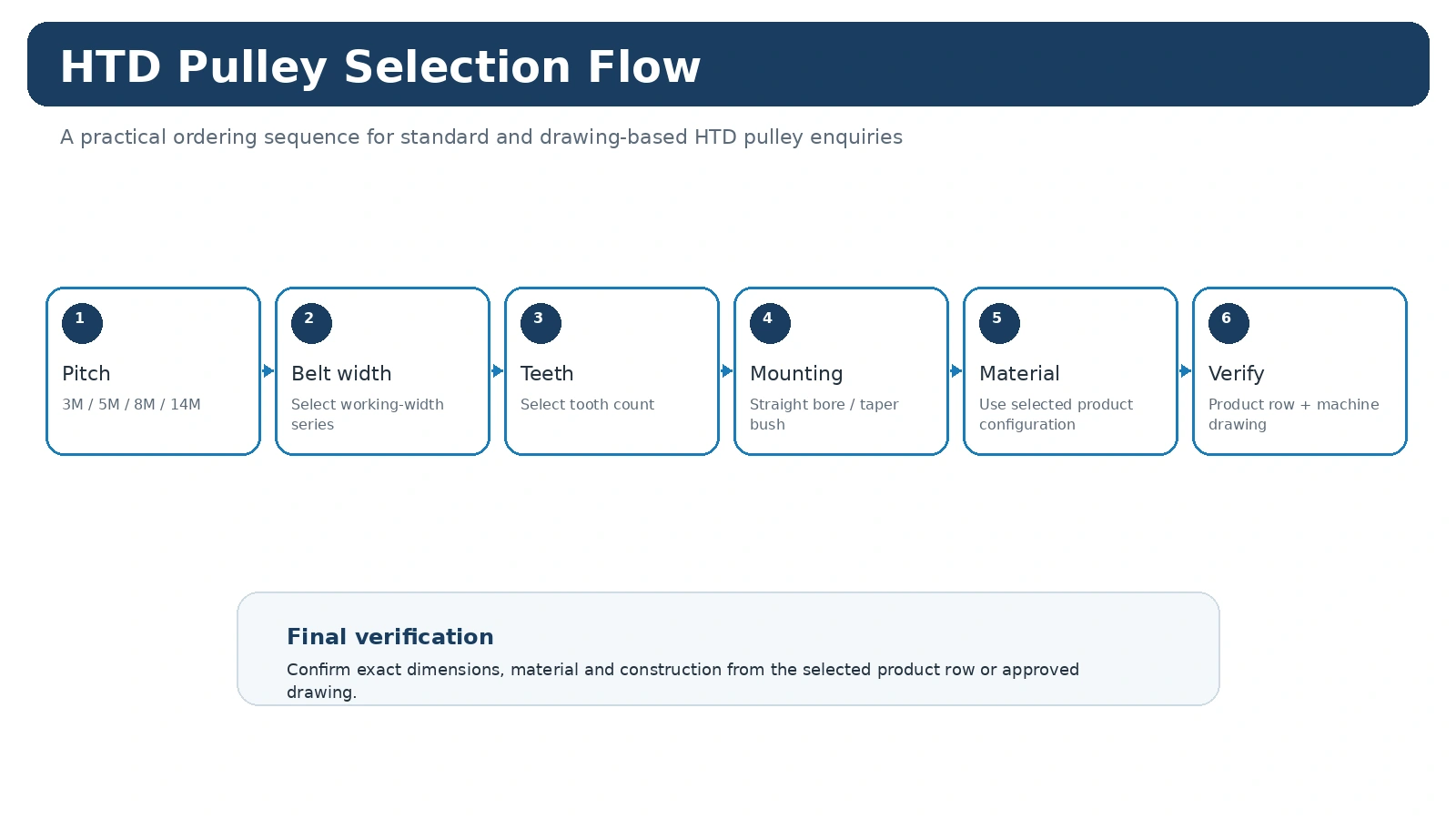
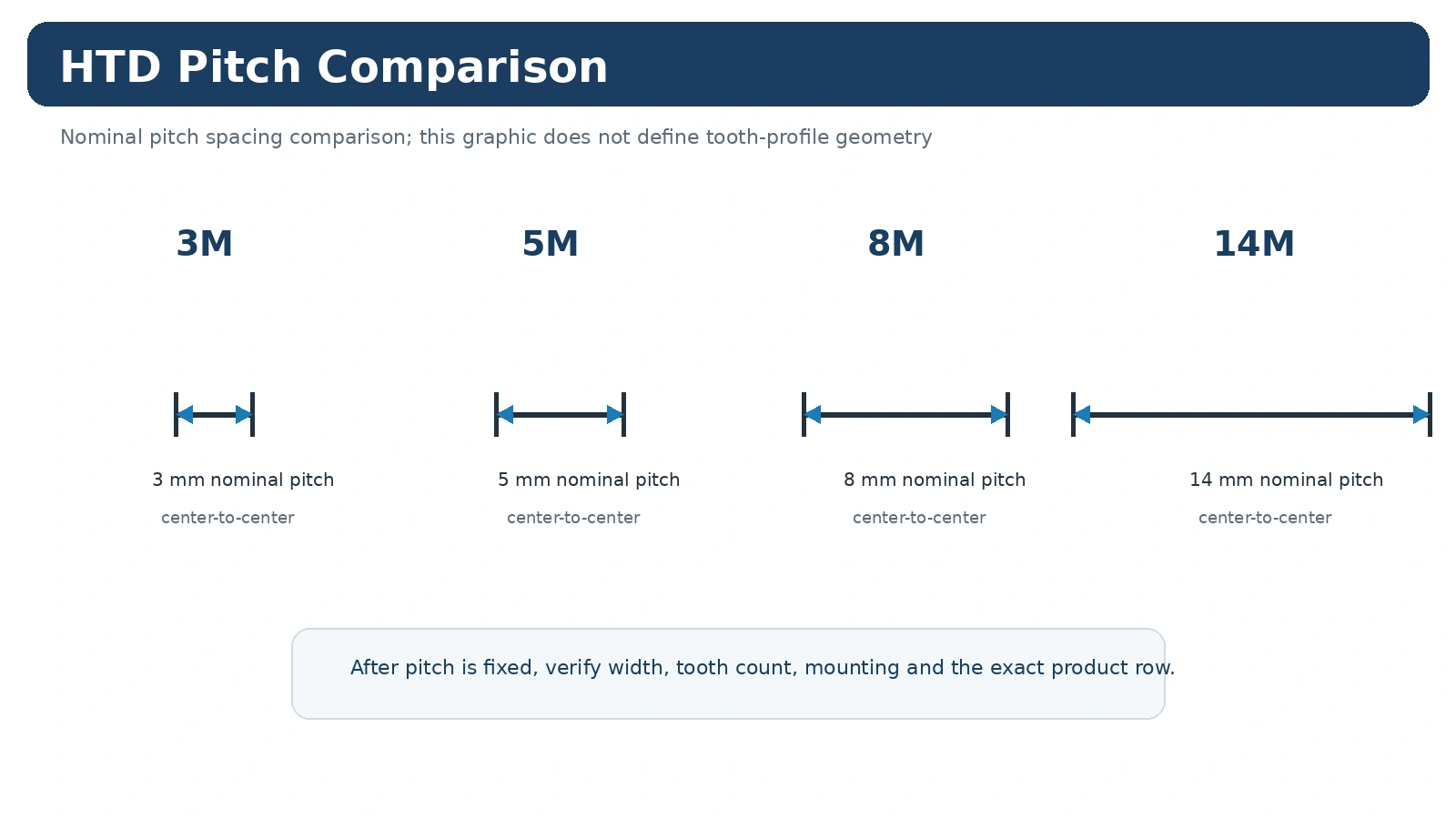
For timing pulley tooth count selection, identify the complete belt marking before comparing pulley diameters. HTD is a curvilinear synchronous system and the nominal pitch must stay associated with its profile family. Record the driver and driven tooth counts when an existing ratio must be preserved. For a new drive, document the target speed ratio, driver speed and expected load before choosing tooth counts. This prevents a component-level decision from overriding the machine requirement.
ஒரு மாற்றுத் திட்டத்திற்கு, ஒரு பட்டியல் வரிசை சமமானது என்று முடிவு செய்வதற்கு முன், அளவிடப்பட்ட மதிப்பை நிறுவப்பட்ட பெல்ட் மற்றும் இயந்திர அமைப்புடன் ஒப்பிடவும். ஒரு புதிய திட்டத்திற்கு, வடிவமைப்பு அடிப்படையை ஆவணப்படுத்தவும், இதன்மூலம் பிற்காலப் பராமரிப்புக் குழுக்கள் பிட்ச், பற்களின் எண்ணிக்கை மற்றும் பொருத்தும் முறை ஆகியவை ஏன் தேர்ந்தெடுக்கப்பட்டன என்பதைப் புரிந்துகொள்ள முடியும்.
நிறுவலைக் கட்டுப்படுத்தும் பரிமாணங்கள்
துளை, மையம், விளிம்பு அல்லது அச்சு நிலை வேறுபடுவதால், ஒரு கப்பி அதன் சுருதி மற்றும் பல் எண்ணிக்கையில் பொருந்தினாலும் இயந்திரத்தில் பொருந்தாமல் போகலாம். தண்டு இடைமுகம், பட்டை முகப்பு அகலம், இருபுறமும் உள்ள மையத்தின் நீட்சி மற்றும் ஒரு நிலையான இயந்திர ஆதாரத்துடன் தொடர்புடைய பட்டை கோடு ஆகியவற்றை அளவிடவும். கூம்பு வடிவ புஷ் பயன்படுத்தப்படும் இடங்களில், கப்பித் தொடர் மற்றும் புஷ் குறியீடு இரண்டையும் பதிவு செய்யவும். முடிக்கப்பட்ட துளை தேவைப்படும் இடங்களில், வரைபடத்தில் பொருத்தம், சாவி வழி மற்றும் தக்கவைக்கும் முறை ஆகியவற்றைச் சேர்க்கவும்.
ஒரு மாற்றுத் திட்டத்திற்கு, ஒரு பட்டியல் வரிசை சமமானது என்று முடிவு செய்வதற்கு முன், அளவிடப்பட்ட மதிப்பை நிறுவப்பட்ட பெல்ட் மற்றும் இயந்திர அமைப்புடன் ஒப்பிடவும். ஒரு புதிய திட்டத்திற்கு, வடிவமைப்பு அடிப்படையை ஆவணப்படுத்தவும், இதன்மூலம் பிற்காலப் பராமரிப்புக் குழுக்கள் பிட்ச், பற்களின் எண்ணிக்கை மற்றும் பொருத்தும் முறை ஆகியவை ஏன் தேர்ந்தெடுக்கப்பட்டன என்பதைப் புரிந்துகொள்ள முடியும்.
தேர்வில் இடம்பெற வேண்டிய இயக்க நிலைமைகள்
The same nominal timing pulley tooth count selection component can see very different service depending on the machine. Starts per hour, reversing, shock loading, continuous operating time, temperature, contamination, cleaning and access for tensioning all influence the drive. A compact automation axis emphasizes repeatable motion and controlled alignment, while a conveyor or process machine may emphasize continuous duty and service access. Supply these conditions instead of asking the pulley to be selected from size alone.

ஒரு மாற்றுத் திட்டத்திற்கு, ஒரு பட்டியல் வரிசை சமமானது என்று முடிவு செய்வதற்கு முன், அளவிடப்பட்ட மதிப்பை நிறுவப்பட்ட பெல்ட் மற்றும் இயந்திர அமைப்புடன் ஒப்பிடவும். ஒரு புதிய திட்டத்திற்கு, வடிவமைப்பு அடிப்படையை ஆவணப்படுத்தவும், இதன்மூலம் பிற்காலப் பராமரிப்புக் குழுக்கள் பிட்ச், பற்களின் எண்ணிக்கை மற்றும் பொருத்தும் முறை ஆகியவை ஏன் தேர்ந்தெடுக்கப்பட்டன என்பதைப் புரிந்துகொள்ள முடியும்.
நிறுவுவதற்கு முன் ஆய்வு செய்ய வேண்டியவை
இயக்கத்தைப் பாதிக்கும் பரிமாணங்களான ஷாஃப்ட் இடைமுகம், அச்சு அமைவிடம், பல்லின் நிலை, முகப்பு அகலம் மற்றும் வரைபடத்தால் கட்டுப்படுத்தப்படும் ஏதேனும் ரன்அவுட் அல்லது டேட்டம் தொடர்பு ஆகியவற்றில் ஆய்வு கவனம் செலுத்த வேண்டும். ஒரு பொதுவான தர அறிக்கை ஏற்பை வரையறுக்காது. ஒரு பரிமாண அறிக்கை, மூலப்பொருள் ஆவணம் அல்லது ஆர்டர் சார்ந்த பதிவு தேவைப்பட்டால், உற்பத்திக்கு முன் அதைக் கண்டறியவும். பராமரிப்பின் போது, ஃபிளேன்ஜ் சேதம், விளிம்புத் தேய்மானம், குப்பைகள் மற்றும் ஷாஃப்ட்டில் புல்லி நகர்ந்ததற்கான அறிகுறிகளைக் கவனிக்கவும்.
ஒரு மாற்றுத் திட்டத்திற்கு, ஒரு பட்டியல் வரிசை சமமானது என்று முடிவு செய்வதற்கு முன், அளவிடப்பட்ட மதிப்பை நிறுவப்பட்ட பெல்ட் மற்றும் இயந்திர அமைப்புடன் ஒப்பிடவும். ஒரு புதிய திட்டத்திற்கு, வடிவமைப்பு அடிப்படையை ஆவணப்படுத்தவும், இதன்மூலம் பிற்காலப் பராமரிப்புக் குழுக்கள் பிட்ச், பற்களின் எண்ணிக்கை மற்றும் பொருத்தும் முறை ஆகியவை ஏன் தேர்ந்தெடுக்கப்பட்டன என்பதைப் புரிந்துகொள்ள முடியும்.
ஆர்டர் செய்வதற்கு முன் மூடுவதற்கான திறந்த கேள்விகள்
என்ன துல்லியமான HTD ப்ரொஃபைல் மற்றும் அகலம் நிறுவப்பட்டுள்ளது அல்லது குறிப்பிடப்பட்டுள்ளது?
எந்த விகிதம் அல்லது தற்போதுள்ள பல் எண்ணிக்கை பாதுகாக்கப்பட வேண்டும்?
என்ன வகையான துளை, பொருத்தம், திறப்புவழி அல்லது கூம்புத்தூள் அமைப்பு தேவைப்படுகிறது?
ஹப் நீட்சி மற்றும் ஃபிளேன்ஜ் இடைவெளி எவ்வளவு உள்ளது?
வேகம், சுமை, தொடக்கங்கள், பின்னோக்கிச் செல்லுதல் மற்றும் இயக்க நேரங்கள் என்னென்ன?
வழங்கப்படும் பொருளுடன் எந்த வரைபடம், மூலப்பொருள் அல்லது ஆய்வுப் பதிவுகள் இணைக்கப்பட வேண்டும்?
RFQ உடன் என்ன அனுப்ப வேண்டும்
விவரக்குறிப்பு, பற்களின் எண்ணிக்கை, பெல்ட் அகலம், ஷாஃப்ட் இடைமுகம், ஹப்/ஃப்ளாஞ்ச் விவரங்கள், அளவு, சேருமிடம் மற்றும் ஒரு வரைபடம் அல்லது மாற்று அளவீட்டு வரைப்படம் ஆகியவற்றை அனுப்பவும். ஒரு புதிய இயக்ககத்திற்காக வேகம், விகிதம், சுமை, மையத் தொலைவு மற்றும் சூழல் ஆகியவற்றைச் சேர்க்கவும். மதிப்பாய்வு செய்யவும். HTD தயாரிப்பு குடும்பங்கள், பயன்படுத்தவும் தேர்வு வழிகாட்டிஅல்லது தொடர்புடையவற்றை ஒப்பிடுக விண்ணப்பக் குறிப்புகள்.
Tooth Count Changes More Than Diameter
Driver and driven tooth counts set the basic speed relationship, but the choice also changes pulley diameter, shaft-center geometry and the number of teeth engaged with the belt. A tooth count that produces the desired ratio still needs to fit the machine envelope and support the required belt wrap and duty.
அளவிடப்பட்ட மதிப்புகள், பட்டியல் குறிப்புகள் மற்றும் திட்டத் தேவைகள் ஆகியவற்றைத் தெளிவாகப் பிரித்து வைக்கவும். தேவைப்படும் ஒரு அம்சம், தொடர்புடைய பட்டியல் அட்டவணையிலோ அல்லது அங்கீகரிக்கப்பட்ட வரைபடத்திலோ குறிப்பிடப்படவில்லை என்றால், சாத்தியமான ஆனால் சரிபார்க்கப்படாத ஒரு மதிப்பைக் கொண்டு அந்த இடைவெளியை நிரப்புவதற்குப் பதிலாக, அதனை விலைக்கோரல் கேள்வியாகவோ (RFQ question) அல்லது வரைபடத் தேவையாகவோ சேர்க்கவும்.
Use Ratio as a Check, Not a Shortcut
Write the required driver speed, driven speed and tooth-count pair together. For replacements, preserve the existing ratio unless the machine change is intentional. For new designs, calculate the ratio first and then confirm that the resulting pulley sizes, center distance and belt choice are practical.
கொள்முதல் பதிவேடு, இயந்திரத்தின் தேவைக்கும் தேர்ந்தெடுக்கப்பட்ட புல்லிக்கும் இடையே ஒரு தெளிவான இணைப்பை வைத்திருக்க வேண்டும். அதாவது, முழுமையான பெல்ட் அல்லது புரொஃபைல் அடையாளம், பற்களின் எண்ணிக்கை, செயல்படும் அகலம் மற்றும் ஷாஃப்ட்-இடைமுகத் தகவல் ஆகியவை தயாரிப்புக் குறியீட்டுடன் சேர்ந்தே இருக்க வேண்டும். ஏதேனும் சிறப்புப் பொருள், பூச்சு, கட்டுப்படுத்தப்பட்ட சகிப்புத்தன்மை, குறியிடுதல் அல்லது அறிக்கைத் தேவை ஆகியவை தனியாகக் குறிப்பிடப்பட வேண்டும், அப்போதுதான் அது முழுத் தொகுப்பிற்குமான ஒரு பொதுவான அம்சமாகத் தவறாகக் கருதப்பட முடியாது.
கொள்முதல் மற்றும் ஆவணப்படுத்தல்
தேர்வு தெளிவானதும், ஏற்றுக்கொள்ளப்பட்ட பொருளின் அடையாளம், அளவு, சேருமிடம் மற்றும் வரைபடத் திருத்தம் ஆகியவற்றை ஒரே கொள்முதல் வரிசையில் வைக்கவும். வழக்கமான பட்டியல் பாகங்கள் பொதுவாக குறைந்தபட்ச உற்பத்தி அளவை மையமாகக் கொண்டு திட்டமிடப்படுகின்றன, அதே சமயம் பெரிய அல்லது அதிக மதிப்புள்ள பொருட்களை நடைமுறை ஆர்டர் மதிப்பின் அடிப்படையில் மதிப்பாய்வு செய்யலாம். கட்டமைப்பு மற்றும் உற்பத்தி வழிமுறை பொருத்தமானதாக இருக்கும்போது, தகுதிவாய்ந்த புதிய வாடிக்கையாளர் மாதிரிகளான 1–5 துண்டுகள், மாதிரி விலையில் மதிப்பாய்வு செய்யப்படலாம்.
கலப்பு-மாதிரி ஆர்டர்களை, சுமார் 1,500 அமெரிக்க டாலர் நடைமுறை ஆர்டர் மதிப்பை நோக்கி ஒருங்கிணைக்கலாம். சிறப்புப் பொருட்கள் மற்றும் சிறப்புச் செயல்முறைகளுக்கு, அந்தந்த செயல்முறைக்குத் தேவைப்படும் குறைந்தபட்ச அளவு பின்பற்றப்படும். மிகச் சிறிய, ஒன்று அல்லது இரண்டு துண்டுகள் கொண்ட கோரிக்கைகள், சில்லறை மாற்று ஆர்டர்களாகக் கருதப்படாமல், தகுதிவாய்ந்த பொறியியல் சரிபார்ப்பு அல்லது கட்டண மாதிரி நிகழ்வுகளாக மட்டுமே கையாளப்படுகின்றன.
தொழில்நுட்ப வரையறை தெளிவாகிய பின்னரே விநியோக நேரம் உறுதி செய்யப்படும். வழக்கமான பாகங்கள் பொதுவாக 10–25 வேலை நாட்களிலும், தனிப்பயன் பாகங்கள் 20–45 வேலை நாட்களிலும், மற்றும் திட்ட அடிப்படையிலான அசெம்பிளிகள் அல்லது அது தொடர்பான உபகரணங்கள் பொருந்தக்கூடிய இடங்களில் 45–120 வேலை நாட்களிலும் திட்டமிடப்படுகின்றன. EXW, FOB, CIF மற்றும் DAP ஆகியவை பொதுவாக ஆதரிக்கப்படுகின்றன; பொருத்தமான ஏற்றுமதிகளுக்கு FCA, CFR, CPT, CIP மற்றும் DDP குறித்து விவாதிக்கலாம். ஆர்டர் மதிப்பாய்வுக்கு முன், இவற்றை ஒரு திட்டமிடல் வரம்பாகக் கருதுங்கள், ஏற்றுமதி வாக்குறுதியாக அல்ல.
ஒரு நடைமுறை முடிவெடுக்கும் வரிசை
Start with driver and driven tooth counts, target ratio and available diameter. Keep the machine requirement separate from the catalogue choice: first identify what the drive must preserve, then compare only the rows or drawings that match that identity. This keeps a familiar-looking pulley from being accepted before its functional interfaces have been checked.
For an existing machine, preserve the original relationship before making changes. For a new design, record the target ratio, operating context and installation envelope so the tooth-count decision can be reviewed later without relying on memory or a photograph alone.
அளவீட்டுப் பதிவை உருவாக்குங்கள்
The most useful measurement set contains both pulley tooth counts, shaft speeds, center distance and required ratio. Mark which values were measured on the machine and which values came from a catalogue or released drawing. When a feature is inaccessible, photograph its relationship to a stable datum and identify it as confirmation-required rather than filling the gap with an assumed value.
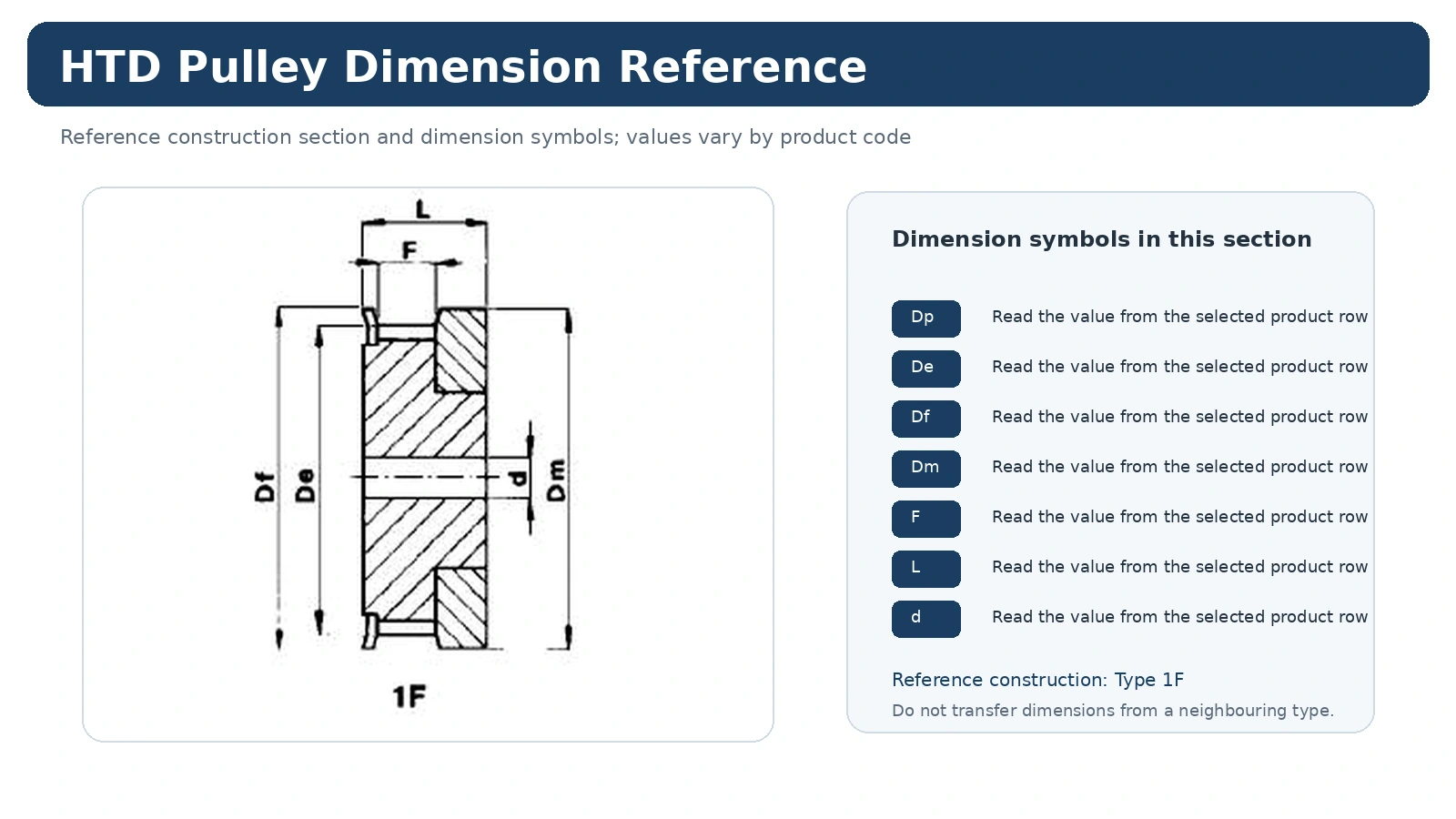
பரிமாண வரைபடங்களை முழுமையாகப் படிக்கக்கூடிய அகலத்தில் பார்க்க வேண்டும். ஒருபோதும் ஸ்கிரீன்ஷாட்டை அளவை மாற்றி, பின்னர் அந்த மாற்றப்பட்ட பரிமாணத்தை ஒரு அளவீடாகக் கருதாதீர்கள்; அச்சிடப்பட்ட மதிப்பையும் சரியான கட்டுமான வகையையும் பயன்படுத்தவும்.
தவிர்க்க வேண்டிய ஒரு தோல்வி முறை
A common error is changing tooth count without reviewing speed ratio and wrap. That can produce a part that appears close in the catalogue yet changes ratio, belt line, mounting or service access. Resolve the conflicting feature before requesting price so the quotation refers to one mechanically coherent configuration.
இரண்டு சாத்தியமான உள்ளமைவுகள் மீதமிருந்தால், இயந்திர அளவீடுகள், புகைப்படங்கள் மற்றும் நீங்கள் விரும்பும் விருப்பம் ஆகிய இரண்டையும் அனுப்பவும். அதன் பிறகு, நிச்சயமற்ற தன்மையை மௌனமாக ஒரு விவரக்குறிப்பாக மாற்றுவதற்குப் பதிலாக, எந்த இடைமுகத்திற்கு இன்னும் உறுதிப்படுத்தல் தேவை என்பதை விலைப்புள்ளியால் அடையாளம் காண முடியும்.
தொழில்நுட்பத் தேர்வை மேற்கோளுக்குத் தயாரான செலவினமாக மாற்றவும்
HTD/ப்ரொஃபைல் ஃபேமிலி மற்றும் முழுமையான பெல்ட் தகவல்களைக் குறிப்பிடவும்.
பற்களின் எண்ணிக்கை, வேலை செய்யும் அகலம் மற்றும் தொடர்புடைய பரிமாணம் அல்லது வரைபடக் குறிப்புகளை வழங்கவும்.
பொருந்தக்கூடிய இடங்களில், துளை அல்லது புஷ், ஷாஃப்ட் தரவு, ஹப் நீட்சி மற்றும் பெல்ட்-லைன் நிலை ஆகியவற்றை வரையறுக்கவும்.
அளவு, சேருமிடம், தேவையான ஆவணங்கள் மற்றும் கோரிக்கைக்குப் பயன்படுத்தப்பட்ட வரைபடத் திருத்தம் ஆகியவற்றைச் சேர்க்கவும்.
மேலே உள்ளவற்றில் ஒன்று உண்மையாகவே தெரியாத பட்சத்தில், உறுதிப்படுத்துவதற்காக அதைக் குறியிடவும். ஒருபோதும் அளவிடப்படாத நம்பத்தகுந்த மதிப்பை விட, ஒரு துல்லியமான விடைதெரியா கேள்வி அதிகப் பயனுள்ளது.
வாங்குபவர்கள் பொதுவாகக் கேட்கும் கேள்விகள்
முதலில் எதை உறுதிப்படுத்த வேண்டும்?
Confirm driver and driven tooth counts, target ratio and available diameter. That prevents later dimensions from being compared across the wrong product family or installation route.
மாற்று நபருக்கு எந்தத் தகவல் மிகவும் பயனுள்ளதாக இருக்கும்?
Send both pulley tooth counts, shaft speeds, center distance and required ratio, plus clear photographs before the old pulley is removed. The photographs preserve axial orientation and neighboring clearances that a loose part cannot show.
வரைபடத்தை எப்போது பயன்படுத்த வேண்டும்?
இயந்திரத்திற்கு முக்கியமான ஷாஃப்ட் இடைமுகம், ஹப்/ஃப்ளாஞ்ச் அமைப்பு, பூச்சு, சகிப்புத்தன்மை அல்லது ஆய்வுத் தேவை ஆகியவற்றை அட்டவணை வரிசை முழுமையாக வரையறுக்காத போதெல்லாம், ஒரு கட்டுப்படுத்தப்பட்ட வரைபடத்தைப் பயன்படுத்தவும்.
Measure the Feature That Answers the Decision
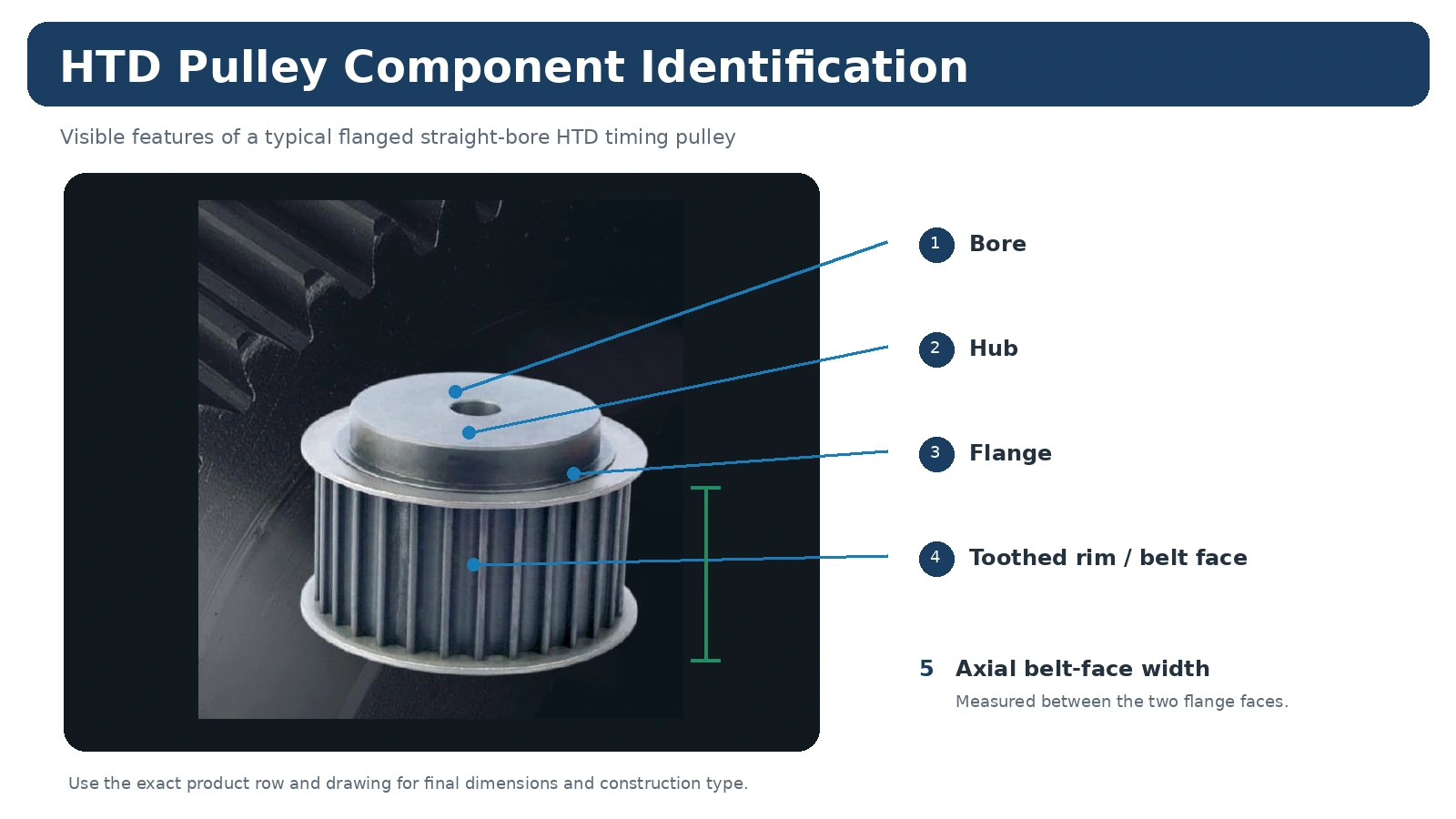
Measurement should follow the question being solved. Tooth count and verified pitch establish the belt-side identity. Working face establishes which belt width the pulley is intended to support. Hub projection and overall axial envelope establish where the belt sits relative to the machine. Bore or bush details establish the shaft connection. Mixing these purposes is how an outside diameter or overall width gets mistaken for a catalogue selection value.
When replacing a worn part, photograph the assembly before removal and label measurements by physical feature. Do not rename them Dp, De, F or L until the catalogue drawing confirms that the measured feature corresponds to that symbol. Wear can also reduce diameters or alter edges, so the old component is a useful reference, but it is not an unquestionable nominal master.
Use the Catalogue View as a Nomenclature Map
The dimension view should be read immediately before the product table. It shows which surface a symbol refers to, while the row supplies the numeric value for that exact construction. A dash is not zero; it means the value is not stated for that row or construction.
For a custom replacement, make a simple front, rear and side sketch. Show the shaft diameter, hub projection on both sides, working face and any flange that controls the belt line. This is often more useful than a long list of unlabeled measurements.
Treat Tooth Count as Part of the Speed Relationship and the Physical Envelope
Tooth count changes more than the label on the pulley. Within one pitch family it changes pitch diameter, and that can change guard clearance, wrap geometry, hub proportions and the space left for neighboring bearings or structures. On a two-pulley drive, the tooth-count ratio participates in the speed relationship, so selecting a count in isolation can move the machine away from its intended operating relationship even when the belt profile still matches.
For a replacement, count the teeth directly when the marking is unclear and keep that result beside the mating belt information. Do not derive the count from outside diameter alone because the measured surface and the catalogue pitch reference are not the same thing. For a new drive, record the driver and driven speeds or required ratio first, then check whether the resulting pulley sizes fit the center distance and available envelope.
Once a candidate count is found, compare the actual catalogue row for construction type, hub, flange and material. A family may change construction as diameter increases, so the same pitch and width series does not guarantee identical mounting geometry across every tooth count.
Use Tooth Count to Control Ratio and Diameter Together
Tooth count is not a cosmetic model choice. In a synchronous drive, the ratio between driver and driven tooth counts determines the nominal speed relationship, while the selected tooth count also changes pulley pitch diameter and therefore the available center-distance geometry. A change made to solve one issue can create another if guard clearance, belt wrap or shaft spacing is ignored.
For a replacement, count the teeth directly when possible and compare the result with the belt marking and any readable product code. Do not infer tooth count from outside diameter alone on a worn or unfamiliar pulley. For a new drive, evaluate the pair of pulleys as one system rather than choosing one tooth count without considering the mating pulley and the resulting center distance.
Keep both driver and driven tooth counts on the same calculation sheet.
Check resulting pulley diameter against guards, housings and adjacent components.
Confirm the selected pair can be installed with the intended belt length and tensioning method.
Use the exact tooth count together with width series and mounting configuration.
If the application needs a specific ratio, include the required input/output relationship in the RFQ. If the tooth count is fixed by a replacement belt or machine geometry, state that constraint explicitly so the quotation does not substitute a visually similar pulley with a different ratio.