
டைமிங் புல்லி மூலப்பொருள் தேர்வு: அலுமினியம், எஃகு மற்றும் வார்ப்பு இரும்பு இதை ஒரு இயக்க அமைப்பு முடிவாக அணுக வேண்டும். இதன் பயனுள்ள தொடக்கப் புள்ளி, இணையும் பெல்ட் மற்றும் இயந்திரத்தின் இடைமுகம் ஆகும். அதனைத் தொடர்ந்து பற்களின் எண்ணிக்கை, செயல்படும் அகலம், ஷாஃப்ட் பொருத்துதல் மற்றும் பணி நிலைமைகள் ஆகியவை கவனிக்கப்பட வேண்டும். ஒரு பொறியாளர் அல்லது வாங்குபவர், டைமிங் புல்லிக்கான மூலப்பொருள் தேர்வை, ஒரு பட்டியல் வரிசை அல்லது வரைபடத்துடன் சரிபார்க்கக்கூடிய விலைக் கோரிக்கையாக (RFQ) மாற்றுவதற்கு உதவும் சோதனைகளை இந்த வழிகாட்டி விளக்குகிறது.
டைமிங் புல்லி பொருள் தேர்வுக்கான இயக்க அடையாளத்தை நிறுவவும்
டைமிங் புல்லி பொருளைத் தேர்ந்தெடுக்கும்போது, புல்லி விட்டங்களை ஒப்பிடுவதற்கு முன், பெல்ட்டின் முழுமையான குறியீட்டைக் கண்டறியவும். HTD என்பது ஒரு வளைவு ஒத்திசைவு அமைப்பு ஆகும், மேலும் அதன் பெயரளவு பிட்ச் அதன் வடிவமைப்பு குடும்பத்துடன் தொடர்புடையதாக இருக்க வேண்டும். ஏற்கனவே உள்ள விகிதத்தைப் பாதுகாக்க வேண்டியிருக்கும் போது, இயக்கி மற்றும் இயக்கப்படும் பற்களின் எண்ணிக்கையைப் பதிவு செய்யவும். ஒரு புதிய டிரைவிற்கு, பற்களின் எண்ணிக்கையைத் தேர்ந்தெடுப்பதற்கு முன், இலக்கு வேக விகிதம், இயக்கி வேகம் மற்றும் எதிர்பார்க்கப்படும் சுமை ஆகியவற்றை ஆவணப்படுத்தவும். இது, ஒரு கூறு அளவிலான முடிவு இயந்திரத்தின் தேவையை மீறுவதைத் தடுக்கிறது.
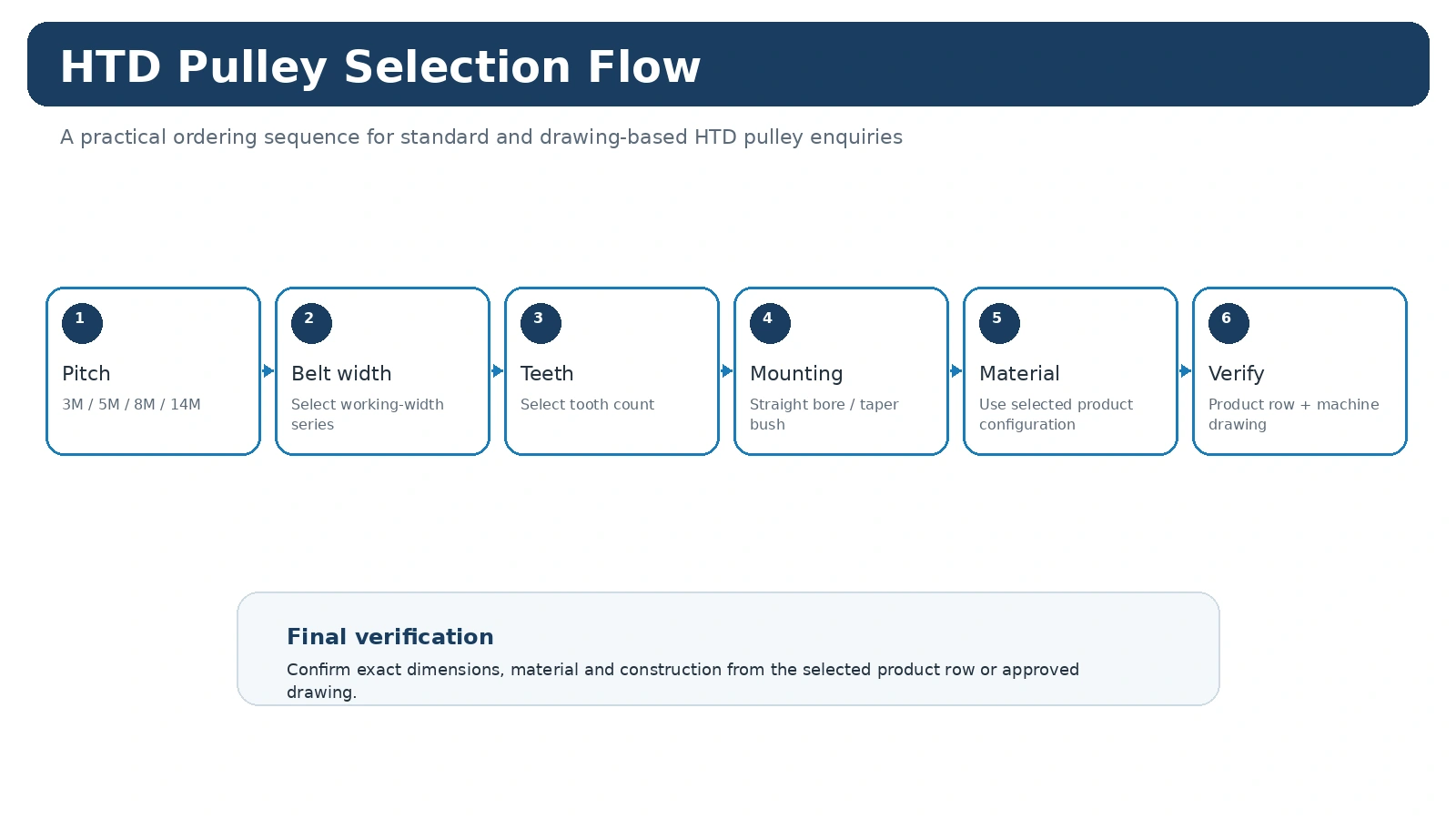
ஒரு மாற்றுத் திட்டத்திற்கு, ஒரு பட்டியல் வரிசை சமமானது என்று முடிவு செய்வதற்கு முன், அளவிடப்பட்ட மதிப்பை நிறுவப்பட்ட பெல்ட் மற்றும் இயந்திர அமைப்புடன் ஒப்பிடவும். ஒரு புதிய திட்டத்திற்கு, வடிவமைப்பு அடிப்படையை ஆவணப்படுத்தவும், இதன்மூலம் பிற்காலப் பராமரிப்புக் குழுக்கள் பிட்ச், பற்களின் எண்ணிக்கை மற்றும் பொருத்தும் முறை ஆகியவை ஏன் தேர்ந்தெடுக்கப்பட்டன என்பதைப் புரிந்துகொள்ள முடியும்.
டைமிங் புல்லி பொருள் தேர்வை கட்டுப்படுத்தும் பரிமாணங்கள்
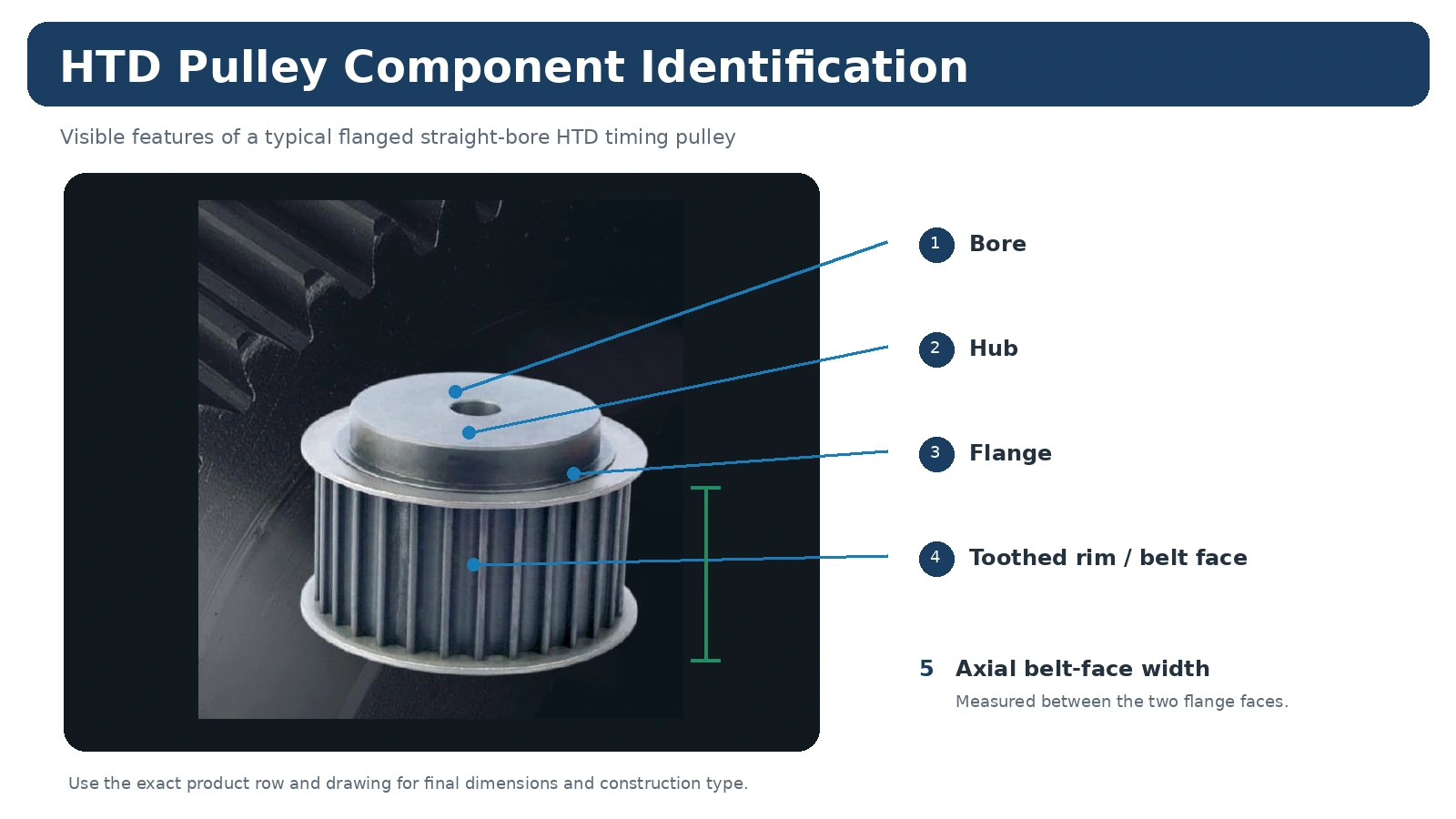
துளை, மையம், விளிம்பு அல்லது அச்சு நிலை வேறுபடுவதால், ஒரு கப்பி அதன் சுருதி மற்றும் பல் எண்ணிக்கையில் பொருந்தினாலும் இயந்திரத்தில் பொருந்தாமல் போகலாம். தண்டு இடைமுகம், பட்டை முகப்பு அகலம், இருபுறமும் உள்ள மையத்தின் நீட்சி மற்றும் ஒரு நிலையான இயந்திர ஆதாரத்துடன் தொடர்புடைய பட்டை கோடு ஆகியவற்றை அளவிடவும். கூம்பு வடிவ புஷ் பயன்படுத்தப்படும் இடங்களில், கப்பித் தொடர் மற்றும் புஷ் குறியீடு இரண்டையும் பதிவு செய்யவும். முடிக்கப்பட்ட துளை தேவைப்படும் இடங்களில், வரைபடத்தில் பொருத்தம், சாவி வழி மற்றும் தக்கவைக்கும் முறை ஆகியவற்றைச் சேர்க்கவும்.
ஒரு மாற்றுத் திட்டத்திற்கு, ஒரு பட்டியல் வரிசை சமமானது என்று முடிவு செய்வதற்கு முன், அளவிடப்பட்ட மதிப்பை நிறுவப்பட்ட பெல்ட் மற்றும் இயந்திர அமைப்புடன் ஒப்பிடவும். ஒரு புதிய திட்டத்திற்கு, வடிவமைப்பு அடிப்படையை ஆவணப்படுத்தவும், இதன்மூலம் பிற்காலப் பராமரிப்புக் குழுக்கள் பிட்ச், பற்களின் எண்ணிக்கை மற்றும் பொருத்தும் முறை ஆகியவை ஏன் தேர்ந்தெடுக்கப்பட்டன என்பதைப் புரிந்துகொள்ள முடியும்.
டைமிங் புல்லி பொருள் தேர்வை உண்மையான இயந்திரச் சூழலில் பொருத்திப் பாருங்கள்
ஒரே பெயரளவு டைமிங் புல்லி மூலப்பொருளைக் கொண்ட பாகம், இயந்திரத்தைப் பொறுத்து மிகவும் மாறுபட்ட சேவையைக் காணக்கூடும். ஒரு மணி நேரத்திற்கு எத்தனை முறை இயக்கப்படுகிறது, பின்னோக்கிச் செல்லுதல், திடீர் சுமையேற்றம், தொடர்ச்சியான இயக்க நேரம், வெப்பநிலை, மாசுபடுதல், சுத்தம் செய்தல் மற்றும் இறுக்குவதற்கான அணுகல் ஆகிய அனைத்தும் அதன் இயக்கத்தைப் பாதிக்கின்றன. ஒரு கச்சிதமான தானியங்கு அச்சு, மீண்டும் மீண்டும் செய்யக்கூடிய இயக்கம் மற்றும் கட்டுப்படுத்தப்பட்ட சீரமைப்பிற்கு முக்கியத்துவம் அளிக்கிறது, அதேசமயம் ஒரு கன்வேயர் அல்லது செயல்முறை இயந்திரம் தொடர்ச்சியான பணி மற்றும் சேவைக்கான அணுகலுக்கு முக்கியத்துவம் அளிக்கலாம். புல்லியை அதன் அளவை மட்டும் கொண்டு தேர்ந்தெடுக்கச் சொல்வதற்குப் பதிலாக, இந்த நிபந்தனைகளை வழங்குங்கள்.

ஒரு மாற்றுத் திட்டத்திற்கு, ஒரு பட்டியல் வரிசை சமமானது என்று முடிவு செய்வதற்கு முன், அளவிடப்பட்ட மதிப்பை நிறுவப்பட்ட பெல்ட் மற்றும் இயந்திர அமைப்புடன் ஒப்பிடவும். ஒரு புதிய திட்டத்திற்கு, வடிவமைப்பு அடிப்படையை ஆவணப்படுத்தவும், இதன்மூலம் பிற்காலப் பராமரிப்புக் குழுக்கள் பிட்ச், பற்களின் எண்ணிக்கை மற்றும் பொருத்தும் முறை ஆகியவை ஏன் தேர்ந்தெடுக்கப்பட்டன என்பதைப் புரிந்துகொள்ள முடியும்.
டைமிங் புல்லி பொருள் தேர்வுக்கான ஆய்வுப் புள்ளிகள்
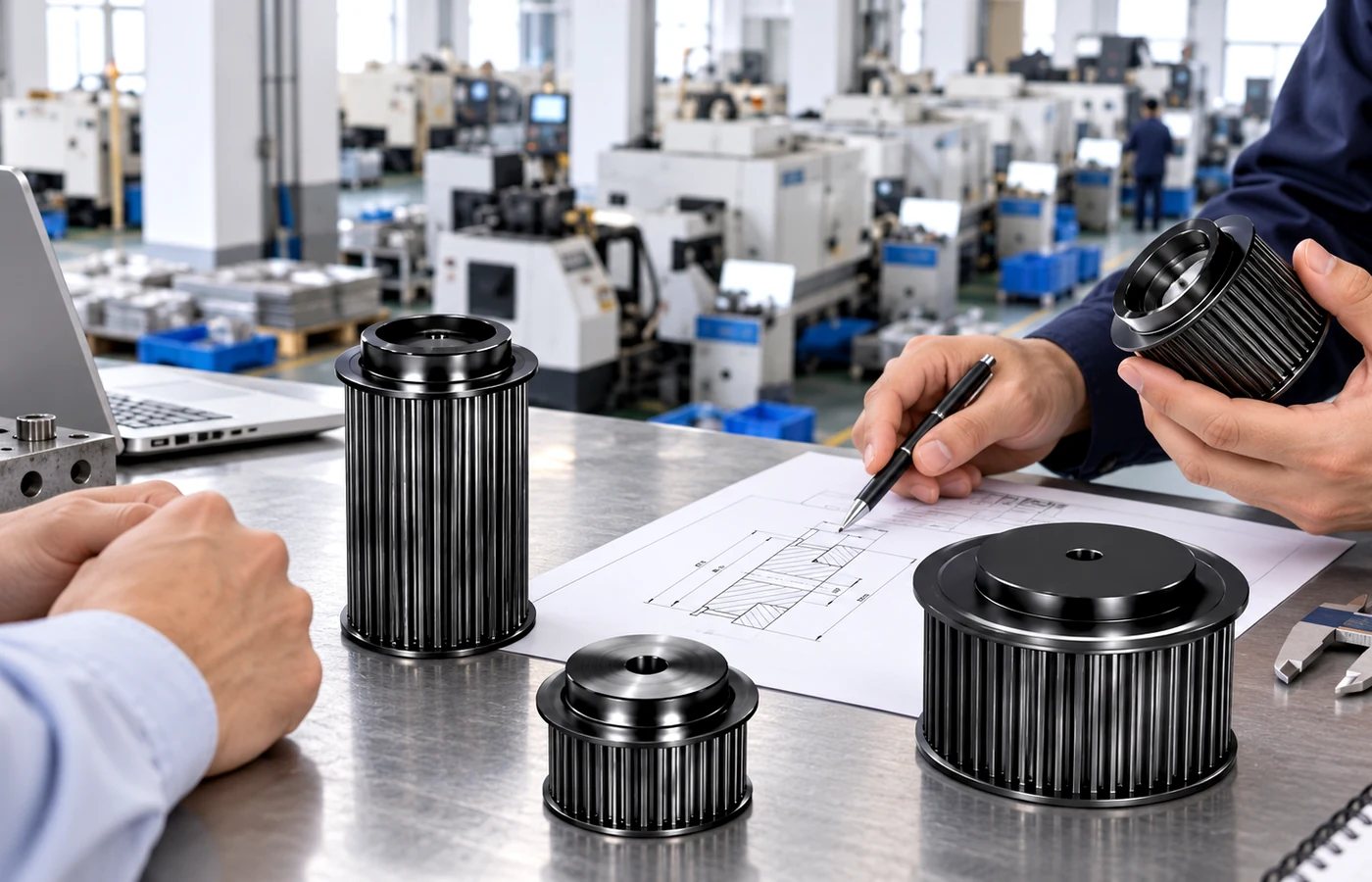
இயக்கத்தைப் பாதிக்கும் பரிமாணங்களான ஷாஃப்ட் இடைமுகம், அச்சு அமைவிடம், பல்லின் நிலை, முகப்பு அகலம் மற்றும் வரைபடத்தால் கட்டுப்படுத்தப்படும் ஏதேனும் ரன்அவுட் அல்லது டேட்டம் தொடர்பு ஆகியவற்றில் ஆய்வு கவனம் செலுத்த வேண்டும். ஒரு பொதுவான தர அறிக்கை ஏற்பை வரையறுக்காது. ஒரு பரிமாண அறிக்கை, மூலப்பொருள் ஆவணம் அல்லது ஆர்டர் சார்ந்த பதிவு தேவைப்பட்டால், உற்பத்திக்கு முன் அதைக் கண்டறியவும். பராமரிப்பின் போது, ஃபிளேன்ஜ் சேதம், விளிம்புத் தேய்மானம், குப்பைகள் மற்றும் ஷாஃப்ட்டில் புல்லி நகர்ந்ததற்கான அறிகுறிகளைக் கவனிக்கவும்.
ஒரு மாற்றுத் திட்டத்திற்கு, ஒரு பட்டியல் வரிசை சமமானது என்று முடிவு செய்வதற்கு முன், அளவிடப்பட்ட மதிப்பை நிறுவப்பட்ட பெல்ட் மற்றும் இயந்திர அமைப்புடன் ஒப்பிடவும். ஒரு புதிய திட்டத்திற்கு, வடிவமைப்பு அடிப்படையை ஆவணப்படுத்தவும், இதன்மூலம் பிற்காலப் பராமரிப்புக் குழுக்கள் பிட்ச், பற்களின் எண்ணிக்கை மற்றும் பொருத்தும் முறை ஆகியவை ஏன் தேர்ந்தெடுக்கப்பட்டன என்பதைப் புரிந்துகொள்ள முடியும்.
டைமிங் புல்லி மூலப்பொருளைத் தேர்ந்தெடுப்பதற்கு முன் தீர்க்கப்பட வேண்டிய கேள்விகள்
என்ன துல்லியமான HTD ப்ரொஃபைல் மற்றும் அகலம் நிறுவப்பட்டுள்ளது அல்லது குறிப்பிடப்பட்டுள்ளது?
எந்த விகிதம் அல்லது தற்போதுள்ள பல் எண்ணிக்கை பாதுகாக்கப்பட வேண்டும்?
என்ன வகையான துளை, பொருத்தம், திறப்புவழி அல்லது கூம்புத்தூள் அமைப்பு தேவைப்படுகிறது?
ஹப் நீட்சி மற்றும் ஃபிளேன்ஜ் இடைவெளி எவ்வளவு உள்ளது?
வேகம், சுமை, தொடக்கங்கள், பின்னோக்கிச் செல்லுதல் மற்றும் இயக்க நேரங்கள் என்னென்ன?
வழங்கப்படும் பொருளுடன் எந்த வரைபடம், மூலப்பொருள் அல்லது ஆய்வுப் பதிவுகள் இணைக்கப்பட வேண்டும்?
RFQ உடன் என்ன அனுப்ப வேண்டும்
விவரக்குறிப்பு, பற்களின் எண்ணிக்கை, பெல்ட் அகலம், ஷாஃப்ட் இடைமுகம், ஹப்/ஃப்ளாஞ்ச் விவரங்கள், அளவு, சேருமிடம் மற்றும் ஒரு வரைபடம் அல்லது மாற்று அளவீட்டு வரைப்படம் ஆகியவற்றை அனுப்பவும். ஒரு புதிய இயக்ககத்திற்காக வேகம், விகிதம், சுமை, மையத் தொலைவு மற்றும் சூழல் ஆகியவற்றைச் சேர்க்கவும். மதிப்பாய்வு செய்யவும். HTD தயாரிப்பு குடும்பங்கள், பயன்படுத்தவும் தேர்வு வழிகாட்டிஅல்லது தொடர்புடையவற்றை ஒப்பிடுக விண்ணப்பக் குறிப்புகள்.
பொருளானது உண்மையான கட்டமைப்பு மற்றும் கடமையைப் பின்பற்றுகிறது.
இந்தப் பட்டியல், பல்வேறு தொடர்கள் மற்றும் அளவுகளில் உள்ள அலுமினியம், எஃகு மற்றும் வார்ப்பிரும்பு உள்ளமைப்புகளைக் காட்டுகிறது. மூலப்பொருளை, தயாரிப்பு வரிசையிலிருந்தோ அல்லது வரைபடத்திலிருந்தோதான் எடுக்க வேண்டும்; நிறத்தை வைத்தோ அல்லது ஒரு பொதுவான விருப்பத்தின் அடிப்படையிலோ அதை ஊகிக்கக் கூடாது.
அளவிடப்பட்ட மதிப்புகள், பட்டியல் குறிப்புகள் மற்றும் திட்டத் தேவைகள் ஆகியவற்றைத் தெளிவாகப் பிரித்து வைக்கவும். தேவைப்படும் ஒரு அம்சம், தொடர்புடைய பட்டியல் அட்டவணையிலோ அல்லது அங்கீகரிக்கப்பட்ட வரைபடத்திலோ குறிப்பிடப்படவில்லை என்றால், சாத்தியமான ஆனால் சரிபார்க்கப்படாத ஒரு மதிப்பைக் கொண்டு அந்த இடைவெளியை நிரப்புவதற்குப் பதிலாக, அதனை விலைக்கோரல் கேள்வியாகவோ (RFQ question) அல்லது வரைபடத் தேவையாகவோ சேர்க்கவும்.
மேற்பரப்புத் தோற்றத்திலிருந்து மூலப்பொருள் தேர்வைப் பிரிக்கவும்
அடர் நிற அல்லது பளபளப்பான மேற்பூச்சு, மூலப் பொருளின் நம்பகத்தன்மைக்கு நம்பகமான சான்று அல்ல. அரிப்பு, நிலைமம், வெப்பநிலை அல்லது சிறப்புச் செயலாக்கம் ஆகியவை முக்கியமான காரணிகளாக இருந்தால், அதற்கான தேவையைக் குறிப்பிட்டு, தேர்ந்தெடுக்கப்பட்ட உள்ளமைப்பிற்கான உறுதிப்படுத்தலைக் கோரவும்.
கொள்முதல் பதிவேடு, இயந்திரத்தின் தேவைக்கும் தேர்ந்தெடுக்கப்பட்ட புல்லிக்கும் இடையே ஒரு தெளிவான இணைப்பை வைத்திருக்க வேண்டும். அதாவது, முழுமையான பெல்ட் அல்லது புரொஃபைல் அடையாளம், பற்களின் எண்ணிக்கை, செயல்படும் அகலம் மற்றும் ஷாஃப்ட்-இடைமுகத் தகவல் ஆகியவை தயாரிப்புக் குறியீட்டுடன் சேர்ந்தே இருக்க வேண்டும். ஏதேனும் சிறப்புப் பொருள், பூச்சு, கட்டுப்படுத்தப்பட்ட சகிப்புத்தன்மை, குறியிடுதல் அல்லது அறிக்கைத் தேவை ஆகியவை தனியாகக் குறிப்பிடப்பட வேண்டும், அப்போதுதான் அது முழுத் தொகுப்பிற்குமான ஒரு பொதுவான அம்சமாகத் தவறாகக் கருதப்பட முடியாது.
கொள்முதல் மற்றும் ஆவணப்படுத்தல்
தேர்வு தெளிவானதும், ஏற்றுக்கொள்ளப்பட்ட பொருளின் அடையாளம், அளவு, சேருமிடம் மற்றும் வரைபடத் திருத்தம் ஆகியவற்றை ஒரே கொள்முதல் வரிசையில் வைக்கவும். வழக்கமான பட்டியல் பாகங்கள் பொதுவாக குறைந்தபட்ச உற்பத்தி அளவை மையமாகக் கொண்டு திட்டமிடப்படுகின்றன, அதே சமயம் பெரிய அல்லது அதிக மதிப்புள்ள பொருட்களை நடைமுறை ஆர்டர் மதிப்பின் அடிப்படையில் மதிப்பாய்வு செய்யலாம். கட்டமைப்பு மற்றும் உற்பத்தி வழிமுறை பொருத்தமானதாக இருக்கும்போது, தகுதிவாய்ந்த புதிய வாடிக்கையாளர் மாதிரிகளான 1–5 துண்டுகள், மாதிரி விலையில் மதிப்பாய்வு செய்யப்படலாம்.
கலப்பு-மாதிரி ஆர்டர்களை, சுமார் 1,500 அமெரிக்க டாலர் நடைமுறை ஆர்டர் மதிப்பை நோக்கி ஒருங்கிணைக்கலாம். சிறப்புப் பொருட்கள் மற்றும் சிறப்புச் செயல்முறைகளுக்கு, அந்தந்த செயல்முறைக்குத் தேவைப்படும் குறைந்தபட்ச அளவு பின்பற்றப்படும். மிகச் சிறிய, ஒன்று அல்லது இரண்டு துண்டுகள் கொண்ட கோரிக்கைகள், சில்லறை மாற்று ஆர்டர்களாகக் கருதப்படாமல், தகுதிவாய்ந்த பொறியியல் சரிபார்ப்பு அல்லது கட்டண மாதிரி நிகழ்வுகளாக மட்டுமே கையாளப்படுகின்றன.
தொழில்நுட்ப வரையறை தெளிவாகிய பின்னரே விநியோக நேரம் உறுதி செய்யப்படும். வழக்கமான பாகங்கள் பொதுவாக 10–25 வேலை நாட்களிலும், தனிப்பயன் பாகங்கள் 20–45 வேலை நாட்களிலும், மற்றும் திட்ட அடிப்படையிலான அசெம்பிளிகள் அல்லது அது தொடர்பான உபகரணங்கள் பொருந்தக்கூடிய இடங்களில் 45–120 வேலை நாட்களிலும் திட்டமிடப்படுகின்றன. EXW, FOB, CIF மற்றும் DAP ஆகியவை பொதுவாக ஆதரிக்கப்படுகின்றன; பொருத்தமான ஏற்றுமதிகளுக்கு FCA, CFR, CPT, CIP மற்றும் DDP குறித்து விவாதிக்கலாம். ஆர்டர் மதிப்பாய்வுக்கு முன், இவற்றை ஒரு திட்டமிடல் வரம்பாகக் கருதுங்கள், ஏற்றுமதி வாக்குறுதியாக அல்ல.
ஒரு நடைமுறை முடிவெடுக்கும் வரிசை
பட்டியல் மூலப்பொருட்களின் இருப்பு, அத்துடன் துளை அளவு, வேகம், சூழல் மற்றும் விறைப்புத்தன்மை தேவைகள் ஆகியவற்றிலிருந்து தொடங்கவும். இயந்திரத்தின் தேவையை பட்டியல் தேர்விலிருந்து தனியாக வைக்கவும்: முதலில், இயக்கி எதைப் பாதுகாக்க வேண்டும் என்பதைக் கண்டறியவும், பின்னர் அந்த அடையாளத்துடன் பொருந்தும் வரிசைகள் அல்லது வரைபடங்களை மட்டும் ஒப்பிடவும். இது, ஒரு பழக்கமான தோற்றமுடைய கப்பியின் செயல்பாட்டு இடைமுகங்கள் சரிபார்க்கப்படுவதற்கு முன்பே அது ஏற்றுக்கொள்ளப்படுவதைத் தடுக்கிறது.
ஏற்கனவே உள்ள ஒரு இயந்திரத்தில் மாற்றங்களைச் செய்வதற்கு முன், அதன் அசல் அமைப்பைப் பாதுகாக்கவும். ஒரு புதிய வடிவமைப்பிற்கு, இலக்கு விகிதம், இயக்கச் சூழல் மற்றும் நிறுவல் பரப்பு ஆகியவற்றை பதிவு செய்யவும். இதன்மூலம், நினைவாற்றல் அல்லது ஒரு புகைப்படத்தை மட்டும் சார்ந்திருக்காமல், பின்னர் மூலப்பொருள் குறித்த முடிவை மறுபரிசீலனை செய்ய முடியும்.
அளவீட்டுப் பதிவை உருவாக்குங்கள்
மிகவும் பயனுள்ள அளவீட்டுத் தொகுப்பில் தயாரிப்புக் குறியீடு, உண்மையான மூலப்பொருள், ஷாஃப்ட் இடைமுகம், சூழல் மற்றும் ஏதேனும் இறுதித் தேவை ஆகியவை அடங்கும். எந்த மதிப்புகள் இயந்திரத்தில் அளவிடப்பட்டன, எந்த மதிப்புகள் ஒரு பட்டியல் அல்லது வெளியிடப்பட்ட வரைபடத்திலிருந்து பெறப்பட்டன என்பதைக் குறித்துக்கொள்ளுங்கள். ஒரு அம்சத்தை அணுக முடியாதபோது, அந்த இடைவெளியை ஒரு அனுமான மதிப்பைக் கொண்டு நிரப்புவதற்குப் பதிலாக, ஒரு நிலையான தரவுத்தளத்துடனான அதன் தொடர்பைப் புகைப்படம் எடுத்து, அதை உறுதிப்படுத்தல் தேவை எனக் குறிப்பிடுங்கள்.
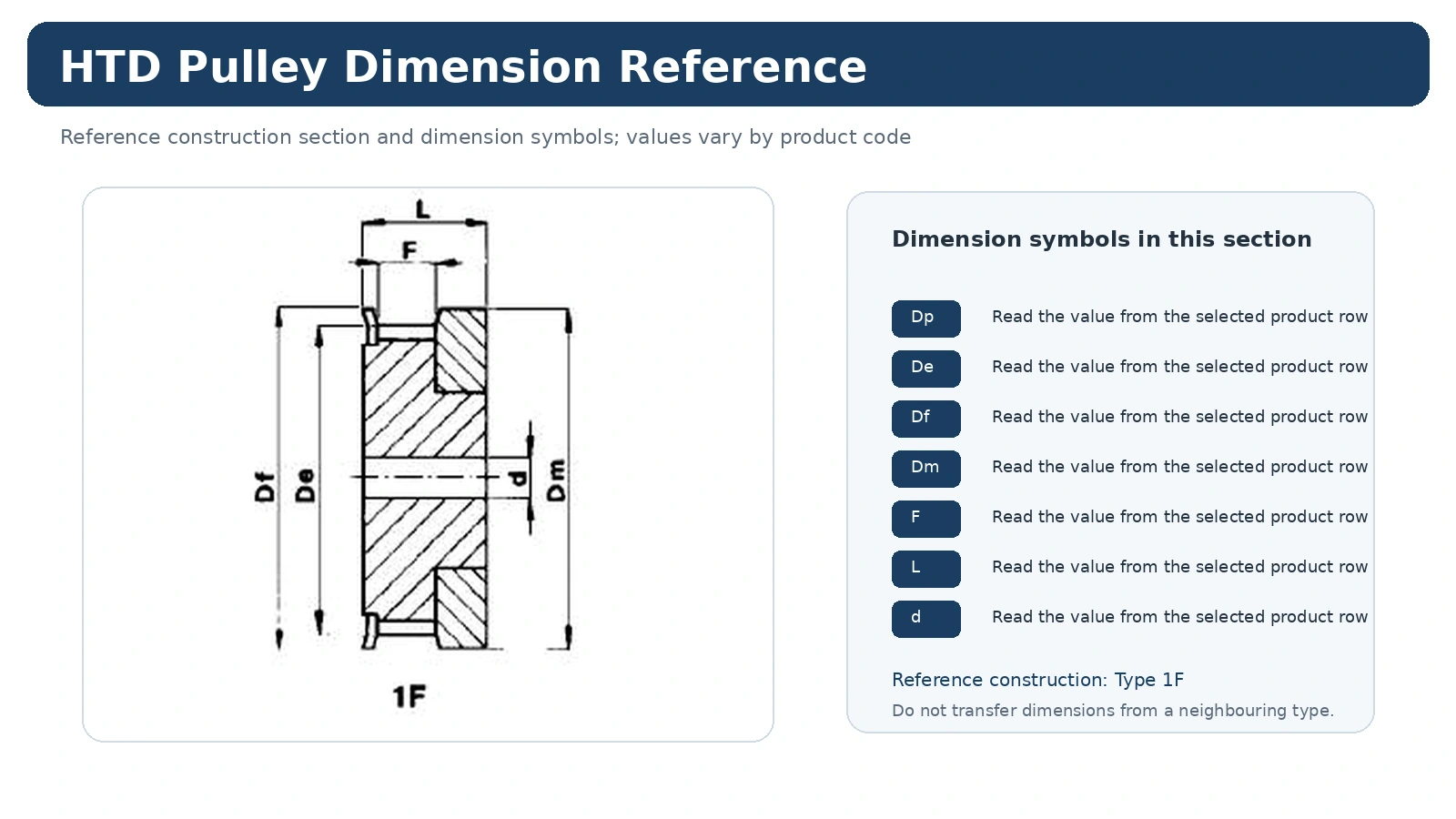
பரிமாண வரைபடங்களை முழுமையாகப் படிக்கக்கூடிய அகலத்தில் பார்க்க வேண்டும். ஒருபோதும் ஸ்கிரீன்ஷாட்டை அளவை மாற்றி, பின்னர் அந்த மாற்றப்பட்ட பரிமாணத்தை ஒரு அளவீடாகக் கருதாதீர்கள்; அச்சிடப்பட்ட மதிப்பையும் சரியான கட்டுமான வகையையும் பயன்படுத்தவும்.
தவிர்க்க வேண்டிய ஒரு தோல்வி முறை
பட்டியலில் உள்ள துல்லியமான உள்ளமைப்பைக் கருத்தில் கொள்ளாமல், நிறம் அல்லது தோற்றத்தின் அடிப்படையில் மூலப்பொருளைத் தேர்ந்தெடுப்பது ஒரு பொதுவான தவறாகும். இதனால், பட்டியலில் கிட்டத்தட்ட ஒரே மாதிரியாகத் தோன்றும் ஒரு பாகத்தின் விகிதம், பெல்ட் லைன், பொருத்துதல் அல்லது சேவை அணுகல் ஆகியவை மாறக்கூடும். விலை கோருவதற்கு முன், முரண்படும் அம்சத்தைச் சரிசெய்துவிடுங்கள், அப்போதுதான் விலைப்புள்ளியானது இயந்திரரீதியாக ஒத்திசைவான ஒரே உள்ளமைப்பைக் குறிப்பிடும்.
இரண்டு சாத்தியமான உள்ளமைவுகள் மீதமிருந்தால், இயந்திர அளவீடுகள், புகைப்படங்கள் மற்றும் நீங்கள் விரும்பும் விருப்பம் ஆகிய இரண்டையும் அனுப்பவும். அதன் பிறகு, நிச்சயமற்ற தன்மையை மௌனமாக ஒரு விவரக்குறிப்பாக மாற்றுவதற்குப் பதிலாக, எந்த இடைமுகத்திற்கு இன்னும் உறுதிப்படுத்தல் தேவை என்பதை விலைப்புள்ளியால் அடையாளம் காண முடியும்.
தொழில்நுட்பத் தேர்வை மேற்கோளுக்குத் தயாரான செலவினமாக மாற்றவும்
HTD/ப்ரொஃபைல் ஃபேமிலி மற்றும் முழுமையான பெல்ட் தகவல்களைக் குறிப்பிடவும்.
பற்களின் எண்ணிக்கை, வேலை செய்யும் அகலம் மற்றும் தொடர்புடைய பரிமாணம் அல்லது வரைபடக் குறிப்புகளை வழங்கவும்.
பொருந்தக்கூடிய இடங்களில், துளை அல்லது புஷ், ஷாஃப்ட் தரவு, ஹப் நீட்சி மற்றும் பெல்ட்-லைன் நிலை ஆகியவற்றை வரையறுக்கவும்.
அளவு, சேருமிடம், தேவையான ஆவணங்கள் மற்றும் கோரிக்கைக்குப் பயன்படுத்தப்பட்ட வரைபடத் திருத்தம் ஆகியவற்றைச் சேர்க்கவும்.
மேலே உள்ளவற்றில் ஒன்று உண்மையாகவே தெரியாத பட்சத்தில், உறுதிப்படுத்துவதற்காக அதைக் குறியிடவும். ஒருபோதும் அளவிடப்படாத நம்பத்தகுந்த மதிப்பை விட, ஒரு துல்லியமான விடைதெரியா கேள்வி அதிகப் பயனுள்ளது.
வாங்குபவர்கள் பொதுவாகக் கேட்கும் கேள்விகள்
முதலில் எதை உறுதிப்படுத்த வேண்டும்?
பட்டியலில் உள்ள பொருட்களின் இருப்பு மற்றும் துளை அளவு, வேகம், சூழல், மற்றும் விறைப்புத்தன்மை தேவைகள் ஆகியவற்றை உறுதிப்படுத்தவும். இது, பிற்காலத்தில் தவறான தயாரிப்புக் குடும்பம் அல்லது நிறுவல் வழியின் அடிப்படையில் பரிமாணங்கள் ஒப்பிடப்படுவதைத் தடுக்கிறது.
மாற்று நபருக்கு எந்தத் தகவல் மிகவும் பயனுள்ளதாக இருக்கும்?
பழைய புல்லியை அகற்றுவதற்கு முன்பு, தயாரிப்புக் குறியீடு, உண்மையான மூலப்பொருள், ஷாஃப்ட் இடைமுகம், சூழல் மற்றும் ஏதேனும் இறுதித் தேவை ஆகியவற்றுடன் தெளிவான புகைப்படங்களையும் அனுப்பவும். தளர்வான பாகத்தால் காட்ட முடியாத அச்சு நோக்குநிலை மற்றும் அருகிலுள்ள இடைவெளிகளைப் புகைப்படங்கள் பாதுகாக்கின்றன.
வரைபடத்தை எப்போது பயன்படுத்த வேண்டும்?
இயந்திரத்திற்கு முக்கியமான ஷாஃப்ட் இடைமுகம், ஹப்/ஃப்ளாஞ்ச் அமைப்பு, பூச்சு, சகிப்புத்தன்மை அல்லது ஆய்வுத் தேவை ஆகியவற்றை அட்டவணை வரிசை முழுமையாக வரையறுக்காத போதெல்லாம், ஒரு கட்டுப்படுத்தப்பட்ட வரைபடத்தைப் பயன்படுத்தவும்.
இடைமுக முடிவை துல்லியமான மாதிரியிலிருந்து பிரிக்க வேண்டாம்
புல்லியின் அளவு மற்றும் கட்டமைப்பைப் பொறுத்து மூலப்பொருள், துளை மற்றும் கூம்பு-புஷ் ஆகியவற்றின் கிடைக்கும்தன்மை மாறக்கூடும். பிட்ச் குடும்பத்தின் ஒவ்வொரு உறுப்பினரும் ஒரே மாதிரியாக வழங்கப்படலாம் என்று கருதுவதற்குப் பதிலாக, தேர்ந்தெடுக்கப்பட்ட வரிசைக்குக் குறிப்பிடப்பட்டுள்ள மூலப்பொருள் மற்றும் பொருத்தும் தகவல்களைப் பயன்படுத்தவும். ஆதரிக்கப்படும் வரிசைக்கு வெளியே இயந்திரத்திற்கு ஒரு அம்சம் தேவைப்பட்டால், வரைபடக் கட்டுப்பாட்டு தனிப்பயன் மதிப்பாய்வுக்குச் செல்லவும்.
டேப்பர்-புஷ்ஷின் அதிகபட்ச துளை என்பது அந்த புஷ்ஷின் கொள்ளளவு வரம்பே தவிர, ஆர்டர் செய்யப்பட்ட ஷாஃப்ட்டின் விட்டம் அல்ல. உண்மையான ஷாஃப்ட்டின் அளவைக் குறிப்பிடவும். ஸ்ட்ரெய்ட்-போர் வேலைக்கு, தேவைப்படும் இறுதி இடைமுகம் மற்றும் ஏதேனும் கீவே அல்லது பூட்டு அம்சம் ஆகியவற்றைத் தெளிவாகக் குறிப்பிடவும். ஹப் புரோஜெக்ஷன் மற்றும் பெல்ட் சென்டர்லைன் ஆகியவை வரைபடத்தில் தெரியும் வகையில் இருக்க வேண்டும், ஏனெனில் பாகம் சரியாகப் பொருந்துமா என்பதை அவையே தீர்மானிக்கும்.
பொருள் கோரிக்கைகளுக்கு ஒரு செயல்பாட்டு ரீதியான காரணம் தேவை.
பட்டியல் தொகுப்பில் பல பொருட்கள் இடம்பெற்றிருந்தால், உண்மையில் ஆதரிக்கப்படும் உள்ளமைப்புகளில் இருந்து தேர்ந்தெடுக்கவும். சுற்றுச்சூழல் அல்லது வாடிக்கையாளர் தரநிலையின்படி ஒரு சிறப்புப் பொருள், பூச்சு அல்லது பதப்படுத்தும் முறை தேவைப்பட்டால், அதை ஒரு கட்டுப்படுத்தப்பட்ட ஆர்டர் தேவையாகக் குறிப்பிட்டு, செயல்முறைக்கான குறைந்தபட்ச ஆர்டர் அளவு (MOQ) குறித்து விவாதிக்கவும். ஒரு பொருளின் புகைப்படத்தின் நிறத்தை மட்டும் கொண்டு பொருளை ஊகிக்க வேண்டாம்.
ஆய்வுக்காக, மூலப்பொருள் தேர்வு அல்லது இடைமுகம் எதைக் கட்டுப்படுத்தும் என எதிர்பார்க்கப்படுகிறது என்பதைக் கண்டறியவும். இது ஒரு மூலப்பொருள் ஆவணம், பரிமாணப் பதிவு அல்லது பிற அறிக்கையை உண்மையான ஆர்டருக்கு அர்த்தமுள்ளதாக ஆக்குகிறது.
வரிசைப்படுத்தப்பட்ட கட்டமைப்பு மற்றும் இயக்கத் தேவையின் அடிப்படையில் மூலப்பொருளைத் தேர்ந்தெடுக்கவும்.
டைமிங் புல்லி வகைகளில் அலுமினியம், எஃகு மற்றும் வார்ப்பு இரும்பு ஆகியவை காணப்படுகின்றன, ஆனால் மூலப்பொருட்கள் கிடைப்பது தொடர் மற்றும் பற்களின் எண்ணிக்கையைப் பொறுத்து மாறுபடும். எனவே, தொடங்குவதற்கு மிகவும் பாதுகாப்பான இடம், உண்மையான பட்டியல் வரிசையே ஆகும். நிறம் அல்லது மேற்பரப்புத் தோற்றத்தை மட்டும் வைத்து மூலப்பொருளை ஊகிக்க வேண்டாம்; மேலும், ஒவ்வொரு அகலத்திற்கும் மற்றும் கட்டுமான வகைக்கும் எல்லா மூலப்பொருட்களும் கிடைக்கும் என்று கருதிவிடாதீர்கள்.
மாற்றுவதற்கு, தற்போதுள்ள பொருள் என்னவென்று தெரிந்திருந்தால் அதைக் கண்டறிந்து, மாற்றம் ஏன் பரிசீலிக்கப்படுகிறது என்பதையும் பதிவு செய்யவும். நிறை, விறைப்புத்தன்மை, அரிக்கும் சூழல், மையத்தின் வடிவியல், துளை அளவு மற்றும் உற்பத்தி வழிமுறை ஆகிய அனைத்தும் முக்கியத்துவம் வாய்ந்தவையாக இருக்கலாம். ஒரு பயன்பாட்டிற்கு ஒரு குறிப்பிட்ட தரம், பூச்சு, வெப்பச் சிகிச்சை அல்லது ஆவணம் தேவைப்பட்டால், அந்தத் தேவையை RFQ அல்லது வரைபடத்தில் குறிப்பிடவும், இதன்மூலம் அது ஒரு ஆர்டர் சார்ந்த கட்டுப்பாடாக மதிப்பாய்வு செய்யப்படலாம்.
தீர்க்கப்படாத சீரமைப்பு அல்லது பொருத்தப் பிரச்சனையை ஈடுசெய்வதற்காக மூலப்பொருள் தேர்வைப் பயன்படுத்தக் கூடாது. முதலில் பெல்ட் வகை, பல் வடிவியல் மற்றும் ஷாஃப்ட் இடைமுகம் ஆகியவற்றை உறுதிப்படுத்தவும்; அதன் பிறகு, உண்மையான இயந்திரத் தேவையின் அடிப்படையில் மூலப்பொருளை மதிப்பாய்வு செய்யவும்.
வரையறுக்கப்பட்ட தேவையைத் தீர்க்க பொருள் மாற்றங்களைப் பயன்படுத்தவும்
ஒரு பொருள் மாற்றம் என்பது, எடை, விறைப்புத்தன்மை, அரிமானச் சூழல், உற்பத்தி வழிமுறை அல்லது ஆவணப்படுத்தல் போன்ற ஒரு குறிப்பிட்ட இயந்திரம் அல்லது கொள்முதல் தேவையைப் பூர்த்தி செய்வதாக இருக்க வேண்டுமே தவிர, ஏதேனும் ஒரு உலோகத்தின் மீதான தெளிவற்ற விருப்பமாக இருக்கக்கூடாது. வேறு மாற்றங்கள் இல்லாமல் அதை மாற்றீடு செய்ய முடியும் என்று கருதுவதற்கு முன்பு, கோரப்பட்ட பொருளானது தேர்ந்தெடுக்கப்பட்ட தொடர் மற்றும் கட்டுமானத்திற்கு நடைமுறைக்கு உகந்ததா என்பதை உறுதிப்படுத்திக்கொள்ளுங்கள்.
பழுதடைந்த ஒரு பாகத்தை ஆய்வு செய்யும்போது, அதன் மூலப்பொருள் தொடர்பான சான்றுகளை, சீரமைப்பு மற்றும் பொருத்துதல் சான்றுகளிலிருந்து பிரித்துப் பார்க்கவும். அரிப்பு அல்லது மேற்பரப்புச் சேதம் மூலப்பொருளைப் பற்றிய ஒரு கலந்துரையாடலை நியாயப்படுத்தலாம், அதே சமயம் ஒரு பக்க விளிம்புத் தேய்மானம் அல்லது உராய்வு, ஒரு புதிய மூலப்பொருளால் மட்டும் தீர்க்க முடியாத ஒரு இயந்திர இடைமுகப் பிரச்சனையைச் சுட்டிக்காட்டக்கூடும்.
மேற்பரப்புத் தோற்றத்திற்காக அல்லாமல், செயல்பாட்டு ரீதியான காரணத்திற்காகப் பொருளைத் தேர்ந்தெடுக்கவும்.
தேர்ந்தெடுக்கப்பட்ட பட்டியலில், HTD வரிசையின் வெவ்வேறு பாகங்களில் உள்ள அலுமினியம், எஃகு மற்றும் வார்ப்பிரும்பு கட்டமைப்புகள் அடங்கும். மூலப்பொருட்களின் கிடைக்கும்தன்மை, தொடர் மற்றும் பற்களின் எண்ணிக்கையைப் பொறுத்து மாறுபடும். எனவே, ஒரு வாங்குபவர் ஒவ்வொரு அளவும் ஒவ்வொரு மூலப்பொருளிலும் வழங்கப்படும் என்று கருதுவதற்குப் பதிலாக, உண்மையான மாடல் வரிசையிலிருந்து தொடங்க வேண்டும். ஒரு பழைய புல்லியின் மூலப்பொருளை அடையாளம் காண, அதன் தோற்றத்தை மட்டும் கொண்டு நம்பகமான வழி இல்லை.
ஒரு தனிப்பயன் கோரிக்கைக்கு, பொருளின் எடை, விறைப்புத்தன்மை, சுற்றுச்சூழல், உற்பத்தி வழிமுறை அல்லது மற்றொரு திட்டத் தேவை போன்றவற்றுக்காகப் பொருளில் மாற்றம் ஏன் தேவைப்படுகிறது என்பதை விளக்குங்கள். அப்போதுதான் அந்தக் கோரிக்கையை வடிவவியலுடன் ஒப்பிட்டு மதிப்பாய்வு செய்ய முடியும். சிறப்புப் பொருள் அல்லது பதப்படுத்தும் முறையானது, செயல்முறைக்கான குறைந்தபட்ச அளவுகளையும் மற்றும் காலக்கெடுவையும் பாதிக்கக்கூடும். இதனால்தான், இயந்திர வேலை தொடங்கிய பிறகு வரையறுப்பதை விட, விலைப்புள்ளி வழங்குவதற்கு முன்பே அதை வரையறுக்க வேண்டும்.
தேர்ந்தெடுக்கப்பட்ட குறியீட்டிற்கான பட்டியலிடப்பட்ட உள்ளடக்கத்தைத் தொடக்கப் புள்ளியாகப் பயன்படுத்தவும்.
வேறு பொருளைக் கோரும்போது அதற்கான செயல்பாட்டுக் காரணத்தைக் குறிப்பிடவும்.
அரிப்பு, சுத்தம் செய்தல் அல்லது வெப்பநிலை நிலைமைகள் பொருந்தும்போது மட்டும் அவற்றைச் சேர்க்கவும்.
ஆர்டருக்குத் தேவைப்பட்டால், விலைக்கோரல் கோரிக்கை (RFQ) கட்டத்திலேயே மூலப்பொருள் பதிவுகளைக் கோரவும்.
“அனைத்து கப்பிகளும் கடினப்படுத்தப்பட்ட எஃகினால் ஆனவை” என்பது போன்ற ஒரு பொதுவான கூற்றை அடிப்படையாகக் கொண்டு வெளியிடவோ அல்லது வாங்கவோ வேண்டாம். பொறியியல், கொள்முதல் மற்றும் ஆய்வுத் துறைகள் ஒரே பாகத்தைப் பற்றி விவாதிக்கும் வகையில், தகவல்களை அதன் துல்லியமான கட்டமைப்பு மற்றும் வரைபடத்துடன் இணைத்து வைத்திருங்கள்.