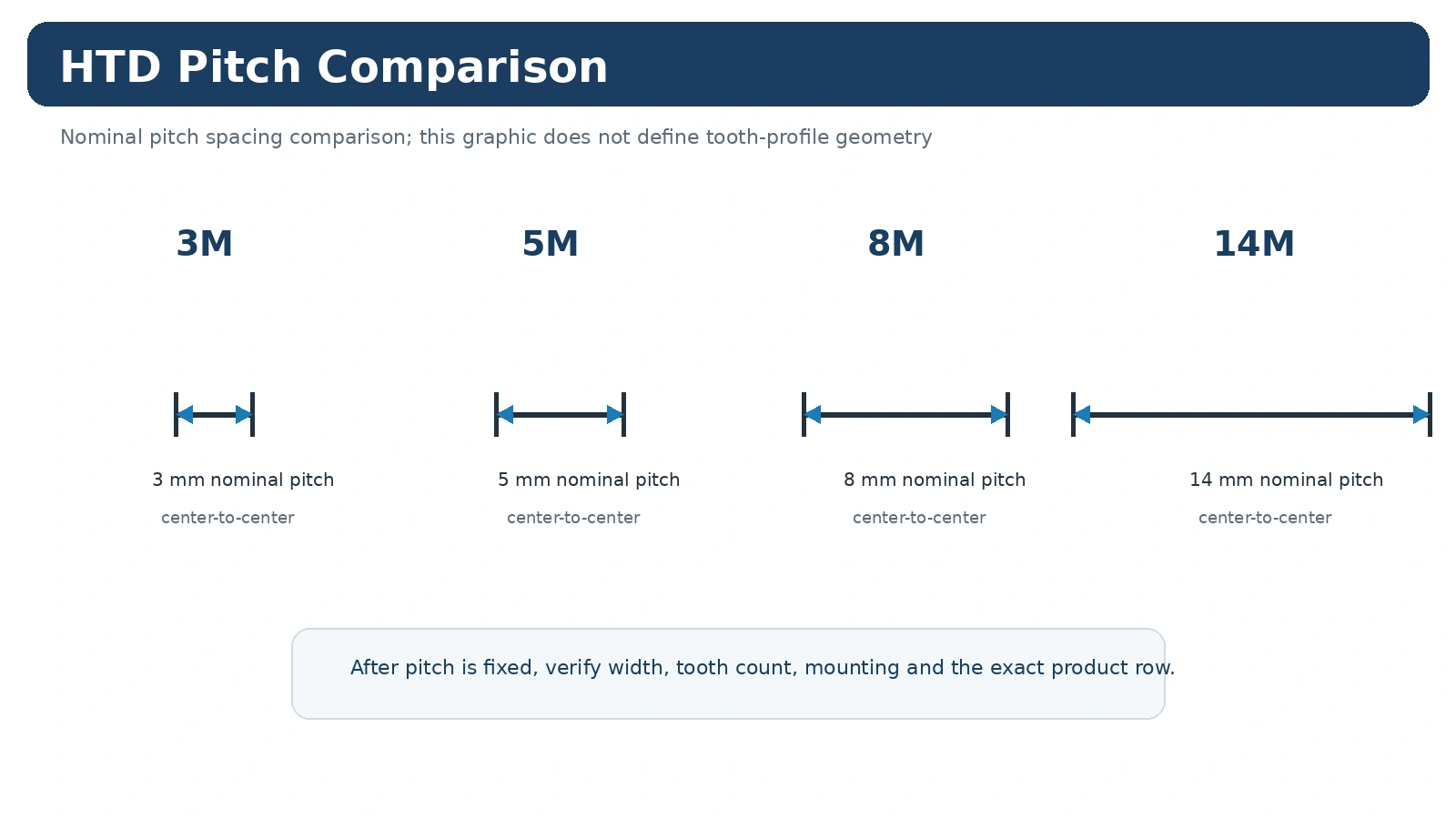
HTD 3M vs 5M vs 8M vs 14M: Compare nominal pitch families without assuming that pitch alone determines capacity or interchangeability.
Vad detta beslut styr
Compare nominal pitch families without assuming that pitch alone determines capacity or interchangeability. The decision should be documented with the belt designation, product code or drawing because a timing pulley is part of a drive system. A visual match does not prove tooth compatibility or shaft fit.
Rekommenderat arbetsflöde
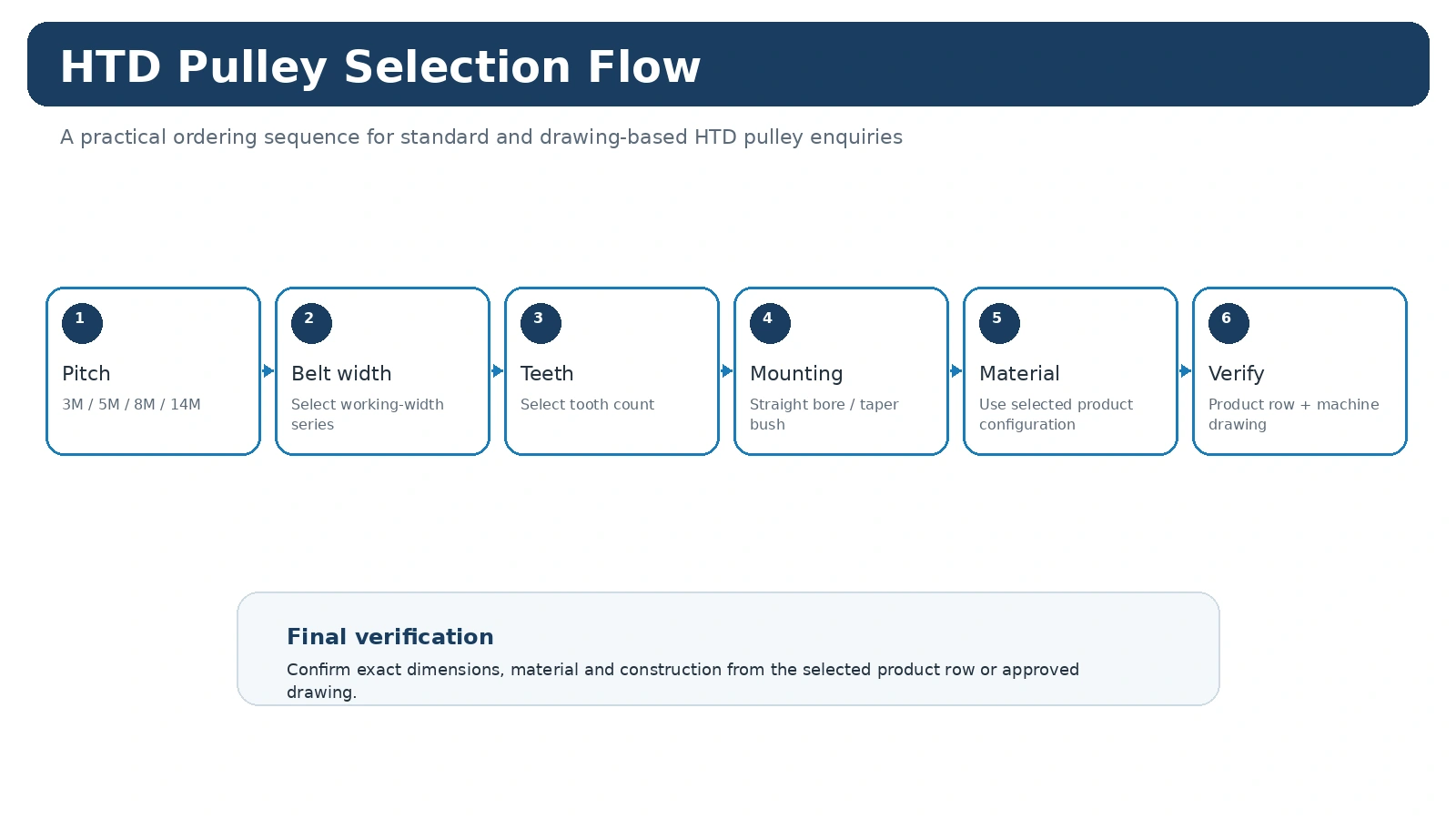
Börja med kraven för passande rem och drivning. Bekräfta stigning/profil, kuggantal och arbetsbredd. Kontrollera sedan axelgränssnittet, nav- och flänshöljet, material och eventuella kontrollerade inspektionskrav. Vid utbyte, mät den gamla delen från båda sidor och registrera remlinjen i förhållande till ett stabilt maskinreferensvärde.
Vanliga fel att undvika
- Val efter ytterdiameter utan hänsyn till tandsystemet.
- Anta att varje kurvlinjär profil med samma nominella stigning är utbytbar.
- Mäter endast ena sidan och saknar navutstickning eller en förskjuten bälteslinje.
- Avvaktar med krav på borrpassning, kilspår, bussningskod eller inspektion tills efter offert.
- Använda ett universellt remspännings- eller toleransvärde utan maskin- och remkonstruktionsbas.
Använd guiden i en offertförfrågan
När nyckelvariablerna har registrerats, öppna HTD-produktfamiljer, jämför relevanta applikationskontext, eller skicka ritningen och beställningsuppgifterna via formuläret nedan.
Use Pitch Comparison to Narrow the Family, Not to Approve a Part
3M, 5M, 8M and 14M describe different pitch families. The comparison helps define the right search path, but it does not determine tooth count, working width or shaft connection.
After choosing the family, return to the model table and check the physical envelope. If the project is a replacement, keep the existing belt identity fixed unless the entire drive is intentionally being redesigned.
Pitch Controls Tooth Spacing, Not the Whole Pulley
3M, 5M, 8M and 14M identify distinct HTD pitch families. Larger pitch does not automatically mean the correct pulley for a higher load; drive design also depends on belt construction, width, tooth engagement, speed, ratio and machine geometry.
När beslutet gäller en befintlig maskin, håll mått, katalogvärden och nya projektkrav separata. Detta förhindrar att ett fältmått i tysthet behandlas som en nominell dimension eller att en önskad ändring misstas för en standardfamiljefunktion.
Använd ritningen och tabellen tillsammans
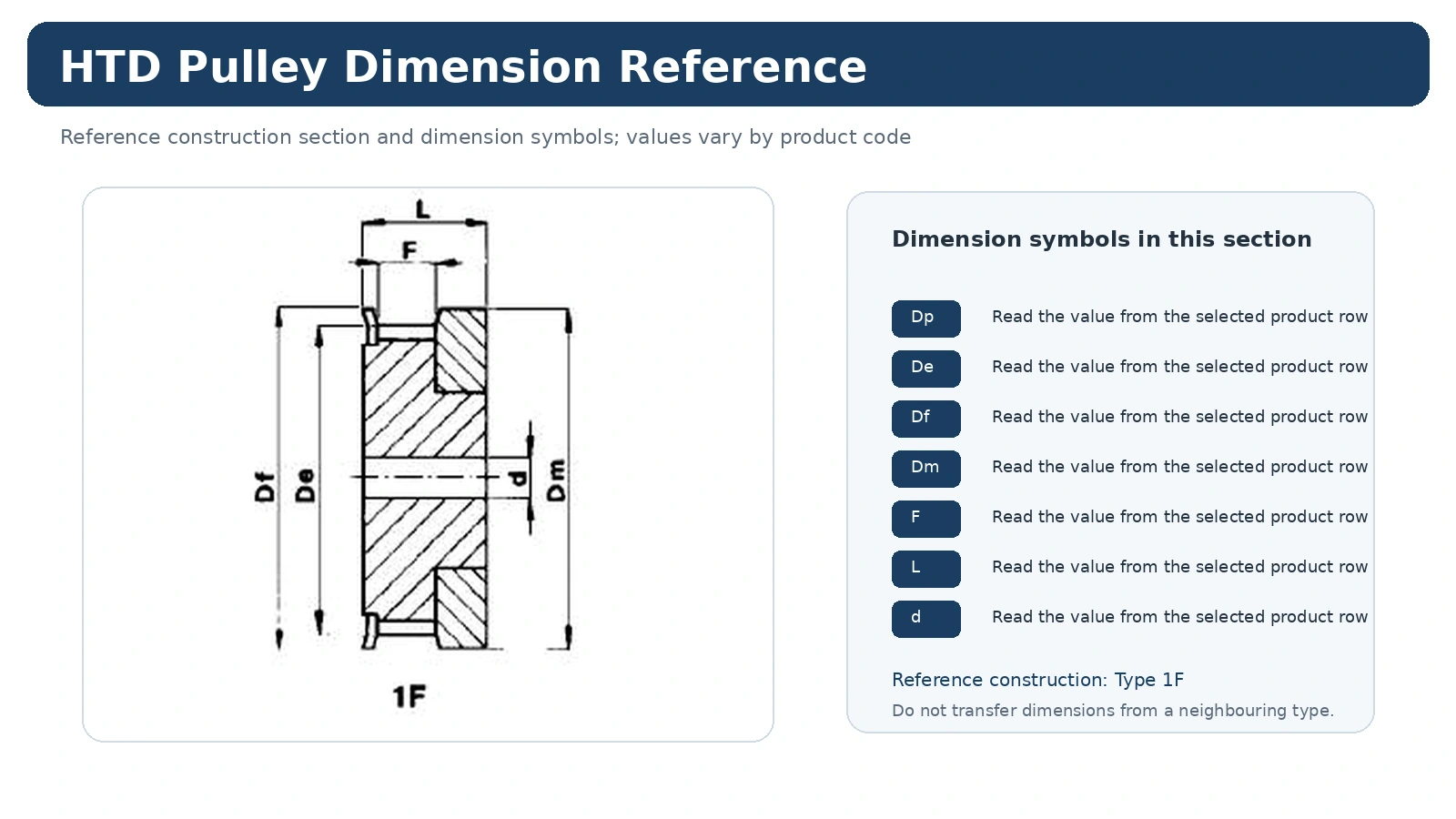
Konstruktionsritningar förklarar symbolerna och sambanden. Den radspecifika tabellen anger de faktiska värdena för den valda modellen. Skala inte illustrationen eller överför mått från en annan bredd eller tandantal bara för att produkten ser likartad ut.
Om katalogen inte styr en erforderlig passform, rundgång, tolerans, ytbehandling eller dokument, lägg till det kravet på projektritningen eller offertförfrågan och gör det till en del av ordergranskningen.
Checklista för utgivning
Håll band-/profilidentitet, arbetsbredd, tandantal, monteringsdefinition, kvantitet och ritningsrevision på samma tekniska orderrad. Lägg till maskintjänst för en ny drivning eller tydliga fotografier och mått för utbytesarbete. Detta ger inköp av en konfiguration som kan kontrolleras istället för en samling separata dimensioner.
Vad den här guiden inte ersätter
Denna guide hjälper till att organisera urvals- och mätprocessen; den ersätter inte den exakta produktraden, remdata eller projektritningen. Om en erforderlig effekt, vridmoment, hastighet, passform, tolerans eller servicegräns inte anges i relevant katalogtabell eller godkänd ritning, behåll den som design- eller offertförfrågan och verifiera den för den faktiska drivningen.
Den gränsen är användbar vid upphandling eftersom den förhindrar att en allmän teknisk förklaring citeras senare som om det vore ett garanterat värde för varje HTD-remskivekonfiguration.
Apply the Htd Pitch Comparison to a Real Machine
Collect 3M, 5M, 8M and 14M family identity, required drive envelope, tooth count and duty. Use the catalogue or dimension drawing to name features consistently, then separate measured machine values from catalogue values. The working rule is simple: do not use nominal pitch as a universal torque or compatibility ranking. If the old component is worn or modified, treat its measurements as field data rather than assuming they are the original nominal dimensions.
Vid utbytesarbete, jämför både främre och bakre navs relationer och notera vilken yta som etablerar remlinjen. För en ny konstruktion, registrera hastighetsförhållandet, centrumavståndet, drifttiden och installationsområdet innan produktkoden väljs. Detta gör valet spårbart när drevet servas senare.
Använd ritningen för att stänga återstående luckor
En standardproduktrad kan definiera stigningsfamilj, tandantal och många kuvertdimensioner, men projektspecifika axelpassningar, viktiga detaljer, navbyten, ytbehandlingar eller inspektionsgränser kan fortfarande kräva en ritning. Visa maskinens utgångspunkt och de dimensioner som faktiskt styr monteringen snarare än att fylla ritningen med okontrollerade referensdimensioner.
Om två katalogkonfigurationer verkar möjliga, identifiera vad som fortfarande är okänt och mät den egenskapen direkt. Detta är mer tillförlitligt än att välja konfigurationen med den närmaste ytterdiametern eller det mest kända fotografiet.
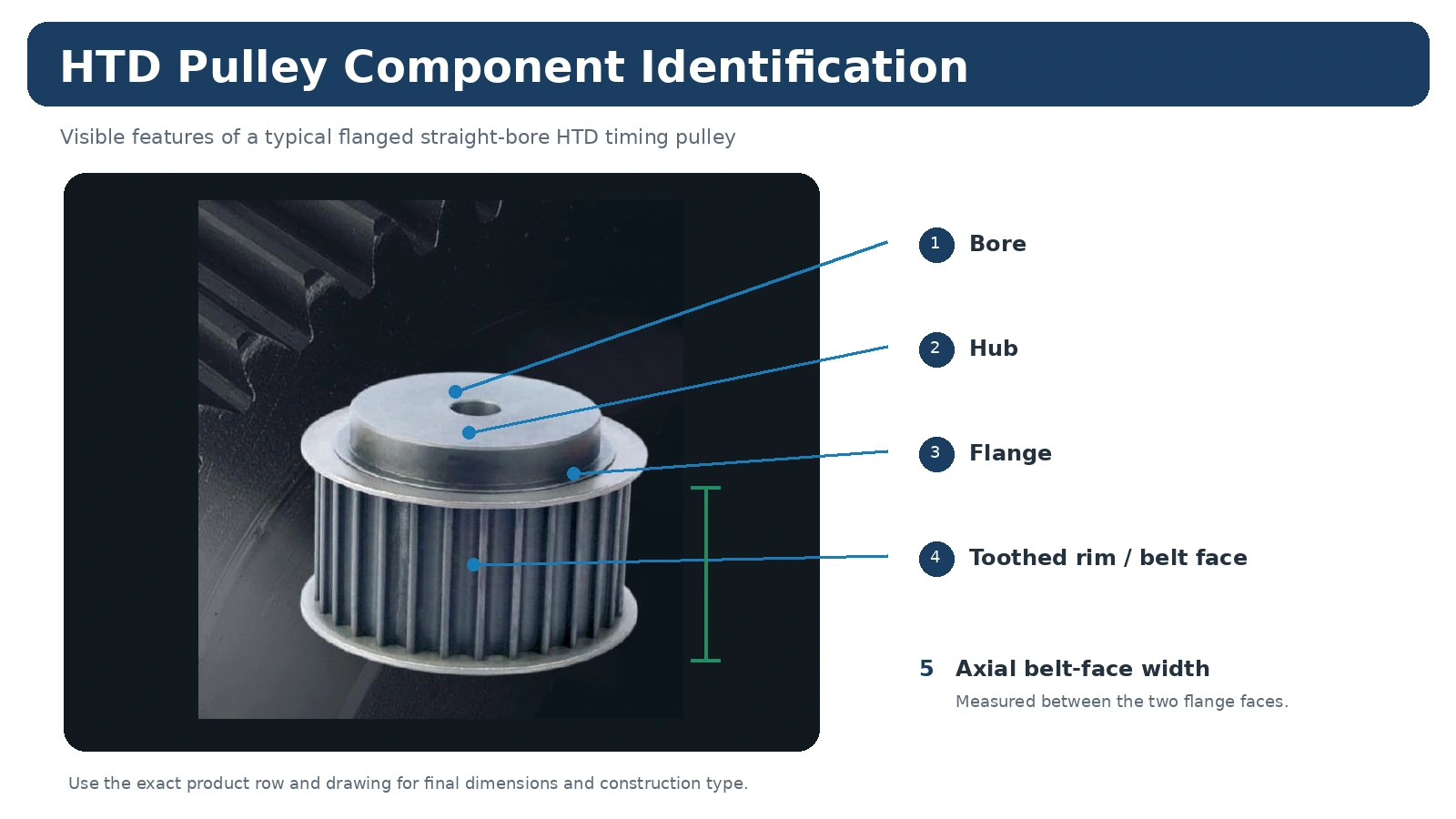
Release Data for Htd Pitch Comparison
Behåll den fullständiga produktidentiteten med inköpsraden: HTD-familj, breddserie, tandantal, hål eller bussning, kvantitet och ritningsrevision om sådan används. Lägg till orderspecifika material-, ytbehandlings-, inspektions- eller dokumentationskrav separat. Detta gör senare utbytesarbete enklare eftersom den accepterade konfigurationen kan återställas utan att beslutet behöver rekonstrueras från e-posthistoriken.
Choose the Family, Then Verify the Exact Configuration
The 3M, 5M, 8M and 14M labels organize nominal pitch families; they are not a universal capacity ranking. Existing-belt identity, required ratio, available diameter, shaft interface, working width and operating duty still determine the usable pulley. Once the pitch family is selected, move to the actual model row and construction view instead of extrapolating between families. If the application requires a nonstandard bore, hub or flange, freeze the tooth system first and release the remaining geometry by drawing.